

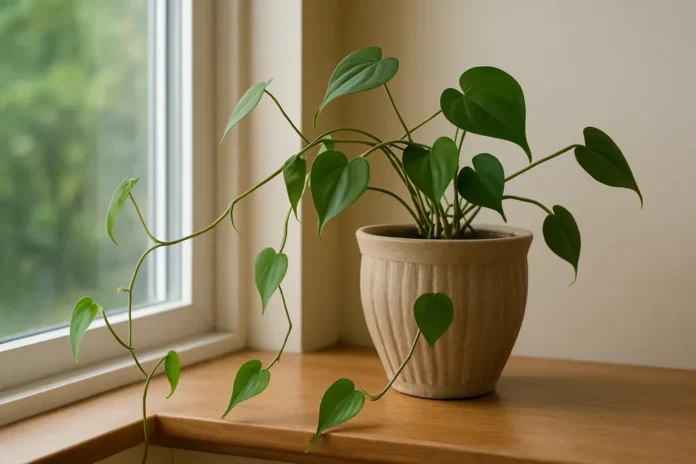
A philodendron usually gets leggy because it is not getting enough light, so it stretches out and makes longer stems with wider gaps between leaves. Sparse growth can also be made worse by uneven light, missed pruning, or seasonal slowdowns.
A leggy philodendron is one of the most common houseplant complaints I hear, and in most cases the plant is not dying. It is simply responding to its environment by stretching its stems, spacing its leaves farther apart, and putting its energy into reaching rather than filling out.
With philodendrons, a little vining is normal. These plants are natural climbers and trailers, so long stems do not always mean something is wrong. The real issue is when your philodendron has long bare stems or small leaves with big gaps between them, especially if it used to look fuller.
The good news is that legginess is usually fixable. Once you understand whether your plant is stretching from low light, growing unevenly, or just following its natural habit, you can make a few smart changes and get denser new growth over time.
What Leggy Growth Looks Like on a Philodendron
Leggy growth means the stems are longer than you want relative to the number and size of the leaves. On a philodendron, this often shows up as long vines with wide spaces between nodes, smaller newer leaves, and a thinner overall look. The plant may still be green and alive, but it looks sparse instead of lush.
Some philodendrons are naturally more sprawling than others. Heartleaf philodendron will vine and trail, while upright types may elongate differently. The clue that something is off is not just length. It is length plus thinness, reduced leaf size, or obvious bare sections along the stem.
- Long stems with fewer leaves than before
- Large gaps between nodes or leaf attachments
- Small new leaves compared with older ones
- Growth leaning strongly toward a window
- Older parts of the vine looking bare while only the tips stay leafy
When I judge legginess, I do not look at stem length alone. I compare the newest few leaves to older ones. If the leaves are getting smaller while the spaces between them are getting larger, I usually treat that as a light problem first.
Low Light Is the Most Common Cause
The biggest reason a philodendron becomes leggy is insufficient light. Philodendrons tolerate lower light better than many houseplants, but tolerance is not the same as thriving. In dim rooms, they often survive by stretching toward the nearest light source, producing longer internodes and fewer leaves along the way.
This stretching response is a plant survival strategy. Your philodendron is trying to reach brighter conditions where it can make more energy. That is why the stems get elongated and the plant starts looking thin. It is not choosing to be scraggly. It is trying to solve a problem.
A plant can also become leggy if the light is technically bright enough but comes from only one side. In that case, the plant may bend and extend heavily toward the window, leaving one side sparse and uneven.
- A philodendron far from a window often stretches more than one close by
- North-facing rooms may be too dim for compact growth unless the plant is right at the window
- Sheer curtains can soften harsh sun, but deep shade usually leads to weak stems
- Winter light is often much weaker, so a plant that looked fine in summer may turn leggy by late winter
If you move a philodendron to brighter light, judge the result by the new growth, not the old stretched stems. Existing leggy sections will not shrink back, but future leaves should come in closer together and often slightly larger.
Natural Vining Growth Can Be Mistaken for a Problem
Not every long philodendron is unhealthy. Many common varieties are true vines, and over time they naturally extend outward or downward. A healthy trailing philodendron may still have long stems, especially if it has not been pruned in a while.
The difference is density. A healthy vining plant usually still has reasonably spaced leaves, good color, and active growing tips. A truly leggy plant has long empty stretches or noticeably weaker growth. If your plant is simply getting bigger and more vine-like, it may not need a rescue so much as better styling, support, or pruning.
Climbing philodendrons also behave differently when given support. If they are allowed to trail without a pole, they may produce smaller leaves and longer stems. When grown upward on a moss pole or plank, many develop stronger growth and a fuller appearance.
Pruning Habits Affect Fullness
A philodendron that is never pruned often becomes lankier over time, even in decent light. Pinching or cutting back the growing tips encourages branching, which helps the plant look bushier. Without that intervention, many philodendrons keep extending from the ends instead of filling in from lower points.
Home gardeners sometimes avoid pruning because the plant already looks sparse and they do not want to remove any growth. I understand that hesitation, but strategic pruning is often exactly what improves the shape. Cutting just above a node can trigger new shoots below the cut, leading to a denser plant.
- Pruning redirects energy into side growth
- Pinching the tips early often prevents extreme legginess later
- Long bare vines can be cut back and propagated
- Regular shaping usually creates a fuller basket or pot over time
Container Position and Rotation Matter More than People Think
Philodendrons react strongly to directional light. If one side always faces the room and the other side faces the window, the window side may stay fuller while the room side thins out. That can make the plant look leggy even when overall light is acceptable.
Rotating the pot every week or two can help balance growth. This is especially useful for hanging baskets and shelf plants where the light angle stays constant. I have seen many philodendrons improve in shape with simple rotation alone, though severe stretching still points to a need for brighter conditions.
Placement also matters because shelves, corners, and furniture can reduce light much more than people expect. A spot that looks bright to your eyes may still be too dim for compact leaf spacing.
Watering and Nutrition Can Make Legginess Worse
Low light is the usual root cause, but weak care patterns can add to the problem. Inconsistent watering stresses the plant, which may slow leaf production and leave longer stretches of stem between leaves. Overwatering can also reduce root health, making growth weaker and less robust overall.
Nutrient issues play a supporting role too. A philodendron that has been in the same potting mix for a long time without feeding may not have the resources to produce strong foliage. That does not usually create dramatic stretching by itself, but it can contribute to smaller leaves and a thinner appearance.
Heavy fertilizing is not the answer. Too much fertilizer can create soft, fast growth that is not especially attractive or sturdy. What helps most is balanced care: consistent watering, healthy roots, and light feeding during active growth.
When a philodendron looks sparse, I try not to blame fertilizer first. If the plant is stretched and reaching, more food rarely fixes it. I would rather improve light and root health before adjusting feeding.
Seasonal Changes Can Trigger Stretching
Philodendrons often change their growth pattern with the seasons. In spring and summer, they usually produce stronger leaves because days are longer and brighter. In fall and winter, the same plant may grow more slowly, produce smaller leaves, or stretch if light levels drop too much.
That is why a plant can suddenly look leggy even when you have not moved it. The room did not change, but the sun angle and day length did. This is especially common in northern climates, apartments with limited window exposure, or homes where plants sit a few feet back from the glass.
If your philodendron puts out one or two weaker winter vines, that is not unusual. It becomes more of a problem when the pattern continues and the plant keeps building poor structure month after month.
How to Fix a Leggy Philodendron
The best fix depends on how severe the legginess is, but the core strategy is simple: improve the growing conditions for compact new growth, then reshape the plant. You are usually working on two goals at once, better future growth and a better-looking plant right now.
Move It Into Brighter Indirect Light
Place the plant closer to a bright window where it gets strong indirect light for much of the day. East-facing windows are often great. Bright south or west exposures can also work if the light is filtered or the plant is set back enough to avoid scorching.
Prune Stretched Stems
Trim back the longest, sparsest vines just above a node. This helps the plant branch lower down and keeps it from spending all its energy on weak extended tips. Do not feel like you have to cut everything at once. You can reshape in stages if the plant is large.
Propagate Cuttings and Replant Them
One of my favorite tricks for a fuller philodendron is to root healthy stem cuttings and plant them back into the same pot. That fills in empty space and gives you a denser plant much faster than waiting for one original vine to branch enough on its own.
Add Support for Climbing Types
If your philodendron is a climber, train it up a moss pole, trellis, or plank. Upright support often improves leaf size and stem strength. A climbing plant that trails for too long can look thinner and less mature than one given something to climb.
Correct Any Care Stress
Make sure watering is consistent, the pot drains well, and the plant is not badly rootbound or sitting in exhausted mix. During the active season, a light balanced fertilizer can support stronger foliage if everything else is in place.
- Move the philodendron into brighter indirect light.
- Rotate the pot regularly for even growth.
- Prune long, bare stems above nodes.
- Root cuttings and add them back to the pot if you want a bushier look.
- Maintain steady watering and light feeding during active growth.
If your plant is very sparse, I like to combine pruning with propagation on the same day. You keep the original plant shorter and more likely to branch, while the cuttings become future fillers for the pot.
What Not to Expect After You Fix the Problem
One thing that frustrates gardeners is expecting old leggy growth to become full again on its own. Usually, it will not. Once a stem has stretched with wide internodes, that section stays stretched. Better care improves the new growth that comes after the change.
That is why pruning matters. If you leave all the old stretched vines in place and only increase light, the plant may improve at the tips but still look awkward overall. Think of the recovery process as a reset, not a repair of every old stem.
Recovery also takes time. A philodendron will not become bushy again in a week. What you want to see is a gradual shift toward closer node spacing, healthier leaf size, and stronger branching over the next growth cycle.
How to Prevent Legginess in the Future
Once you have dealt with a leggy philodendron, prevention is much easier than correction. Keep the plant where it gets bright indirect light year-round, rotate it regularly, and prune lightly before the vines become overly long.
Use the plant's growth pattern as feedback. If leaves are arriving smaller, farther apart, or all leaning one direction, make a small adjustment early. Catching the problem quickly saves you from having to cut back a much larger plant later.
- Give the plant bright indirect light instead of deep shade
- Rotate the pot for balanced exposure
- Pinch or prune tips during active growth
- Support climbing varieties rather than always letting them trail
- Refresh potting mix and feed lightly during the growing season
- Watch winter growth closely and move the plant if it starts stretching
FAQ
Can a Leggy Philodendron Become Full Again?
Yes, but mostly through new growth, pruning, and sometimes replanting cuttings. Old stretched sections usually stay stretched, so fuller recovery often comes from encouraging branching and filling the pot back in.
Should I Cut Off Leggy Philodendron Vines?
Usually yes, especially if the vines are long, sparse, or bare. Cutting above a node encourages branching, and the removed pieces can often be propagated.
Will More Fertilizer Fix a Leggy Philodendron?
Not by itself. Legginess is most often caused by inadequate light, and fertilizer cannot replace that. Too much fertilizer can even create weak, overly soft growth.
Do Philodendrons Like Direct Sun?
Most philodendrons prefer bright indirect light. Gentle morning sun can be fine, but harsh midday or afternoon sun can scorch leaves, especially indoors behind hot glass.
Why Is My Philodendron Growing Long Stems with No Leaves?
This usually points to low light, aging vines, or stress that caused leaves to drop earlier. If the vine tip still grows but the lower stem is bare, pruning and brighter light are often the best combination.
Is a Trailing Philodendron Always Leggy?
No. Many philodendrons naturally trail or climb, so length alone is normal. It becomes legginess when the growth is thin, sparse, widely spaced, or noticeably weaker than before.
How Often Should I Rotate My Philodendron?
Every week or two works well for most indoor plants. Frequent small rotations help prevent the plant from leaning hard toward one light source.
Want a fuller, healthier houseplant collection? Explore our guides on the best grow lights, moss poles, and philodendron care tools to correct legginess faster and keep new growth compact.
