

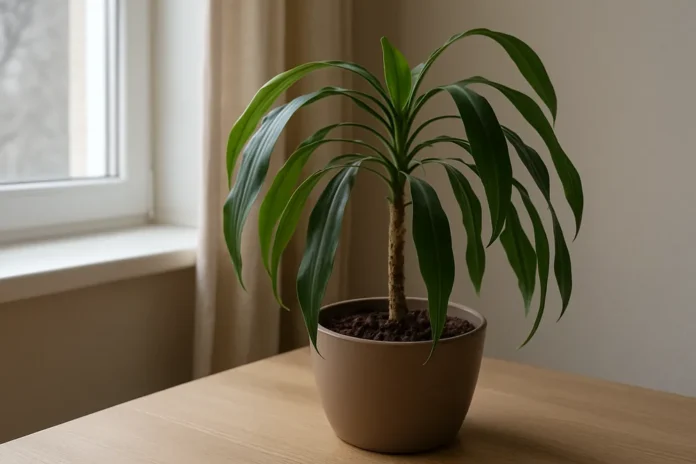
A dracaena usually droops because it is stressed by too much water, too little water, sudden temperature swings, or low light. Root problems are especially common when the potting mix stays wet too long.
A dracaena that suddenly looks limp can be unsettling, especially because these plants are usually sturdy and forgiving. When leaves lose their normal arch and start hanging, the plant is telling you something is off with water, roots, light, or temperature.
In my experience, drooping leaves on dracaena are often less mysterious than they first appear. The key is to look at the whole pattern, not just the fact that the plant is sagging. A thirsty plant droops differently from one with soggy roots, and cold damage has its own look too.
The good news is that dracaenas often bounce back well once the real problem is corrected. If you catch the issue before the stem softens or the roots rot badly, recovery is usually very possible.
What Drooping Usually Means on a Dracaena
Drooping is a general stress signal, not a single diagnosis. Dracaena leaves normally have a gentle arch, but they should still feel firm and hold themselves with some structure. When the whole plant looks tired, floppy, or collapsed, it is usually struggling to move water properly through the roots and stems.
Most cases come down to one of four issues: overwatering, underwatering, environmental shock, or root restriction. Pests and transplant stress can also play a role, but they are less common than basic care problems. The fastest way to narrow it down is to notice whether the soil is wet or dry, whether the leaves are yellowing or crisping, and whether the drooping happened gradually or all at once.
- Drooping with yellow leaves often points to excess moisture or root trouble.
- Drooping with dry brown tips or curling can point to underwatering or very dry air.
- Sudden drooping after moving the plant often suggests temperature shock, repotting stress, or a sharp change in light.
- A crowded plant that dries too fast may be root-bound and unable to stay evenly hydrated.
When I diagnose dracaena problems, I look at the newest leaves and the oldest leaves separately. If the whole plant is drooping evenly, I usually suspect roots or watering first. If only a few older leaves are sagging while new growth looks fine, the problem is often milder.
Overwatering Is the Most Common Cause
If I had to bet on one cause of a drooping dracaena indoors, it would be overwatering. These plants like to dry a bit between waterings. When the potting mix stays wet too long, oxygen drops around the roots and they stop functioning well. The leaves then droop even though the soil is technically moist.
This is what confuses many gardeners. A plant with wet soil can still look limp because damaged roots cannot absorb water correctly. Once rot begins, the plant may also develop yellowing leaves, a musty smell, or stems that feel less firm than usual.
Signs Your Dracaena Is Staying Too Wet
- Soil feels wet several days after watering
- Lower leaves are turning yellow before they dry out
- The pot feels unusually heavy
- There is a sour or swampy smell near the soil
- The stem base feels soft, dark, or weak
- The plant droops even though the soil is not dry
Overwatering is not only about frequency. It can also come from using a pot without drainage, a dense mix that stays soggy, or a container that is too large for the root ball. In all of those cases, the roots sit in moisture longer than they should.
What to Do if Overwatering Is the Issue
- Stop watering until the top few inches of soil have dried.
- Empty any saucer so the pot is not standing in runoff.
- Check that the container has a drainage hole.
- If the mix is compacted or smells bad, slide the plant out and inspect the roots.
- Trim mushy, black, or foul-smelling roots and repot in fresh, airy mix if rot is present.
After an overwatering episode, do not try to ‘balance it out’ by watering again on schedule. I wait for clear dryness in the root zone and then resume a slower, more careful rhythm based on the plant’s actual use of water.
Underwatering Can Make Leaves Sag Too
Although overwatering is common, dracaenas also droop when they get too dry. When the root ball loses too much moisture, the plant cannot keep enough pressure in the leaves, so they bend and hang. This kind of drooping often comes with dry soil, crispy brown tips, or leaves that feel thinner than normal.
Underwatering is especially likely if the plant sits near heat vents, gets bright afternoon sun, or has become root-bound. In those situations, the pot dries faster than expected and the plant begins to wilt between waterings.
Clues That Dryness Is the Real Problem
- Soil pulls away from the sides of the pot
- The pot feels very light
- Leaf tips and margins are brown and crisp
- Leaves may curl inward slightly
- The plant perks up within a day after a deep watering
If the soil has become extremely dry, water can run down the sides without soaking the root ball. In that case, the surface may look wet for a moment while the center remains dry. A slow, deep watering works much better than a quick splash.
How to Rehydrate Safely
Water thoroughly until excess drains out the bottom, then let the pot finish draining completely. If the soil has turned hard and hydrophobic, bottom watering for 20 to 30 minutes or watering in stages can help the mix absorb moisture again. After that, do not swing to the other extreme and keep the plant constantly wet.
Root Problems Can Hide Behind Both Wet and Dry Symptoms
Roots are really the center of the story with a drooping dracaena. If the roots are rotting, cramped, damaged, or poorly established after repotting, the leaves often droop because the plant cannot regulate water properly. This is why a dracaena may look thirsty even when it has been watered.
A root-bound plant can also droop, but for the opposite reason. When thick roots circle the pot and leave little soil behind, the mix dries very quickly and the plant struggles to stay evenly hydrated. In that case, you may notice frequent wilting even though you water regularly.
When to Inspect the Roots
- Drooping continues after you correct watering
- The plant dries out much faster than it used to
- Water sits in the pot for a long time with little improvement
- Roots are visible on the soil surface or through drainage holes
- The plant feels loose in the pot or the stem base seems unstable
Healthy dracaena roots are usually firm and pale. Rotten roots are brown or black, mushy, and may slip apart when touched. Root-bound plants may have healthy roots, but they are tightly packed and circling with very little room left.
If root rot is present, remove the damaged roots and repot into a container only slightly larger than the remaining root mass. If the plant is badly root-bound, loosen the outer roots gently and move it into a pot one size up with fresh mix. Avoid jumping to a much larger pot, because that can create new overwatering problems.
Light, Temperature, and Drafts Can Trigger Drooping
Dracaenas are tolerant houseplants, but they do react when conditions change sharply. A plant kept in a dark corner may become weak and floppy over time. A plant exposed to a cold draft, hot window glass, or air conditioning vent may droop more suddenly.
Low light does not always cause dramatic wilting right away, but it can reduce the plant's ability to use water normally. That often leads to a messy cycle where the soil stays wet too long, roots struggle, and drooping follows. Temperature stress is more abrupt. After a chilly night near a window or a blast from a heater, the leaves may sag and lose firmness within a day or two.
Environmental Red Flags
- Plant sits in very dim light for most of the day
- Leaves touch cold glass in winter
- The pot is near a drafty door, heater, or air vent
- The plant was recently moved from low light to direct sun
- Drooping started right after a room temperature change
Most dracaenas do best in bright, indirect light with stable indoor temperatures. They do not need harsh direct sun, but they usually perform better with moderate brightness than in a truly dark spot.
I often see dracaenas decline slowly in low light while the owner focuses on watering. If the plant is not getting enough light, the soil stays wet longer and every watering mistake becomes bigger. Improving light can solve half the problem before you even change anything else.
Recent Repotting or Relocation Can Cause Temporary Droop
If your dracaena drooped right after repotting, moving, or coming home from the store, stress may be the main cause. Even a healthy plant can sag for a short time while it adjusts to new humidity, temperature, light levels, and root disturbance.
Repotting shock is more likely when a lot of roots were broken, the plant was moved into a much larger pot, or the new mix holds water very differently from the old one. Relocation stress is common when a plant goes from a greenhouse or bright store display to a dim room at home.
How Long Adjustment Droop Should Last
Mild drooping from adjustment often improves within one to three weeks if the roots remain healthy. The plant should stabilize rather than keep declining. If the leaves continue yellowing, the stems soften, or the soil stays wet for too long, there is likely a second issue involved beyond simple shock.
During this period, keep conditions steady. Do not fertilize, prune heavily, or make repeated location changes. A calm recovery period gives the plant the best chance to reestablish itself.
Less Common Causes to Rule Out
If watering and environment do not explain the problem, check for a few less common causes. Dracaenas can droop from pest pressure, mineral-heavy tap water over time, or physical stem injury. These usually come with extra clues beyond simple limp leaves.
Pests
Spider mites, mealybugs, and scale can weaken a dracaena enough to make growth look tired or droopy. Look for stippling, sticky residue, fine webbing, cottony clusters, or small bumps along stems and leaf undersides.
Water Quality
Dracaenas can be sensitive to fluoride and salt buildup, especially in areas with hard tap water. This more often causes brown tips and margins than full drooping, but chronic root stress from buildup can contribute to poor overall posture. Flushing the pot occasionally or using filtered water can help sensitive plants.
Stem Damage
If a cane or stem has been bent, softened by rot, or physically damaged, the top growth above that point may droop while the rest of the plant looks normal. In that case, inspect the stem closely for wrinkles, mushiness, cracks, or darkened areas.
How to Tell Which Cause You Are Dealing With
The best diagnosis comes from combining soil moisture, leaf appearance, and timing. One clue alone can mislead you, but several clues together usually point clearly in one direction.
- Wet soil plus yellowing plus limp leaves usually means overwatering or root rot.
- Bone-dry soil plus crispy edges plus drooping usually means underwatering.
- Sudden drooping after a cold night, vent exposure, or move often means environmental shock.
- Frequent drooping soon after watering can suggest root rot.
- Frequent drooping before watering is due can suggest a root-bound plant or a very fast-drying location.
If you are unsure, resist the urge to keep adding water as a rescue reflex. That is the mistake I see most often. A drooping plant is not always a thirsty plant, and extra water is exactly what pushes many dracaenas from stress into real root loss.
How to Help a Drooping Dracaena Recover
Once you identify the likely cause, recovery is usually about stability and patience. Dracaenas do not always snap back overnight, especially after root stress. The goal is to support healthy new growth and stop further decline.
Best Recovery Steps
- Correct the watering pattern based on actual soil moisture, not the calendar.
- Place the plant in bright, indirect light.
- Keep it away from cold drafts, heater blasts, and sudden temperature swings.
- Repot only if the roots or old mix truly need attention.
- Hold fertilizer until the plant starts growing normally again.
- Remove only leaves that are fully yellow, dead, or badly damaged.
Watch new growth more than old damaged leaves. Older leaves may stay bent or marked even after the plant improves. What matters most is whether the crown firms up, fresh leaves emerge normally, and the plant stops worsening.
Expect recovery to take anywhere from several days for a mildly thirsty plant to several weeks for one that needed root work. Severe root rot can take much longer, and sometimes propagation from a healthy cane top is the best backup plan.
How to Prevent Drooping in the Future
Prevention is mostly about consistent conditions. Dracaenas like moderation. They do best when they are allowed to dry somewhat between waterings, kept in decent light, and protected from extremes.
- Use a pot with drainage every time.
- Choose a loose indoor potting mix that does not stay soggy.
- Water only when the top part of the soil has dried.
- Give the plant bright, indirect light instead of a very dark corner.
- Rotate the pot occasionally for even growth.
- Check for root crowding every year or two.
- Keep the plant away from vents, radiators, and freezing windows.
A simple habit that helps a lot is lifting the pot before and after watering. Over time, you learn the difference between a plant that is truly drying out and one that is still carrying plenty of moisture below the surface.
FAQ
Will a Drooping Dracaena Stand Back Up?
Yes, many do once the cause is corrected. A mildly thirsty plant may perk up quickly, while one with root damage may need several weeks before it looks normal again.
How Often Should I Water a Drooping Dracaena?
Do not water by schedule alone. Water when the upper part of the potting mix has dried, because drooping can come from both too little and too much water.
Can Low Light Make Dracaena Leaves Droop?
Yes, especially over time. Low light weakens growth and slows water use, which can lead to soft, sagging foliage and increase the risk of overwatering.
Should I Cut Off Drooping Leaves?
Only remove leaves that are fully yellow, brown, or badly damaged. Slightly drooping green leaves may still recover if the plant's main problem is fixed.
Does Repotting Cause Dracaena Droop?
It can. Root disturbance, a major pot size increase, or a very different soil mix can all cause temporary drooping after repotting.
Can a Dracaena Droop From Cold Air?
Yes. Cold drafts, air conditioning, or contact with chilly window glass can stress the plant and cause leaves to sag suddenly.
What Does Root Rot Look Like in Dracaena?
Root rot usually shows up as drooping with wet soil, yellowing leaves, and roots that are dark, mushy, or foul-smelling when you inspect them.
Need the right fix fast? Read our guide to the best indoor plant soils and watering tools so you can correct dracaena stress before root damage gets worse.
