

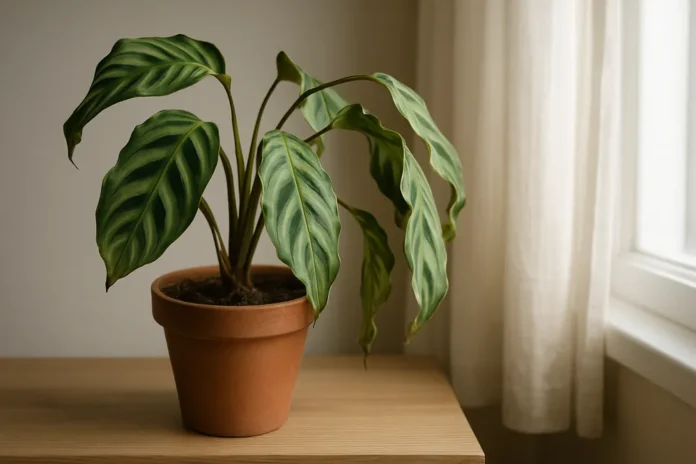
A drooping calathea is usually reacting to watering stress, dry air, temperature shock, or root problems. Sometimes it is also just showing its normal daily leaf movement rather than a true health issue.
A calathea drooping can look dramatic fast. One day the leaves are standing proud, and the next they seem limp, folded, or slumped over the edge of the pot. The good news is that drooping is often an early warning sign rather than a death sentence.
In my experience, calatheas usually droop because something in their environment shifted before the plant had time to adjust. Calathea leaves respond quickly to dry soil, soggy roots, dry indoor air, cold drafts, and even the stress of a recent repot. The trick is figuring out whether you are seeing normal daily movement or a real problem that needs correcting.
Below, I will walk through the most common causes, what each one tends to look like, and how I would narrow it down at home without guessing.
Normal Movement or Real Drooping
Calatheas are sometimes called prayer plants because their leaves move with the light cycle. Many varieties raise and lower their leaves over the course of a day. That means a plant can look more relaxed in the afternoon and more upright in the evening without anything being wrong.
True drooping usually looks different. The leaves and stems lose tension, the whole plant appears tired, and it does not recover overnight. You may also notice curling edges, crispy tips, yellowing, mushy stems, or soil that is either bone dry or constantly wet.
- Likely normal movement: leaves change position during the day but still look firm and healthy
- Likely stress drooping: leaves stay limp for more than a day and the plant looks weak overall
- Likely watering trouble: drooping comes with dry soil, yellow leaves, or a sour smell from the pot
- Likely humidity stress: drooping is paired with browning edges or leaves that feel papery
When I am unsure, I look at the leaf stems rather than just the leaf blades. A calathea doing its normal daily movement still has tension in the stems, while a stressed plant looks slack from the base upward.
Underwatering Is One of the Most Common Causes
If your calathea drooped suddenly, underwatering is one of the first things to consider. These plants prefer evenly moist soil, not repeated cycles of becoming dry and then getting drenched. Once the root ball dries too far, the plant loses turgor pressure and the leaves slump.
This happens a lot in homes during winter heating season or when a small nursery pot dries out faster than expected. It can also happen if peat-heavy potting mix has become so dry that water runs down the sides instead of soaking in.
Signs Your Calathea Is Too Dry
- The pot feels very light when lifted
- The top 1 to 2 inches of soil are dry and the root ball feels dry deeper down too
- Leaf edges curl inward or feel thin
- Brown tips or crisp margins appear along with drooping
- The plant perks up noticeably within several hours after a thorough watering
If this sounds like your plant, water thoroughly until excess drains from the bottom, then empty the saucer. If the soil has become stubbornly dry, bottom watering for 20 to 30 minutes can help rehydrate the root ball more evenly.
I do not judge calathea watering by the surface alone. I push a finger deeper or use a wooden skewer because the top can look dry while the lower root zone is still moist, or the reverse can happen in compacted mixes.
Overwatering and Root Stress Can Look Almost the Same
One of the frustrating things about calatheas is that overwatering can also cause drooping. Roots need oxygen as much as water. If the potting mix stays saturated too long, roots begin to suffocate and decline, and the leaves wilt even though the soil is wet.
This often happens when a decorative cachepot traps water, the pot has poor drainage, or the mix is too dense. It also shows up after winter when the plant is using water more slowly but watering habits did not change.
Clues the Roots Are Staying Too Wet
- The soil feels wet for many days in a row
- Lower leaves start yellowing before they dry out
- The pot smells sour, swampy, or stale
- Stems near the base feel soft instead of crisp
- New growth stalls while older leaves droop
If the plant has mild overwatering stress, let the excess moisture drain away and wait until the upper part of the mix is slightly dry before watering again. If the roots may be rotting, unpot the plant and inspect them. Healthy roots are firm and pale. Rotten roots are dark, mushy, or hollow.
Trim away damaged roots with clean scissors and repot into a fresh, airy mix in a pot with drainage holes. After that, keep the mix lightly moist but not soggy while the plant recovers.
Low Humidity Makes Calatheas Unhappy Fast
Calatheas come from humid environments, so dry indoor air is a frequent reason for drooping, curling, and crisp edges. A plant may have enough water at the roots but still lose moisture from the leaves faster than it can replace it, especially near heating vents or air conditioning.
Low humidity stress usually builds gradually rather than overnight. The leaves may droop softly, margins may brown, and the plant can look tired even when your watering is fairly consistent.
Humidity Problems Are More Likely When
- Indoor humidity regularly falls below about 50 percent
- The plant sits near a heater, radiator, fireplace, or strong vent
- You see brown tips on several leaves at once
- The soil moisture seems reasonable but the foliage still looks stressed
A room humidifier helps much more than occasional misting. Grouping plants together can also create a slightly more humid pocket around the foliage. I have had the best results by moving calatheas to bathrooms with bright indirect light or to a room where a humidifier runs steadily.
Temperature Shock and Drafts Can Trigger a Sudden Slump
Calatheas prefer stable warmth. A cold window at night, an air conditioner blowing directly across the leaves, or a blast of hot dry air can all cause drooping. These plants are sensitive enough that one rough night near a drafty pane can change how they look the next morning.
Aim to keep your calathea in temperatures roughly between 65 and 80 degrees Fahrenheit. More important than the exact number is avoiding sharp swings and airflow extremes.
- Cold stress often comes with drooping, curling, and darkened patches
- Heat stress often causes drooping plus dry edges and faster soil drying
- Draft stress is more likely if only the exposed side of the plant looks worse
I have seen healthy calatheas collapse for a day after being brought home in cold weather. If a recent move or delivery happened, I factor that in before I assume a watering problem.
Light Problems Can Weaken the Plant Over Time
Calatheas want bright indirect light, not harsh direct sun and not deep shade. Too much direct sun can dehydrate and scorch the leaves, which leads to drooping along with faded color or crispy patches. Too little light usually causes slower growth and a generally weak, stretched appearance, which can make the foliage look less upright.
If your calathea sits in a sunny west or south window, filter that light with a sheer curtain or move the plant back a few feet. If it is tucked into a dim corner, try a brighter spot where it gets plenty of ambient light without direct midday sun.
How Light Affects Drooping
- Too much sun: drooping, washed-out color, scorch marks, curling
- Too little light: weak growth, less upright posture, slow recovery after watering
- Balanced light: leaves hold better shape and new growth opens more evenly
Poor Water Quality and Salt Buildup Can Stress the Foliage
Calatheas are famous for reacting to tap water in some homes. Fluoride, chlorine, and dissolved salts can build up in the soil and irritate the roots, which contributes to drooping, browning tips, and overall decline. This issue tends to creep up slowly rather than causing an instant collapse.
If your plant has been watered from the tap for a long time and has persistent brown edges despite decent humidity, water quality may be part of the problem. Distilled water, filtered water, or rainwater is often gentler on calatheas.
Flushing the soil occasionally can help remove excess mineral buildup. To do that, run a generous amount of water through the pot and let it drain completely. Just make sure the potting mix is airy enough that this does not leave the roots sitting in soggy soil for days.
Repotting Stress, Crowded Roots, and Soil Issues
A recently repotted calathea may droop while it adjusts, especially if roots were disturbed or the new mix dries differently from the old one. On the other hand, a plant that has been rootbound for too long can also droop because water runs through too quickly and the roots do not have enough room to function well.
Soil structure matters too. A mix that is too compact stays wet too long, while a mix that is too coarse may dry out before the plant can drink enough. Calatheas usually do best in a light, moisture-retentive mix that still drains well.
Signs Repotting or Root Crowding May Be Involved
- Drooping started soon after repotting or dividing the plant
- Roots circle tightly around the root ball
- Water rushes straight through the pot and the plant dries out fast
- The soil shrank away from the pot edges or became dense and airless
After repotting, keep conditions stable and avoid fertilizing right away. If the plant is rootbound, move up just one pot size rather than placing it in a much larger container that will stay wet too long.
Pests and Disease Are Less Common but Still Possible
Spider mites, mealybugs, fungus gnats, and occasional fungal issues can all contribute to drooping. Spider mites are especially common in dry indoor conditions and may cause stippling, dull leaves, and a tired-looking plant before you notice webbing.
Root disease is a bigger concern when the pot stays too wet. If the plant keeps drooping even though your watering seems careful, inspect both the foliage and roots. Look under leaves, along stems, and at the crown where the stems meet the soil.
- Spider mites: fine stippling, leaf dullness, possible webbing
- Mealybugs: white cottony clusters in leaf joints
- Fungus gnats: tiny flying insects plus persistently wet soil
- Root disease: foul-smelling mix and mushy roots
Treat pests promptly with appropriate methods such as insecticidal soap, neem-based products, or repeated rinsing depending on the pest. If disease has taken hold in the roots, replacing the mix and removing rotted tissue is usually necessary.
How to Diagnose a Drooping Calathea Step by Step
Because several problems look similar, it helps to diagnose methodically instead of changing everything at once. I try to match the drooping with what the soil, roots, air, and location are telling me.
- Check whether the movement is temporary by observing the plant at different times of day.
- Feel the potting mix deeper down, not just the surface, to judge whether the root zone is dry or wet.
- Lift the pot and note its weight compared with how it feels after a full watering.
- Look for secondary symptoms such as crisp tips, yellow leaves, mushy stems, or scorched patches.
- Think about recent changes like repotting, moving the plant, weather swings, or a missed watering.
- Inspect for pests under leaves and around the crown.
- If the soil has stayed wet too long or smells bad, inspect the roots.
Change one major variable at a time when possible. If you move the plant, repot it, start a humidifier, and alter watering all in the same week, it becomes much harder to tell which fix actually helped.
What to Do Right Now to Help It Recover
Once you have a likely cause, focus on stabilizing the plant rather than forcing fast growth. Calatheas recover best when their environment becomes predictable.
- If the soil is too dry, rehydrate thoroughly and resume even moisture.
- If the soil is too wet, improve drainage and let the upper layer dry slightly before watering again.
- Move the plant away from direct sun, vents, radiators, and cold windows.
- Raise humidity with a humidifier or a better room placement.
- Use filtered, distilled, or rainwater if tap water seems to be causing buildup.
- Trim only fully dead leaves. Leave partly damaged leaves in place while the plant recovers.
- Hold fertilizer until you see healthy new growth again.
Do not expect damaged leaves to look perfect again. Judge success by whether the plant stops declining and starts producing stronger new leaves.
How to Prevent Future Drooping
Preventing drooping comes down to consistency. Calatheas are not impossible, but they do respond badly to extremes. Once you learn the rhythm of your home, they become much easier to manage.
- Water when the upper part of the mix is just starting to dry, not when the pot is fully dry
- Always use a pot with drainage holes
- Keep humidity moderate to high whenever possible
- Provide bright indirect light instead of harsh direct sun
- Protect the plant from drafts and temperature swings
- Refresh old compacted soil before it starts causing root stress
- Monitor for pests regularly, especially in dry rooms
If you are growing more than one calathea, you may notice that some are fussier than others. That is normal. I have found that the basic care principles are the same, but each plant has its own pace for drying out and recovering.
FAQ
Should I Water My Calathea Immediately if It Is Drooping?
Not automatically. Check the soil first. A dry root ball needs water, but a wet pot with drooping leaves may point to overwatering or root trouble instead.
Can a Calathea Recover After Drooping Badly?
Yes, many do recover if the cause is corrected early. The existing damaged leaves may not fully improve, but healthy new growth is a strong sign the plant is bouncing back.
Do Calatheas Droop at Night Naturally?
They can change leaf position through the day and night as part of normal movement. Natural movement still looks firm, while stress drooping looks limp and persistent.
How Often Should I Water a Calathea?
There is no fixed schedule that works in every home. Water when the upper portion of the potting mix begins to dry, while the lower root zone still has some moisture.
Is Misting Enough to Stop Calathea Drooping?
Usually not. Misting gives only brief surface moisture and does not raise room humidity for long. A humidifier or better placement is usually more effective.
Why Is My Calathea Drooping After Repotting?
Repotting can disturb the roots and change how moisture moves through the mix. Mild drooping is common for a short period if the plant was recently handled or divided.
Can Tap Water Make a Calathea Droop?
It can contribute, especially over time. Mineral salts, chlorine, or fluoride may irritate sensitive roots and lead to brown tips, stress, and weaker leaf posture.
Need the right setup for fussy houseplants? Explore our guide to the best humidifiers, watering tools, and indoor plant care products to keep your calathea upright and thriving.
