

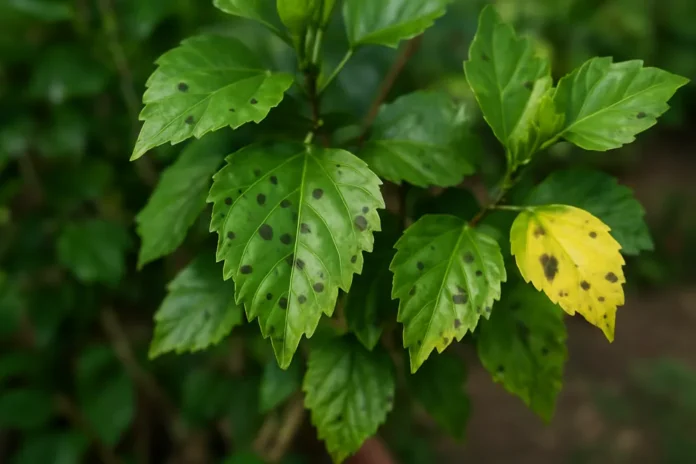
Black spots on hibiscus leaves are most often caused by leaf spot diseases, pest residue like sooty mold, or stress that weakens the plant. Wet foliage, poor airflow, and insect activity are the most common triggers.
If your hibiscus leaves have black spots, the plant is usually reacting to one of a few common problems rather than something mysterious. In my garden, the biggest culprits are leaf spot diseases, honeydew-producing pests that lead to sooty mold, and growing conditions that keep leaves damp for too long.
The good news is that black spotting on hibiscus is often manageable if you catch it early. The key is figuring out whether you are looking at damage inside the leaf tissue, which points more toward disease, or a dark coating sitting on the surface, which often suggests pest activity and sooty mold.
Once you know which pattern you are dealing with, the fix gets much simpler. Healthy new growth is what matters most, because badly spotted leaves rarely return to normal even after the problem is under control.
What Black Spots on Hibiscus Usually Mean
Most black spotting on hibiscus falls into three broad categories: fungal or bacterial leaf spot, sooty mold growing on sticky insect residue, or environmental stress that sets the plant up for secondary problems. Hibiscus has broad, soft leaves, so it shows spotting quickly when moisture lingers or pests get ahead of you.
- Small black or dark brown spots with yellow halos often suggest leaf spot disease.
- A black, dusty, or soot-like coating on the leaf surface often points to sooty mold.
- Irregular dark patches after weather swings, splash, or physical injury can start with stress or damage and then worsen.
On hibiscus, several causes can look similar at first glance. That is why the pattern matters more than the color alone. Look at whether the spots are circular or irregular, whether they appear on older leaves first, and whether the leaf surface feels clean or grimy.
When I diagnose hibiscus spotting, I do not start with the worst leaf. I compare a few leaves from the top, middle, and lower canopy. If the damage starts low and spreads upward, I suspect splash-borne disease. If the newest leaves are sticky, I start hunting for insects.
Leaf Spot Diseases Are the Most Common Cause
How Fungal and Bacterial Spots Look
Leaf spot diseases often begin as tiny water-soaked flecks or dark pinpoints. Over time, they expand into black or dark brown spots, sometimes with tan centers or yellow rings around them. If the infection worsens, leaves may yellow, curl, and drop early.
Fungal leaf spots are especially common when hibiscus leaves stay wet overnight, the plant is crowded, or rain splashes soil onto the lower foliage. Bacterial spots can look similar, but they may appear more angular, especially where veins limit the spread.
Why Hibiscus Is Prone to It
Hibiscus loves warmth and regular moisture, but it does not enjoy stale, damp air around the leaves. Dense growth, overhead watering, humid weather, and poor cleanup all give disease a head start. Outdoor hibiscus often develops spotting after rainy stretches, while indoor or patio plants can run into trouble if leaves are misted frequently or packed into a still corner.
- Overhead irrigation that wets foliage late in the day
- Tight spacing or heavy pruning neglect that reduces airflow
- Old infected leaves left on the plant or soil surface
- Repeated rain splash from bare soil or dirty containers
What to Do if Disease Is the Issue
Remove the worst affected leaves if the plant still has plenty of healthy foliage. Clean up fallen leaves around the base, water the soil rather than the leaves, and thin crowded stems enough to let the canopy dry more quickly. If spotting keeps spreading, a garden fungicide labeled for ornamental leaf spot diseases may help protect new growth, though it will not erase existing spots.
Do not judge success by the old damaged leaves. I watch the next flush of growth. If the new leaves emerge clean after a week or two of better watering and airflow, you are usually on the right track.
Sooty Mold Can Make Leaves Look Black
What Sooty Mold Is
Sooty mold is not usually the original problem. It is a dark fungus that grows on the sticky honeydew left behind by sap-sucking insects such as aphids, whiteflies, soft scale, and mealybugs. Instead of true spots inside the leaf, you may see a black film, dusty coating, or blotchy stain on the surface.
This coating can merge until whole leaves look gray-black or dirty. It may wipe off on your fingers or a damp cloth. The hibiscus leaf underneath may still be green at first, though heavy buildup can block light and weaken the plant over time.
How to Tell if Insects Are Involved
- Leaves feel sticky before they turn black
- You see ants traveling up and down stems
- Tiny white insects flutter when the plant is disturbed
- There are bumps, cottony clusters, or soft-bodied insects on stems and leaf undersides
If you find pests, the fix starts there. Wash the plant thoroughly, especially the undersides of leaves, then treat with insecticidal soap or horticultural oil if the label allows use on hibiscus. Repeat as directed. Once honeydew stops, the sooty mold gradually weathers away or can be gently rinsed off.
Water, Humidity, and Airflow Often Set the Stage
Even when a pathogen or pest is technically responsible, growing conditions usually explain why the problem took hold. Hibiscus wants consistent soil moisture, warm temperatures, and good sun, but the foliage should not stay wet for long periods.
Overwatering Versus Wet Leaves
Overwatering in the root zone does not always create black spots by itself, but soggy soil stresses the plant and makes it more susceptible to leaf issues. Wet leaves are a more direct problem. When foliage stays damp through cool nights or humid mornings, disease pressure rises fast.
Poor Airflow Matters More than Many Gardeners Think
A hibiscus tucked against a wall, surrounded by other plants, or allowed to grow into a thick thicket often dries slowly after watering or rain. That damp pocket is ideal for spotting diseases. A little selective thinning can make a surprising difference without ruining the plant's shape.
- Water early so any splashed leaves dry quickly
- Direct water to the soil instead of spraying the canopy
- Space containers and shrubs so air can move around them
- Avoid heavy mulch piled against stems where moisture lingers
I see more hibiscus leaf spotting from crowding than from lack of fertilizer. Gardeners often feed first because it feels productive, but opening the plant to light and air solves more black spot problems than extra nutrients ever will.
Other Possible Causes of Black Spotting
Sunscald and Weather Stress
Leaves that were suddenly exposed to harsher sun, hot reflected heat, or strong wind can develop scorched patches that later darken. These marks are usually more irregular than disease spots and often show up after a move from indoors to outdoors or from shade to full sun.
Cold Damage
Tropical hibiscus is sensitive to cold. After a chilly night, damaged tissue may turn dark, nearly black, and then become papery. The edges and exposed upper leaves are often hit first. This is more of a patchy injury pattern than a tidy set of round spots.
Chemical Injury
Sprays applied in hot weather, too-strong fertilizer, or accidental contact with herbicides can also create dark spotting or blotching. If the issue appears suddenly on many leaves at once, think back to anything recently sprayed nearby, including lawn weed killers drifting onto the plant.
Root Stress and General Decline
A severely rootbound potted hibiscus, a plant sitting in waterlogged soil, or one with root rot may show mixed symptoms that include spotting, yellowing, wilting, and leaf drop. In these cases, the black spots are part of a broader stress picture rather than the only clue.
How to Tell Which Cause You Are Dealing With
You can usually narrow this down in a few minutes by looking closely at where the black appears and what else is happening on the plant. You do not need a lab diagnosis to make smart first moves.
- Rub a dark area gently with a damp finger or cloth. If some black material comes off, think sooty mold.
- Check the undersides of leaves and the stems for aphids, whiteflies, scale, or mealybugs.
- Look for halos, tiny round lesions, or spots that appear embedded in the leaf tissue. That leans toward leaf spot disease.
- Notice whether the worst damage is on lower leaves after rain or overhead watering. That also supports disease.
- Think about recent stress such as cold nights, harsh sun, or spray drift if the damage appeared suddenly and broadly.
If more than one factor is present, that is normal. A stressed hibiscus can have insect pressure and leaf spot at the same time. In practice, gardeners often need to improve conditions and treat the immediate cause together.
How to Fix Black Spots on Hibiscus
Start with sanitation and environment before reaching for stronger products. Hibiscus responds best when you reduce stress, clean up the plant, and stop the spread.
- Prune off badly spotted leaves and any dead or crowded growth. Disinfect pruners if disease seems likely.
- Remove fallen leaves and debris from the soil surface.
- Water at the base, ideally in the morning.
- Inspect for pests and treat them if present.
- Increase airflow by spacing plants or thinning dense stems.
- Use a fungicide only if spotting continues to spread and the label includes hibiscus or ornamental leaf spot control.
If your hibiscus is in a pot, also make sure the container drains freely and the plant is not sitting in a saucer full of water. Repot if roots are packed tightly and the soil has broken down into a dense, soggy mix.
Avoid removing too many leaves at once unless the plant is heavily diseased. Hibiscus still needs enough foliage to keep growing. Focus on the worst leaves and on creating better conditions for the next round of growth.
When Black Spots Are Serious Enough to Worry About
A few spotted leaves are not usually an emergency. I get more concerned when the plant is losing leaves quickly, black spots are spreading to most of the canopy, or the hibiscus is also wilting, dropping buds, or showing stem dieback.
- Rapid defoliation or widespread yellowing
- Blackening that moves into stems or buds
- Persistent soggy soil and a sour smell from the root zone
- No clean new growth after improving watering, airflow, and pest control
Those signs suggest either a more aggressive disease issue or a root problem that needs attention. In a prized hibiscus, especially a large potted specimen, it can be worth taking a sample to a local extension office or garden center familiar with plant diagnostics.
How to Prevent Black Spots From Coming Back
Prevention is mostly about keeping foliage dry, catching pests early, and avoiding the kind of stress that weakens hibiscus. Once you have dealt with black spots once, the routine becomes easier.
- Water deeply but only when needed, and avoid soaking the leaves
- Prune lightly to maintain airflow through the center of the plant
- Inspect leaf undersides every week during warm weather
- Clean up fallen leaves before they build up around the base
- Keep potted hibiscus in bright light with room around the foliage
- Quarantine new plants before placing them near established hibiscus
I also like to keep mulch under hibiscus, but not touching the stems, because it reduces soil splash during rain. That one small change can help lower disease pressure on the lower leaves.
FAQ
Should I Cut Off All Hibiscus Leaves with Black Spots?
No. Remove the worst affected leaves, especially if they are heavily spotted or yellowing, but leave enough healthy foliage for the plant to keep growing. Stripping too much at once can add more stress.
Can Black Spots on Hibiscus Go Away on Their Own?
The existing spots usually do not disappear. What you want to see is clean new growth after you correct the cause. Old damaged leaves may stay marked until they naturally drop or you prune them.
Are Black Spots on Hibiscus Contagious to Nearby Plants?
Some leaf spot diseases can spread, especially in wet conditions or through splashing water. Sooty mold itself is less about contagion and more about insect honeydew, but the insects causing it can move to nearby plants.
Can I Spray Neem Oil on Hibiscus with Black Spots?
Neem may help if pests are involved, but it is not a cure for every black spot problem. Always follow the label, avoid spraying in hot direct sun, and do not assume all leaf spotting is insect-related.
Why Do the Lower Leaves Get Black Spots First?
Lower leaves are often hit first because they stay wetter longer and receive more splash from soil during watering or rain. That pattern is common with fungal and bacterial leaf spot diseases.
Is Black Spot on Hibiscus Caused by Too Much Fertilizer?
Too much fertilizer usually causes tip burn, margin scorch, or general stress rather than classic black spotting by itself. However, stressed plants can become more vulnerable to disease and pest issues afterward.
Can Indoor Hibiscus Get Black Spots Too?
Yes. Indoor hibiscus can develop black spots from poor airflow, overwatering, wet leaves, or pests like whiteflies and scale. Houseplants are especially prone to sooty mold when insect problems go unnoticed.
Need the right treatment fast? Read our guide to the best fungicides, insecticidal soaps, and care products for hibiscus so you can stop spotting and protect the next flush of blooms.
