

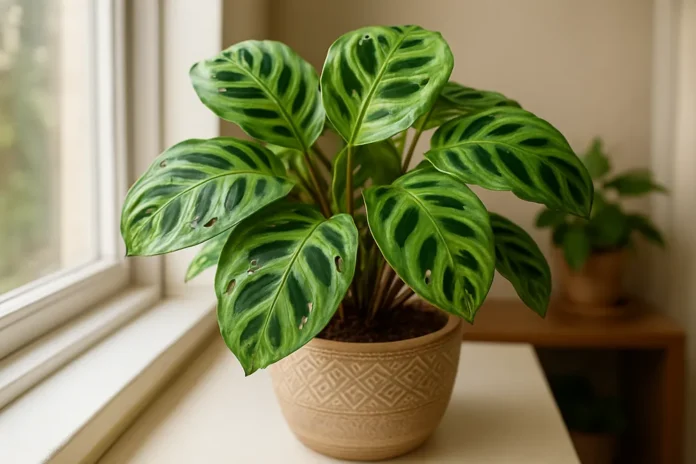
Calathea leaves usually get holes from pest feeding, torn foliage, or damage that happened while the leaf was still tightly rolled. Dry air, rough handling, and inconsistent care can make that damage show up more clearly.
Finding holes in calathea leaves can be frustrating, especially when the rest of the plant looks healthy and you have been doing your best to keep it happy. In my experience, this symptom often looks more alarming than it is, because a calathea can keep growing well even while a few older leaves show tears or missing spots.
The tricky part is that holes do not come from just one cause. Sometimes insects are chewing on the leaves. Sometimes the leaf was damaged while it was still rolled up and the hole only became obvious after it opened. And sometimes dry indoor air or simple handling damage leaves these thin, delicate plants looking ragged. The good news is that holes in calathea leaves usually leave clues if you know what to look for.
What Holes in Calathea Leaves Usually Mean
Unlike yellowing or overall drooping, holes are usually a sign of physical damage to the leaf tissue rather than a root problem. That damage can happen from chewing pests, from a leaf sticking and tearing as it unfurls, or from a bump, bend, or scrape after the leaf has already opened.
Calatheas have thin, tender foliage, so even minor stress can leave visible marks. A healthy new leaf that emerges with a neat hole in the middle often points to damage that happened earlier while the leaf was still curled. Ragged edges, speckling, or tiny expanding holes are more suspicious for pest feeding.
- Clean-edged tears or splits often suggest mechanical damage or a stuck unfurling leaf.
- Tiny scattered holes with silvery scarring can point to thrips or other sap-feeding pests.
- Larger irregular missing sections may come from chewing insects or accidental tearing.
- Holes that appear only on older leaves are often cosmetic and not a sign of an ongoing problem.
When I diagnose calathea leaf holes, I compare the newest two leaves first. If the newest growth is coming in clean, I usually treat older holes as past damage rather than a current crisis.
Pests Are One of the Most Common Causes
Thrips and Other Sap-feeding Insects
Thrips are one of the first things I think about when a calathea develops odd holes, streaks, or papery patches. These insects scrape and suck plant tissue, which can weaken the leaf enough that damaged spots dry out and break open later. On a newly unfurled leaf, that earlier damage can look like a tiny hole or thin dead patch.
Spider mites usually do not create true holes, but they can cause stippling, fading, and fragile leaves that tear more easily. Fungus gnats are annoying but they are not the cause of holes in mature leaves. Mealybugs and scale also tend to cause decline, sticky residue, or distortion more than clean holes.
Chewing Pests Indoors and Outdoors
If your calathea spends time outside in summer, chewing pests become much more likely. Caterpillars, earwigs, slugs, snails, and beetles can leave irregular bites in leaves, especially along the edges. Indoors, true chewing damage is less common, but it can still happen if something hitchhiked in on another plant.
- Look for black specks, silvery streaking, or distorted new growth if you suspect thrips.
- Check leaf undersides, leaf joints, and tightly rolled new leaves for hidden pests.
- If the plant was recently outdoors, inspect at night for slugs, snails, or earwigs.
- Quarantine the plant from your other houseplants until you know what you are dealing with.
I like to wipe both sides of the leaves and then recheck the plant 48 hours later under bright light. Fresh speckling, moving insects, or new scarring after cleaning is a strong sign that pests are active right now.
Damage During Unfurling Is Very Common on Calatheas
Calathea leaves emerge tightly rolled, which makes them vulnerable while they are developing. If the air is too dry, the plant is dehydrated, or the leaf sticks to itself as it opens, that delicate tissue can tear. Once the leaf fully opens, the tear may look like a hole in the center of the blade.
This is especially common in homes with forced-air heat, low winter humidity, or inconsistent watering. The plant may not be unhealthy overall. It may simply be growing in conditions that make unfurling harder than it should be.
Signs the Hole Happened Before the Leaf Opened
- The hole has smooth edges and sits neatly within the leaf.
- The same leaf also has a crease, split, or slightly crinkled texture.
- The damage appears on a fresh leaf soon after opening.
- You do not see active insects, frass, or expanding damage on nearby leaves.
When this is the cause, the hole itself will not heal, but future growth often improves once moisture and humidity are more consistent. That is why it helps to judge success by the condition of new leaves rather than trying to fix old ones.
Low Humidity and Watering Stress Can Make Holes More Likely
Calatheas are famous for reacting to dry indoor air. Low humidity alone may not punch a hole through a leaf, but it can make the tissue brittle, slow leaf unfurling, and turn small weak spots into visible tears. If the plant also goes a bit too dry between waterings, the effect is even stronger.
On the other hand, constantly soggy soil is not good either. Overwatering weakens roots, and weak roots cannot support smooth new growth. That can lead to misshapen leaves, soft tissue, and leaves that open with defects.
Humidity and Moisture Clues to Watch For
- Brown crispy edges plus holes often suggest dry air and moisture swings.
- Curled leaves with tears often point to the plant drying too much before watering.
- Soft stems, yellowing, and slow growth along with damaged leaves can point to root stress from excess water.
- Damage that worsens during winter often lines up with indoor heating and lower humidity.
For most homes, the best improvement comes from consistency rather than perfection. Even if you cannot maintain greenhouse humidity, keeping the plant away from hot vents, watering evenly, and avoiding long dry spells often leads to cleaner leaves.
Physical Damage Is Easy to Overlook
Sometimes the explanation is simple. Calathea leaves tear easily when brushed against furniture, bent while watering, rubbed during transport, or pinched when you rotate the pot. Pets and curious children can also leave holes or splits that look mysterious at first glance.
This kind of damage usually stays exactly where it started. It does not spread from leaf to leaf, and it does not come with sticky residue, speckling, webbing, or distorted new growth. If the plant otherwise looks good, an isolated torn leaf is usually just cosmetic.
Common Sources of Accidental Tearing
- Moving the plant through doorways or narrow shelves
- Leaves pressing against blinds, walls, or heater covers
- Handling the plant while the leaves are still soft and newly opened
- Pet damage, especially from cats that bat at moving foliage
How to Tell Which Cause Is Most Likely
The best diagnosis comes from looking at the pattern of damage, not just one hole. A single older leaf with a tear is usually not serious. Multiple new leaves opening with holes suggest a care or humidity issue. Holes plus scarring, specks, or distorted growth raise the odds of pests.
- Look at the newest leaves first. Clean new leaves mean the problem may already be over.
- Inspect both sides of damaged leaves in bright natural light.
- Check for silvery streaks, tiny black dots, webbing, or visible insects.
- Think back to recent changes like moving the plant, turning on heat, repotting, or taking it outdoors.
- Compare damaged leaves with healthy ones to see whether the pattern is isolated or spreading.
If every damaged leaf came from the same growth period, I usually suspect an environmental hiccup like dry air or missed watering. If the damage keeps appearing on leaf after leaf, especially with scarring, I shift my attention to pests fast.
What to Do Next Based on the Cause
If Pests Are Causing the Holes
Isolate the plant right away. Remove heavily damaged leaves if they are mostly cosmetic and make inspection harder. Wipe the foliage, rinse the plant if practical, and treat with an indoor-safe product such as insecticidal soap or neem-based treatment according to the label. Repeat applications matter because one treatment rarely catches every life stage.
If the Leaves Are Tearing While Unfurling
Focus on steadier moisture and higher humidity around the plant. Water when the top layer begins to dry rather than letting the pot go very dry. Keep the plant away from vents and drafts. A humidifier usually helps more than misting, since misting is brief and inconsistent.
If the Damage Is Mechanical
Reposition the plant where leaves are less likely to rub or snag. Give it enough space for new leaves to open freely. Avoid touching the rolled leaves unless absolutely necessary, because that is when the tissue is easiest to damage.
If Root Stress Is Part of the Problem
Check that the pot has drainage and the soil is airy rather than dense and swampy. Calatheas do best when the mix stays lightly moist but not waterlogged. If roots have been stressed for a while, recovery shows up in future growth first.
- Do not expect existing holes to close up. Leaves do not regenerate missing tissue.
- Watch the next two or three leaves for improvement.
- Change one major variable at a time so you can tell what helped.
- Remove badly damaged leaves only if they spoil the look of the plant or make pest inspection harder.
How to Prevent More Holes in the Future
Prevention is mostly about reducing stress while new leaves are forming. Calatheas reward stable routines more than dramatic interventions. Once you get the rhythm right, the foliage usually starts coming in cleaner.
- Keep humidity moderate to high, especially during heating season.
- Water consistently so the soil does not swing from soggy to bone dry.
- Inspect new plants before bringing them near your calathea collection.
- Wipe leaves regularly so pests are easier to spot early.
- Give the plant enough space so leaves can unfurl without rubbing nearby surfaces.
- Avoid sudden placement changes that expose it to drafts, harsh sun, or hot dry air.
I also recommend a little patience here. Calatheas often show past mistakes for weeks because damaged leaves stay damaged. What matters is whether the next round of foliage looks better than the last one.
FAQ
Will Holes in Calathea Leaves Heal?
No. A damaged calathea leaf will not fill back in once tissue is missing. The goal is to stop new damage and watch for healthier upcoming leaves.
Should I Cut Off Leaves with Holes?
Only if they are badly damaged, yellowing, or making pest inspection harder. A leaf with a few holes can still photosynthesize and help the plant.
Can Low Humidity Alone Cause Holes in Calathea Leaves?
Low humidity usually causes crisp edges, tearing, and trouble unfurling rather than direct puncture holes. It often contributes to holes by making leaves stick, split, or become fragile.
Do Spider Mites Make Holes in Calathea Leaves?
Usually not true holes. Spider mites more often cause stippling, fading, and a dusty or webbed look. Severely weakened leaves may tear more easily afterward.
Why Do New Calathea Leaves Open with Holes Already in Them?
That usually means the damage happened while the leaf was still rolled up. Dry air, dehydration, pests, or physical pressure can injure the developing leaf before it opens.
Can Tap Water Cause Holes in Calathea Leaves?
Tap water does not usually cause holes directly. However, mineral buildup or chemical sensitivity can stress calatheas and contribute to poor leaf quality, browning, and rougher unfurling.
Are Holes in One Leaf a Sign My Whole Calathea Is in Trouble?
Not necessarily. One isolated damaged leaf is often just old physical damage or a leaf that tore while opening. Repeated damage on new leaves is more concerning.
Want cleaner, healthier foliage fast? Read our guide to the best calathea care tools, humidifiers, and pest treatments so you can stop leaf damage before the next flush of growth.
