

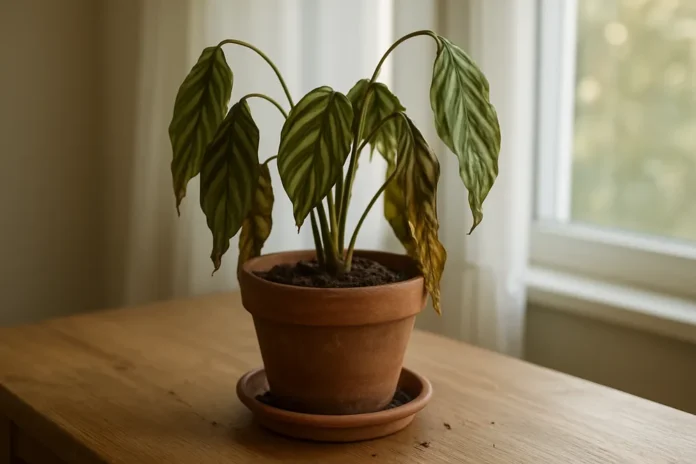
A calathea usually wilts because its roots are stressed by dry soil, soggy soil, low humidity, temperature swings, or transplant shock. Wilting can also happen when root rot, compacted soil, or pests keep the plant from moving water properly.
A calathea wilting can look dramatic fast. One day the leaves are upright and patterned, and the next they are drooping, curling, or collapsing over the rim of the pot. The good news is that wilting is usually a stress signal, not an automatic death sentence.
In my experience, calatheas wilt when something interrupts the plant's ability to move moisture through its leaves. That can happen because the soil got too dry, the roots stayed too wet, the air turned dry, or the plant was exposed to a cold draft or sudden heat. Sometimes the problem is simple. Sometimes several small stresses stack up at once.
The key is to look at the whole plant, not just the droop. Check the soil, pot, roots, humidity, and the pattern on the leaves. A wilting calathea often gives extra clues that point you toward the real cause.
What Wilting Usually Means in Calatheas
Wilting means the plant is losing internal water pressure in its leaves and stems. Calatheas are especially quick to show that loss because their foliage is thin, flexible, and sensitive to environmental shifts. Even a short period of stress can make the leaves droop noticeably.
That does not always mean the plant needs more water. One of the most common mistakes I see is watering a wilted calathea without checking whether the soil is already soggy. Roots that are sitting in overly wet mix cannot pull in oxygen well, and once roots struggle, the leaves wilt just as they do when the soil is bone dry.
- Leaves hanging limp but soil feels very dry often points to underwatering.
- Leaves drooping while the pot feels heavy and wet often suggests overwatering or root stress.
- Wilting with crispy edges often comes with low humidity, dry soil, or mineral-heavy water.
- Wilting with yellowing lower leaves often leans toward root problems or chronic overwatering.
- Sudden whole-plant collapse after a move may be temperature shock or transplant stress.
When I diagnose a calathea, I look at the newest leaf first. If the newest growth is limp but still green, I usually suspect a current watering or humidity problem. If new growth is weak and older leaves are yellowing too, I start thinking about root trouble.
Dry Soil and Underwatering
How Dry Roots Make Leaves Collapse
Calatheas like evenly moist soil, not repeated drought. If the potting mix dries too far down, the roots cannot keep up with moisture loss through the leaves. The result is a limp, droopy plant that may also have curling leaf margins or papery brown edges.
This often happens in small nursery pots, in homes with air conditioning or winter heat, or when the plant is rootbound and the mix dries faster than expected. Peat-heavy potting soil can also become hydrophobic when it gets too dry, which means water starts running down the sides of the pot instead of soaking into the root ball.
Signs the Plant Is Too Dry
- Top 1 to 2 inches of soil feel dry and the pot feels unusually light
- Leaves droop but perk up within several hours to a day after watering
- Leaf edges are crisp or curled inward
- Soil pulls away from the sides of the pot
- The plant wilts more often than your watering schedule suggests
If this sounds like your plant, water thoroughly until excess drains out, then let the top inch or so dry before watering again. If the root ball has become extremely dry, bottom watering for 20 to 30 minutes can help rehydrate the mix more evenly.
Overwatering and Root Rot
Why Too Much Water Causes Wilted Leaves
A surprising number of wilted calatheas are actually too wet, not too dry. Roots need oxygen as much as they need moisture. When soil stays saturated, oxygen levels fall, roots weaken, and fungal rot can begin. Once damaged roots stop functioning, leaves wilt because water is no longer moving efficiently through the plant.
This is especially common in decorative cachepots without drainage, oversized pots, dense potting mixes, and low-light rooms where evaporation is slow. A calathea that is watered on schedule instead of by feel can also end up constantly wet.
Common Clues of Overwatering
- Soil is wet several days after watering
- Pot feels heavy all the time
- Leaves wilt and also turn yellow
- Stems near the base seem soft
- The pot or soil smells sour, swampy, or stale
- Brown spots appear along with general drooping
If a wilted calathea is in wet soil, do not keep adding water because the leaves look thirsty. I let the root zone guide me, not the leaf posture. Wet roots and limp leaves together are a strong warning sign.
If you suspect root rot, slide the plant out of the pot and inspect the roots. Healthy roots are firm and light-colored. Rotten roots are often brown, mushy, stringy, or foul-smelling. Trim away dead roots with clean scissors and repot in fresh, airy mix with good drainage.
Low Humidity and Dry Indoor Air
Calatheas come from humid environments, so dry household air can cause them to droop, curl, and crisp around the edges even when the soil moisture is acceptable. Wilting from low humidity is often worst in winter, near heating vents, or in sunny rooms with forced air.
Humidity alone does not usually cause a complete collapse unless conditions are very dry, but it can push a mildly stressed plant over the edge. A calathea that is slightly underwatered in low humidity will look worse much faster than the same plant in a moister room.
- Leaf edges brown before the whole leaf yellows
- New leaves unfurl with damage or stay slightly curled
- The plant sits near heat, AC, or a drafty window
- Other humidity-loving plants nearby show dry tips too
Aim for moderate to high humidity if possible, especially above 50 percent. A humidifier is far more effective than occasional misting. Grouping plants together can help a little, but it usually is not enough by itself in very dry homes.
Temperature Stress, Drafts, and Sudden Changes
Calatheas dislike temperature swings. Cold windows, hot afternoon sun, HVAC vents, and frequent moves can all trigger wilting. If the plant was recently bought, shipped, repotted, or moved from one room to another, the drooping may be partly a reaction to sudden change.
A cold draft can damage leaf tissue and slow root activity, while excessive heat increases moisture loss and dries the pot faster. In both cases, the leaves respond by drooping or curling. This is one reason a plant can wilt even when your watering routine has not changed.
- Wilting started soon after a move or delivery
- Plant sits beside an exterior door, window, heater, or air vent
- Leaves feel cool or overly warm to the touch compared with room temperature
- Drooping appears suddenly rather than gradually
Keep calatheas in steady indoor temperatures, ideally away from direct blasts of hot or cold air. Bright, indirect light and a stable room tend to give the most consistent results.
Poor Soil, Rootbound Plants, and Drainage Issues
Sometimes the issue is not how often you water but what the roots are growing in. Old compacted potting mix can hold too much water at the bottom while becoming hard to rewet at the top. A severely rootbound calathea can also wilt because roots fill the pot so densely that water runs through too quickly and does not soak in properly.
I often see this in store-bought plants that have been in the same nursery pot for a long time. The top may look fine, but underneath there is a dense mat of roots with very little fresh mix left.
Signs the Potting Setup Is the Real Problem
- Water rushes through immediately without wetting the root ball
- The plant wilts again quickly after watering
- Roots circle the pot heavily or poke from drainage holes
- Soil looks dense, broken down, or crusted
- The pot has poor drainage or no drainage holes at all
Repot into a container only slightly larger than the current root ball. Use a loose mix that retains some moisture but drains well, such as houseplant potting mix amended with perlite and a little fine bark or coco coir.
I do not automatically move a calathea into a much larger pot when it wilts. Extra soil stays wet longer, and that can create a second problem. A small step up in pot size is usually safer.
Water Quality, Fertilizer Issues, and Salt Buildup
Calatheas are known for reacting to poor water quality. Hard tap water, excess fluoride, chlorine, and fertilizer salts can irritate the roots and leaf margins. This does not always cause dramatic wilting by itself, but it can weaken the plant enough that ordinary watering stress hits harder.
If your calathea has drooping leaves plus brown tips, spotting, or a white crust on the soil surface, mineral buildup may be part of the picture. Overfertilized roots can also burn, which reduces their ability to take up water properly.
- Brown tips develop despite decent humidity
- Crusty residue appears on soil or pot rim
- Wilting began after feeding heavily
- Tap water in your area is very hard
Using filtered, distilled, or rainwater often helps sensitive calatheas. If salts have built up, flush the potting mix thoroughly with clean water and pause fertilizer until the plant resumes healthy growth.
Pests and Hidden Damage
Spider mites, thrips, and mealybugs can all stress a calathea enough to cause drooping. Spider mites are especially common in dry indoor air, and they feed by piercing plant tissue and draining sap. A heavily infested plant can look tired, faded, curled, and wilted even when watering seems correct.
Check the undersides of leaves, leaf joints, and along the midrib. Fine webbing, stippled speckling, silvery patches, or sticky residue all suggest pests are involved.
- Tiny moving dots or delicate webbing under leaves
- Speckled or washed-out foliage
- Distorted new growth
- Wilting that does not improve after moisture issues are corrected
If pests are present, isolate the plant and begin treatment. In many homes, repeated wiping plus insecticidal soap works better than one strong treatment followed by neglect.
How to Tell Which Cause Is Most Likely
A wilted calathea is easiest to diagnose when you combine symptoms instead of relying on drooping alone. The soil condition, leaf texture, and recent changes in the plant's environment usually narrow it down quickly.
- Dry soil plus crispy edges usually means the plant got too dry.
- Wet soil plus yellow leaves usually points to overwatering or root rot.
- Drooping after a move often means environmental shock.
- Drooping with brown tips but not soggy soil can suggest low humidity or poor water quality.
- Drooping that keeps returning soon after watering may mean rootbound soil or damaged roots.
When more than one factor is present, fix the root-zone issue first. Healthy roots give you the best chance of recovery, while humidity and water quality adjustments help the plant stabilize afterward.
How to Help a Wilted Calathea Recover
Recovery depends on correcting the actual cause, then giving the plant steady conditions while it rebounds. Calatheas can recover surprisingly well if the roots are still mostly healthy, but they rarely improve when several care changes happen at once.
- Check soil moisture with your finger or a chopstick before watering.
- Water thoroughly if the root ball is dry, or hold off and inspect roots if the mix is still wet.
- Move the plant away from direct sun, vents, and cold drafts.
- Increase humidity with a humidifier if the room is very dry.
- Repot only if the mix is compacted, drainage is poor, or roots are rotting or badly crowded.
- Pause fertilizer until you see healthy new growth.
Do not expect damaged leaves to fully repair themselves. Judge recovery by the plant firming up, leaf posture improving, and new growth emerging normally. Some older leaves may still decline even after conditions improve.
How to Prevent Wilting From Coming Back
Prevention is mostly about consistency. Calatheas do best when moisture, humidity, light, and temperature stay fairly even from week to week. They are less forgiving than pothos or snake plants, but once the setup suits them, they can be very predictable.
- Water when the top inch of soil starts to dry, not on a rigid calendar
- Use a pot with drainage holes
- Keep the plant in bright, indirect light
- Protect it from hot sun and cold drafts
- Use a loose potting mix that stays moist without staying swampy
- Flush the soil occasionally if you use tap water or fertilizer regularly
- Watch for pests during dry seasons
If you tend to overcare for calatheas, simplify your routine. Stable moisture, gentle light, and decent humidity matter more than constant tweaking.
FAQ
Can a Calathea Recover After Wilting?
Yes, if the roots are still alive and the cause is corrected quickly. A calathea that wilted from dryness, low humidity, or mild shock often recovers well. If root rot is advanced, recovery is slower and less certain.
Should I Water My Calathea as Soon as It Wilts?
Not automatically. Wilting can come from dry soil or overly wet soil. Always check the root zone first so you do not worsen an overwatering problem.
How Often Should I Water a Calathea?
There is no fixed schedule that works in every home. Most calatheas want water when the top inch of soil begins to dry, but pot size, light, humidity, and season all change the timing.
Does Low Humidity Make Calathea Leaves Droop?
Yes, especially when the air is very dry or combined with inconsistent watering. Low humidity often shows up with curling and brown edges along with general drooping.
Why Is My Calathea Wilting After Repotting?
Repotting can cause temporary transplant shock, especially if roots were disturbed or the plant was moved into a much larger pot. It can also wilt if the new mix stays wetter or drier than the old one.
Can Tap Water Make a Calathea Wilt?
Indirectly, yes. Hard water and mineral buildup can stress the roots and leaf edges over time, which makes the plant less resilient and more likely to wilt under normal care fluctuations.
What Does Root Rot Look Like in a Calathea?
Root rot usually shows up as limp leaves, yellowing, constantly wet soil, and roots that are brown, mushy, or foul-smelling. Healthy roots should feel firm rather than soft or slimy.
Need help dialing in the right setup for fussy houseplants? Read our guide to the best soil mixes, humidifiers, and watering tools for calatheas so you can stop the wilt cycle for good.
