

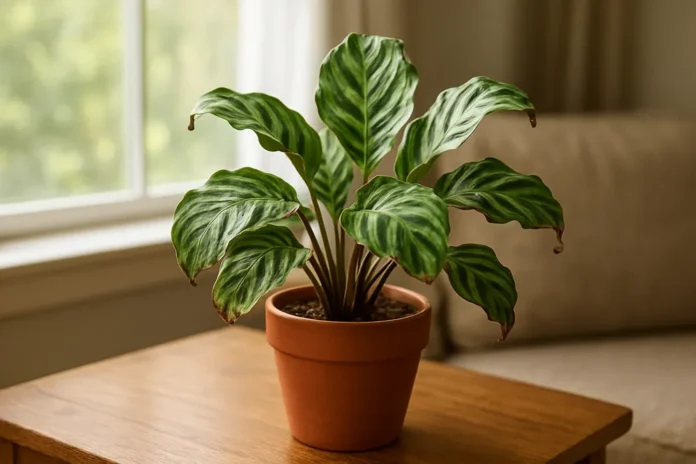
Calathea leaves usually curl when the plant is trying to conserve moisture or react to stress. The most common triggers are dry air, inconsistent watering, temperature stress, and root problems.
When a calathea with curling leaves shows up on my windowsill or potting bench, I treat it like a stress signal rather than a disease by default. Calatheas are beautiful, but they are also quick to show discomfort. Their leaves curl to reduce surface area and hold on to moisture, so the plant is often telling you its environment has slipped out of the range it likes.
The tricky part is that several problems can cause the same symptom. Calathea leaves curling can come from underwatering, overwatering, low humidity, cold drafts, hard tap water, too much sun, or roots that are no longer happy in the pot. The good news is that once you narrow down the cause, these plants often bounce back better than people expect.
I usually start by looking at the pattern. Are all the leaves curling, or only the newest ones? Are the edges crisp, soft, yellowing, or spotted? Is the soil bone dry, soggy, or compacted? Those clues matter much more than the curling alone.
What Curling Leaves Mean on a Calathea
Curling is a protective response. A healthy calathea leaf stays open and broad when the plant has enough moisture, steady warmth, and gentle light. When conditions become stressful, the leaf blades roll inward to reduce water loss and limit exposure. That means curling is usually an early warning sign, which is helpful because you can often correct the problem before you lose the whole plant.
On calatheas, I pay close attention to whether the curling happens during the day and relaxes at night, or stays tight all the time. Some movement is normal because these plants naturally raise and lower their leaves. Persistent curling, especially when paired with drooping, browning, yellowing, or stalled growth, points to an actual care issue.
When I diagnose calatheas, I do not judge the plant by one leaf. I compare the oldest leaves, the newest leaves, and the overall soil condition. If every leaf is rolling the same way, I suspect environment or watering. If only a few leaves are affected, I look harder for root trouble, sun scorch, or pests.
Dry Air Is One of the Most Common Causes
Low humidity is one of the biggest reasons calathea leaves curl indoors. These plants come from humid tropical conditions, and many homes in the U.S. run much drier than they prefer, especially in winter or in air-conditioned rooms. When the air is too dry, the leaves lose moisture faster than the roots can replace it, so they curl inward.
Dry-air curling often shows up with brown edges, crispy tips, or leaves that feel thin and papery. You may notice it gets worse near heating vents, radiators, fireplaces, drafty windows, or ceiling fans. Even if you water correctly, poor humidity can still make a calathea look thirsty all the time.
- Leaf edges turn brown or crisp while the center still looks green
- Curling is worse in winter or during long stretches of indoor heating
- The plant sits near a vent, draft, or constantly running fan
- The top of the soil dries quickly but the pot is not rootbound
- Other humidity-loving plants nearby also show dry tips
If dry air is the main issue, improving humidity steadily works better than occasional misting. A small humidifier nearby is usually the most reliable fix. Grouping plants together can help a little, and moving the plant away from direct airflow often makes a visible difference within a week or two.
Underwatering Can Make Leaves Fold Inward Fast
A genuinely thirsty calathea will often curl dramatically. Because the leaves are thin and moisture-sensitive, they react faster than many common houseplants. If the soil has become very dry, the leaves may curl, droop, and feel limp at the same time.
This tends to happen when watering is too infrequent, when the potting mix has become so dry that it repels water, or when a rootbound plant uses moisture faster than expected. Sometimes gardeners think they are watering enough because they add a little water often, but the center of the root ball stays dry.
- The pot feels unusually light for its size
- Soil pulls away from the edge of the pot
- Leaves curl and droop at the same time
- The mix feels dry more than an inch below the surface
- The plant perks up noticeably after a deep watering
If the potting mix has gone fully dry, water it thoroughly until excess drains from the bottom, then empty the saucer. In very dry mixes, I sometimes water once, wait ten minutes, and water again so the root ball can rehydrate evenly. After that, switch to a more consistent watering rhythm instead of cycling between bone dry and soaked.
If a calathea dries out repeatedly, I stop relying on the calendar. I lift the pot or feel the soil every few days instead. These plants care far more about consistency than about being watered on the same weekday.
Overwatering and Soggy Roots Can Cause Curling Too
This is the part that frustrates many growers: a calathea with too much water can look a lot like a calathea with too little water. When roots sit in dense, wet soil for too long, they cannot take up oxygen properly. Once the roots are stressed, the leaves may curl because the plant is no longer moving water the way it should.
Overwatering problems are especially common in decorative pots without drainage, heavy mixes that stay wet for too long, or low-light rooms where the soil dries slowly. The leaf texture often looks softer than with dry-air stress. You may also see yellowing, mushy stems near the base, or a stale smell from the potting mix.
- Soil stays wet for many days after watering
- Leaves curl but also yellow or soften
- The pot feels heavy all the time
- There is little or no drainage from the container
- The root zone smells sour or swampy
If you suspect chronic wetness, let the top layer dry slightly before watering again and make sure the pot has drainage holes. If the soil is compacted or the roots are damaged, repotting into a lighter mix may be necessary. A calathea wants evenly moist soil, not waterlogged soil.
Water Quality Can Quietly Stress Calatheas
Calatheas can be fussy about tap water. In many areas, tap water contains chlorine, fluoride, salts, or dissolved minerals that build up in the soil over time. Sensitive roots may react by slowing water uptake, and the leaves respond with curling, browning tips, or dull-looking margins.
This issue is easy to miss because the plant may not decline all at once. Instead, it slowly looks less healthy even when the light and watering routine seem reasonable. If your water is especially hard, or if white crust is visible on the soil surface or pot rim, water quality is worth considering.
Filtered water, rainwater, or distilled water often helps calatheas perform better. Flushing the pot thoroughly once in a while can also reduce mineral buildup, as long as the mix drains well. If you fertilize regularly, salt accumulation can become even more noticeable.
Temperature Swings and Drafts Trigger Sudden Curling
Calatheas prefer stable indoor temperatures and dislike sharp shifts. Cold drafts from windows, blasts from an air conditioner, or hot dry air from a furnace can make leaves curl almost overnight. The plant reads those extremes as stress even if the average room temperature seems acceptable.
I see this a lot when a plant sits close to a window in winter. The room may be 70 degrees, but the leaf touching the glass experiences a much colder microclimate. Likewise, a plant directly under an AC vent can curl and crisp even though the soil is moist.
- Curling appears suddenly after weather changes
- Leaves nearest a window, vent, or door look worst
- Brown patches form after contact with cold glass
- The plant sits in the path of constant moving air
Aim for a spot with steady warmth, away from drafts and heat sources. In most homes, a few feet back from a bright window works much better than right against the glass.
Too Much Direct Sun Can Curl and Scorch the Foliage
Calatheas like bright, indirect light, not harsh direct sun. Strong sun can overheat the leaves, fade their patterns, and dry them faster than the roots can keep up. The result is often curling along with crispy patches or bleached areas.
This is common on south- or west-facing windowsills, especially in summer. Morning sun is usually gentler than intense afternoon sun, but even that can be too much if the plant is pressed against the glass. If the affected side faces the light source and the back leaves look better, light stress becomes more likely.
Move the plant to bright filtered light or set it farther from the window. Sheer curtains can help. Damaged leaves may not flatten out completely, but healthy new growth should emerge normally once the light level is right.
Rootbound Plants and Compacted Soil Create Moisture Stress
Sometimes the plant is being watered correctly, but the roots or soil are keeping that water from being used well. A rootbound calathea may dry out too quickly because there is more root than soil in the pot. On the other hand, old compacted mix can stay wet on top while becoming airless below, which also leads to stressed roots and curled foliage.
If roots circle densely around the pot, poke out from drainage holes, or the plant needs water far more often than it used to, it may be time to repot. If the soil feels heavy, dense, and shrinks into a solid mass, the mix itself may be the issue.
- Water runs straight through without soaking in well
- The plant wilts again very quickly after watering
- Roots are visible at the bottom of the pot
- The mix feels dense, stale, or hard to moisten evenly
I have had the best luck repotting calatheas into a mix that holds moisture but still breathes well. If the soil is too chunky, it dries unevenly. If it is too heavy, the roots sulk. A balanced houseplant mix with some coco coir, bark, and perlite usually behaves better than garden soil or peat-heavy sludge.
Pests Can Curl New Growth, Especially Spider Mites and Thrips
Although environmental stress is more common, pests can absolutely cause curling. Spider mites are a frequent culprit on calatheas, especially in dry indoor air. Thrips and aphids can also distort tender leaves by feeding on them before they fully unfurl.
Pest-related curling often affects new growth first. You may see stippling, silvery scarring, tiny black specks, fine webbing, or leaves that emerge twisted and never open properly. Flip the leaves over and inspect along the midrib and where the leaf joins the stem.
- Fine webbing under leaves points to spider mites
- Silvery streaking or scarred patches can suggest thrips
- Sticky residue may appear with sap-feeding insects
- New leaves unfurl misshapen or remain partially stuck
If pests are present, isolate the plant and treat it promptly with a method suited to the pest, such as insecticidal soap or horticultural oil where appropriate. Repeated treatments are usually necessary because eggs and hidden insects are easy to miss.
How to Tell Which Cause Is Most Likely
Because curling has several causes, look for combinations of symptoms rather than a single clue. Dry air usually brings crisp edges. Underwatering often makes the pot feel light and the whole plant look limp. Overwatering tends to come with yellowing, prolonged wet soil, and softness. Sun stress creates faded or scorched patches on the exposed side. Pests distort new leaves and leave visible feeding signs.
Think about what changed recently. Did you move the plant? Turn on heat for the season? Repot into a heavier soil? Start using fertilizer more often? Switch window locations? Calatheas often react within days to environmental changes, so the timeline matters.
- Feel the soil several inches down, not just at the top.
- Check the plant's location for direct sun, vents, or cold drafts.
- Inspect leaf undersides and new growth for pests.
- Look at the pot for drainage and signs of root crowding.
- Consider whether tap water, fertilizer salts, or old soil could be adding stress.
How to Help a Calathea Recover
Recovery starts with correcting the main stress, then keeping conditions stable long enough for the plant to respond. Do not try to fix everything at once unless the problem is obvious, like standing water in a pot with no drainage or severe pest activity. A calathea recovers best when the environment becomes predictable.
- Keep the soil evenly moist but never soggy
- Raise humidity if the air is dry
- Use bright, indirect light rather than direct sun
- Protect the plant from drafts and temperature swings
- Use gentler water if your tap water is very hard or treated
- Repot if roots are crowded or the mix has turned dense and airless
Do not expect severely curled or damaged leaves to look perfect again. Judge progress by the condition of new growth and by whether existing leaves stop worsening. If new leaves open more normally and edges stop browning, you are moving in the right direction.
I also avoid heavy fertilizing while the plant is stressed. A struggling calathea usually needs steadier moisture, humidity, and root health more than extra feeding. Once you see healthy new growth, you can return to a light fertilizer routine during active growing periods.
When Curling Leaves Are Normal and when They Are Not
A little daily leaf movement is normal for calatheas. They naturally shift position between day and night, and newly unfurling leaves can look slightly rolled before they open fully. That kind of temporary curling is not usually a problem.
What is not normal is persistent tight curling, especially when paired with browning, drooping, yellowing, crispy edges, mushy stems, or stalled growth. If the plant stays curled for days and does not relax after conditions improve, it has likely been under stress long enough that recovery will take time.
FAQ
Will Curled Calathea Leaves Uncurl Again?
Sometimes they do, especially if the cause was temporary thirst, dry air, or a recent draft. If the leaf tissue has already crisped, scorched, or been damaged by pests, that leaf may stay distorted even after the plant improves.
Should I Mist My Calathea to Stop the Leaves From Curling?
Misting may give a brief boost, but it usually does not raise humidity enough for long-term improvement. A humidifier, better placement, and steady watering are much more effective.
Can Overwatering Really Make Calathea Leaves Curl?
Yes. When roots stay too wet and lose access to oxygen, they stop functioning well, and the leaves can curl just as they do when the plant is too dry.
Is Tap Water Bad for Calatheas?
In some homes, yes. Hard water and treated tap water can contribute to brown tips, curling, and mineral buildup, especially in sensitive varieties. Filtered, rain, or distilled water is often gentler.
How Often Should I Water a Calathea with Curled Leaves?
There is no single schedule that fits every home. Water when the top portion of the soil starts to dry slightly, but do not let the root ball become bone dry or stay soggy for days.
Do Curled Leaves Mean My Calathea Has Pests?
Not always. Most curling comes from humidity, watering, light, or temperature stress. Pests are more likely if you also see webbing, silvery damage, speckling, or deformed new growth.
Should I Cut Off Curled Calathea Leaves?
Only remove leaves that are mostly damaged, brown, or no longer contributing much to the plant. Slightly curled leaves can still photosynthesize and support recovery.
Need help getting the conditions right? Read our guide to the best humidifiers, water options, and potting mixes for calatheas so you can stop leaf curling and grow stronger foliage faster.
