

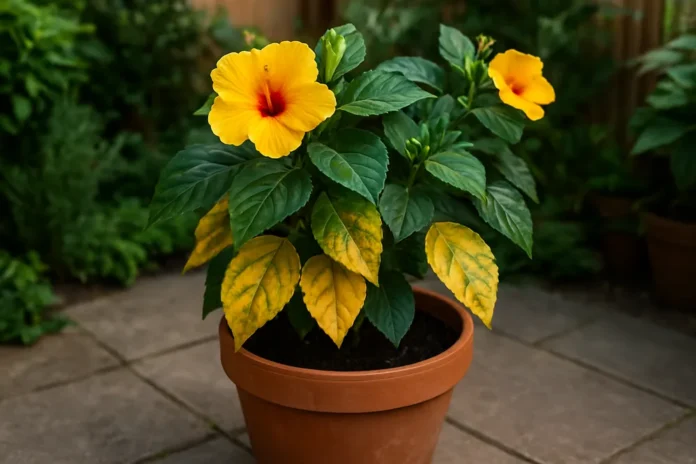
Hibiscus leaves usually turn yellow because the plant is stressed by watering problems, poor drainage, nutrient imbalance, pests, or sudden temperature changes. In many cases, the yellowing is the plant's way of reacting to root stress.
A hibiscus with yellow leaves can look alarming fast, especially when the plant was deep green and blooming well just a week or two earlier. The good news is that yellowing usually starts as a stress signal, not a death sentence. Hibiscus are vigorous plants, but they can be fussy when watering, feeding, drainage, and weather all get slightly out of balance.
When I troubleshoot hibiscus leaves turning yellow, I try not to jump straight to fertilizer or pruning. The pattern matters. Are the oldest leaves yellowing first, or the newest? Is the whole plant pale, or only a few lower leaves? Are leaves yellow with green veins, spotted, drooping, or dropping off? Those clues usually narrow the cause quickly.
In most home gardens, yellow hibiscus leaves come down to a handful of common issues: too much water, too little water, root trouble in containers, nutrient deficiencies, pests, or environmental shock. Once you match the symptom pattern to the likely cause, the fix is usually straightforward.
What Yellow Leaves on Hibiscus Usually Mean
Yellowing, also called chlorosis, means the leaf is losing chlorophyll. That can happen because the plant is naturally shedding older leaves, or because something is interfering with water movement, nutrient uptake, or normal growth. A few yellow leaves now and then are not unusual, especially after a move, a weather swing, or the end of a bloom flush.
The bigger concern is when yellowing spreads, comes with leaf drop, affects new growth, or is paired with wilting, brown edges, spots, or visible pests. Hibiscus tend to respond quickly to stress, so the foliage often shows a problem before the whole plant declines.
- A few lower yellow leaves can be normal aging
- Widespread yellowing often points to watering or root stress
- Yellow leaves with green veins often suggest an iron or magnesium issue
- Yellow leaves plus sticky residue or stippling often point to pests
- Yellowing after a cold snap or heat blast may be environmental shock
When I look at hibiscus, I pay more attention to which leaves changed first than to the color alone. Old leaves yellowing first usually tells a different story than pale, distorted new leaves at the tips.
Watering Problems Are the Most Common Cause
Overwatering and Soggy Roots
If your hibiscus is staying wet too long, roots cannot get enough oxygen. That leads to yellow leaves, limp stems, slow growth, and leaf drop. In containers, overwatering is often caused by poor drainage, a saucer full of water, or a potting mix that has compacted and stays dense.
Overwatered hibiscus can look droopy even though the soil is wet, which confuses many gardeners. The roots are stressed, so the plant cannot move water properly. Leaves may turn yellow evenly across the blade before falling off.
Underwatering and Drought Stress
Hibiscus also yellow when they get too dry, especially in hot weather or small containers. Dry roots reduce nutrient uptake and force the plant to shed leaves to conserve moisture. You may see yellowing along with crispy edges, wilting during the day, dropped buds, or flowers that fade quickly.
- Wet soil plus yellow, soft leaves suggests overwatering
- Dry soil plus yellowing and crisp edges suggests underwatering
- A plant that swings between soaked and bone dry may show both symptoms
- Container hibiscus need closer monitoring than those planted in the ground
I do not water hibiscus by the calendar alone. I check the top inch or two of soil first, because a plant in sun, wind, and bloom can dry out much faster than one in shade or humid weather.
Poor Drainage and Root Problems Can Trigger Fast Yellowing
Even if you are not watering too often, drainage problems can create the same result. Hibiscus roots want moisture, but they also need air. In heavy clay soil, low spots, decorative pots without proper drainage, or old potting mix that has broken down, water can sit around the roots too long.
Root-bound hibiscus can yellow too. When roots circle densely inside a pot, water may run down the sides without soaking in evenly, or the root mass may dry out too quickly. The plant then swings between drought stress and poor uptake, both of which can yellow leaves.
- Check for drainage holes that are open and unobstructed
- Avoid leaving nursery pots inside decorative cachepots full of water
- Repot root-bound hibiscus into a slightly larger container with fresh mix
- Use a well-draining potting mix rather than dense garden soil in containers
- In the landscape, improve drainage or plant on a slight mound if soil stays soggy
Nutrient Deficiencies and pH Issues Often Show in the Leaves
Hibiscus are hungry plants, especially when they are growing fast and blooming heavily. If nutrients are low, leaves may lose their deep green color and turn pale yellow. But not all deficiencies look the same, and pH can block nutrient uptake even when fertilizer is present.
Nitrogen Deficiency
Nitrogen deficiency often causes overall paling and yellowing, especially on older leaves first. Growth may slow, stems may stay thinner than usual, and flowering can weaken. This is common in container hibiscus that have not been fed regularly during the growing season.
Iron Deficiency
Iron deficiency usually shows up on newer leaves first. The leaf blade turns yellow while the veins stay greener. This is called interveinal chlorosis. It often happens when soil pH is too high, the potting mix stays too wet, or roots are stressed and cannot absorb iron efficiently.
Magnesium Deficiency
Magnesium deficiency tends to appear on older leaves first, often with yellowing between veins while some green tissue remains. This can show up in heavily watered containers where nutrients leach out over time.
- Older leaves yellowing evenly can suggest low nitrogen
- New leaves yellow with greener veins can suggest iron deficiency
- Older leaves with interveinal yellowing can suggest magnesium deficiency
- High pH can lock up iron even when fertilizer is applied
- Overwatering can mimic or worsen nutrient problems by damaging roots
For many home gardeners, a balanced fertilizer formulated for flowering plants and a consistent feeding routine solve mild nutrient problems. If yellowing is persistent, a soil or potting mix pH test is worth the effort. Hibiscus generally prefer slightly acidic to neutral conditions rather than alkaline soil.
Pests Can Make Hibiscus Yellow and Weak
Several sap-sucking pests commonly attack hibiscus, and they often cause yellowing long before the infestation looks dramatic. Spider mites, aphids, whiteflies, and scale feed on plant juices, weakening leaves and interfering with normal growth.
Spider Mites
Spider mites are especially common in hot, dry conditions or on stressed indoor hibiscus. They cause fine stippling, a faded yellow cast, and sometimes delicate webbing on leaf undersides. Leaves may look dusty or bronzed before they drop.
Aphids, Whiteflies, and Scale
Aphids cluster on tender growth and buds. Whiteflies flutter up when the plant is disturbed. Scale can look like tiny bumps attached to stems or leaf undersides. All of these pests can cause yellowing, curling, sticky honeydew, and reduced blooming.
- Look under leaves, not just on top
- Check buds and soft new growth for aphids
- Watch for fine stippling or webbing from spider mites
- Notice sticky leaves or black sooty mold from honeydew-producing insects
- Treat early because light infestations are much easier to control
If a hibiscus looks yellow but the watering seems right, I turn a few leaves over before doing anything else. Pests hide on the undersides so often that this quick check saves a lot of guesswork.
Temperature Swings, Light Stress, and Seasonal Change
Hibiscus dislike abrupt change. A sudden cold night, a blast of hot wind, moving a plant from indoors to full sun, or bringing it indoors for winter can all trigger yellow leaves. Tropical hibiscus are especially sensitive to temperatures below about 50 degrees Fahrenheit, though exact tolerance varies.
Too little light can also cause yellowing and leaf drop. Indoors, hibiscus often struggle near dim windows, especially in winter. Outdoors, sudden exposure to intense afternoon sun after a period of shade may scorch leaves and create yellow patches or stress-related drop.
- Cold stress can cause quick yellowing and leaf drop
- Sudden moves between indoor and outdoor conditions can shock the plant
- Low light often leads to pale leaves and weaker growth
- Abrupt sun exposure can stress or scorch leaves
- Seasonal leaf loss may happen when conditions change sharply
Diseases and Less Common Causes to Consider
Disease is not the first cause I suspect with plain yellow leaves, but it does happen. Fungal root rot can develop in chronically wet soil and produce yellowing, wilting, and decline. Leaf spot diseases may begin as small spots with yellow halos rather than broad, even yellowing.
Chemical stress is another possibility. Overapplying fertilizer, using strong pesticide sprays in heat, or exposing roots to salt buildup in containers can all damage the plant and cause yellowing. If the problem started right after a product application, that timing matters.
- Root rot is more likely when soil stays wet and the plant wilts anyway
- Leaf spot usually includes distinct spots, lesions, or halos
- Fertilizer burn may cause yellowing with brown edges or root stress
- Salt buildup is common in container plants fed heavily without occasional flushing
How to Tell Which Cause Is Affecting Your Hibiscus
The easiest way to diagnose yellow hibiscus leaves is to combine pattern, timing, and growing conditions. Do not rely on color alone. Look at where the yellowing started, how fast it spread, and what changed recently in watering, weather, or care.
- Check soil moisture a few inches down, not just the surface.
- Look at old leaves and new leaves separately.
- Inspect the undersides of leaves and stems for pests.
- Think about recent changes such as repotting, moving locations, heat, or cold.
- Consider how long it has been since the plant was fertilized or the mix was refreshed.
- Check whether the pot drains freely or the planting area stays soggy.
For example, an outdoor hibiscus with evenly yellow lower leaves after weeks of heavy rain often has root stress. An indoor hibiscus with yellow stippled leaves near a heating vent often has spider mites. A container plant with pale new leaves and green veins may be struggling with iron uptake.
How to Fix Yellow Hibiscus Leaves
The best fix depends on the cause, but the main goal is to stabilize the plant rather than throw multiple treatments at it at once. Hibiscus usually respond well when watering is corrected, drainage is improved, pests are treated early, and feeding becomes more consistent.
- Adjust watering so soil stays evenly moist but not saturated
- Empty saucers and improve drainage if water lingers
- Repot if the plant is root-bound or stuck in exhausted potting mix
- Feed regularly during active growth with a suitable flowering plant fertilizer
- Treat pests with insecticidal soap, horticultural oil, or another appropriate control
- Protect tropical hibiscus from cold nights and sudden environmental swings
- Remove badly damaged yellow leaves, but keep healthy green growth whenever possible
Change one major factor at a time when you can. If you repot, fertilize heavily, and spray all in the same weekend, it becomes much harder to tell what helped and what added more stress.
Do not expect existing yellow leaves to turn deep green again in every case. The better measure of success is healthy new growth. If the newest leaves come in greener and stronger over the next couple of weeks, you are moving in the right direction.
When Yellow Leaves Are Normal and when to Worry
A few yellow leaves are often normal, especially older lower leaves on a vigorous plant, or after relocation and mild seasonal stress. Hibiscus regularly shed some foliage as they redirect energy into new growth and flowers.
It is time to worry when yellowing spreads quickly, most of the canopy is affected, buds are dropping, stems are soft, or the plant is wilting despite moist soil. Those signs suggest more serious root damage, a major pest problem, or prolonged environmental stress.
- Normal: a few older leaves yellow and drop occasionally
- Concerning: many leaves yellow at once across the whole plant
- Concerning: yellowing paired with wilt in wet soil
- Concerning: yellow leaves plus visible pests or sticky residue
- Concerning: yellowing that continues despite corrected watering
FAQ
Should I Remove Yellow Leaves From My Hibiscus?
Yes, you can remove fully yellow leaves, especially if they come off easily. Leave partly green leaves in place for a bit longer if the plant still has use for them, and focus on correcting the underlying problem.
Can Hibiscus Recover After Leaves Turn Yellow?
Usually yes, as long as the roots and stems are still healthy. The yellow leaves may not turn green again, but the plant can recover by producing healthy new growth once the stress is fixed.
Do Yellow Hibiscus Leaves Mean I Need Fertilizer?
Not always. Yellowing can come from overwatering, pests, cold stress, poor drainage, or pH issues, so fertilizer helps only when nutrient deficiency is actually part of the problem.
Why Are My Hibiscus Leaves Yellow with Green Veins?
That pattern often points to interveinal chlorosis, commonly linked to iron deficiency or high pH that blocks iron uptake. It can also happen when roots are stressed by excess moisture.
How Often Should I Water Hibiscus to Prevent Yellow Leaves?
Water when the top inch or two of soil starts to dry, rather than on a rigid schedule. Hot weather, wind, pot size, and soil type all change how quickly hibiscus use water.
Can Too Much Sun Make Hibiscus Leaves Yellow?
Sudden exposure to harsher sun can stress leaves and contribute to yellowing, especially if the plant was recently moved. Established outdoor hibiscus usually tolerate bright light well when watered properly.
Why Is My Potted Hibiscus Yellowing More than One in the Ground?
Container plants dry out faster, stay waterlogged longer if drainage is poor, and run through nutrients more quickly. Their roots also have less room, so small care mistakes show up faster.
Will Epsom Salt Fix Yellow Hibiscus Leaves?
Only if magnesium deficiency is the real issue. It is not a cure-all, and using it without a clear reason can distract from more common causes like watering problems or pest damage.
Want the fastest path to greener growth and more blooms? Read our hibiscus care guide and compare the best fertilizers and pest treatments before your plant loses more leaves.
