

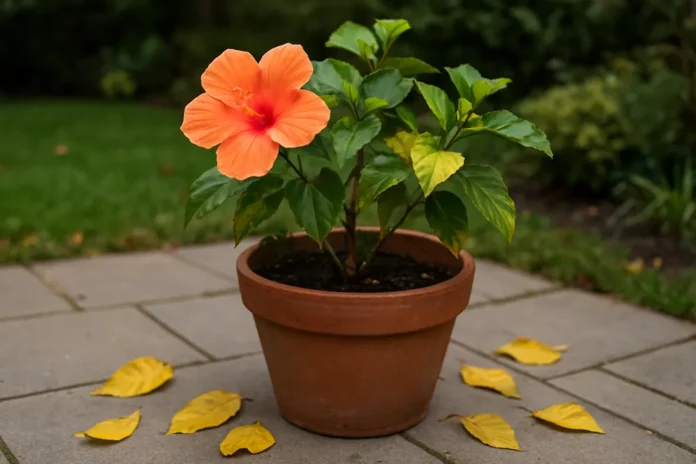
Hibiscus leaves usually fall off because the plant is stressed by watering problems, sudden temperature changes, low light, pests, or root damage. Sometimes seasonal adjustment and moving the plant indoors can also trigger temporary leaf drop.
A hibiscus can go from lush and tropical-looking to bare and unhappy in what feels like a weekend. When I see hibiscus leaves falling off, I treat it as a stress signal first, not an automatic sign that the plant is dying. Hibiscus reacts quickly to changes in its environment, and leaf drop is one of its most common ways of showing that something is off.
The tricky part is that several different problems can cause the same symptom. Too much water, not enough water, cold air, dim indoor light, spider mites, and cramped roots can all make a hibiscus shed leaves. The good news is that the pattern of leaf drop, plus a few clues from the soil and stems, usually points you in the right direction.
If your hibiscus is dropping both yellow and green leaves, start with the recent history of the plant. A move indoors, a heat wave, a missed watering, or a heavy soaking after a dry spell often explains more than gardeners expect.
What Leaf Drop Is Telling You
Leaf drop on hibiscus is usually a response to stress, not a symptom you can diagnose in isolation. The plant is trying to reduce demand on its roots and stems when conditions stop matching what it wants. That means the exact color and timing of the fallen leaves matter.
- Yellow leaves dropping often point to watering issues, root stress, or normal adjustment after a change in conditions.
- Green leaves dropping suddenly often suggest shock from cold, drafts, moving the plant, or severe root disturbance.
- Leaves with stippling, webbing, or sticky residue often indicate pests such as spider mites, aphids, or whiteflies.
- Leaf drop with soft stems or a sour soil smell raises concern for overwatering and root rot.
- Leaf drop with dry, crispy edges and bone-dry potting mix usually means the plant got too dry for too long.
When I troubleshoot hibiscus, I look at the leaves still on the plant before I study the ones on the ground. The remaining foliage usually shows the active problem more clearly, especially if newer leaves look pale, curled, speckled, or limp.
A little leaf loss after a seasonal transition can be normal, especially when a hibiscus moves from a bright patio to a much dimmer indoor room. Heavy drop, continuing decline, or branch dieback means the plant needs a closer look.
Watering Problems Are the Most Common Cause
Overwatering and Soggy Roots
Hibiscus likes consistent moisture, but it does not want to sit in waterlogged soil. When the roots stay too wet, they lose access to oxygen and start to weaken. That often causes yellowing leaves, limp growth, dropped buds, and leaves that fall with only a light touch.
Potted hibiscus is especially vulnerable if the container drains poorly or if a saucer stays full of water. In the ground, compacted clay and low spots can create the same problem after rain or frequent irrigation.
- Soil feels wet several inches down for days at a time
- Lower leaves yellow first and fall off
- The plant looks wilted even though the soil is damp
- Potting mix smells stale, swampy, or sour
- Roots may look brown and soft instead of firm and pale
Underwatering and Dry Root Balls
Hibiscus also drops leaves when it gets too dry. This can happen quickly in hot weather, especially in black nursery pots or on windy patios. A severely dry root ball may even repel water at first, so the top looks wet after watering while the center of the pot stays dry.
Underwatered hibiscus often sheds leaves to reduce moisture loss. Buds may drop before opening, leaves can look dull or folded, and some may turn yellow before falling while others simply dry up and drop.
- Pot feels very light for its size
- Soil pulls away from the edge of the container
- Leaves droop in afternoon heat and do not fully recover by morning
- Leaf edges may brown or crisp before dropping
- Flower buds dry and fall off along with leaves
If a potted hibiscus has gone extremely dry, I water it slowly in stages instead of dumping on a full can at once. That gives the root ball time to rehydrate evenly instead of letting water run down the sides and out the bottom.
How to Correct Watering Stress
Aim for evenly moist soil, not constantly wet and not allowed to become powder dry. For containers, water thoroughly until excess drains out, then wait until the top inch or two begins to dry before watering again. For in-ground plants, water deeply enough to moisten the root zone and then let the surface dry slightly between soakings.
If overwatering is the issue, reduce frequency, improve drainage, and empty saucers promptly. If underwatering is the issue, water more consistently and consider shifting the plant out of intense reflected heat or into a slightly larger pot if roots are packed tightly.
Temperature Shock and Seasonal Changes Can Trigger Sudden Drop
Hibiscus is a warm-weather plant that dislikes sudden changes. A blast of cold air, a chilly night, an air conditioner vent, or bringing the plant indoors for winter can all cause leaves to yellow and drop in a hurry. Tropical hibiscus is especially sensitive once temperatures begin drifting much below about 50 to 55 degrees Fahrenheit.
One of the most common scenarios is fall transition. Outdoors, the plant has been growing in strong light, warm air, and higher humidity. Indoors, it gets less light, drier air, and less airflow. The result is often a short period of leaf drop while it adjusts.
- Leaf drop starts soon after moving the plant to a new spot
- Many leaves stay green but still fall
- The plant is near drafty windows, doors, or HVAC vents
- A cold snap hit recently, especially overnight
- New growth slows sharply after the move
Heat stress can play a role too. Very hot afternoons, dry wind, or reflected heat from walls and pavement can push a thirsty hibiscus into stress leaf drop, especially if watering has not kept up.
To reduce temperature-related leaf loss, keep conditions as stable as possible. Move indoor plants before nights turn cold, place them in the brightest area you have, and keep them away from drafts. Outdoor plants benefit from protection during unusual cold events and from a consistent watering routine during heat.
Low Light and Indoor Conditions Often Weaken Hibiscus
Hibiscus is not a low-light houseplant. When it does not receive enough sun, it often responds with yellowing leaves, sparse growth, fewer flowers, and gradual leaf drop. This is especially common after bringing a patio hibiscus into a room that seems bright to us but is much dimmer than outdoor light.
Indoor humidity can make the problem worse. Dry heated air stresses leaves, and weak light means the plant uses water more slowly, which can lead gardeners to overwater in response to drooping or yellowing. That combination of low light and too much moisture is rough on hibiscus.
Signs the Environment Is the Problem
- The plant is several feet from the brightest window
- New growth is thin, weak, or stretched
- Flowering has slowed or stopped
- Leaves yellow gradually instead of spotting or crisping
- Leaf drop started after moving indoors
Place indoor hibiscus in a bright south- or west-facing window if possible. If natural light is limited, a strong grow light can help hold foliage through winter. Rotate the pot occasionally so one side does not weaken faster than the other.
Many indoor hibiscus problems are really light problems wearing a watering disguise. When a plant is not getting enough sun, the soil stays wet longer, roots slow down, and leaf drop follows even if your watering schedule looked fine outdoors.
Pests and Disease Can Make Leaves Fall Prematurely
Several common pests love hibiscus, and heavy infestations can absolutely cause leaf drop. Spider mites are high on the list, especially indoors or during hot, dry weather. Aphids, whiteflies, scale, and mealybugs can also weaken the plant enough to trigger yellowing and leaf loss.
Spider Mites, Aphids, and Whiteflies
Spider mites are easy to miss until damage is advanced. Leaves often show fine pale stippling, a dusty look, or delicate webbing under the foliage. Aphids and whiteflies feed on tender growth and can leave sticky honeydew behind, which may later attract sooty mold.
- Tiny pale specks across the leaf surface
- Webbing on leaf undersides or between stems
- Sticky residue on leaves or nearby surfaces
- Distorted new growth
- Clusters of small insects on buds and tender stems
Wash pests off first if possible, especially on sturdy outdoor plants. Then follow up with insecticidal soap or horticultural oil, coating leaf undersides where pests hide. Repeat treatments according to the product label because one spray rarely solves a well-established infestation.
Root Rot and Leaf Spot Concerns
Disease is less often the first cause than environmental stress, but it can join in after the plant weakens. Root rot from persistently wet soil causes yellowing and leaf drop along with poor vigor. Leaf spot diseases usually create visible lesions, but mild spotting alone is less likely to explain major defoliation unless the plant is already stressed.
If you suspect root rot, focus on correcting the moisture issue quickly. Remove badly affected roots if repotting, use fresh well-draining mix, and hold back on fertilizer until healthy new growth resumes.
Root Stress, Fertilizer Issues, and Transplant Shock
Hibiscus can also drop leaves when its roots are crowded, damaged, or chemically stressed. A pot-bound plant dries out very fast and becomes hard to water evenly. Freshly transplanted hibiscus may lose some leaves while roots recover and start exploring new soil.
Too much fertilizer can burn roots and upset the balance between top growth and root support. This may show up as browning leaf edges, wilted foliage despite moist soil, and sudden leaf loss after feeding. Salt buildup from repeated fertilizer use is a common issue in containers.
Clues That Point to Root or Fertilizer Stress
- Roots circle densely around the inside of the pot
- Water runs straight through the container without soaking in
- Leaf drop started after repotting or planting out
- White crust appears on the soil surface or pot rim
- Symptoms worsened soon after a strong fertilizer application
Repot pot-bound hibiscus into a container just one size larger with a loose, fast-draining mix. After transplanting, keep the soil evenly moist and protect the plant from extreme afternoon heat until it settles in. If fertilizer burn is likely, flush the potting mix thoroughly with water to help wash out excess salts.
How to Pinpoint the Cause and Help Your Hibiscus Recover
Because hibiscus leaf drop has several look-alike causes, the best approach is to work through the most likely stressors in order. Start with the root zone and recent environmental changes, then inspect for pests. Try to avoid changing five things at once, or you will not know what actually helped.
A Practical Diagnosis Checklist
- Check soil moisture a couple inches down, not just on the surface.
- Think back over the last two weeks for a move, temperature swing, missed watering, or heavy rain.
- Inspect leaf undersides, stems, and buds for mites, aphids, whiteflies, or sticky residue.
- Look at drainage. Make sure the pot has holes and the saucer is not holding water.
- Assess light levels, especially if the plant recently moved indoors.
- Slide the root ball partly out of the pot if you suspect severe crowding or rot.
What Recovery Usually Looks Like
Damaged leaves rarely recover, so do not judge success by old foliage. Instead, watch for healthy new leaves, firmer stems, improved bud retention, and a slower rate of leaf drop over the next couple of weeks. Hibiscus can rebound surprisingly well once the main stress is corrected.
If a branch turns brittle and brown, prune back to live green wood. Remove badly infested or dead material, but avoid heavy pruning while the plant is actively stressed unless you are cutting away dead tissue.
I try not to fertilize a leaf-dropping hibiscus right away unless I am sure the issue is simple nutrient hunger. A stressed plant with unhappy roots usually improves faster from stable moisture, warmth, and light than from extra feeding.
FAQ
Will Hibiscus Grow Back After Dropping All Its Leaves?
Often yes, as long as the stems are still alive and the roots are healthy enough to recover. Scratch a small section of bark with your fingernail. If the tissue underneath is green, the branch is still alive and the plant may leaf out again once conditions improve.
Should I Cut Off Yellow Leaves From a Hibiscus?
You can remove leaves that are fully yellow, badly damaged, or pest-infested, but do not strip the plant bare. Leaves that still have some green continue to help the plant, and excessive pruning can add more stress.
How Often Should I Water a Hibiscus That Is Dropping Leaves?
There is no fixed schedule that fits every plant. Water when the soil begins to dry slightly near the top, then water thoroughly. Hot outdoor containers may need frequent watering, while indoor plants in winter often need much less.
Why Is My Hibiscus Dropping Green Leaves Instead of Yellow Ones?
Green leaf drop usually points to sudden stress such as cold exposure, drafts, transplant shock, or a major shift in light or location. It can also happen when roots are disturbed or severely waterlogged.
Can Bringing Hibiscus Indoors for Winter Make It Lose Leaves?
Yes, that is very common. The change from outdoor sun and humidity to indoor light and air often triggers temporary leaf drop while the plant adjusts. Good light and stable temperatures help reduce the transition shock.
Do Spider Mites Make Hibiscus Leaves Fall Off?
Yes. Heavy spider mite infestations can cause stippling, yellowing, and early leaf drop, especially indoors or in hot, dry conditions. Check the undersides of leaves closely for fine webbing and speckled damage.
Can Too Much Fertilizer Cause Hibiscus Leaf Drop?
Yes. Excess fertilizer can damage roots and create salt buildup in the potting mix, which leads to wilt, yellowing, brown edges, and dropped leaves. Container plants are especially vulnerable.
Want the right fix faster? Explore our hibiscus care and treatment guides to compare the best fertilizers, pest controls, and potting mixes for stronger growth and fewer dropped leaves.
