

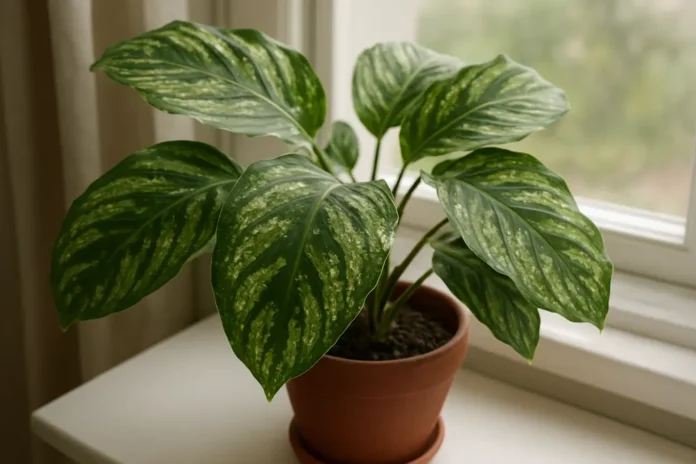
Calathea leaves usually get white spots from mineral buildup, pest feeding, leaf spot disease, or too much direct sun. The exact cause depends on whether the spots wipe off, look bleached, or come with stippling, webbing, or damaged edges.
Seeing calathea leaves with white spots can be frustrating because the marks do not all mean the same thing. Sometimes they are just dried mineral residue from tap water or misting. Other times they are a warning sign of spider mites, thrips, fungal leaf spot, or light stress.
What matters most is how the spots look and where they show up. White film that wipes away points in a very different direction than pale scarring, powdery patches, or crisp bleached areas. Once you match the pattern to the cause, calatheas are usually very manageable.
I treat calathea leaf spotting like a small investigation. I look at the newest leaves, the undersides, the watering routine, and how close the plant sits to bright windows before I change anything. That usually narrows the problem down fast.
What the White Spots Are Telling You
White spots on calathea leaves generally fall into a few categories: something sitting on the leaf, damage to the leaf tissue, or disease growing on the leaf. If the mark can be rubbed off with a damp cloth, you are often dealing with residue from hard water, guttation minerals, fertilizer splash, or a product that dried on the leaf. If it will not wipe off, the plant tissue itself has been damaged by pests, excess light, or infection.
Calatheas are especially prone to cosmetic leaf issues because their foliage is thin, decorative, and sensitive to dry air, strong sun, and poor water quality. A hardy pothos might shrug off a little stress, but a calathea often records it right on the leaves.
- A chalky or crusty white film often points to hard water residue or dried minerals from guttation.
- Tiny pale dots or silvery white scarring usually suggest spider mites or thrips feeding on the leaf surface.
- Round tan or white-centered spots with darker edges can indicate fungal or bacterial leaf spot.
- Large faded or bleached patches, especially on the side facing a window, usually come from too much direct sun.
- Cottony white clusters near stems or leaf joints are more likely mealybugs than actual spotting.
When I am unsure, I compare several leaves instead of staring at one damaged leaf. If every affected leaf faces the same window, I lean toward light stress. If the damage is random but concentrated on undersides and tender growth, I start hunting for pests.
Mineral Residue and Water Quality Problems
Hard Water Is One of the Most Common Causes
In many homes, the simplest explanation is tap water. Calatheas can react badly to water with high mineral content, especially calcium and magnesium. As droplets dry on the leaves after watering, misting, or humidifier spray, they leave behind white specks or a thin powdery film. These marks often show up more heavily on broad upper leaf surfaces.
This kind of spotting is usually superficial. The leaf may still be healthy underneath, and the residue often comes off when you gently wipe it with a soft damp cloth. If you notice the plant also has browning tips or crispy margins, poor water quality may be affecting both the roots and the foliage.
Guttation Can Leave White Crusts
Calatheas sometimes push out extra moisture through leaf edges or tips, a process called guttation. When that moisture dries, it can leave tiny white crystals or crusty marks. This is most common after heavy watering, in warm rooms, or when the plant takes up more water than it can use right away.
Guttation residue tends to collect along the leaf edge or near the tip rather than appearing as random dots all over the blade. It is not a disease, but repeated mineral deposits can dull the foliage and make the leaves look unhealthy.
How to Fix Residue From Water and Minerals
- Wipe leaves with a soft microfiber cloth and distilled or filtered water.
- Stop misting if your water leaves visible deposits.
- Use distilled, rainwater, or filtered water for routine watering if your tap water is hard.
- Aim humidifiers near the plant, not directly onto the leaves where droplets dry into spots.
- Flush the potting mix occasionally to wash out excess fertilizer salts if you feed regularly.
If the spots disappear with wiping and do not return once you switch water sources, you have your answer. This is one of the easiest calathea problems to solve.
Pests That Cause White Spotting and Pale Scarring
Spider Mites Create Fine Stippling
Spider mites are a classic calathea problem, especially in dry indoor air. They feed by piercing leaf tissue and sucking out contents, leaving behind many tiny pale dots that can make the leaf look dusty, faded, or peppered with white specks. In heavier infestations, you may also see fine webbing under leaves or where stems meet.
The damage usually starts subtly. A leaf may lose its rich contrast and begin to look washed out before obvious webbing appears. Because calathea leaves are patterned already, mite damage is easy to miss until the plant has several affected leaves.
Thrips Leave Silvery White Patches
Thrips scrape and feed on leaf surfaces, often leaving silvery white streaks, scuffed patches, or irregular pale spots. You may also notice tiny dark specks of waste on the leaves. New growth can emerge distorted or scarred if thrips feed while leaves are still unfurling.
Mealybugs Look Like White Spots at First
Mealybugs are not leaf spots, but gardeners often mistake them for them. They appear as soft, cottony white bits clustered in leaf joints, along stems, or on the underside of leaves. If the white material looks fuzzy or stuck in sheltered creases rather than flat on the leaf blade, inspect closely for insects.
How to Confirm and Treat Pest Damage
- Check the undersides of leaves with a flashlight.
- Look for webbing, tiny moving dots, cottony masses, or black specks.
- Isolate the plant from other houseplants.
- Rinse the foliage gently, paying special attention to the undersides.
- Treat with insecticidal soap or neem-based products labeled for houseplants, repeating as directed.
- Increase humidity moderately and keep the plant out of hot, dry drafts, which encourage spider mites.
If I suspect pests, I do not judge success by old leaves. I watch the next two or three leaves that open. Clean new growth tells you the treatment is working better than any damaged leaf still on the plant.
Avoid jumping straight to heavy pesticide use indoors unless the infestation is severe and the label clearly covers indoor houseplants. For many calatheas, consistent washing and repeat treatment with a mild product works well if you catch the problem early.
Leaf Spot Disease and Fungal Issues
How Disease Spots Usually Look
Fungal and bacterial leaf spots tend to create defined lesions rather than a uniform dusting of white. You might see small circular spots with pale centers and darker brown, reddish, or yellow halos. As the spots enlarge, the center can dry out and look tan, gray, or whitish.
These spots do not wipe away, and they often spread when leaves stay wet for long periods. Poor air circulation, splashing water, overcrowding, and consistently damp foliage all raise the risk. Calatheas grown in enclosed corners or grouped tightly with many plants can develop these problems more easily.
Powdery Growth Versus True Spotting
Occasionally, a white fungal growth can sit on the leaf surface rather than inside the tissue. Powdery mildew is less common on indoor calatheas than residue or mites, but it can happen in stagnant conditions. It looks more like a soft coating than separate pale dots.
How to Respond to Suspected Leaf Spot
- Remove badly spotted leaves with clean scissors.
- Keep water off the foliage as much as possible.
- Improve airflow around the plant without blasting it with a vent.
- Avoid overcrowding the plant with other pots.
- Water the soil directly instead of misting the leaves.
- Use a houseplant-safe fungicide only if spotting continues to spread after cultural fixes.
Disease damage will not reverse, so the goal is to stop new spotting. If fresh leaves come in clean after you improve airflow and keep foliage dry, the plant is recovering.
Light Stress, Spray Residue, and Other Less Obvious Causes
Too Much Direct Sun Can Bleach Calathea Leaves
Calatheas like bright indirect light, not hot direct sun. When they sit in a strong west or south window without a sheer curtain, the leaves can develop bleached white or pale tan patches. These areas often look larger and flatter than pest stippling, and they usually appear on the side of the plant facing the strongest light.
Sunscald often comes with crisp texture. The tissue may feel dry or papery rather than simply discolored. Once burned, that section of the leaf will not turn green again.
Leaf Sprays and Cleaning Products Can Mark the Foliage
Shine sprays, foliar feeds, diluted soap mixtures, and even some homemade pest treatments can dry into white specks or cause a light burn if applied in bright light. If spots appeared soon after you sprayed something, the product itself may be responsible. Calatheas have delicate leaves, so they are not the best candidates for frequent foliar treatments.
Fertilizer Splash and Salt Buildup
If liquid fertilizer splashes onto the leaves and dries, it can leave a pale crust or even create localized burn marks. Overfertilized plants may also show white crust at the soil line along with browning leaf edges. This usually happens when plants are fed too often or when excess salts are not flushed out of the mix.
I see a lot of calatheas damaged by good intentions. Misting, leaf shine, extra fertilizer, and frequent sprays can all leave marks on a plant that would rather have stable moisture, gentle light, and minimal fuss on its leaves.
What to Change if Stress Is the Issue
- Move the plant a few feet back from harsh direct sun or filter the light with a sheer curtain.
- Avoid leaf shine and unnecessary foliar products.
- Rinse off any recent spray residue with plain water and a soft cloth.
- Fertilize lightly during active growth rather than feeding heavily year-round.
- Flush the pot every month or two if you use synthetic fertilizer regularly.
How to Diagnose Your Calathea and Help It Recover
If your calathea has white spots and you are not sure why, slow down and look for patterns before making several changes at once. The worst approach is to move it, repot it, spray it, fertilize it, and change watering all in the same weekend. That creates more stress and makes the original cause harder to identify.
A Simple At-home Diagnosis Routine
- Try wiping a spot with a damp cloth. If it lifts off, think residue first.
- Inspect the underside of affected leaves for mites, thrips, webbing, or cottony insects.
- Check whether damaged leaves are concentrated on the window-facing side of the plant.
- Look at the shape of the spots. Defined circular lesions suggest disease more than residue.
- Review your care routine, especially misting, water source, fertilizer use, and any recent sprays.
- Watch the newest leaves over the next two to four weeks for signs of improvement or continued spotting.
General Recovery Care
While you sort out the exact cause, keep the plant in bright indirect light, water when the top inch of soil starts to dry, and avoid sudden temperature swings. Maintain moderate humidity, but do it with room humidity or a nearby humidifier rather than constant misting. Remove a few badly damaged leaves if they bother you, but leave any leaf that is still mostly green and functional.
Calatheas do not recover overnight. Existing spots usually stay, so success means cleaner new growth, steadier color, and fewer fresh marks over time. Once the underlying problem is fixed, the plant often settles back into normal growth.
FAQ
Can White Spots on Calathea Leaves Go Away on Their Own?
Only residue can truly be removed from the existing leaf surface. Damage from pests, disease, sunburn, or fertilizer burn will not heal, although new leaves can grow in clean once you fix the cause.
How Do I Tell if the White Spots Are Hard Water or Pests?
Hard water residue usually wipes off and tends to look chalky or film-like. Pest damage does not wipe away and often comes with tiny dots, silvery scarring, webbing, black specks, or insects hiding under the leaves.
Should I Cut Off Spotted Calathea Leaves?
Remove leaves that are heavily damaged, diseased, or mostly brown. If a leaf still has plenty of healthy green tissue, you can leave it so the plant keeps using it for energy while it recovers.
Is Misting Causing the White Spots on My Calathea?
It can be. Misting with hard tap water often leaves white mineral marks, and keeping leaves wet for long periods can also encourage leaf spot disease.
Do Calatheas Need Distilled Water to Avoid White Spots?
Not always, but many do look better with distilled, filtered, or rainwater if your tap water is hard. Sensitive calatheas often show fewer leaf marks and less tip browning when mineral-heavy water is avoided.
Can Too Much Sun Make Calathea Leaves Look White?
Yes. Direct sun can bleach sections of the leaf into pale or whitish patches, especially near hot windows. The damaged areas may later turn tan and crispy.
Are White Spots on Calathea Contagious to Other Houseplants?
Mineral residue and sunscald are not contagious. Pests and some leaf diseases can spread, so isolate the plant if you suspect insects or active spotting that keeps enlarging.
Need help choosing the right fix fast? Read our calathea care and pest treatment guides to find the best water, humidity tools, and houseplant-safe products for clean, healthy new leaves.
