

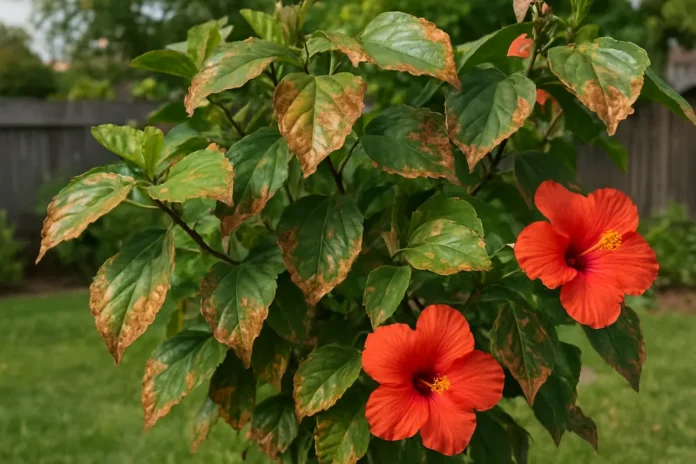
Hibiscus leaves usually turn brown because of watering stress, heat or cold damage, fertilizer or salt buildup, pests, or leaf disease. The exact cause often shows up in where the browning starts and how fast it spreads.
Seeing hibiscus leaves turning brown can be frustrating, especially when the plant was lush and tropical-looking just a week earlier. In my experience, hibiscus often reacts quickly to stress, and leaf browning is one of its clearest warning signs.
The good news is that brown leaves do not always mean the whole plant is in serious trouble. Sometimes the issue is as simple as a dry root ball, a blast of hot wind, or too much fertilizer. Other times, the browning pattern points to pests, disease, or weather damage. If you look closely at where the leaf is browning, whether it feels crispy or limp, and how the rest of the plant looks, you can usually narrow the problem down pretty fast.
This guide walks through the most common reasons hibiscus leaves turn brown, how to tell them apart, and what to do next so the plant can push healthy new growth again.
What Brown Hibiscus Leaves Are Telling You
Brown leaves are a symptom, not a diagnosis by themselves. On hibiscus, the pattern matters a lot. Brown, crispy edges usually suggest moisture stress, salt buildup, or hot sun and wind exposure. Whole leaves that turn brown and drop may point more toward severe watering problems, root trouble, or sudden cold damage. Brown spots with yellow halos can lean toward fungal or bacterial leaf issues.
Also pay attention to whether the problem is affecting old leaves, fresh growth, or one side of the plant. Older lower leaves often show stress from watering inconsistency or nutrient issues first. Tender new growth is more likely to show damage from pests, cold snaps, or chemical burn. If only the side facing a wall, patio, or reflected heat is browning, I start by thinking about environmental stress before I assume disease.
When I troubleshoot hibiscus, I look at several leaves before deciding anything. If every damaged leaf has the same brown edge pattern, it is usually a care issue. If the leaves look irregular, spotted, or patchy, I start considering pests or disease much more seriously.
Watering Problems Are the Most Common Cause
Underwatering and Dry Soil
Hibiscus likes evenly moist soil, especially in warm weather. If the soil dries too much between waterings, the leaves can develop brown edges, dry tips, or a papery texture. Container hibiscus is especially vulnerable because pots heat up and dry out quickly. During summer, a plant in a black nursery pot can go from fine to stressed in a day.
With underwatering, the leaves often feel crisp, may curl inward, and can eventually drop. Flower buds may also yellow and fall off before opening. If the potting mix has pulled away from the sides of the container, that is another clue the root ball has become too dry.
Overwatering and Soggy Roots
Too much water can also lead to brown leaves, although the texture is usually different. Instead of dry, brittle leaves, overwatered hibiscus often has limp, blotchy, or darkening foliage. Chronic soggy soil can suffocate roots and lead to root rot, which keeps the plant from taking up water properly even though the soil is wet.
This is why overwatering and underwatering can look surprisingly similar from a distance. In both cases, the leaves may brown and fall. The difference is usually in the soil and stems. Wet, heavy soil and a tired-looking plant despite constant watering suggest root stress rather than drought.
- Underwatering often causes dry, crispy edges and curled leaves.
- Overwatering often causes limp leaves, dark patches, yellowing before browning, and slow recovery.
- Potted hibiscus needs drainage holes and a fast-draining potting mix.
- In-ground hibiscus still needs regular watering during heat, wind, and drought.
If a potted hibiscus has become bone dry, do not just splash water on top and walk away. I like to water slowly, let it soak in, then water again a few minutes later so the whole root ball rehydrates instead of staying dry in the center.
Heat, Sun, Wind, and Cold Can Scorch the Leaves
Hibiscus is a tropical-looking plant, but that does not mean it enjoys every kind of heat. Extreme afternoon sun, reflected heat from concrete, and drying winds can all scorch the leaves. This often shows up as brown edges or tan patches, especially on exposed leaves at the top or outer side of the plant.
Sun scorch is more likely after a sudden move from shade to strong sun, or when a greenhouse-grown plant is set outdoors without a gradual adjustment. Newly purchased hibiscus often struggles with this. The leaves can bleach, then dry into brown patches.
Cold is another common trigger. Tropical hibiscus can react badly to chilly nights, cold rain, or a surprise frost. Damaged leaves may turn dull, then brown or blackened, and drop soon afterward. If only the outer leaves are damaged after a cold event but the stems are still green, the plant often recovers once warm weather returns.
- Browning on the hottest, sunniest side often suggests scorch.
- Damage after a cold night often appears quickly on tender new growth.
- Wind stress can dry leaves even when the soil is not fully dry.
- Plants moved outdoors need a gradual transition into stronger light.
Fertilizer Burn and Salt Buildup Can Brown the Edges
Hibiscus is a fairly hungry bloomer, so many gardeners feed it regularly. But too much fertilizer, especially in containers, can burn the roots and cause the leaf margins to turn brown. This often happens when a strong liquid feed is applied to dry soil, or when slow-release fertilizer is added too heavily.
Salt buildup from fertilizer or hard water can create a similar look. The roots struggle to take in moisture properly, and the leaf tips and edges dry out first. You may even see a white crust on the soil surface or around the pot rim.
If the plant was green before a recent feeding and suddenly developed browning soon after, fertilizer burn becomes much more likely. This is especially true if the newest leaves look damaged or twisted along with the browning.
- Leaf tip burn and edge browning after feeding often suggest fertilizer stress.
- White residue on soil or pot edges points to salt accumulation.
- Dry potting soil plus strong fertilizer is harder on hibiscus roots.
- Frequent light feeding is usually safer than occasional heavy feeding.
Pests Can Trigger Browning by Damaging the Leaf Surface
Several common hibiscus pests feed by piercing plant tissue and sucking sap, which can eventually cause browning. Spider mites are a big one, especially in hot, dry conditions. They often cause fine stippling first, then bronzing, browning, and leaf drop if the infestation continues.
Thrips, aphids, and whiteflies can also weaken leaves and distort new growth. Scale insects may be less obvious at first, but they can contribute to overall decline and leaf discoloration. Pest damage does not always make the leaves uniformly brown. It can look speckled, bronzed, scarred, or patchy before leaves finally dry up.
Check the undersides of leaves, growing tips, and stems. Fine webbing, tiny moving dots, sticky honeydew, or clusters of insects are all strong clues. If the plant is indoors for part of the year, spider mites and whiteflies become even more likely because indoor air tends to be dry and still.
Spider mite damage on hibiscus often gets mistaken for drought stress because the leaves look dry and tired. If I see browning plus a dusty or bronzed cast to the foliage, I always flip leaves over before changing my watering routine.
Leaf Spot and Other Diseases Can Cause Brown Patches
Fungal and bacterial leaf diseases are another possibility, particularly in warm, humid weather or when the foliage stays wet for long periods. Instead of clean brown edges, disease usually causes spots, blotches, or irregular lesions. Some spots have yellow halos, darker borders, or a water-soaked appearance before they dry out.
Poor air circulation, overhead watering late in the day, and crowded plantings all make leaf disease more likely. The lower leaves often show the first signs because they stay damp longer and get less airflow. Splashed soil can also spread pathogens onto the foliage.
Disease-related browning tends to spread in a more random pattern than drought stress or fertilizer burn. If the leaves have multiple separate spots that merge into larger dead patches, disease should be on your list of suspects.
- Brown spots with yellow halos often suggest a leaf disease.
- Random blotches are more suspicious than evenly browned edges.
- Wet leaves overnight increase fungal and bacterial problems.
- Removing fallen infected leaves helps reduce reinfection.
Root Stress and Pot Problems Are Easy to Miss
Sometimes the leaves turn brown because the roots are struggling, even when the top of the plant looks normal at first glance. A root-bound hibiscus can dry out too quickly, forcing the plant into repeated cycles of drought stress. On the other hand, a pot without good drainage can keep the roots constantly wet.
Compacted old potting mix is another hidden problem. Water may run down the sides of the pot and out the bottom while the center of the root ball stays dry, or the mix may stay soggy too long after watering. Either way, the leaves respond with stress symptoms, including browning and drop.
If you slide the plant from its pot and find dense circling roots, a sour smell, black mushy roots, or badly compacted mix, the issue is probably below ground. Hibiscus can bounce back well from root corrections, but only if you catch the problem before stem dieback begins.
How to Tell Which Cause Is Most Likely
The fastest way to diagnose brown hibiscus leaves is to match the browning pattern with recent conditions. Ask yourself what changed in the last week or two. Was there a heat wave, a cold night, a missed watering, a heavy feeding, or a move to a brighter location? Hibiscus often reacts quickly to sudden changes.
- Brown, crispy edges and dry soil: likely underwatering, heat, wind, or salt buildup.
- Limp leaves and wet soil: likely overwatering or root rot.
- Patchy browning on exposed leaves: likely sun or heat scorch.
- Speckled, bronzed, or dusty-looking leaves: likely pest damage, especially spider mites.
- Distinct spots or haloed lesions: likely leaf disease.
- Sudden browning after fertilizing: likely fertilizer burn.
You do not need a perfect diagnosis on day one, but you do want to avoid making several changes at once. If you increase water, add fertilizer, spray for pests, and move the plant all in the same afternoon, it becomes much harder to tell what actually helped.
Judge recovery by the new growth, not by damaged old leaves. Brown tissue usually stays brown. What you want to see is healthy green leaves emerging after you correct the main stress.
How to Fix Brown Leaves on Hibiscus
Start with the basics. Water deeply when the top inch or so of soil begins to dry, but do not keep the plant constantly soggy. For potted hibiscus, make sure excess water drains freely and never let the pot sit in standing water for long.
If heat or sun scorch seems likely, give the plant protection from intense late afternoon exposure for a while, especially if it was recently moved. In hot regions, morning sun and afternoon relief often works better than all-day blazing sun. If wind is a factor, move containers to a more sheltered spot.
If fertilizer burn or salt buildup is the issue, flush the soil with plain water to wash out excess salts, then pause feeding until the plant stabilizes. Resume with a lighter, more regular feeding schedule rather than a strong dose. For pest problems, wash the plant down and treat with an appropriate control such as insecticidal soap or horticultural oil, making sure to cover leaf undersides.
For suspected disease, remove the worst affected leaves, improve air circulation, avoid wetting the foliage when possible, and sanitize fallen debris. If symptoms keep spreading, a labeled fungicide or bactericide may be warranted depending on the disease involved. If roots are the problem, repot into fresh, well-draining mix and trim away any clearly dead, mushy roots.
- Prune off fully brown leaves or badly damaged ones to tidy the plant and reduce disease pressure.
- Keep soil evenly moist, not flooded and not bone dry.
- Use a balanced hibiscus fertilizer at a moderate rate during active growth.
- Inspect the plant weekly so pests are caught early.
- Protect tropical hibiscus from cold snaps and sudden hard transitions.
When Brown Leaves Are Normal and Not a Major Problem
Not every brown leaf means the whole plant is failing. Hibiscus can shed a few older leaves as it adjusts to seasonal changes, a move indoors, a repotting, or a shift in light. If the browning is limited to a handful of older leaves and the plant is still producing healthy new growth, the issue may be temporary and mild.
Likewise, a leaf that was physically damaged by rubbing, hail, or a rough transplant may brown in isolated patches without signaling a larger problem. The key is whether the browning continues to spread. A stable plant with fresh green growth is usually on the right track, even if some older leaves look rough for a while.
FAQ
Should I Cut Off Brown Hibiscus Leaves?
Yes, if a leaf is mostly or completely brown, you can remove it. It will not turn green again, and pruning it off can improve the plant's appearance and reduce disease pressure. If only a small area is damaged, you can leave it until new growth fills in.
Can Too Much Sun Make Hibiscus Leaves Turn Brown?
Yes. Strong afternoon sun, reflected heat, and hot dry wind can scorch hibiscus leaves, especially if the plant was recently moved from shade or indoor conditions. The damage often appears as brown patches or crispy edges on exposed leaves.
Why Are My Potted Hibiscus Leaves Turning Brown Faster than My In-ground Plant?
Containers heat up and dry out much faster than garden soil, and they can also accumulate fertilizer salts more quickly. A root-bound pot or poor drainage can make the problem worse. Potted hibiscus usually needs closer monitoring in summer.
Will Brown Hibiscus Leaves Turn Green Again?
No. Brown tissue is dead and will not recover. Focus on correcting the cause and watching for healthy new leaves, which is the best sign that the plant is improving.
Can Overwatering Really Cause Brown Leaves Instead of Just Yellow Leaves?
Yes. Overwatering often starts with yellowing, but prolonged root stress can lead to brown patches, whole brown leaves, and leaf drop. The leaves usually feel softer or limp at first rather than crisp.
How Often Should I Water a Hibiscus with Brown Leaves?
Water based on the soil, not on a fixed calendar. Hibiscus prefers evenly moist soil, so water when the top inch begins to dry. In hot weather, container plants may need water much more often than in-ground plants.
Are Brown Spots on Hibiscus Leaves Always a Disease?
No. Brown spots can come from disease, but they can also result from sun scorch, chemical burn, pest damage, or physical injury. Disease becomes more likely when the spots are numerous, irregular, or surrounded by yellow halos.
Need help choosing the right treatment fast? Read our hibiscus care and pest-control guides to find the best sprays, fertilizers, and recovery steps for healthier blooms.
