

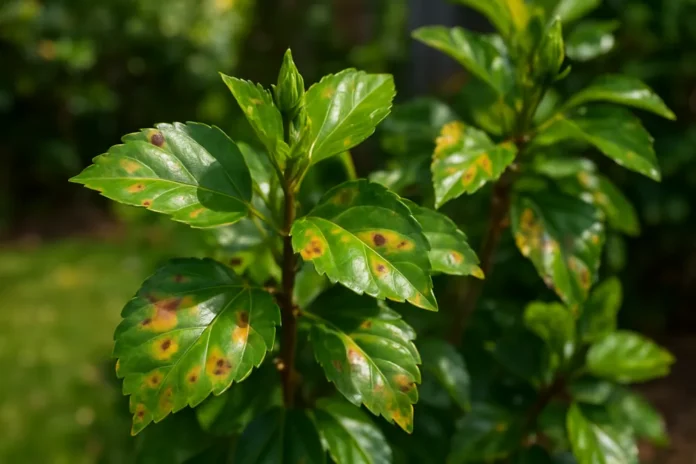
Hibiscus leaves usually develop brown spots because of leaf spot disease, watering stress, pest damage, or sun and fertilizer stress. The exact cause depends on whether the spots look wet, dry, speckled, yellow-rimmed, or concentrated on older or newer leaves.
Brown spotting on hibiscus leaves can look alarming, especially when a plant that was lush and glossy suddenly starts showing freckles, blotches, or crispy patches. In my experience, hibiscus leaves with brown spots usually mean the plant is reacting to stress, but not always the same kind of stress. Sometimes it is a leaf spot disease encouraged by warm, humid weather. Other times it is watering trouble, sun scorch, fertilizer burn, or even pest feeding that leaves behind scarred tissue.
The tricky part is that several problems can produce similar-looking marks at first. A few tiny spots on lower leaves may not mean the same thing as large brown patches on sun-exposed leaves or dark lesions with yellow halos spreading after rainy weather. When I diagnose hibiscus, I look at the pattern first: where the spots started, how fast they spread, whether the leaf is yellowing too, and what the rest of the plant looks like.
Once you match the symptom pattern to the likely cause, the fix gets much easier. Below, I will walk through the most common reasons brown spots on hibiscus leaves show up, how to tell them apart, and what usually helps the plant recover.
What Brown Spots on Hibiscus Usually Mean
Brown spots are a symptom, not a diagnosis by themselves. On hibiscus, they most often come from leaf spot pathogens, uneven moisture, insect feeding, chemical injury, sun damage, or root stress. The same plant can even have more than one issue at once, especially if it has been stressed by weather and then becomes more vulnerable to disease or pests.
Start by noticing the character of the spots. Small circular spots with defined edges often suggest disease. Large bleached or papery patches often point to sun scorch. Tiny stippled bronzing that turns into rough brown flecks can come from mites or thrips. Marginal browning after a heavy feeding may be fertilizer burn. If leaves are also wilting, dropping, or yellowing broadly, root or watering issues may be part of the problem.
- Spots that are round, dark, and spreading after rain often suggest fungal or bacterial leaf spot.
- Brown patches on the hottest, brightest side of the plant often suggest sun scorch.
- Fine speckling, silvery scarring, or distorted leaves often points to pests like spider mites or thrips.
- Browning along edges or tips after feeding can indicate fertilizer salt injury.
- Random spotting plus drooping or leaf drop often means the roots are under stress from watering problems.
When I am unsure, I compare several leaves from different parts of the plant instead of staring at the worst one. A true disease pattern usually repeats itself. Accidental scorch or splash damage is often more irregular and tied to one side or one event.
Leaf Spot Diseases Are One of the Most Common Causes
How Fungal and Bacterial Spots Look
Hibiscus is quite prone to leaf spot diseases in warm, humid conditions, especially when foliage stays wet. Fungal spots often begin as small brown, tan, or dark purple specks that enlarge into circular or irregular lesions. Some have yellow halos around them. Bacterial spotting can look water-soaked at first, then turn dark brown or black and papery as the tissue dies.
These diseases usually start on older or lower leaves where air circulation is poorer and splash-up from soil is more likely. You may notice spots increasing after overhead watering, long stretches of rain, or crowded growth. Severely affected leaves can yellow and drop early.
What Encourages Disease
- Frequent overhead watering
- Warm, humid weather
- Leaves staying wet overnight
- Poor spacing and limited airflow
- Old infected leaves left around the plant
- Water splashing soil onto the foliage
What to Do
Remove badly spotted leaves that are still attached and clean up fallen ones. Water at the soil line instead of wetting the canopy. Prune lightly if the plant is dense so air can move through it. If the problem is advancing quickly, a garden fungicide labeled for ornamental leaf spot diseases may help slow spread, but sanitation and dry foliage matter just as much. Bacterial problems are harder to cure with sprays, so keeping the leaves dry and avoiding handling wet plants is especially important.
Watering Stress Can Create Brown Spotting and Patchy Damage
Underwatering Symptoms
When hibiscus gets too dry, the leaves may develop dry brown patches, crisp edges, or scorched-looking areas, especially during hot weather. Underwatered plants often droop in the afternoon, drop buds, and produce thinner, duller leaves. The spotting is usually less neat and circular than disease spots. Instead, it looks more like tissue that dried out unevenly.
Overwatering Symptoms
Overwatering can also show up as brown spots, especially when roots begin to struggle and leaves lose the ability to regulate moisture properly. In that case, the plant may look yellow overall, feel limp even though the soil is wet, and shed leaves readily. Brown lesions may appear as stressed tissue collapses. Potted hibiscus is especially vulnerable if the container drains poorly or a saucer stays full.
The key difference is the overall moisture picture. Dry soil plus crispy patches suggests drought stress. Constantly soggy soil plus yellowing and limp leaves suggests excess water and root stress.
I like to judge hibiscus watering by the root zone, not the calendar. If the top inch is dry in a container or the soil a couple of inches down feels only lightly moist in the ground, it is usually time to water deeply.
Too Much Sun and Heat Can Scorch Hibiscus Leaves
Hibiscus loves sun, but even sun-loving plants can scorch when conditions change abruptly. A plant moved from shade to full afternoon sun, one recently purchased from a sheltered nursery, or one stressed by drought can develop brown or tan patches where the tissue literally burns. These spots are usually larger and more bleached or papery than disease lesions.
Sun scorch often appears on the side of the plant receiving the harshest afternoon exposure. It may affect upper leaves first, while lower shaded leaves remain mostly healthy. Heat reflected from walls, patios, or pavement can make this worse. In containers, roots heat up faster, and that extra stress can amplify leaf damage.
- Spots are larger, drier, and less circular than disease spots
- Damage is worse on the outer or top leaves
- The plant may have been recently moved or exposed to a heat wave
- Leaves may look bleached before turning brown
If scorch is the cause, focus on steady moisture and a gradual transition to stronger sun. In very hot inland areas, some afternoon shade can keep hibiscus foliage looking much better.
Pests Can Leave Behind Brown Scars, Speckles, and Dead Tissue
Spider Mites
Spider mites are tiny, but the damage they cause can look like widespread brown or bronze spotting. Leaves often start with pale stippling, then turn dull, bronzed, and patchy. In dry conditions, mites multiply quickly on hibiscus. Fine webbing on the undersides of leaves is a strong clue.
Thrips and Other Sap Feeders
Thrips can scar leaves and flowers, leaving silvery streaks, distorted growth, and brown flecks where tissue has been damaged. Aphids and whiteflies usually cause more curling and sticky residue than spotting, but heavy infestations can still weaken the plant enough to create secondary browning.
How to Confirm Pest Damage
- Check leaf undersides with a hand lens if possible
- Look for webbing, moving specks, or black specks of insect waste
- Tap a leaf over white paper to spot tiny moving pests
- Inspect buds and new leaves, not just older foliage
A strong rinse can knock down many pests. Insecticidal soap or horticultural oil can help if labeled for hibiscus and applied carefully, especially on the undersides of leaves. Repeated applications are often needed because eggs and hidden pests can escape the first treatment.
Fertilizer Burn and Salt Buildup Can Mimic Disease
Hibiscus is a hungry bloomer, so gardeners often feed it regularly. The problem comes when fertilizer is too strong, applied too often, or added to dry soil. That can create salt stress in the root zone, and the leaves respond with brown tips, brown margins, or scattered necrotic spots. Container plants are especially prone because salts accumulate faster in potting mix than in open ground.
Unlike fungal spotting, fertilizer injury often shows up shortly after feeding and may affect multiple leaves in a more uniform way. You may also see a white crust on the soil surface or around the pot rim. If the roots are damaged, leaf yellowing and drop can follow.
Flush container soil thoroughly with water to help wash excess salts through the drainage holes. Hold off on more feeding until the plant stabilizes. Then resume with a diluted fertilizer schedule rather than full strength every time.
Nutrient and Root Problems Can Make Spotting Worse
A straightforward nutrient deficiency does not always create classic brown spots, but nutritional imbalance can weaken leaves and make minor spotting more noticeable. Potassium shortage, magnesium deficiency, and poor uptake caused by root stress can all contribute to marginal burn, patchy necrosis, or yellow leaves with dead brown areas.
If your hibiscus has been in the same pot for a long time, compacted roots and exhausted potting mix can also trigger leaf problems that look like multiple issues at once. A rootbound plant dries quickly, absorbs nutrients unevenly, and struggles more in heat. In the ground, poor drainage or damaged roots can produce similar stress signals.
When a hibiscus has spots plus weak flowering, stunted new growth, and fast-drying soil, I start thinking about the roots before I blame the leaves. Foliar symptoms often look complicated when the real problem is happening below the pot line.
How to Tell the Causes Apart by Pattern
Pattern recognition is the fastest way to narrow this down. Instead of asking only what color the spots are, ask where they began, what the edges look like, and whether the plant has other symptoms.
- Round dark spots with halos: more likely fungal or bacterial leaf spot.
- Large dry patches on exposed leaves: more likely sun or heat scorch.
- Tiny bronzed speckles with webbing: more likely spider mites.
- Brown tips and edges after feeding: more likely fertilizer burn or salt buildup.
- Patchy browning with wilting or yellowing: more likely watering or root stress.
- Distorted leaves with brown scarring: more likely thrips or other sap-feeding pests.
Also note the pace. Disease and pests usually spread over days to weeks. Sun scorch can appear abruptly after a heat event. Fertilizer injury often follows soon after feeding. Water stress may come and go with weather or irregular watering habits.
What to Do Right Now to Help Your Hibiscus Recover
If you are not fully sure of the cause yet, start with the safest corrective steps that help most hibiscus problems without making them worse. First, remove the worst damaged leaves and all fallen debris around the plant. Second, water the soil deeply and evenly, then let the surface approach dryness before watering again. Third, avoid wetting the leaves if disease is a possibility.
- Clean up fallen leaves and prune off heavily spotted foliage.
- Improve airflow by thinning crowded stems lightly if needed.
- Switch to watering at the base early in the day.
- Pause fertilizer if you recently fed or suspect salt buildup.
- Inspect leaf undersides for mites, thrips, or other pests.
- Move container plants out of harsh reflected heat if scorch is likely.
- Use a labeled fungicide or insecticidal treatment only after narrowing down the cause.
Do not expect damaged leaves to turn green again. Recovery shows up as healthier new growth. If fresh leaves emerge clean and the spotting stops spreading, your adjustment is working.
How to Prevent Brown Spots From Coming Back
Prevention comes down to keeping hibiscus vigorous and avoiding the conditions that invite spot problems. The healthier the plant, the better it handles heat, pests, and minor disease pressure.
- Water consistently instead of letting the plant swing from bone dry to soggy.
- Use well-draining soil and containers with generous drainage holes.
- Give the plant enough sun, but acclimate it gradually to stronger exposure.
- Space or prune for airflow, especially in humid climates.
- Keep fallen leaves cleaned up so disease spores have fewer places to linger.
- Feed regularly but moderately, and never on very dry roots.
- Check the undersides of leaves often in hot, dry weather for mites.
- Repot container hibiscus when roots become crowded or potting mix degrades.
A little routine observation goes a long way. Hibiscus tends to tell you early when something is off, and small corrections are much easier than rescuing a plant after heavy leaf drop.
FAQ
Should I Remove Hibiscus Leaves with Brown Spots?
Yes, if the leaves are heavily spotted, yellowing, or clearly diseased, remove them and dispose of them. If only a few spots are present and the leaf is still mostly healthy, you can leave it while you monitor new growth.
Can Brown Spots on Hibiscus Leaves Spread to Other Plants?
They can if the cause is a fungal or bacterial leaf spot disease. Spread is more likely when leaves stay wet, plants are crowded, or infected debris is left nearby.
Will Spotted Hibiscus Leaves Turn Green Again?
No, damaged leaf tissue does not heal back to green. The goal is to stop the spread and encourage clean new growth.
Can I Spray Neem Oil on Hibiscus for Brown Spots?
Neem oil may help if pests are involved and some products are labeled for certain fungal issues, but it is not the right fix for every cause. It can also burn leaves in hot sun, so follow the label and avoid spraying stressed plants during heat.
Do Brown Spots Mean My Hibiscus Is Overwatered?
Not always. Overwatering is one possibility, but brown spots can also come from disease, pests, sun scorch, or fertilizer injury. Look for soggy soil, yellowing, and limp growth before assuming too much water is the problem.
Why Are Only the Lower Hibiscus Leaves Getting Brown Spots?
Lower leaves are often the first to show fungal leaf spot because they stay wetter longer and get more soil splash. They can also be the oldest leaves, which makes them more likely to show stress first.
Can Hard Water Cause Brown Spots on Hibiscus Leaves?
Hard water is more likely to contribute to salt buildup in the soil over time than to create classic round spots directly. If mineral salts accumulate, you may see browning at tips or edges, especially in containers.
Want the right fix faster? Read our hibiscus care and treatment guides to choose the best fungicide, insecticidal spray, fertilizer, and watering setup for healthier foliage and more blooms.
