

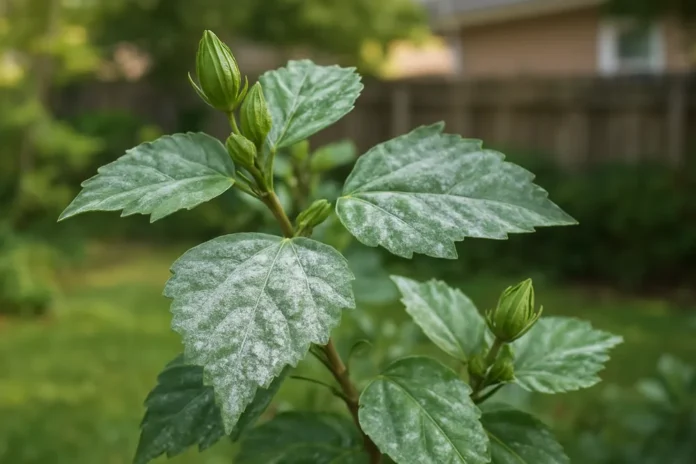
The white powder on your hibiscus is usually powdery mildew, a common fungal disease that forms a dusty coating on leaves, buds, and stems. It often shows up when plants have high humidity around them, limited airflow, or uneven watering stress.
If your hibiscus suddenly looks like someone dusted it with flour, the most likely culprit is powdery mildew on hibiscus. This is a common fungal disease that creates a pale gray or white coating on leaves, tender stems, and sometimes flower buds. It can look alarming fast, especially on lush hibiscus growth, but it is usually manageable if you catch it early.
I see this most often on hibiscus that are growing thick and leafy in warm weather, especially where mornings stay damp and air does not move well. The good news is that white residue is not always a death sentence for the plant. The key is figuring out whether you are dealing with powdery mildew, insect residue, hard water deposits, or something else that only looks similar.
What the White Powder Usually Is
In most cases, the white powder on hibiscus is powdery mildew. This fungal disease sits on the surface of the plant rather than soaking the leaves in dark, wet-looking spots the way some other fungi do. Early on, it may appear as a few scattered white patches. As it spreads, those patches can merge into a more obvious dusty film.
Powdery mildew often starts on newer leaves, crowded inner growth, or shaded areas that stay humid. Hibiscus leaves may begin to curl, distort, yellow, or drop if the infection gets heavy. Buds can also be affected, which may reduce flowering or cause blooms to open poorly.
- The coating looks dry, dusty, or chalky rather than slimy.
- It may rub off lightly on your fingers.
- It often appears on the upper leaf surface first, but can spread to stems and buds.
- Affected leaves may later turn yellow, become puckered, or fall off.
When I am deciding whether it is really powdery mildew, I look at several leaves in different parts of the plant. If the white coating shows up in patches across multiple leaves and the newest growth looks slightly twisted, I lean toward mildew rather than residue from water or dust.
How to Tell Powdery Mildew From Lookalikes
Not every white mark on hibiscus is a fungus. A few common problems can mimic powdery mildew, and the right treatment depends on getting that distinction right. Before spraying anything, take a close look at the texture, location, and whether the white material seems alive, crusty, sticky, or fuzzy.
Powdery Mildew
This looks like a fine white or pale gray powder on the leaf surface. It may start in spots and spread into blotches. Leaves can become misshapen over time, and badly affected tissue may yellow or drop.
Mealybugs and Other Sap-sucking Pests
Mealybugs can create small white cottony clusters, especially at leaf joints, on stems, and around buds. Unlike mildew, these are more clumped and insect-like. You may also notice sticky honeydew, ants, or black sooty mold growing on that sticky residue.
Hard Water or Fertilizer Residue
If you overhead water with mineral-heavy water or spray foliar products, you may see a pale film or spotty residue. This usually looks more crusty or speckled than powdery mildew and does not spread outward on its own from leaf to leaf.
Dust or Pollen Buildup
Outdoor hibiscus can collect dust, especially near roads, dry patios, or construction. Dust wipes away evenly and does not usually distort the leaves. Pollen can also land on foliage but tends to be temporary and unevenly scattered.
Spider Mite Webbing
Spider mites can leave fine silk that catches light and may look pale from a distance. Up close, webbing looks stringy rather than dusty. Leaves often have tiny yellow speckles from feeding damage.
- If it looks like flour dusted on the leaf, think powdery mildew.
- If it looks like cotton clumps in leaf joints, think mealybugs.
- If it looks crusty after watering or spraying, think mineral or product residue.
- If it comes with stickiness or ants, think sap-sucking insects.
Why Hibiscus Gets Powdery Mildew
Powdery mildew thrives when the plant has the right combination of humidity, tender growth, and poor air circulation. Unlike many fungal diseases, it does not need soaking wet leaves to get started. In fact, it often appears during periods with humid air and dry leaf surfaces, especially when nights are cool and days warm.
Hibiscus is especially prone when it is growing vigorously. Soft new growth is easier for the fungus to colonize, and dense branching can trap still, humid air inside the plant canopy. Container hibiscus on covered patios and tropical hibiscus pushed with high-nitrogen fertilizer are two situations where I see this a lot.
- Poor airflow around or inside the plant
- Crowded stems and heavy leaf growth
- Humid conditions, especially at night or in the morning
- Too much shade
- Overfertilizing with nitrogen, which encourages soft growth
- Stress from inconsistent watering
- Nearby infected plants that spread spores
I would rather slightly thin a crowded hibiscus than keep treating the same mildew over and over. A modest pruning that opens the center often does more long-term good than repeated spray applications alone.
What Powdery Mildew Does to Hibiscus
A light case is mostly cosmetic at first, but heavier infections can weaken the plant. The white coating blocks some sunlight from the leaf surface and interferes with normal growth. That means your hibiscus may not photosynthesize as efficiently, and the newest leaves may emerge smaller or distorted.
Flowering can also suffer. Buds may be smaller, fewer, or fail to open cleanly. On a repeatedly infected hibiscus, the plant can become less vigorous over time, especially if it is already stressed by heat, poor drainage, or nutrient issues.
- White dusty patches on leaves, stems, and buds
- Leaf curling, puckering, or twisting
- Yellowing leaves
- Premature leaf drop
- Reduced blooming
- General loss of vigor in severe or repeated outbreaks
How to Treat White Powder on Hibiscus
If the white powder is powdery mildew, treatment works best when you combine cleanup with improving the growing conditions. Sprays can help, but they do not fix dense growth, shade, or stagnant air. Start by removing the worst affected leaves if the plant is not too heavily infected. Do not strip the entire plant bare, but do reduce the main sources of spores.
Prune and Clean Up First
Snip off badly infected leaves and any dead or crowded interior growth. Clean fallen leaves from the soil surface and nearby containers. This lowers the spore load and improves airflow around the remaining foliage.
Move Air Through the Plant
If your hibiscus is in a pot, move it where it gets better light and more air movement. If it is planted in the ground, trim neighboring plants back enough to keep the foliage from staying packed together.
Use a Labeled Fungicidal Treatment if Needed
Home gardeners often use neem oil, horticultural oil, sulfur, or potassium bicarbonate products labeled for powdery mildew. Always follow the product label exactly, including temperature restrictions and plant safety directions. Hibiscus can be sensitive to sprays in hot weather, so avoid treating during the heat of the day.
- Apply treatments early in the day or late in the evening if the label allows.
- Coat affected leaf surfaces thoroughly, including hidden areas where mildew may be starting.
- Repeat only as directed on the label.
- Do not mix products unless the label specifically says it is safe.
Avoid Creating Extra Stress
Do not suddenly flood a dry plant, heavily fertilize it, or prune it hard all at once. The plant still needs stable care while it recovers. Water consistently at the base and avoid pushing lush new growth until the disease is under control.
With hibiscus, I judge treatment success by the condition of new growth rather than by expecting every old spot to disappear. Damaged leaves often stay marked, but if the fresh leaves come in clean, you are moving in the right direction.
Should You Use Homemade Remedies
Plenty of home remedies get suggested for powdery mildew, including baking soda mixes, milk sprays, and diluted hydrogen peroxide. Some gardeners do report results, especially on mild infections. Still, homemade sprays can be inconsistent, and concentration mistakes can burn leaves, especially on tender hibiscus in hot weather.
If you prefer a lower-input approach, it is usually safer to focus first on pruning, spacing, watering habits, and removing infected material. If you do try a homemade spray, test it on a small portion of the plant and wait a day or two before treating the whole hibiscus. For larger or recurring problems, a product specifically labeled for ornamental plants is the more dependable route.
How to Prevent It From Coming Back
Prevention matters because powdery mildew often returns under the same conditions that caused it the first time. Hibiscus grows quickly, so a plant that looked fine a month ago can become crowded enough to trap humidity by midseason. A few simple habits make a big difference.
- Give hibiscus enough sun for strong, balanced growth.
- Prune lightly to open the center and improve airflow.
- Space potted plants so leaves are not constantly touching.
- Water the soil instead of wetting the foliage whenever possible.
- Keep watering consistent so the plant is not cycling between stress and lush rebound growth.
- Avoid excessive nitrogen fertilizer.
- Remove infected leaves promptly and clean up fallen debris.
For indoor overwintered hibiscus or greenhouse-grown plants, airflow is even more important. A bright spot plus a fan set for gentle circulation can prevent the still, humid conditions that invite fungal problems.
When the Problem May Be Something Other than Mildew
If the white material is concentrated in fuzzy tufts along stems and leaf nodes, check closely for mealybugs. If the residue only appears after watering and does not spread, you may be dealing with hard water deposits. And if the leaves are sticky, that points more toward insects than a fungal coating.
A simple inspection helps. Use your fingernail or a soft cloth to wipe a small area. Powdery mildew tends to smear or lift as a dusty film. Mealybugs crush into a messier residue and may reveal tiny insects underneath. Mineral residue tends to flake or remain tied to splash patterns.
- Sticky leaves suggest honeydew from insects.
- Cottony clusters at joints suggest mealybugs.
- Uniform residue after spraying suggests product buildup.
- A spreading dusty film across multiple leaves suggests powdery mildew.
When to Worry About Serious Damage
A small amount of powdery mildew is usually not an emergency, but there are times to act quickly. If the plant is losing leaves rapidly, buds are dropping, or most of the new growth is getting coated as soon as it appears, the disease is gaining ground. That is more likely if the hibiscus is already weakened by poor drainage, root crowding, or pest pressure.
You should also take it more seriously if you have multiple susceptible plants nearby. Powdery mildew spores can move easily through a garden space, especially where airflow is poor. Treating early on one hibiscus can help protect neighboring ornamentals.
FAQ
Can Powdery Mildew Kill a Hibiscus?
It usually does not kill a healthy hibiscus outright, but a severe or repeated infection can weaken the plant, reduce blooming, and make it more vulnerable to other stresses.
Will the White Powder Go Away on Its Own?
Sometimes a light case slows down when weather changes, but existing damage usually stays visible and the problem often returns if airflow, humidity, or crowding are not improved.
Is It Safe to Touch Powdery Mildew on Hibiscus?
Yes, casual contact is generally not harmful to people, though you may want to wash your hands afterward and avoid spreading spores from one plant to another.
Should I Remove All the Infected Leaves?
Remove the worst leaves and crowded growth, but avoid stripping the plant bare. Hibiscus still needs enough healthy foliage to recover and keep growing.
Can I Spray Water on the Leaves to Wash the Powder Off?
You can rinse some surface growth away, but washing alone rarely solves the problem. Repeatedly wetting the plant late in the day can also create other disease issues.
Does Powdery Mildew Spread to Other Plants?
Yes, spores can spread to nearby susceptible plants, especially when plants are crowded and air circulation is poor.
Why Does My Hibiscus Keep Getting White Powder Every Year?
Recurring outbreaks usually mean the same favorable conditions are still present, such as dense growth, too much shade, humid air, or excess nitrogen fertilizer.
Want the fastest path to a cleaner, healthier plant? Read our guide to the best fungicides and hibiscus care products so you can choose the right treatment before the mildew spreads.
