

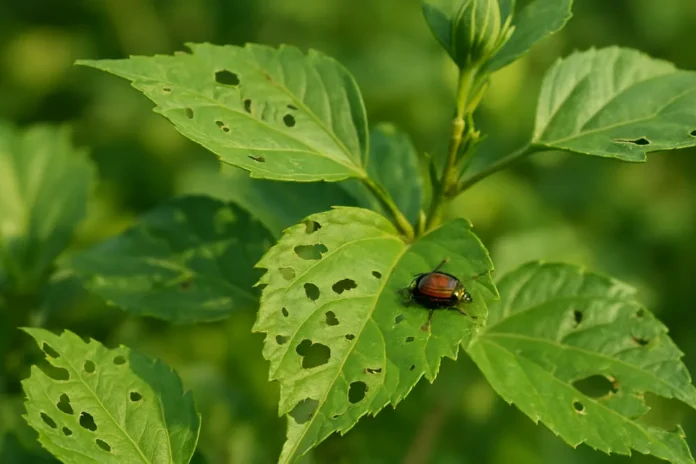
Holes in hibiscus leaves are usually caused by chewing pests such as Japanese beetles, caterpillars, grasshoppers, or slugs. Less often, leaf spots, wind damage, or physical tearing can make hibiscus leaves look chewed.
If your hibiscus leaves have holes, the most common cause is something eating them. On hibiscus, that usually means beetles, caterpillars, grasshoppers, or other chewing pests that feed on the soft leaf tissue and leave behind ragged openings, notched edges, or skeletonized patches.
That said, not every hole points to an insect. I have seen hibiscus leaves split from wind, tear after rough handling, or develop dead spots that dry out and fall away, leaving the leaf looking chewed. The trick is to look at the shape of the damage, where it shows up on the plant, and whether it is getting worse quickly or staying isolated.
Once you know what kind of damage you are dealing with, the fix gets much easier. Hibiscus leaf holes can usually be managed with a few close inspections, better timing, and the right treatment for the actual cause.
What Leaf Holes on Hibiscus Usually Mean
When a hibiscus leaf has clean missing pieces or irregular openings in the middle, that points first to chewing damage. Sucking pests like aphids, whiteflies, and spider mites usually cause stippling, curling, yellowing, or sticky residue instead of true holes. Actual missing leaf tissue usually means a pest with mouthparts built for chewing.
The pattern matters. If holes appear overnight and the plant looks shredded, I usually suspect larger feeders like Japanese beetles, grasshoppers, or caterpillars. If the damage builds slowly and is mostly on lower leaves or around the pot rim, slugs or earwigs become more likely. If the holes seem to start as brown spots that later break open, disease or scorch may be part of the story instead.
When I diagnose leaf holes, I always compare new damage versus old damage. Fresh chewing looks green and moist around the edges, while older holes have dry, tan margins. That simple check tells me whether the pest is still active or whether I am just seeing leftover damage from a problem that already passed.
Chewing Pests That Commonly Make Holes in Hibiscus Leaves
Japanese Beetles
Japanese beetles are one of the most obvious culprits on hibiscus in many parts of the U.S. They feed in groups and can turn leaves lacy very quickly by eating the tissue between veins. You may also see damage on flowers, since they like petals almost as much as foliage.
Look for metallic green and copper beetles on the plant during the day, especially in sunny weather. The damage often shows up high on the plant and on exposed leaves first.
Caterpillars
Caterpillars leave irregular holes, missing edges, and dark droppings called frass. Some feed openly during the day, while others hide under leaves and come out at dusk. On hibiscus, they often prefer tender new growth, so you may notice fresh leaves getting ragged before older leaves are touched.
Grasshoppers
Grasshoppers chew larger holes and chunks from leaf edges. The damage can look rough and uneven, almost as if someone took bites out of the leaf. In hot, dry summers, they can be especially active and may move from one ornamental plant to another.
Slugs and Snails
Slugs and snails are more likely if your hibiscus is in a damp, shaded area or in a container surrounded by mulch. They chew softer tissue and often leave irregular holes with smooth-ish edges, plus a faint slime trail. Damage is usually worse at night and often starts on lower leaves.
Earwigs and Other Night Feeders
Earwigs sometimes feed on hibiscus leaves and flowers, especially when plants are crowded or moist near the base. They do not always cause severe damage, but they can add to the problem and make holes look more mysterious because they hide during the day.
- Large ragged holes usually suggest grasshoppers or caterpillars.
- Lacy or skeletonized leaves strongly suggest Japanese beetles.
- Low, nighttime damage near mulch often points to slugs, snails, or earwigs.
- Damage concentrated on tender new growth often fits caterpillars best.
Less Common Causes That Can Look Like Chewing Damage
Leaf Spot Disease
Some leaf spot diseases begin as brown, black, or tan lesions. As the dead tissue dries, the center can crack or drop out, leaving a neat hole sometimes called a shot-hole effect. On hibiscus, this is less common than insect feeding, but it does happen, especially in warm, humid weather with poor air movement.
If disease is involved, you will usually see discoloration around the hole. The opening may have a yellow halo, dark border, or papery edge rather than the fresh torn look insects leave behind.
Wind, Hail, and Physical Tearing
Hibiscus leaves are broad and fairly tender, so strong wind can whip them against fences, walls, cages, or neighboring branches. Hail can punch holes or shred the leaf surface. Even moving a patio hibiscus through a narrow gate can tear leaves in a way that looks like pest damage afterward.
Sunscald or Chemical Burn
A badly scorched patch can dry, become brittle, and fall out later. This is less common, but it can happen after an abrupt move into intense sun or after spraying a product at the wrong rate in hot weather. In those cases, the holes are usually part of a larger pattern of browning, bleaching, or distorted leaves.
How to Tell What Is Actually Causing the Holes
The fastest way to solve this problem is to stop guessing and inspect the plant at the right time. Many hibiscus pests hide well during midday, so a quick glance is not always enough. Look at the top and bottom of leaves, the stems near growing tips, the mulch surface, and the undersides of lower leaves.
- Check the shape of the holes. Ragged bites and missing edges suggest chewing pests. Holes with dark margins suggest disease or dead tissue.
- Look for active feeders in early morning, evening, or after dark with a flashlight.
- Search for frass, slime trails, beetles, webbing, or leaf rolling that points to a specific pest.
- Inspect nearby plants too. If roses, beans, basil, or zinnias are also chewed, roaming pests like beetles or grasshoppers may be involved.
- Notice where the damage starts. Lower damp foliage often points to slugs. Exposed upper growth often points to beetles.
If I do not find anything during the day, I go back out after sunset with a flashlight and check again. Night inspections solve a lot of hibiscus mysteries because slugs, earwigs, and some caterpillars feed when gardeners are not looking.
What to Do for Pest Damage on Hibiscus
Treatment works best when it matches the pest. A broad spray applied too quickly can miss the real cause, harm beneficial insects, or fail because the feeder only comes out at night. Start with the least disruptive option that fits what you found.
Hand-picking and Physical Removal
For Japanese beetles, caterpillars, and even larger grasshoppers, hand-picking can make a real difference when the infestation is still light. Drop pests into a bucket of soapy water. Remove heavily infested leaves only if the plant has plenty of healthy foliage left.
Insecticidal Soap and Neem
These can help with very small soft-bodied pests, but they are not the best tools for major leaf-chewing damage from beetles or grasshoppers. Neem may discourage some feeding, but it is usually more useful when the problem is minor or part of a broader pest program.
Bt for Caterpillars
If caterpillars are the issue, products containing Bacillus thuringiensis var. kurstaki, often shortened to Bt, are a good targeted option. It works when caterpillars eat treated foliage. It does not control beetles, slugs, or grasshoppers, so correct identification matters.
Slug and Snail Baits
For slug damage, iron phosphate baits are a common garden option. They work best when combined with reducing hiding spots like thick debris, overturned saucers, and constantly wet mulch piled against the pot or stem area.
Row Covers and Exclusion
Temporary covers can help on younger hibiscus or valuable patio plants during a heavy pest period, though this is less practical for large established shrubs. Exclusion is especially useful when grasshoppers are active and chemical options are limited or undesirable.
- Use Bt only for caterpillars.
- Use slug bait only when slug or snail evidence is present.
- Hand-pick Japanese beetles early in the morning when they are sluggish.
- Avoid spraying open hibiscus flowers when pollinators are active.
How to Handle Disease or Non-pest Damage
If the holes are forming from dead spots rather than active feeding, focus on plant health and moisture management. Remove badly spotted leaves that have dropped a lot of tissue, especially if they are still attached and crowding the plant. Clean up fallen leaves under the hibiscus so disease spores have fewer places to linger.
Water the soil rather than the foliage when possible, and give the plant better airflow by spacing containers or lightly thinning congested branches. Fungicides are not always necessary for a small amount of spotting, especially if weather improves and new growth is clean.
For wind or physical tearing, there is usually nothing to spray. Just remove the worst damaged leaves if they are unsightly, then protect the plant from repeated stress. Move potted hibiscus out of harsh wind tunnels, stake if needed, and avoid brushing past the plant when leaves are wet and fragile.
How to Keep Hibiscus Leaves From Getting Holes Again
Healthy hibiscus can tolerate a little cosmetic damage, but repeated chewing weakens the plant and spoils flowering. Prevention is mostly about making the plant easier to inspect and less inviting to pests and disease.
- Inspect leaves weekly during warm weather, especially undersides and tender new growth.
- Remove weeds and debris around the base where slugs, earwigs, and other pests hide.
- Keep the plant evenly watered so it can outgrow minor damage.
- Avoid overfertilizing with high nitrogen products that push very soft, attractive new growth.
- Space hibiscus well for airflow and faster leaf drying.
- Check nearby favorite pest plants if damage suddenly appears, especially roses and other ornamentals that attract beetles.
I am much less worried about a few old leaves with holes than I am about fresh damage on new growth. Hibiscus recovers well when the problem is caught early, so I judge success by whether the newest leaves emerge clean, not by whether the old damaged leaves ever look good again.
When the Damage Is Serious Enough to Act Fast
A few scattered holes are mostly cosmetic. You need faster action when leaves are disappearing quickly, buds are being chewed, or the plant is losing vigor. Severe feeding can reduce flowering, stress container-grown hibiscus, and leave the plant more vulnerable to heat and drought.
- More than a small portion of new leaves are being chewed within a few days.
- Flower buds or blooms are also damaged.
- You can clearly see active pests on the plant every day or night.
- Leaves are becoming skeletonized rather than just lightly nibbled.
- The hibiscus is already stressed from drought, transplanting, or poor root health.
When damage reaches that point, combine direct control with better growing conditions. A stressed hibiscus attracts more trouble and has fewer reserves to replace lost foliage.
What Healthy Recovery Looks Like
Existing holes will not heal or fill back in. Recovery shows up as clean new leaves, steady bud formation, and no widening pattern of fresh chewing. If you have treated the right problem, the plant should begin putting out unaffected growth within the next stretch of active growth, especially in warm conditions.
Do not rush to remove every damaged leaf right away. Those leaves still photosynthesize unless they are mostly destroyed or diseased. I usually leave moderately damaged leaves in place until the plant has enough fresh growth to replace them naturally.
FAQ
Will Holes in Hibiscus Leaves Kill the Plant?
Usually no. A few holes are mostly cosmetic. The bigger concern is heavy ongoing feeding that strips new leaves, damages buds, or adds stress to an already weak plant.
Can Aphids Cause Holes in Hibiscus Leaves?
Not directly. Aphids suck sap and usually cause curling, sticky honeydew, distorted growth, or yellowing. If you see true holes, look first for chewing pests or leaf spot damage.
Why Do My Hibiscus Leaves Have Holes but I Cannot Find Bugs?
Many culprits feed at night or hide well during the day. Slugs, earwigs, and some caterpillars are classic examples. Old damage can also remain visible after the pest is gone.
Should I Cut Off Hibiscus Leaves with Holes?
Only if the leaves are badly damaged, diseased, or making the plant look crowded. Mildly damaged leaves can still help the plant by producing energy while new foliage comes in.
What Is Eating My Hibiscus Leaves at Night?
Slugs, snails, earwigs, and some caterpillars are common nighttime feeders. Check with a flashlight after dark and inspect the mulch, lower leaves, and undersides of foliage.
Can Leaf Spot Make Hibiscus Leaves Look Eaten?
Yes. Some leaf spots kill small patches of tissue that later dry and fall out, leaving a hole. Those holes usually have discolored borders instead of fresh torn edges.
Do Japanese Beetles Like Hibiscus?
Yes, in areas where they are common, Japanese beetles often feed on hibiscus leaves and flowers. They can skeletonize foliage quickly, especially in sunny garden beds.
Need a treatment that actually matches the pest? Read our guide to the best insecticides and organic controls for chewing garden pests so you can protect hibiscus without wasting time on the wrong product.
