

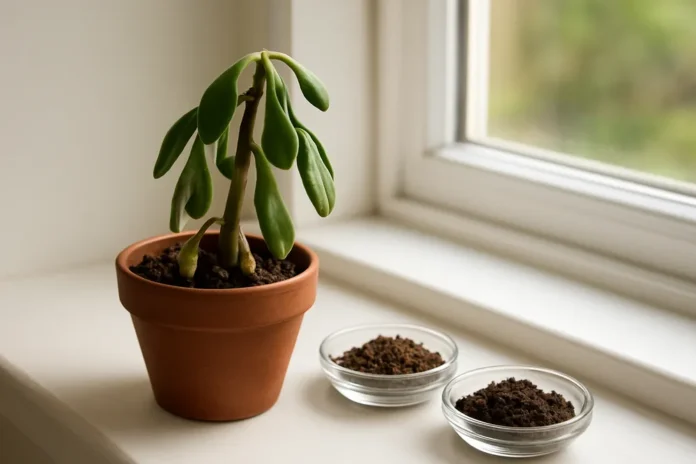
A jade plant usually wilts because its roots are stressed by too much water, too little water, poor drainage, or sudden environmental changes. Pests and root damage can also keep the leaves and stems from staying firm.
A jade plant wilting can be confusing because these plants are supposed to look sturdy, plump, and almost a little indestructible. When one starts drooping, softening, or leaning over, it is usually a sign that something has disrupted the way the plant stores and moves water.
In my experience, the biggest mistake gardeners make is assuming every wilt means the plant is thirsty. With jade, that is often wrong. These succulents can wilt from dry soil, but they can also wilt from soggy roots, weak light, temperature stress, or root damage after repotting. The trick is to read the whole plant, not just the droop.
The good news is that a jade plant often gives you time to correct the problem if you catch it early. Once you know what the leaves, stems, soil, and roots are telling you, the cause usually becomes much easier to narrow down.
What Wilting Looks Like on a Jade Plant
Wilting on jade does not always look like a thirsty annual flower collapsing in summer heat. More often, the plant looks limp, the leaves lose their firmness, stems bend more than usual, or whole branches start to sag. Sometimes the leaves wrinkle first. Other times they stay smooth but feel soft or loose on the stem.
It helps to separate wilting into a few patterns. A dry jade often looks shriveled and slightly deflated. An overwatered jade may look heavy, soft, and droopy even though the soil is wet. A plant with root rot can have wilting leaves along with blackened stems or a sour smell from the pot. If the problem is light or temperature stress, the plant may lean, droop, or drop leaves without obvious signs of rot.
When I diagnose a wilting jade, I always squeeze a few leaves from different parts of the plant. If older lower leaves are thin and wrinkled but the stems still feel solid, I suspect underwatering. If leaves are soft, mushy, or dropping while the soil stays damp, I start thinking root trouble.
Overwatering Is the Most Common Cause
Jade plants are built to store water in their leaves and stems, so they do not need frequent watering. When the potting mix stays wet too long, the roots cannot breathe properly. That stress quickly shows up as drooping leaves, limp stems, yellowing, and eventual leaf drop.
This is why a jade can look wilted even when the soil is soaked. The roots are not taking up water normally because they have been damaged by excess moisture. Many gardeners water on a fixed schedule, but jade needs watering based on how dry the potting mix has become, not on the calendar.
- Leaves feel soft instead of plump
- The soil stays damp for many days
- Lower leaves turn yellow or translucent
- Stems near the base begin to soften
- The pot feels heavy long after watering
If this sounds like your plant, stop watering until the mix dries thoroughly. Make sure the pot has a drainage hole and that excess water can run out freely. If the plant continues wilting in wet soil, it is time to inspect the roots.
Underwatering Can Also Make Jade Droop
Although overwatering is more common, a badly dried jade can absolutely wilt. When the plant uses up the water stored in its leaves and stems, the foliage starts to wrinkle, flatten, and lose tension. Branches may droop because the tissues are no longer well hydrated.
This often happens when a plant sits in intense sun, gets rootbound in a tiny pot, or is watered so lightly that only the top inch of soil gets wet. A jade needs a deep soak when it is time to water. Small sips on the surface often leave the root ball dry underneath.
- Leaves look wrinkled or puckered
- The potting mix pulls away from the pot edges
- The pot feels unusually light
- Leaves may drop after a long dry spell
- Stems remain firm rather than mushy
When underwatering is the issue, a thorough watering usually perks the plant up over several days, not instantly. Very dry potting mix can become hydrophobic, so water may rush around the sides instead of soaking in. In that case, water slowly and let the mix absorb moisture fully.
Root Rot Turns a Firm Succulent Into a Limp One
Root rot is really an advanced form of overwatering damage, but it deserves its own category because it is one of the most serious reasons a jade wilts. Once roots start rotting, the plant loses its ability to support its top growth. Even though there may be plenty of moisture in the pot, the plant behaves like it is dehydrated.
Common signs include a soft trunk base, black or dark brown roots, a stale or sour smell, and leaves that fall off with little pressure. If stems are turning mushy, especially near the soil line, you need to act quickly. Healthy jade roots should be pale and firm, not slimy.
To confirm root rot, gently slide the plant out of the pot. Trim away black, mushy roots with clean scissors, let cuts dry briefly, and repot into fresh, gritty succulent mix. If rot has moved far up the stems, you may need to take healthy cuttings from uninfected growth and start over.
If I find even mild root rot, I do not reuse the old damp soil. Fresh mix dries more predictably and removes a big source of lingering fungal and bacterial pressure around recovering roots.
Poor Drainage and the Wrong Potting Mix Cause Hidden Stress
Sometimes the problem is not how often you water but what you planted the jade in. Dense potting soil, decorative cachepots with no drainage, oversized containers, and saucers full of water all keep the root zone wet longer than jade likes. That constant moisture leads to drooping, weak growth, and gradual decline.
A jade plant needs a coarse, fast-draining mix that allows air to reach the roots. A cactus or succulent mix is a good start, and many gardeners improve it further with pumice, perlite, or coarse sand. The goal is not to create a bone-dry environment but a mix that wets thoroughly and dries at a reasonable pace.
- Use a pot with at least one drainage hole
- Choose a container only slightly larger than the root ball
- Empty decorative outer pots after watering
- Avoid heavy peat-rich mixes that stay soggy
- Repot compacted, old soil that has lost structure
If your watering habits seem fine but the plant still wilts repeatedly, soil structure and drainage are worth a close look. I see this often with gift jades that came planted in rich indoor foliage mix instead of succulent soil.
Light Problems Can Make a Jade Look Weak and Floppy
Jade plants need bright light to maintain sturdy stems and compact growth. In low light, they stretch toward the nearest window and develop weaker, more elongated growth that can droop under its own weight. This is not classic wilting from water loss, but many gardeners describe it the same way because the plant looks limp and unsupported.
A light-starved jade may have wide spaces between leaf pairs, pale growth, and branches that lean strongly in one direction. If the plant has been sitting in a dim room, especially through winter, the stems can become too weak to hold the canopy upright.
Move the plant gradually into brighter conditions. A south- or west-facing window often works well indoors, though harsh direct sun should be introduced over several days to prevent scorch. If natural light is limited, a grow light can help restore sturdier growth over time.
Temperature Shock and Environmental Swings Matter More than People Think
Jade plants tolerate warmth well, but they dislike sudden swings. A cold draft, an unheated porch, a hot blast from a vent, or abrupt outdoor exposure can all lead to wilting or leaf drop. Because jade stores water in its tissues, extreme conditions can damage cells quickly.
Cold injury is especially sneaky. Leaves may soften, collapse, or turn dark after a chilly night near a window or during transport. Heat stress can also cause drooping if the plant dries too fast or sits against hot glass in intense afternoon sun after a long time in lower light.
- Keep jade away from freezing windows and exterior doors in winter
- Do not place it directly in the path of HVAC vents
- Harden it off gradually before moving it outdoors
- Avoid sudden jumps from low light to all-day direct sun
Pests Can Weaken a Jade Enough to Cause Wilting
A heavy pest problem can make jade leaves lose vigor and firmness. Mealybugs are the most common culprit indoors, though scale insects and spider mites can also stress the plant. These pests feed on plant juices, weakening tissues and interfering with healthy growth.
Check leaf joints, stem creases, and the undersides of leaves. Mealybugs look like small bits of white cotton. Scale appears as brown or tan bumps stuck to stems and leaves. Spider mites are harder to see, but fine webbing and stippled, dull foliage are clues.
Mild infestations can often be managed by wiping pests off with cotton swabs dipped in rubbing alcohol and repeating as needed. More persistent cases may require insecticidal soap or horticultural oil, used carefully according to label directions.
Repotting Stress and Root Damage Can Cause Temporary Droop
If your jade started wilting soon after repotting, the roots may have been disturbed more than the plant liked. Broken roots, a major change in soil texture, or a jump into a much larger pot can all create short-term stress. The plant may droop while it adjusts, even if you did not do anything seriously wrong.
This is one reason I prefer to repot jade only when needed and to keep the new pot just a little larger. A giant pot holds too much extra moisture around a reduced root system. That can turn simple transplant stress into a true overwatering problem.
After repotting a jade, I look most closely at the newest leaves and stem tips over the next few weeks. Old damage may not reverse, but steady, firm new growth tells me the roots are reestablishing even if the plant still looks a little awkward.
How to Figure Out the Real Cause
Because several issues can cause similar drooping, use a simple checklist instead of guessing. Start with the soil. Is it bone dry, evenly moist, or soggy? Then feel the leaves. Are they wrinkled, firm, soft, or mushy? Finally, inspect the stems, the pot, the roots if needed, and the plant's recent environment.
- Check moisture several inches down in the potting mix
- Feel leaves for wrinkling versus softness
- Look at the stem base for dark, mushy tissue
- Confirm the pot has drainage and the mix is fast-draining
- Think about recent changes in light, temperature, or repotting
- Inspect for mealybugs, scale, or mites
Patterns matter. Dry soil plus wrinkled leaves points toward thirst. Wet soil plus soft yellowing leaves points toward overwatering. Mushy stems or foul-smelling roots point toward rot. Leaning, stretched growth with no major root symptoms points toward inadequate light.
How to Help a Wilting Jade Recover
Recovery depends on matching the fix to the cause. If the plant is underwatered, water deeply and let excess drain away. If it is overwatered, hold off on watering and improve drainage. If there is rot, trim damaged roots and repot in fresh succulent mix. If low light is the issue, increase brightness gradually.
Do not try to solve everything at once unless there is an urgent rot issue. Sudden changes in watering, light, fertilizer, and temperature can pile stress onto an already struggling plant. Jade usually responds best to one well-chosen correction and a little time.
- Remove any standing water from saucers or outer pots
- Prune off obviously mushy or dead growth
- Wait to fertilize until the plant is actively recovering
- Keep the plant in bright, stable conditions
- Judge progress by new firm growth rather than damaged old leaves
If a main stem is badly rotted but healthy tips remain, propagation is often the best backup plan. Jade cuttings root readily after the cut end has dried and callused, which can save the plant even when the original root system is failing.
How to Prevent Wilting in the Future
Prevention comes down to consistency and restraint. Jade plants do best when they are allowed to dry between thorough waterings, grown in a gritty mix, and kept in strong light. They are much more forgiving of a little neglect than of constant fussing.
I have found that many long-lived jades thrive because their owners develop a simple routine and stop treating them like tropical houseplants. Once you learn your pot, your window, and your home's drying speed, jade care gets much easier.
- Water only when the potting mix has dried well
- Use succulent soil and a draining pot
- Provide bright light year-round
- Protect the plant from cold drafts and sudden exposure changes
- Inspect occasionally for pests before infestations get established
- Repot only when the plant truly needs more root space
FAQ
Can a Jade Plant Recover From Wilting?
Yes, if the cause is corrected before the roots or stems are too badly damaged. Jades often recover well from underwatering, mild overwatering, and minor environmental stress, but severe rot may require pruning or propagation.
Should I Water My Jade Plant Right Away if It Looks Wilted?
Not automatically. A wilted jade can be too dry or too wet, and watering a soggy plant makes the problem worse. Check the soil and leaf texture before deciding.
Why Is My Jade Plant Drooping Even Though the Soil Is Wet?
Wet-soil drooping usually suggests overwatering, oxygen-starved roots, or root rot. The plant cannot take up moisture properly when the roots are damaged, so it wilts despite sitting in damp mix.
How Often Should I Water a Jade Plant?
There is no perfect fixed schedule because season, light, pot size, and soil all change the drying rate. Water when the mix has dried well, then soak thoroughly and let the excess drain.
Will Wrinkled Jade Leaves Become Plump Again?
They often do if the issue was simple underwatering and the roots are healthy. If the roots are damaged or the leaf tissue is too far gone, some older leaves may not fully recover even after the plant improves.
Can Low Light Make a Jade Plant Look Wilted?
Yes. Low light causes stretched, weak stems that flop or lean, which many gardeners describe as wilting. The plant may not be dehydrated, but it still looks limp and unstable.
When Should I Repot a Wilting Jade Plant?
Repot if the current mix stays wet too long, smells sour, lacks drainage, or the roots show rot. If the plant is only mildly underwatered or adjusting to a small environmental change, repotting may not be necessary.
Need the right setup to stop succulent root problems fast? See our guide to the best succulent soils, drainage pots, and jade plant care tools so you can fix wilting before it turns into rot.
