

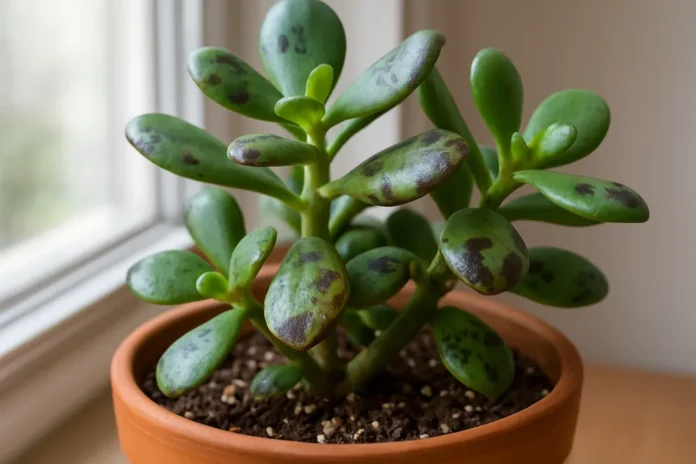
Black spots on jade plant leaves are most often caused by excess moisture, sunburn, cold damage, pests, or leaf disease. The exact cause usually depends on whether the spots look dry, soft, raised, spreading, or limited to the most exposed leaves.
A jade plant is usually one of the easier houseplants to read. When the leaves are firm, plump, and evenly green, it is generally happy. When jade plant leaves have black spots, the plant is telling you something changed in its environment, and the good news is that the spotting pattern often gives strong clues about what went wrong.
In my experience, black spotting on jade is rarely random. It tends to come from a handful of common problems: too much water around the roots, harsh direct sun after a sudden move, chilly temperatures, sap-sucking pests, or a fungal or bacterial issue that took hold after the leaves stayed wet too long. Once you match the look of the spots with the plant's recent care, the cause becomes much easier to pin down.
What Black Spots on Jade Leaves Usually Mean
Black spots are not a single diagnosis. On jade plants, they can show up as tiny pepper-like specks, larger flat blotches, corky dark scars, mushy patches, or sunken lesions with yellowing around them. Some are mostly cosmetic, while others warn that the roots or stems are under real stress.
The first thing to notice is what the spots feel like. Dry, firm, or scabby spots often point to old physical damage, edema, or sun stress. Soft, wet-looking, or spreading black areas are more concerning because they can suggest rot or infection. Also pay attention to where the spots appear. Damage only on the top or sun-facing side tells a different story than spots scattered across the whole plant.
- Dry, flat, dark patches on exposed leaves often suggest sunburn or old environmental damage.
- Black spots with mushy tissue can signal overwatering, rot, or bacterial problems.
- Tiny dark specks with sticky residue may point to pests such as scale or mealybugs.
- Blackened leaf edges or patches after a cold night often indicate cold injury.
- Raised, corky, dark scabs can happen after edema or inconsistent watering.
When I am diagnosing jade, I do not start with the darkest leaf. I compare several leaves from different parts of the plant. If only the outer, brightest side is marked, I suspect sun or cold. If the oldest lower leaves and stems are involved too, I start thinking about waterlogged roots.
Overwatering and Root Stress Are the Most Common Cause
For most indoor jade plants, excess moisture is the leading reason leaves develop dark marks. Jade stores water in its leaves and stems, so it does not need frequent watering. When the potting mix stays damp too long, the roots struggle to breathe, begin to decline, and the leaves often show that stress before the plant fully collapses.
At first, overwatered jade leaves may look slightly translucent, dull, or softer than usual. Then dark spots or irregular black patches can form, especially if cells are damaged by swelling and breakdown. In more advanced cases, leaves drop easily, stems feel soft near the base, and the potting mix smells sour or swampy.
Signs the Roots Are Staying Too Wet
- Leaves feel softer instead of firm and plump.
- Spots are dark and may look water-soaked rather than crisp or dry.
- Lower leaves yellow, wrinkle oddly, or fall off after spotting.
- The soil stays damp for many days after watering.
- The pot has poor drainage or the jade is planted in dense regular potting soil.
- Stems near the soil line begin to soften or discolor.
Overwatering does not always mean you pour in too much at once. More often, it means the plant is watered again before the mix has dried enough, or it is growing in a container that traps moisture. A jade in winter light, in a large pot, or in a heavy peat-based mix can stay wet far longer than expected.
How to Respond if Overwatering Is the Issue
- Stop watering until the potting mix dries well below the surface.
- Check that the container has a drainage hole and does not sit in trapped runoff.
- Remove any leaves or stems that are mushy or collapsing.
- If the mix is compacted or sour-smelling, repot into a gritty succulent blend with fast drainage.
- After recovery, water deeply but only when the soil has dried substantially.
If you are unsure whether to water jade, I lean toward waiting. A slightly thirsty jade usually wrinkles a bit and recovers well. A constantly wet jade can lose roots fast, and black spotting is often one of the first visible warnings.
Sunburn Can Leave Dark Scars After Too Much Direct Light
Jade plants like bright light, and mature plants can handle some direct sun. But if a jade moves suddenly from lower indoor light to a blazing south or west window, porch, or patio, the leaves can burn. Sunburn on succulents often begins as pale, tan, brown, or purplish damage that later darkens into blackened patches.
These spots are usually on the most exposed leaves, especially the top of the plant or the side facing the sun. The damaged tissue tends to feel dry, papery, or scarred rather than soft. Once a leaf is burned, the mark usually stays, even after conditions improve.
Clues the Black Spots Are From Sunburn
- Spots are mostly on the upper or window-facing side.
- The plant was recently moved into much stronger light.
- The tissue is dry and flat, not wet or mushy.
- Only exposed leaves are affected while shaded leaves look normal.
- The spots do not keep spreading once the plant is moved.
If this sounds familiar, move the jade to bright light with gentler direct sun, or acclimate it gradually over one to two weeks. A sheer curtain can help indoors. Do not cut off every spotted leaf unless the damage is severe. If the rest of the leaf is still functioning, it can still support the plant.
Cold Damage Can Create Dark, Collapsed Patches
Jade plants are not frost-hardy houseplants. Even temperatures that do not fully freeze can injure the water-filled leaf tissue. Cold damage often appears as dark black or brown areas that seem to collapse a day or two after exposure to a drafty window, cold porch, garage, or chilly outdoor move.
This kind of spotting often looks sudden. The leaves may turn watery first, then dry down into dark patches or drop off altogether. If one side of the plant faced a cold pane of glass or outdoor wind, that side may show the most damage.
- Spots appeared shortly after a cold snap or after the plant touched a cold window.
- Affected leaves may feel limp before they darken.
- Damage is often concentrated on exposed outer leaves.
- Blackened tissue does not recover, but new growth can be healthy once the plant is warm again.
Move the plant to a stable, warm location and avoid pruning immediately unless the tissue is mushy. Some damaged leaves dry up on their own. Let the plant settle before resuming normal watering, since cold-stressed jade uses less moisture.
Pests Can Leave Black Residue, Scars, or Secondary Spotting
Jade plants are fairly tough, but they can still attract pests, especially indoors where air circulation is limited. Mealybugs, scale, and sometimes aphids feed on plant sap and weaken the leaf tissue. The damage itself may look like yellow stippling, scarring, or distorted growth, but black spotting can show up as sooty mold growing on sticky honeydew or as darkened feeding scars.
What Pest-related Black Spotting Looks Like
- Small bumps on stems or leaf undersides that do not wipe off easily, which often indicates scale.
- White cottony clusters in leaf joints, which usually means mealybugs.
- Sticky leaves or nearby surfaces from honeydew.
- A black film or grime on leaves, which can be sooty mold growing on that sticky residue.
- Spots or scarring paired with weak, distorted new growth.
If pests are involved, isolate the jade from other houseplants. Wipe leaves and stems with cotton swabs or a soft cloth, remove obvious insects by hand, and repeat treatment consistently rather than once. In mild cases, rubbing alcohol on individual pests works well. In heavier infestations, insecticidal soap or horticultural oil may be useful, but always use them carefully on succulents and avoid treating in hot direct sun.
A true black spot inside the leaf tissue and a black film sitting on the leaf are very different problems. I gently wipe one area with a damp cloth first. If the black lifts off, I start thinking honeydew and sooty mold, not a disease inside the leaf.
Fungal or Bacterial Leaf Spots Happen when Moisture Lingers
Although jade is not the most disease-prone houseplant, fungal or bacterial leaf spot can happen when leaves stay wet, airflow is poor, or a stressed plant sits in overly damp conditions. These spots may start small and dark, then enlarge, sometimes with a yellow halo or slightly sunken center.
Disease-related spots are more likely to spread over time than old sunburn scars. If you see new spots forming while the plant remains in the same damp conditions, disease becomes more likely. Splashing water, crowded placement, and cool humid rooms can all contribute.
When to Suspect Leaf Spot Disease
- Spots increase in number over days or weeks.
- Some lesions have yellow margins or a target-like look.
- Leaves were frequently misted or watered overhead.
- Air circulation is poor and the room stays humid.
- The spots appear on multiple leaves, not just the most exposed ones.
Remove badly affected leaves with clean pruners, avoid wetting the foliage, and improve spacing and airflow. Also review watering habits, because leaf spot often rides along with excess moisture around the plant. Fungicides are rarely my first move for a small indoor jade unless spotting is actively spreading despite corrected conditions.
Edema, Mineral Issues, and Old Physical Damage Can Also Leave Dark Marks
Not every black spot means infection or serious decline. Jade leaves can develop dark corky scars after edema, which happens when roots take up water faster than the leaves can use it. The cells swell and rupture, leaving rough spots that later darken. This is more common when watering is inconsistent, light is low, or humidity and temperature shift suddenly.
Mineral buildup from fertilizer salts or hard water is more likely to show as crusty residue or browned edges than true black spots, but stress from high salts can make the plant more vulnerable overall. Physical bruising is another overlooked cause. A bumped, squeezed, or cracked jade leaf can scar darkly as it heals.
- Edema spots are often raised, corky, and dry.
- Old bruises may darken but do not spread to other leaves.
- Salt stress often comes with white crust on soil or pot edges.
- These issues are usually less dangerous than mushy stem or root rot symptoms.
If the plant otherwise looks healthy, these marks may be mostly cosmetic. Focus on steadier care, strong light, and a proper drying cycle between waterings.
How to Tell Which Cause Is Most Likely on Your Plant
A quick diagnosis comes from combining the spot appearance with the plant's recent conditions. Think back over the last two to three weeks. Did you move it into harsher sun, leave it in a chilly spot, water more often, or notice sticky leaves? Jade usually gives you enough evidence if you look at the whole pattern instead of one damaged leaf.
Use This Pattern Guide
- Soft black spots plus soggy soil usually mean overwatering or rot.
- Dry blackened patches on the sunny side usually mean sunburn.
- Sudden dark collapse after cold exposure usually means cold injury.
- Sticky leaves, black film, and visible insects usually mean pests and sooty mold.
- Spreading dark lesions with yellow halos often suggest leaf spot disease.
- Raised scabby marks after irregular watering often point to edema.
If more than one factor fits, that is not unusual. A jade that stayed too wet may also become more vulnerable to disease. A plant weakened by pests may burn faster in intense sun. Start with the issue that threatens the plant most, which is usually root or stem rot if tissue is going soft.
What to Do Next to Help Your Jade Recover
Recovery depends on correcting the cause, not on removing every marked leaf. Many black spots never fade, but the plant can still return to good health if new growth comes in clean and firm. Your goal is to stop new damage and restore stable growing conditions.
Best Recovery Steps for Most Jade Plants
- Place the plant in bright light, but protect it from sudden harsh afternoon sun if it was stressed recently.
- Let the potting mix dry appropriately before watering again.
- Use a fast-draining succulent or cactus mix if repotting is needed.
- Trim off mushy, rotting, or heavily diseased leaves with clean tools.
- Keep foliage dry and improve airflow around the plant.
- Inspect stems and leaf joints for pests every few days until you are confident the problem has stopped.
- Judge progress by healthy new leaves, not by whether old spots disappear.
Try not to make five changes at once. If you repot, move the plant, fertilize heavily, and change watering all in the same weekend, it becomes hard to tell what helped and what added stress. Jade appreciates simple, steady care more than constant adjustment.
How to Prevent Black Spots From Coming Back
Prevention is mostly about matching jade care to what succulents actually need: bright light, sharp drainage, and restraint with water. These plants are much more forgiving of slight dryness than chronic moisture. Once you learn their rhythm, black spotting becomes much less common.
- Grow jade in a pot with a drainage hole.
- Use a gritty, fast-draining mix rather than dense indoor potting soil alone.
- Water thoroughly, then wait until the mix dries well before watering again.
- Acclimate slowly before moving the plant into stronger direct sun outdoors or in a brighter window.
- Keep it away from freezing temperatures and cold window glass in winter.
- Avoid frequent misting or splashing the leaves.
- Inspect regularly for scale and mealybugs, especially around leaf joints and stems.
- Go easy on fertilizer, especially in low light or during winter.
I find that the healthiest jade plants are the ones their owners fuss over the least. Good light, a gritty mix, and patient watering solve most of the problems before black spots ever get started.
FAQ
Should I Remove Jade Leaves with Black Spots?
Only remove leaves that are mushy, rotting, badly diseased, or mostly damaged. If the spots are dry scars from sunburn or old stress, the leaf can often stay until the plant replaces it naturally.
Can Black Spots on Jade Leaves Heal?
The damaged tissue itself usually does not turn green again. What you want to see is that no new spots are forming and new growth looks healthy, firm, and evenly colored.
Do Black Spots Mean My Jade Plant Is Dying?
Not always. Cosmetic sunburn, edema, or old bruising can leave dark marks without threatening the whole plant. Soft black spots with stem mushiness are more serious because they can indicate rot.
Can I Spray Neem Oil on a Jade Plant with Black Spots?
Neem oil may help if pests are part of the problem, but it will not fix overwatering, sunburn, or cold damage. Test it carefully, use it lightly, and avoid applying it in strong direct sun because succulent leaves can react badly.
Why Does My Jade Have Black Spots After Being Outside?
A jade moved outdoors may develop black spots from sudden intense sun, cool nights, rain sitting on the leaves, or pest exposure. Outdoor transitions need gradual light adjustment and protection from cold and prolonged wet conditions.
Can Underwatering Cause Black Spots on Jade Leaves?
Underwatering more often causes wrinkling, thinning, and leaf drop than true black spotting. However, a badly stressed plant may develop some dark scarring, especially if watering swings from very dry to very wet.
What Kind of Potting Mix Helps Prevent Black Spots on Jade?
A fast-draining succulent or cactus mix is best, ideally with added pumice, perlite, or coarse grit. The goal is to keep roots from sitting in dense, soggy soil for too long.
Need help choosing the right soil, pot, or treatment products for a struggling succulent? Check out our jade plant care and succulent rescue guides so you can fix the problem fast and prevent it from coming back.
