

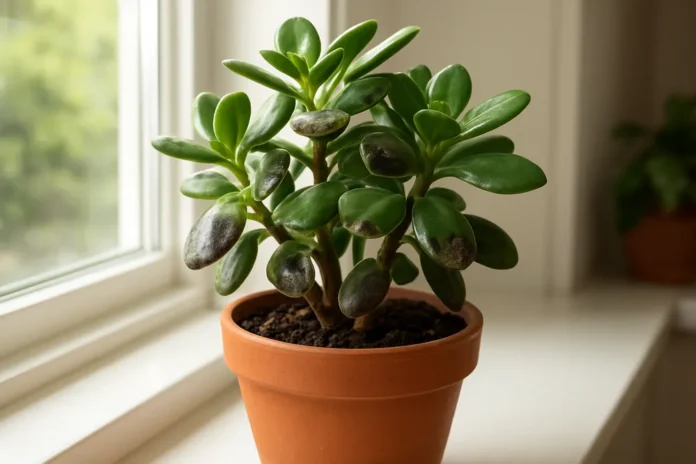
Jade plant leaves usually turn black because of cold exposure, excess moisture around the roots, sun scorch, or rot-related disease. The cause is most often stress that damages leaf tissue rather than a simple nutrient problem.
A jade plant with black leaves is telling you something has gone wrong fairly recently. In my experience, the biggest causes are cold exposure, soggy soil, stem or root rot, and sudden harsh sun. Black tissue means the leaf cells have been damaged, so the goal is to figure out what kind of stress caused it.
The pattern matters more than many gardeners realize. A few black spots on the sun-facing side point in a different direction than soft black leaves dropping from the bottom of the plant. Once you match the symptom pattern to the cause, a jade plant leaves turning black problem is usually much easier to stop.
What Black Leaves Usually Mean on a Jade Plant
Jade plants are succulents, so their leaves store water. When those fleshy leaves turn black, the dark color often comes from tissue collapse. That collapse can happen after freezing temperatures, prolonged wet soil, intense sun after a sudden move outdoors, or infection that sets in after stress.
Unlike yellowing, which can develop slowly from several mild issues, blackening tends to signal more severe damage. The leaf may first look translucent, dark brown, or purplish before it dries or turns mushy. If stems are also blackening, the problem is usually more serious than a few damaged leaves.
- Dry, papery black patches often suggest sun scorch or old physical damage.
- Soft, mushy black leaves usually point to overwatering, rot, or cold injury.
- Black spots with spreading margins can indicate fungal or bacterial disease.
- Blackened leaf edges after a chilly night commonly mean cold stress.
When I diagnose jade problems, I look at texture before color. A crisp black patch and a wet black patch may look similar from across the room, but they come from very different problems and need opposite fixes.
The Most Common Causes of Black Jade Leaves
Overwatering and Poorly Draining Soil
This is the most common reason I see indoors. Jade plants need the soil to dry well between waterings. If the potting mix stays wet for too long, roots begin to suffocate and rot. Once the roots are compromised, leaves can darken, soften, wrinkle, or fall off. Black leaves near the lower part of the plant are especially common when excess moisture is the trigger.
Overwatering does not always mean watering too often. It can also mean a pot without drainage, a heavy peat-based mix, a decorative cachepot that traps runoff, or a plant sitting in low light where moisture evaporates slowly.
Root Rot and Stem Rot
Rot is what overwatering often turns into. If blackening is moving from the stem upward, or if the trunk feels soft near the soil line, root or stem rot is likely involved. A rotting jade often smells sour or musty when you unpot it. Roots may appear dark, stringy, or slough off when touched.
At that stage, the black leaves are a symptom of a deeper issue below the soil. Saving the plant may require cutting away healthy stems for propagation if the base is too far gone.
Cold Damage
Jade plants dislike cold, and actual frost can blacken leaves very quickly. Even temperatures that are not freezing can cause damage if the plant is near a drafty window, an unheated porch, or moved outside too early in spring. Cold-damaged leaves often turn dark, translucent, then black, especially along the edges or on the side facing the cold source.
This kind of damage can look dramatic overnight. The rest of the plant may still be salvageable if the stems remain firm and green inside.
Sun Scorch After Sudden Exposure
Jade plants like bright light, but they can still burn if moved abruptly from indoor light to intense outdoor sun. Sun-damaged leaves may develop dark brown to black patches on the most exposed surfaces. These spots are usually dry rather than mushy and often appear on the upper or outer leaves.
This is especially common in late spring when a plant that spent months indoors is suddenly placed in full afternoon sun.
Fungal or Bacterial Leaf Spots
Less commonly, black spots come from disease organisms encouraged by excess moisture, poor air flow, or damaged tissue. You may see circular lesions, dark halos, or spots that slowly enlarge. If leaves stay wet from misting or crowded growing conditions, pathogens have an easier time getting started.
Physical Injury and Old Damage
Jade leaves bruise easily. A bumped, pinched, or cracked leaf can darken as it heals, sometimes becoming almost black in one spot. If the mark stays isolated and the plant otherwise looks healthy, this cause is minor compared with watering or temperature issues.
How to Tell Which Cause You Are Dealing With
Before changing anything, study the plant closely. Where the blackening starts, how the tissue feels, and what changed recently are your best clues. A jade plant that sat by a cold window last night tells a different story than one that has been in dense, damp potting mix for six months.
- If leaves are soft, wet, and dropping, suspect overwatering or rot.
- If leaves have crispy dark patches on the sunniest side, suspect sun scorch.
- If leaves turned dark right after a cold snap or draft, suspect cold injury.
- If spots are small, distinct, and spreading, disease is more likely.
- If the stem base is dark or mushy, treat it as a rot issue first.
I like to check three leaves from different parts of the plant before deciding on a cause. If the newest, oldest, and sun-facing leaves all show the same texture, the issue is usually environmental. If only the lower leaves are collapsing, I look hard at the roots.
Also consider timing. Black leaves that appear fast, within a day or two, usually come from cold or sudden sun exposure. Blackening that develops gradually over a week or more is more often related to moisture stress, rot, or disease.
What to Do Right Now to Stop the Damage
Move the Plant Out of Stress Conditions
Start by removing the jade from whatever is likely causing the problem. Bring it away from cold glass, drafts, heater blasts, or harsh afternoon sun. Put it in bright, indirect to gentle direct light while it stabilizes.
Inspect the Soil and Roots
If the soil is very wet, smells sour, or the plant feels loose in the pot, unpot it and inspect the roots. Healthy jade roots are pale and firm. Rotten roots are dark, mushy, or stringy. Trim away dead roots with a clean tool.
Remove Badly Damaged Leaves and Stems
Black leaves do not recover. You can leave a few cosmetic spots alone, but remove leaves that are mushy, collapsing, or clearly diseased. If a stem is black and soft, cut back into healthy green tissue. Disinfect tools between cuts if disease or rot is suspected.
Repot if Drainage Is Poor
If the current mix stays wet too long, repot into a fast-draining succulent soil amended with extra pumice, perlite, or coarse grit. Use a pot with a drainage hole. Terracotta is often a good choice because it dries faster than glazed ceramic or plastic.
Hold Off on Extra Water and Fertilizer
After a stress event, gardeners sometimes try to revive the plant with more water or plant food. That usually makes things worse. If rot or cold injury is involved, let the plant recover in stable conditions before feeding it.
If I have to cut back a rotting jade, I save a few healthy tip cuttings even if I think the parent plant may recover. Jade propagates easily, and having backup pieces is often the fastest way to avoid losing the variety altogether.
Recovery Steps Based on the Specific Problem
If Overwatering Is the Cause
Let the soil dry thoroughly before watering again. Going forward, water deeply only when the potting mix has dried well down into the root zone. In many homes, that means watering every couple of weeks or even less often in winter, but always use dryness rather than the calendar as your guide.
If Root Rot Is Present
Trim off rotted roots, allow cuts to dry briefly, and repot in fresh dry mix. Wait a few days before watering so damaged roots can callus. If most of the base is rotten, propagate healthy stem sections instead of trying to save the original root system.
If Cold Damaged the Leaves
Move the plant to a warmer location and keep temperatures consistently above about 55 degrees Fahrenheit. Remove blackened tissue after a few days, once you can clearly see what is dead and what is still viable. Do not prune aggressively the same day as the cold event unless tissue is already mushy.
If Sun Scorch Caused Dark Patches
Shift the plant to bright light with protection from harsh afternoon sun, then reintroduce stronger sun gradually over a week or two if desired. Existing scorched spots stay damaged, but new growth should come in clean once the light level is corrected.
If Disease Spots Are Spreading
Remove affected leaves, improve air circulation, avoid wetting the foliage, and isolate the plant from others if you suspect an infectious issue. For persistent leaf spot, a houseplant-safe copper or fungicidal treatment may help, but only after the watering and ventilation problems are corrected.
How to Prevent Black Leaves From Coming Back
Prevention with jade plants mostly comes down to stable care. They do best when the roots dry properly, the pot drains fast, and the plant is not shocked by temperature swings or sudden extreme sun.
- Use a fast-draining succulent mix and a pot with drainage.
- Water only when the soil has dried well, especially in winter.
- Keep jade away from freezing windows, cold drafts, and unheated outdoor spaces.
- Acclimate indoor plants slowly before moving them into stronger sunlight.
- Avoid frequent misting or crowded placement that keeps leaves damp.
- Inspect the stem base and lower leaves regularly for early signs of rot.
I also recommend rotating indoor jade plants now and then. It does not prevent blackening directly, but it helps you spot changes early and keeps growth more balanced so leaves are not packed tightly against cold glass or a hot sunny pane.
When Black Leaves Mean the Plant May Not Be Salvageable
A jade plant can recover from losing some leaves, but widespread blackening combined with a soft trunk is a serious warning sign. If the main stem is mushy from the soil line upward, the original plant may be too far gone to save. In that case, your best option is to take healthy green cuttings from above the damaged area and root them.
Do not assume the whole plant is lost just because the leaves look terrible. Jades often survive cosmetic leaf damage from sun or cold if the stem tissue stays firm. On the other hand, a plant with only a few black leaves but a rotting base is in much worse shape than it appears.
I trust the trunk more than the leaves when judging whether a jade can come back. Leaves can blacken from a single bad event and still leave the plant alive, but once the trunk starts softening at the base, the clock moves much faster.
FAQ
Should I Cut Off Black Jade Leaves?
Yes, remove leaves that are mushy, rotting, or clearly diseased. If a leaf only has a small dry black patch from old sun damage, you can leave it until the plant replaces it naturally.
Can Black Jade Leaves Turn Green Again?
No. Blackened tissue is damaged tissue and will not recover. Judge improvement by healthy new growth rather than by the appearance of old leaves.
How Often Should I Water a Jade Plant with Black Leaves?
Do not water on a fixed schedule while you are troubleshooting. Let the soil dry well first, then water deeply and allow excess moisture to drain away completely.
Can Too Much Sun Make Jade Leaves Turn Black?
Yes, especially if the plant was moved suddenly from lower indoor light to intense direct sun. Sun scorch usually creates dry dark patches on exposed leaves rather than wet, mushy blackening.
Will Cold-damaged Jade Leaves Fall Off?
Often, yes. Cold-injured leaves may turn dark, soften, and eventually drop. If the stems remain firm, the plant can still recover.
Is Blackening on Only One Side of the Jade Plant Significant?
Yes, that usually points to a directional stress such as sun scorch, cold from a nearby window, or physical damage. Whole-plant blackening is more suggestive of watering or root problems.
Can I Save a Jade Plant with Stem Rot?
Sometimes, if the rot is limited and you cut back into healthy tissue quickly. If the main base is soft or black, take healthy cuttings from above the damage and propagate those.
Need the right succulent soil, drainage pots, or fungicide options to rescue your jade plant? Check our recommended jade plant care and treatment guides to fix the problem faster and prevent it from coming back.
