

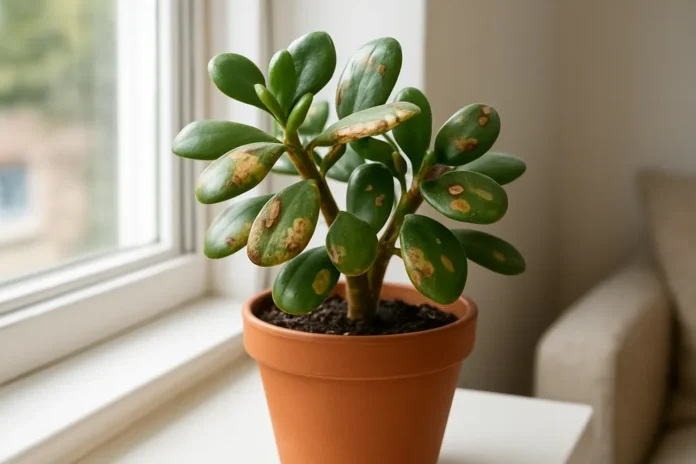
Jade plant leaves usually get brown spots from watering problems, sunburn, cold damage, edema, pests, or occasional disease. The look and placement of the spots often reveal which issue is causing the damage.
A jade plant with brown spots can look alarming, especially when the rest of the plant seemed healthy just days earlier. In my experience, this symptom is common on indoor jades because these succulents react quickly to stress, and the leaves tend to show damage before the stems do.
The tricky part is that brown spotting is not one single diagnosis. A jade may develop dry tan patches from too much direct sun, corky brown marks from excess moisture, dark mushy spots from rot, or tiny speckles from pest feeding. Once you match the pattern of the spots to the plant's recent conditions, the cause usually becomes much easier to narrow down.
Below, I will walk through the most likely reasons jade leaves have brown spots, what each one tends to look like, and how to respond without making the problem worse.
What Brown Spots on Jade Leaves Usually Mean
Brown spots are a symptom of damaged leaf tissue. On jade plants, that damage can come from environmental stress, moisture imbalance, pests, or infection. The color alone is not enough to identify the cause, so it helps to look at texture, size, location, and whether the spots are spreading.
- Dry, bleached, or crispy patches often suggest sunburn or heat stress.
- Soft, dark, or wet-looking spots point more toward overwatering or rot.
- Raised, corky, scab-like spots are often linked to edema from excess moisture uptake.
- Tiny stippled spots with webbing or residue may indicate spider mites or other pests.
- Spots that appear after a cold draft or chilly move outdoors may be cold injury.
When I diagnose a jade, I compare older leaves to the newest growth first. If the newest leaves still look firm and clean while older leaves have scattered brown damage, I usually suspect a past stress event like sunburn, cold exposure, or a watering swing rather than an active disease.
Overwatering and Root Stress
Overwatering is one of the most common reasons jade leaves develop brown spotting. Even though the term sounds simple, the real problem is often that roots stay wet too long. Jade plants store water in their leaves and stems, so they need a potting mix that dries well between waterings. If the roots sit in damp soil, the plant can no longer regulate moisture properly, and leaf tissue begins to break down.
How Overwatering Spots Look
Brown spots caused by excess moisture are often dark, soft, or slightly sunken at first. You may also notice yellowing leaves, leaf drop, mushy stems, or a generally limp appearance even though the soil is wet. In more advanced cases, the spots can spread as rot moves upward from stressed roots.
Common Watering Mistakes
- Watering on a schedule instead of waiting for the soil to dry
- Using a decorative pot without drainage
- Keeping the plant in dense indoor potting soil that holds too much moisture
- Watering lightly and frequently instead of soaking thoroughly and then letting the mix dry
- Leaving excess water in a saucer
If you suspect overwatering, do not keep adding water because the leaves look stressed. A jade with root trouble often looks thirsty and overwatered at the same time. Let the mix dry, inspect drainage, and check whether the roots and lower stem still feel firm.
Edema and Corky Brown Scars
Edema is a very common but underrecognized cause of brown spotting on jade plants. It happens when the roots take up water faster than the leaves can use or release it. The cells swell and rupture, leaving behind tan to brown corky patches or scabs. These marks are usually cosmetic, but they tell you the plant's moisture balance has been off.
Unlike rot, edema spots are typically dry and rough rather than mushy. They may appear on otherwise firm leaves, especially after a heavy watering during cool, cloudy weather or when a plant is growing in low light. Indoor jades are especially prone to this if they are watered generously in winter.
- Spots feel corky or scab-like
- Leaves remain plump instead of collapsing
- Damage often appears after inconsistent watering or low-light periods
- The spots usually do not wipe off or look like insect residue
If the spots are corky and the plant is otherwise solid, I usually avoid drastic pruning or repeated repotting. The fix is usually better light, longer dry-down time, and more consistent watering, not aggressive intervention.
Sunburn and Heat Damage
Jade plants like bright light, but they can still burn if they move too quickly into intense direct sun. This is especially common when an indoor plant is placed outside for summer or when a jade that has been sitting in filtered light is moved into a hot south- or west-facing window.
Sunburn usually causes tan, reddish-brown, or dark brown patches on the side of the plant facing the strongest light. The spots may look dry, papery, or bleached before turning brown. They are often larger and flatter than pest damage, and they tend to show up all at once after a heat event.
Signs the Sun Is the Problem
- Spots are concentrated on the window-facing or sun-facing leaves
- Damage appeared shortly after moving the plant to brighter conditions
- The affected areas feel dry rather than soft
- The newest exposed leaves show the worst injury
Sunburned leaf tissue will not turn green again, but the plant can recover well once conditions improve. Move it to bright light with some protection from harsh afternoon sun, then reintroduce stronger light gradually if needed.
Cold Damage and Sudden Temperature Swings
Jade plants are far less tolerant of cold than many gardeners expect. A chilly windowpane, a winter draft, or a cold night outdoors can damage the water-filled leaf tissue. That injury often shows up as brown or blackened spots, especially on the leaves closest to the cold source.
Cold spots may first look translucent or water-soaked, then darken and dry out. If the exposure was brief, only a few leaves may be marked. If the plant sat in cold conditions longer, whole stems can soften and collapse.
- Damage appears after transport, open-window exposure, or a cold snap
- Leaves nearest the glass or draft are worst
- Spots can look dark and irregular instead of neatly round
- The plant may drop damaged leaves a few days later
This kind of damage is often mistaken for disease, but the pattern usually gives it away. If only the cold-exposed side is affected and the rest of the plant remains healthy, temperature stress is much more likely than infection.
Pests That Leave Brown Speckles and Scars
Several sap-sucking pests can cause jade leaves to develop brown spots, stippling, or rough scars. Spider mites are especially common on indoor succulents kept in dry air. Mealybugs and scale can also cause localized discoloration, often where they cluster along stems or the undersides of leaves.
What Pest Damage Looks Like
- Very small pale or brown speckles scattered across the leaf surface
- Fine webbing between leaves or at stem joints, especially with spider mites
- Sticky residue or sooty buildup from sap-feeding insects
- Brown scars forming where pests repeatedly fed
- Tiny bumps attached to stems or leaf undersides in the case of scale
Pest damage can resemble dryness or edema at first glance, but insects usually leave a pattern of repeated feeding marks rather than one large patch. A close look with bright light is often enough to confirm them. Check hidden spots near leaf axils, stem joints, and the underside of affected leaves.
Spider mite damage on jade often shows up before you clearly see the mites themselves. If the plant has a dull, dusty look and the spotting is very fine and widespread, I assume mites are possible even before webbing becomes obvious.
Fungal or Bacterial Leaf Spot
True fungal or bacterial leaf spot is less common on jade than plain old watering stress, but it can happen, especially when air circulation is poor and leaves stay wet. These spots are often dark brown to black, sometimes with a yellow halo or a slightly wet-looking edge.
Infections tend to spread over time rather than appearing all at once after a weather event. If you notice new spots forming despite stable light and watering, disease moves higher on the list of possibilities. Severely affected leaves may eventually shrivel and drop.
Conditions That Encourage Disease
- Crowded plants with poor airflow
- Frequent overhead watering or splashing leaves
- Persistently damp soil and stressed roots
- Cool indoor conditions combined with moisture
- Introducing an infected plant nearby
If disease seems likely, remove the worst affected leaves, keep the foliage dry, improve airflow, and avoid overwatering. Most home gardeners do not need to jump straight to sprays unless the problem keeps progressing.
Mineral Buildup, Fertilizer Burn, and Water Quality Issues
Brown spotting can also happen when salts build up in the pot from fertilizer or hard water. Jade plants are not especially heavy feeders, and too much fertilizer can stress roots enough to show up as leaf discoloration, brown margins, or scattered dry spots.
This issue is more likely if you fertilize often, use strong liquid feeds, or rarely flush the pot thoroughly. White crust on the soil surface or around the drainage hole is a clue that minerals are accumulating.
- Brown leaf edges or patchy dry spots without mushiness
- Crusty deposits on soil or pot rim
- Symptoms after recent fertilizing
- Slowed growth despite otherwise decent light
If this sounds familiar, pause feeding and flush the soil well when the plant is due for watering, or repot into a fresh gritty mix if the medium is old and compacted.
How to Tell Which Cause Is Most Likely
The best diagnosis comes from combining the spot pattern with the plant's recent history. Ask what changed in the last two to three weeks. Was the jade watered more often, moved to a hotter window, left near a draft, or brought home from a store with hidden pests?
Questions That Narrow It Down
- Are the spots dry and papery, or soft and wet-looking?
- Do they affect the sun-facing side most heavily?
- Did they show up after watering, repotting, or a weather change?
- Are the leaves still firm, or are they yellowing and dropping?
- Can you see webbing, sticky residue, bumps, or other pest signs?
- Is the soil staying wet for many days at a time?
A jade can also have more than one issue at once. For example, a plant weakened by overwatering may become more vulnerable to edema, pests, or leaf spot. That is why broad plant health matters as much as identifying the original trigger.
What to Do Next Without Stressing the Plant Further
Once brown spots appear, the damaged tissue will not heal. Your goal is to stop new spots from forming and encourage healthy new growth. Start with the gentlest correction that fits the likely cause instead of changing everything at once.
- If the soil is staying wet, let it dry well and correct drainage problems.
- If the plant recently moved into harsh direct sun, shift it to bright indirect or gentler morning light.
- If cold exposure is likely, move it away from drafts and cold glass.
- If pests are present, isolate the plant and treat the infestation consistently.
- If the mix is old, dense, or salty, repot into a fast-draining succulent mix.
I like to judge recovery by the next set of leaves, not by the damaged ones already on the plant. If new growth comes in clean and firm, your correction is probably working even if the old scars remain.
Avoid heavy pruning unless the affected leaves are mushy, infected, or badly infested. Jade plants store energy in their leaves, and removing too much healthy tissue can slow recovery.
How to Prevent Brown Spots on Jade Plants
Prevention comes down to steady care. Jade plants are forgiving when their basic needs are met, but they dislike sudden swings in moisture, temperature, and light.
- Use a pot with drainage and a gritty succulent or cactus mix
- Water deeply, then wait until the mix dries well before watering again
- Give bright light, but acclimate the plant gradually to stronger direct sun
- Keep it away from cold drafts and freezing windows
- Inspect regularly for mites, mealybugs, and scale
- Feed lightly during active growth instead of fertilizing heavily year-round
- Make sure the plant has enough airflow and avoid wetting the leaves unnecessarily
In many homes, the biggest improvement is simply adjusting watering to match the season. A jade may drink steadily in summer and barely need moisture in winter. Matching that rhythm prevents a lot of leaf damage before it starts.
FAQ
Should I Remove Jade Leaves with Brown Spots?
Only remove them if they are mushy, heavily diseased, badly infested, or very unsightly. If the leaf is still firm, it can continue helping the plant even though the spot will not disappear.
Can Brown Spots on Jade Leaves Go Away?
No, damaged leaf tissue does not turn green again. Recovery shows up as healthy new growth and the absence of new spots.
Do Brown Spots Always Mean My Jade Is Overwatered?
No. Overwatering is common, but sunburn, edema, cold injury, pests, fertilizer stress, and disease can all create brown spotting too.
Why Does My Jade Have Brown Corky Spots but the Leaves Feel Firm?
That pattern often points to edema rather than rot. The plant likely took up more water than it could process, leaving scab-like scars on otherwise healthy leaves.
Can Too Much Sun Cause Brown Spots on a Jade Plant?
Yes. A jade moved suddenly into strong direct sun can develop dry tan or brown patches, especially on the exposed side facing the light.
Are Brown Spots From Pests Dangerous to the Whole Plant?
They can be if the infestation continues. Spider mites, scale, and mealybugs weaken the plant over time, so it is best to catch them early before spotting spreads and growth suffers.
How Often Should I Water a Jade Plant to Avoid Brown Spots?
Water only after the soil has dried well, not on a fixed weekly schedule. The exact timing depends on pot size, light, temperature, and season.
Need the right setup for a healthier succulent? Check our guide to the best succulent soils, pots, and watering tools so your jade can recover faster and stay spot-free.
