

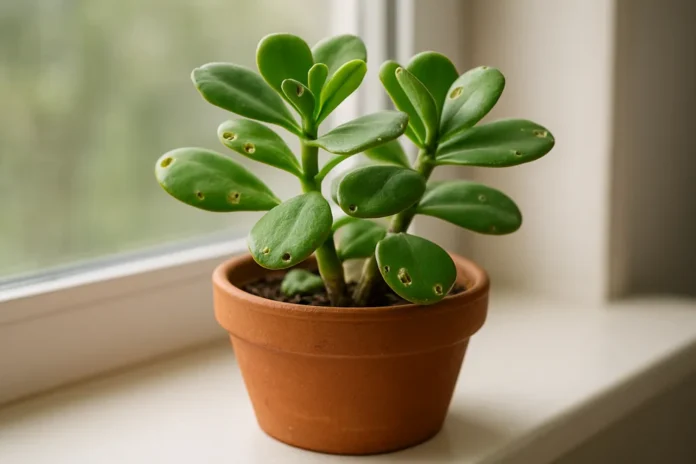
Jade plant leaves usually get holes from pest feeding, physical injury, or damaged tissue that later dries and tears open. Less often, holes show up after rot, sun damage, or handling stress weakens the leaf.
If your jade plant leaves have holes, the good news is that this symptom is usually easier to narrow down than general yellowing or leaf drop. Jade plants have thick, water-storing leaves, so when a hole appears, it often means something physically damaged the leaf tissue first, whether that was a pest, a bruise, rot, or an old injury that dried out and split.
I usually start by looking at the shape of the holes and where they show up. Clean tears on outer leaves suggest handling damage. Ragged chewing points to pests. Soft spots that turn into missing tissue often trace back to rot or a leaf that was damaged while overly wet. With jade plant leaf damage, the pattern tells you more than the hole itself.
What Holes in Jade Leaves Usually Mean
A healthy jade leaf is firm, plump, and tough enough that it does not develop holes for no reason. Unlike thin annuals that can be shredded by weather, jade leaves generally have to be weakened or punctured first. That is why holes often appear after an earlier problem, not as the first visible symptom.
The most common causes are chewing pests, accidental damage, edema-like splitting after water stress, rot-related tissue death, and scarring from sun or cold injury. In some cases, a leaf is damaged while still small, then the injured spot stretches as the leaf expands and finally opens into a noticeable hole.
- Round or irregular holes with rough edges often suggest insects or slugs.
- Torn-looking splits near the leaf edge often come from bumping, squeezing, or crowding.
- Holes that start as soft brown or black spots usually point to rot or severe tissue damage.
- Dry, papery holes can appear after sunburn, cold injury, or an old wound that has callused over.
When I diagnose jade damage, I always compare old leaves to new ones. If the newest growth is clean but older leaves have holes, the problem may already be over and you are just seeing the leftovers of earlier damage.
Chewing Pests That Can Leave Holes in Jade Leaves
Caterpillars, Earwigs, and Outdoor Feeders
If your jade spends time outdoors in warm weather, chewing insects become much more likely. Caterpillars, earwigs, grasshoppers, and even beetles can nibble succulent leaves, leaving irregular holes or missing chunks along the edges. This kind of damage is often easiest to spot in the morning, especially if the culprit feeds at night.
Chewing damage usually looks uneven rather than perfectly circular. You may also see black droppings, scraped patches, or bites on nearby plants. Jade is not always an insect's first choice, but tender new growth can still attract opportunistic feeders.
Slugs and Snails
In humid patios, shady porches, or containers set low to the ground, slugs and snails can rasp holes into jade leaves. Their feeding often leaves rounded openings, shallow gouges, or a silvery slime trail. Succulents are less appetizing to them than some bedding plants, but soft growth can still be targeted.
Less Likely Sap-sucking Pests
Spider mites, scale, and mealybugs are common on jade plants, but they do not usually chew actual holes. Instead, they cause stippling, sticky residue, weakened leaves, or corky scars. Over time, a heavily damaged leaf might dry, crack, and develop a split that looks like a hole, but the pest itself did not bite out the tissue.
- Inspect leaves after dark with a flashlight if you suspect night feeders.
- Check the undersides of leaves and the soil surface for hiding pests.
- Look for slime trails, droppings, or fresh ragged edges.
- Move outdoor jade plants away from dense foliage where insects shelter.
Physical Damage Is More Common than Many Growers Think
Jade leaves look sturdy, but they bruise and puncture more easily than many people expect. A bumped pot, a leaf pinched while moving the plant, a branch rubbing against a shelf, or even pressure from overcrowded stems can create a weak spot. As the leaf ages, that weak spot dries and tears into a hole.
This is especially common on large, mature jade plants with heavy branching. If the plant is kept on a windowsill or moved often between indoors and outdoors, some leaf damage is almost unavoidable. One or two isolated holes on otherwise healthy foliage often come down to this kind of simple mechanical injury.
- Single damaged leaves are more likely from handling than disease.
- Holes near leaf tips or margins often form where leaves were bent.
- Leaves pressed against walls, glass, or furniture can scar and later split.
- Pets and children can accidentally nick succulent leaves without obvious signs elsewhere.
If the damage is isolated, do not rush to treat the whole plant with sprays. I would first watch whether new leaves are coming in clean, because that tells you far more than old cosmetic damage does.
Overwatering, Rot, and Collapsed Leaf Tissue
Overwatering does not usually punch neat holes in a jade leaf, but it can start the chain of events that leads to them. Leaves that stay too wet internally become soft, waterlogged, and prone to cell collapse. A small mushy spot may later dry up, fall away, or tear open, leaving a hole or crater.
When rot is involved, holes are rarely the only symptom. You will often see blackened stems, yellowing leaves, sudden leaf drop, a mushy base, or a sour smell from the potting mix. Leaves may also feel translucent before they shrivel.
Signs the Issue Is Tied to Too Much Moisture
- The potting mix stays damp for many days.
- Leaves are soft instead of firm and plump.
- Brown or black spots appear before the tissue disappears.
- Multiple leaves show similar collapse, not just one or two random tears.
- The plant is in a container without fast drainage or in dense soil.
If this sounds like your jade, focus on correcting the root-zone conditions. Remove severely damaged leaves, let the soil dry properly between waterings, and repot if the mix is compact or water-retentive. A gritty succulent mix and a pot with a drainage hole make a huge difference.
Sunburn, Cold Injury, and Environmental Stress
Jade plants like bright light, but sudden direct sun can scorch leaves that were grown in lower light. Sunburn usually starts as bleached, tan, or brown patches. In severe cases, the damaged tissue dries until it becomes thin and papery, and parts of it can crack out, leaving a hole.
Cold injury can do something similar. A jade leaf exposed to a cold windowpane, frost, or chilly drafts may first look water-soaked or darkened. Once the dead tissue dries, it may split or drop out. This is more likely in winter, especially on leaves touching glass.
- Sunburn usually affects the side facing the strongest light.
- Cold damage often appears after a sudden temperature drop.
- Both problems tend to create dry, fixed damage rather than spreading chew marks.
- New growth formed after conditions improve is usually normal.
Can Fungal or Bacterial Disease Cause Holes?
Yes, but it is less common than pest damage or physical injury on jade. Some leaf spot diseases begin as small discolored lesions that expand, dry, and eventually crack or drop out. On thin-leaved plants this is sometimes called a shot-hole effect. On jade, it is possible, but the leaf's thick texture makes this pattern less common.
Disease becomes more likely when the plant is kept in poor air circulation, watered too frequently, or splashed often on the foliage. If the holes are surrounded by yellow halos, spreading dark margins, or multiple fresh lesions, a disease issue deserves a closer look.
- Remove the worst affected leaves and discard them.
- Avoid wetting the foliage when you water.
- Increase airflow and light without suddenly scorching the plant.
- Separate the jade from crowded plants until you know the issue is stable.
I get suspicious of disease when every damaged spot looks eerily similar in size and color. Random holes scattered here and there usually point me toward handling or pests instead.
How to Tell Which Cause Fits Your Plant
The fastest way to identify the cause is to match the leaf pattern with the plant's recent conditions. Think about where the jade has been, how it has been watered, and whether the damage is active or old. Holes themselves do not heal, so the real question is whether new leaves keep developing damage.
Look at the Edges of the Holes
- Ragged and uneven edges suggest chewing pests.
- Smooth tears or stretched openings suggest physical splitting.
- Dark, sunken edges suggest rot or disease.
- Dry, crisp margins suggest old sun or cold damage.
Check Where the Damage Appears
- Only outer, exposed leaves often means handling, sun, or outdoor pests.
- Damage concentrated low on the plant can hint at slugs, splashing, or poor airflow.
- Damage on the sunniest side suggests scorch.
- Damage on leaves pressed against a window or wall suggests contact injury.
Notice Whether the Plant Is Otherwise Healthy
If the jade is growing well, stems are firm, and new leaves look clean, the damage may be mostly cosmetic. If the plant is dropping leaves, turning mushy, leaning, or developing multiple spots, the issue is more likely tied to care conditions rather than a one-time injury.
How to Stop New Holes From Forming
Old holes will not fill back in, so success is measured by healthy new growth. Once you identify the likely cause, the fix is usually straightforward. Jade plants bounce back well when their roots are healthy and they are kept in bright, stable conditions.
- Inspect the plant closely, including leaf undersides, stem joints, and the soil surface.
- Remove badly damaged or mushy leaves with clean snips.
- Correct watering so the potting mix dries well between soakings.
- Repot if the soil is dense, slow-draining, or sour-smelling.
- Move the plant to bright light, but acclimate gradually to stronger direct sun.
- Protect it from cold glass, drafts, and rough handling.
- Treat confirmed pests with the least disruptive method that fits the culprit, such as hand removal, insecticidal soap for soft-bodied pests, or slug control outdoors.
Try not to change everything at once unless the plant is clearly rotting. If the jade is stable, making one or two smart corrections helps you see what actually solved the problem.
Should You Remove Damaged Jade Leaves?
You do not always need to remove leaves with holes. If a leaf is still firm and mostly green, it can continue helping the plant. Many gardeners leave minor cosmetic damage alone, especially on mature specimens.
Go ahead and remove leaves that are mushy, rotting, heavily scarred, or obviously harboring pests. If you are dealing with disease, removing affected tissue can also reduce spread. Just avoid stripping too much foliage at once, because that can stress the plant further.
How to Prevent Hole Damage in the Future
Preventing holes in jade leaves mostly comes down to consistency. Keep the plant in fast-draining soil, water thoroughly but infrequently, and give it bright light without sudden extremes. Handle the plant gently, especially when moving a heavy mature specimen.
- Use a pot with a drainage hole and a gritty succulent mix.
- Water only when the mix has dried substantially.
- Rotate the plant carefully instead of dragging leaves against surfaces.
- Check outdoor plants regularly for chewing pests.
- Acclimate slowly when moving from indoors to direct outdoor sun.
- Keep leaves from pressing against icy windows in winter.
Once you learn your jade's normal look and texture, hole problems become easier to catch early. A firm, glossy leaf is hard to damage on its own. Most holes start with a stress point you can prevent next time.
FAQ
Will Holes in Jade Leaves Heal?
No. The existing holes will stay, although the leaf may continue functioning if the rest of it is healthy. Judge recovery by whether new leaves emerge clean and firm.
Can Mealybugs Cause Holes in Jade Leaves?
Not directly. Mealybugs suck sap and weaken tissue, but they do not chew out holes. Severe infestations can leave leaves scarred or shriveled, which may later crack.
Should I Cut Off Every Leaf That Has a Hole?
Not necessarily. If the leaf is still firm and mostly green, you can leave it in place. Remove leaves that are soft, rotting, badly damaged, or covered with pests.
Do Indoor Jade Plants Get Holes From Bugs Too?
Yes, but true chewing holes are less common indoors than outdoors. Indoor plants are more likely to show old physical damage, rot-related collapse, or scarring from stress.
Can Overwatering Alone Cause Holes in Succulent Leaves?
It usually causes softness, rot, or splitting first rather than clean holes. The hole often appears later after damaged tissue dries, collapses, or falls away.
Why Do Only the Older Jade Leaves Have Holes?
Older leaves have had more time to be bumped, scarred, sunburned, or exposed to past pest feeding. If the new growth looks healthy, the problem may not be active anymore.
Are Small Round Holes a Sign of Disease?
Sometimes, but not always. Disease is more likely if the holes begin as dark or discolored spots and keep appearing in a consistent pattern across several leaves.
Need the right fix fast? Read our guide to the best succulent soils, pots, and pest treatments so your jade can put out clean, healthy new growth.
