

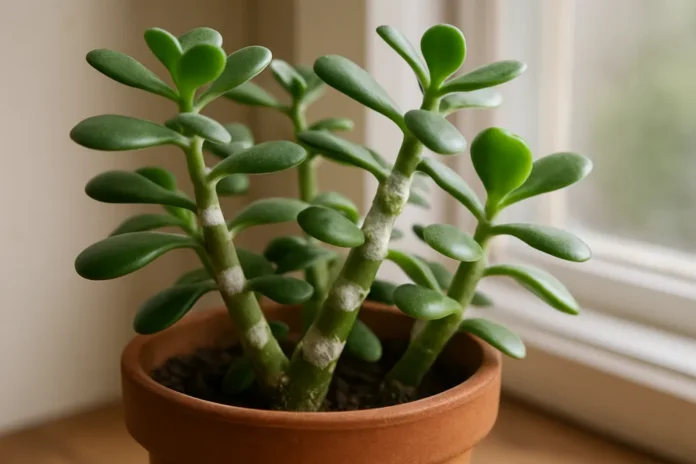
White powder on jade plant stems is most often mealybugs, powdery mildew, or dried mineral residue from water or sprays. The cause depends on whether the white coating looks fuzzy, cottony, or chalky.
If you notice a pale, dusty, or cottony coating on your jade plant, do not assume it is all the same problem. On jade plant stems, white buildup can come from pests, fungal disease, or even leftover mineral salts, and each one looks a little different once you know what to watch for.
I have found that many gardeners jump straight to treatment before they pin down the cause. That usually leads to frustration, especially with white powder that keeps coming back. The good news is that jade plants give a lot of visual clues, and once you read those clues, the fix is usually straightforward.
The Most Likely Causes of White Powder on Jade Stems
There are three common explanations for white material on jade stems. The first is mealybugs, which look like bits of cotton or fuzzy white clumps tucked into stem joints and leaf bases. The second is powdery mildew, a fungal disease that creates a more even dusty coating. The third is mineral residue, which leaves a dry chalky film after water evaporates or fertilizer salts build up.
- Mealybugs usually appear in clusters, especially where stems branch or where leaves meet stems.
- Powdery mildew tends to look like a fine white dust spread across the surface rather than little insects or cottony blobs.
- Mineral residue often sits on the outer surface in flat patches or rings and may appear after misting, overhead watering, or spraying hard water.
When I inspect a jade, I look at the pattern before I look at the color. If the white stuff is hiding in crevices and looks uneven from one stem joint to the next, I suspect mealybugs first. If it sits like flour over a broader area, fungus or residue moves higher on my list.
How to Tell Whether It Is Mealybugs
Mealybugs are one of the most common reasons a jade stem looks white. They are soft-bodied insects covered in a waxy white coating, so at first glance they can look like mold, lint, or a dusty patch. On jade plants, they often gather around stem nodes, in tight branch crotches, and along the undersides of leaves.
Unlike a flat residue, mealybugs look raised and irregular. If you touch them with a cotton swab or fingernail, they smear or lift off rather than dissolving like a mineral film. You may also notice sticky honeydew, distorted new growth, or ants nearby, since ants are attracted to the sugary waste mealybugs leave behind.
- White patches look fluffy, cottony, or tufted
- Buildup is concentrated in hidden spots rather than evenly spread
- Plant growth may look weak, puckered, or stunted
- Leaves may feel sticky or develop black sooty mold later
If your jade has these signs, pests are far more likely than a fungal issue. Mealybugs can spread quickly indoors, especially on plants kept in crowded, low-airflow spaces.
What Powdery Mildew Looks Like on Jade Plants
Powdery mildew is less common on jade than mealybugs, but it does happen. This fungal disease creates a pale gray-white or bright white coating that looks dusted on, almost like someone brushed flour across the plant. It can appear on stems, leaves, and new growth.
The coating from powdery mildew is usually flatter and more uniform than mealybugs. It may start in small spots and merge into larger patches. In more advanced cases, the affected tissue can yellow, dry out, or become slightly scarred.
- White coating looks fine and dusty, not cottony
- Spots may appear on several leaves and stems at once
- The film can spread outward over time
- The plant is often in humid, stagnant indoor air or crowded among other plants
Powdery mildew does not usually create the sticky residue that mealybugs do. It also will not have the obvious insect bodies or cotton nests that show up in crevices.
When the White Coating Is Only Mineral Residue
Sometimes the white material is not a pest or disease at all. Jade plants can end up with chalky mineral deposits from hard water, dried fertilizer splash, or leftover residue from foliar sprays. This is especially likely if the coating is concentrated on the side of the plant that gets misted or splashed.
Mineral residue usually looks flat, crusty, or powdery rather than fuzzy. It often wipes away with a damp cloth and does not return in hidden clusters the way mealybugs do. The plant otherwise looks healthy, with firm leaves and normal new growth.
- The white film is mostly on exposed surfaces
- It appears after spraying, misting, or overhead watering
- There are no sticky spots, insects, or damaged growing tips
- The residue wipes off cleanly and does not look alive or webby
If you suspect residue, wipe one stem with plain water and leave the neighboring stem alone for a few days. If the cleaned area stays clear while the other keeps collecting white film after watering, mineral buildup is a strong possibility.
A Quick Way to Narrow Down the Cause
A close inspection is usually enough to separate these problems. Use bright natural light or a phone flashlight and check stem joints, leaf bases, and the undersides of nearby leaves. You are looking for shape, texture, and placement more than color alone.
- Look closely at where the white material sits. Hidden crevices point toward mealybugs, while broad surface dusting points toward mildew or residue.
- Gently touch a small patch with a cotton swab. Cottony masses that smear or lift in clumps suggest mealybugs. A flat dusty coating suggests mildew or residue.
- Check for plant stress symptoms. Sticky leaves, ant activity, or deformed growth support a pest diagnosis. A generally healthy plant with only superficial film leans toward residue.
- Notice whether the white coating appears on leaves too. Powdery mildew often crosses from stems to leaves in a more even pattern.
If you are torn between mildew and residue, try wiping one affected area with a damp cloth. Residue often comes off cleanly and stays gone unless the same water source or spray is used again. Powdery mildew may come off partly but tends to reappear as the fungus continues growing.
How to Treat Mealybugs on Jade Stems
If the white powder is actually mealybugs, isolate the jade plant from your other houseplants right away. These pests spread easily, and they hide well in branching stems and leaf axils. Start by physically removing as many as you can before using any spray.
- Move the plant away from nearby houseplants.
- Use a cotton swab dipped in 70 percent isopropyl alcohol to dab visible mealybugs. This dissolves their waxy coating and kills them on contact.
- Wipe or rinse away dead insects and cottony residue.
- Inspect the plant every few days and repeat as needed, especially around stem joints and new growth.
- If the infestation is heavier, use an insecticidal soap labeled for houseplants or a ready-to-use horticultural oil, following label directions carefully.
Avoid drenching a jade repeatedly without letting it dry properly, since succulents are sensitive to excess moisture around stems and leaves. Also be cautious with strong oils or soaps in hot bright sun, because treated tissue can scorch.
With mealybugs, one treatment almost never finishes the job. I expect to inspect and spot-treat for at least two to three weeks because eggs and tiny crawlers hide where the original cottony clumps were easy to miss.
How to Treat Powdery Mildew on Jade Plants
If the white coating is powdery mildew, the goal is to reduce fungal spread and improve the conditions that allowed it to start. Mild cases can often be managed by trimming heavily affected growth, increasing air circulation, and keeping the plant dry on the surface.
- Remove the worst affected leaves or small stems with clean pruners.
- Place the jade where it gets bright light and better airflow.
- Avoid misting or splashing water onto stems and leaves.
- Use a houseplant-safe fungicide if the problem is spreading or returning, and follow the product label exactly.
Powdery mildew often takes hold when air is stagnant, plants are crowded, or surfaces stay damp too long. Correcting those conditions matters just as much as any spray you use.
How to Remove Harmless Residue and Prevent It From Coming Back
When the white coating turns out to be mineral residue, cleanup is simple. Wipe stems gently with a soft damp cloth. If the buildup is stubborn, use distilled water on the cloth rather than tap water so you do not leave a fresh layer behind.
To prevent more residue, avoid misting jade plants, skip foliar feeding unless a product specifically calls for it, and water at the soil line instead of over the top of the plant. If your tap water is very hard, using filtered or distilled water for cleaning and spraying can help.
- Water the potting mix directly, not the stems
- Do not let fertilizer solution dry on the plant surface
- Wipe down dusty stems occasionally
- Use cleaner water for sprays if hard water leaves marks in your home
Why Jade Plants Become Vulnerable to These Problems
A healthy jade plant is fairly tough, but certain conditions make white stem issues more likely. Mealybugs are more common on stressed plants, especially those in low light or those that were recently brought home from a store or moved indoors for winter. Powdery mildew is more likely where air is still and moisture lingers on surfaces. Residue builds up when watering habits leave repeated droplets behind.
Jade plants prefer bright light, good drainage, and a chance to dry between waterings. When those basics are in place, pest and fungal problems are usually easier to avoid and easier to catch early.
When to Worry and when the Plant Will Recover
White powder on stems is not always an emergency, but it should not be ignored. Mineral residue is mostly cosmetic. Mealybugs can weaken the plant over time, and powdery mildew can spread and scar tissue if conditions stay favorable for it.
Jade plants usually recover well once the real cause is addressed. Focus on whether new growth comes in clean and healthy. Old marks may remain for a while, especially if tissue was scarred, but a plant that is producing firm new leaves and clean stems is moving in the right direction.
FAQ
Can I Use Rubbing Alcohol on a Jade Plant for White Bugs?
Yes, spot-treating mealybugs with 70 percent isopropyl alcohol on a cotton swab is a common and effective method. Test a small area first, avoid soaking the plant, and keep it out of harsh direct sun right after treatment.
Is Powdery Mildew Common on Jade Plants?
It is less common than mealybugs, but it can happen, especially in stagnant indoor air and on plants that stay damp on the surface. It usually looks like a flat dusty film rather than cottony clumps.
Will White Mineral Residue Hurt My Jade Plant?
Usually no. Mineral residue is mostly cosmetic, though repeated overhead watering can contribute to a less healthy environment overall. Wiping it off and changing how you water usually solves the problem.
Why Does the White Stuff Keep Coming Back After I Wipe It Off?
If it returns quickly in the same hidden crevices, mealybugs are likely. If it comes back after misting or overhead watering, mineral residue is more likely. If it slowly reappears as a dusty film across surfaces, powdery mildew may be the cause.
Should I Isolate My Jade Plant if I See White Powder?
Yes, if you are not sure whether it is mealybugs or a fungal issue, isolation is a smart precaution. It helps protect nearby houseplants until you confirm the cause.
Can Overwatering Cause White Powder on Jade Stems?
Overwatering does not directly create white powder, but it can weaken a jade plant and make pest or fungal problems more likely. It can also encourage conditions that keep stems damp longer than they should be.
Can I Wash a Jade Plant to Remove the White Coating?
You can gently wipe or lightly rinse residue and dead mealybugs away, but avoid frequent soaking of the stems and leaves. Jade plants do better when their surfaces stay relatively dry.
Need a treatment that actually works? See our guide to the best mealybug sprays, insecticidal soaps, and houseplant-safe fungicides so you can choose the right fix fast.
