

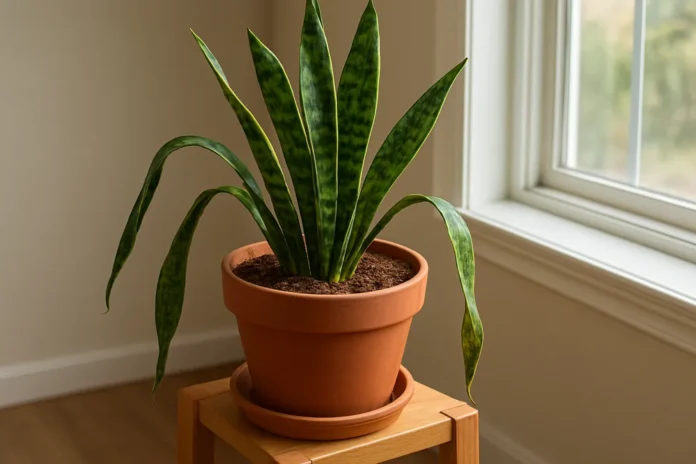
Snake plant leaves usually droop because the roots are stressed, most often from overwatering, rot, or soil that stays wet too long. Drooping can also come from underwatering, low light, cold damage, or leaves that were physically bent or injured.
A snake plant with drooping leaves can look surprisingly dramatic, especially since these plants are known for stiff, upright growth. When the leaves start leaning, folding, or flopping outward, it usually means something has interrupted the plant's ability to support that tall foliage.
In my experience, the most common reason is not age or normal growth. It is usually root trouble, often tied to watering and soil conditions. But drooping can also come from low light, cold exposure, transplant stress, crowded roots, or simple physical damage to a leaf that will never stand straight again.
The good news is that snake plant leaves drooping is often fixable if you catch the cause early. The key is to figure out whether the plant is dealing with wet roots, dry roots, weak light, or damaged tissue, because the right fix depends on what started the problem.
What Drooping Looks Like on a Snake Plant
Drooping is not always the same as soft rot or a thirsty wilt. On a snake plant, you might see leaves leaning away from the center, bending halfway up, collapsing near the soil line, or lying outward over the pot rim. Sometimes the whole plant looks loose and spread open. In other cases, only one or two leaves are affected.
The exact pattern matters. A single bent leaf often points to physical injury. Several outer leaves flopping at once can mean root stress or a plant that has become top-heavy in weak light. If the leaf bases feel mushy, that is more serious and usually suggests rot.
When I diagnose a drooping snake plant, I look at the base of the leaves first, not the tips. If the problem starts low on the plant, I suspect roots and moisture. If the base is firm but the leaf has a crease or flattened section, I usually blame physical damage or old stress that weakened that leaf.
Overwatering Is the Most Common Cause
Snake plants store water in their thick leaves and rhizomes, so they do not need frequent watering. When the soil stays wet too long, the roots cannot get enough oxygen. That stress weakens the plant's support system, and the leaves can begin to droop, soften, or separate from the center.
If overwatering continues, roots and rhizomes may start to rot. Once that happens, the leaves often lose their normal stiffness because the plant cannot move water properly anymore. A plant can look droopy even though the soil is wet, which confuses many gardeners.
Signs the Plant Has Been Kept Too Wet
- Leaves are drooping and the potting mix still feels damp several days after watering
- Leaf bases feel soft, yellowish, or translucent
- The pot feels heavy for a long time
- There is a sour or swampy smell from the soil
- The plant seems loose in the pot because roots have decayed
Overwatering does not always mean you water too often on a calendar. It can also mean the soil is too dense, the pot has poor drainage, or the plant sits in low light where moisture evaporates slowly. In other words, a small amount of water can still become too much if the roots stay wet for too long.
Underwatering Can Also Make Leaves Fold and Lean
While overwatering is more common, underwatering can also cause drooping. When a snake plant goes too long without water, the leaves may lose internal pressure and start to wrinkle, curl inward, or lean. Instead of feeling mushy, they usually feel thinner, drier, or slightly flexible.
This tends to happen more often in very bright rooms, warm dry homes, and plants that are root-bound in small pots. If the potting mix has become extremely dry and shrunk away from the pot edges, water may also be running straight through instead of soaking in evenly.
Clues That the Problem Is Dryness
- Leaves look droopy but not soft at the base
- The soil is bone dry deep in the pot
- Leaves show wrinkles, puckering, or slight inward folding
- The pot feels unusually light
- Growth has slowed and the plant looks dehydrated rather than rotten
A thirsty snake plant usually recovers better than a rotting one, but badly dehydrated leaves may not stand completely upright again. New growth is the best sign that watering has been corrected.
Root Rot and Rhizome Rot Cause Severe Flopping
If your snake plant has gone beyond mild overwatering and into root rot, drooping may become dramatic. Leaves can suddenly tilt, detach, or collapse because the underground rhizomes are no longer firm enough to anchor them. This is especially common in decorative pots without drainage, heavy peat-based mixes, or cold rooms where wet soil dries very slowly.
Rot often starts out of sight. By the time the leaves droop, the roots may already be black, mushy, or missing altogether. The base of the plant may also feel squishy if the rot has moved upward.
What Rot Usually Looks Like
- Black, brown, or mushy roots
- Soft rhizomes instead of firm pale underground stems
- Leaves yellowing from the bottom up
- A foul smell from the pot
- Leaves pulling out easily with little resistance
If you suspect rot, do not keep watering in hopes the plant will perk up. I would unpot it promptly, cut away soft roots and rhizomes with clean scissors, and repot only the firm healthy sections into a fast-draining mix.
Low Light Makes Growth Weaker and Less Upright
Snake plants tolerate low light better than many houseplants, but tolerate does not mean thrive. In dim corners, the leaves often grow longer, thinner, and less rigid. Over time, that weaker growth can arch outward and look droopy, especially on taller varieties.
Low light also slows how quickly the soil dries. That means a plant in a dark room may develop both weak foliage and chronic moisture stress at the same time. This combination is one reason snake plants that looked fine for months may suddenly start leaning.
Signs Light May Be Part of the Problem
- Leaves stretch taller than expected and spread outward
- New growth is paler, narrower, or softer than older leaves
- The plant has not produced much fresh growth for a long time
- The soil stays damp for many days after watering
- The plant sits far from a bright window
A brighter spot with indirect light usually helps future leaves grow stronger. Existing droopy leaves may not fully straighten, but the overall shape often improves over time.
Poor Soil and Drainage Keep Roots From Doing Their Job
Even if your watering schedule is reasonable, the wrong potting mix can still cause drooping. Snake plants prefer a loose, fast-draining soil that lets oxygen reach the roots. Dense, water-holding mixes stay soggy too long and encourage weak roots, which leads to floppy leaves.
I see this often in plants that were left in the original nursery mix for years or repotted into standard indoor potting soil without added drainage material. Compacted soil can become almost sponge-like around the roots while the surface looks dry, which makes watering mistakes more likely.
Better Soil Conditions for Upright Growth
- Use a cactus or succulent mix, or amend houseplant soil with perlite or pumice
- Choose a pot with at least one drainage hole
- Avoid letting water collect in a saucer or cachepot
- Repot when the mix smells stale, stays wet too long, or has compacted heavily
Cold Stress and Sudden Temperature Swings Can Weaken Leaves
Snake plants are tougher than many indoor plants, but they still dislike cold drafts, chilly windows, and sudden temperature drops. Exposure to cold can damage leaf tissue and root function, leading to drooping, soft spots, or collapsed patches that later scar over.
This often happens in winter when a plant sits against a cold windowpane, near an exterior door, or under an air-conditioning vent. The damage may not show immediately. A leaf can look fine at first and then begin leaning or softening several days later.
- Keep snake plants away from cold drafts and freezing glass
- Avoid leaving them in rooms that drop below about 50 degrees Fahrenheit
- Do not water heavily when the plant is in cool, slow-growing conditions
A Crowded Pot Can Make the Plant Unstable
Snake plants do not mind being somewhat root-bound, but extremely crowded plants can become unstable. When thick rhizomes and many tall leaves fill the pot, the clump may start pushing outward. That can make outer leaves lean or cause the whole plant to look splayed open.
Sometimes the issue is not poor health at all. The plant has simply outgrown its container or become top-heavy. If the roots circle tightly, lift the plant above the soil line, or crack the pot, repotting or dividing can help restore a more upright habit.
A very full snake plant can fool people into thinking it is thirsty because the leaves fall outward. If the leaves are still firm and healthy-colored, I check whether the root mass is physically pushing the plant apart before I blame watering.
Physical Damage Leaves a Permanent Bend
Not every drooping leaf signals an ongoing care problem. Snake plant leaves crease easily when they are bumped, pinched, shipped, or pressed against furniture or walls. Once a leaf has a hard bend, that damaged tissue usually cannot support itself the same way again.
In this case, the rest of the plant may be perfectly healthy. You may see one leaf leaning while all the others remain upright. If the leaf is still green and attractive, you can leave it. If it spoils the shape of the plant or begins to split, you can prune it off cleanly at the base.
How to Tell Which Cause Is Most Likely
The fastest way to narrow this down is to combine what the soil feels like with what the leaf bases look like. Drooping plus wet soil points toward overwatering, poor drainage, or rot. Drooping plus dry soil and wrinkled leaves points toward underwatering. Firm leaves that simply lean often suggest low light, crowding, or physical damage.
Use This Quick Symptom Guide
- Wet soil + soft base + yellowing = likely overwatering or rot
- Dry soil + wrinkled leaves + light pot = likely underwatering
- Firm but stretched leaves + dim room = likely low light
- One bent leaf + crease or scar = likely physical damage
- Healthy firm leaves spreading from an overcrowded center = likely root-bound or top-heavy growth
If you are still unsure, gently slide the root ball out of the pot. Healthy roots are firm and generally pale to orange-tan, depending on the mix and age. Rotten roots are dark, mushy, or slough off easily.
How to Fix a Drooping Snake Plant
Once you identify the cause, the fix becomes much easier. Snake plants recover best when you correct the root environment first and then let new growth show whether the plant is improving.
If the Plant Is Overwatered
- Stop watering until the mix dries well.
- Move the plant into brighter indirect light if possible.
- Check that the pot drains freely.
- Repot into a faster-draining mix if the soil stays wet too long.
If the Plant Has Root Rot
- Unpot the plant and remove old wet soil.
- Trim away all mushy roots and soft rhizomes.
- Let cut surfaces dry briefly.
- Repot only healthy sections into dry, gritty mix.
- Wait a bit before watering so damaged tissue can callus.
If the Plant Is Too Dry
- Water thoroughly until excess drains out.
- If the soil has become hydrophobic, re-wet it slowly so it actually absorbs moisture.
- Resume watering only when the mix has dried again.
If Light Is Too Low
- Move the plant closer to a bright window with indirect light.
- Rotate it occasionally for more even growth.
- Adjust watering because brighter light usually means faster drying.
If the Plant Is Crowded or Top-heavy
- Repot into a slightly wider, heavier container.
- Divide large clumps if needed.
- Remove severely damaged outer leaves to improve balance.
Do not judge recovery by old leaves alone. With snake plants, I watch the base stay firm and look for new upright growth. A damaged or previously droopy leaf may never become perfect again even when the plant is healthy.
Can Drooping Leaves Stand Back Up?
Sometimes yes, but not always. If drooping was caused by temporary thirst or mild stress, leaves may regain some firmness. If the leaf has rotted at the base, developed a crease, or stretched weakly in low light for a long time, that individual leaf may never return to a fully upright position.
That does not mean the plant is doomed. Snake plants often recover by producing healthier new leaves once conditions improve. If older foliage remains unattractive, you can prune selected leaves at the base to make room for fresh growth.
How to Prevent Drooping in the Future
- Water only when the potting mix has dried well, not on a fixed weekly schedule
- Use a fast-draining succulent-style potting mix
- Grow the plant in bright indirect light for stronger, sturdier leaves
- Keep it out of cold drafts and away from freezing windows
- Repot when the plant becomes overcrowded or the soil turns dense and stale
- Handle leaves carefully because bent tissue usually stays bent
A healthy snake plant should feel anchored, firm, and upright. When those basics are in place, drooping becomes much less likely.
FAQ
Should I Cut Off Drooping Snake Plant Leaves?
Only if they are badly damaged, mushy, split, or ruining the plant's shape. If a leaf is just leaning but still healthy, you can leave it and focus on fixing the underlying cause.
Can I Stake Drooping Snake Plant Leaves?
You can support them temporarily, but staking does not solve root or light problems. It is most useful for a plant recovering after repotting or for a leaf that is only slightly off balance.
How Often Should I Water a Snake Plant to Prevent Drooping?
There is no perfect schedule because light, temperature, pot size, and soil all change the timing. In most homes, letting the soil dry thoroughly between waterings is more important than watering on a set routine.
Why Are Only the Outer Snake Plant Leaves Drooping?
Outer leaves often droop first on crowded, top-heavy plants or after physical damage. It can also happen when older leaves are affected by root stress before newer central growth shows symptoms.
Can Low Light Alone Make a Snake Plant Droop?
Yes, especially over time. Low light can produce weaker, stretched leaves that lean outward, and it also increases the risk of overwatering because the soil dries more slowly.
Will a Drooping Snake Plant Recover After Repotting?
Usually it can, as long as the roots and rhizomes are still healthy and the new soil drains well. Repotting helps most when the old mix was staying wet too long or the plant was badly root-bound.
Do Snake Plant Leaves Droop Naturally as They Age?
Older leaves can lean a bit, especially on large plants, but sudden or widespread drooping is not normal. When many leaves flop at once, there is usually a care or root issue behind it.
Need help choosing the right soil, pot, or treatment for a struggling snake plant? Read our practical guide to the best snake plant potting mixes and care tools so you can fix root problems faster and prevent drooping from coming back.
