

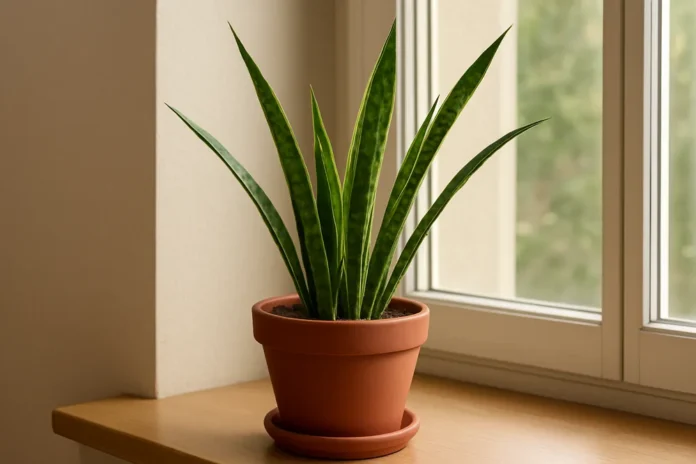
A snake plant usually gets leggy because it is not getting enough light, so new growth stretches and weakens instead of staying compact and upright. Age, crowding, root stress, and watering issues can also make leaves lean, flop, or look sparse.
A snake plant with leggy growth can be frustrating because this is one of the few houseplants people expect to stay clean, upright, and architectural with very little effort. When the leaves start stretching, leaning, spacing out, or falling open, the plant is telling you something in its growing conditions has shifted.
In my experience, most leggy snake plants are really dealing with low light first, and everything else comes after that. But leggy can mean a few different things with sansevieria, now usually sold as Dracaena trifasciata. Sometimes the leaves are truly stretched and weak. Other times they are flopping because the pot is crowded, the roots were stressed, or older foliage has simply outgrown its support.
The key is to look at how the plant is growing, not just that it looks messy. Once you match the pattern to the cause, it is usually very fixable, and new growth can come in much stronger than the old leaves.
What Leggy Looks Like on a Snake Plant
With trailing houseplants, leggy usually means long bare stems with lots of space between leaves. Snake plants are different because they grow as upright leaves from a rhizome at the soil line. So when gardeners say a snake plant is leggy, they are often describing one or more of these symptoms: leaves that are unusually long and narrow, leaves that arch or lean outward instead of standing upright, weak floppy growth, a center that looks open and sparse, or pups that are growing unevenly and stretching toward light.
- New leaves are taller but thinner than older leaves
- The plant leans strongly toward a window
- Leaves splay outward instead of forming a tight clump
- Growth looks pale, weak, or less variegated than before
- The pot has a few long leaves but does not look full
That distinction matters because a snake plant can look leggy for very different reasons. Stretched new growth points in one direction. Top-heavy old leaves, root issues, or damage point in another.
Low Light Is the Most Common Cause
Even though snake plants are famous for tolerating low light, tolerating is not the same as thriving. In dim rooms, they often survive for a long time, but the growth becomes slower, looser, and weaker. The plant puts out leaves that reach for available light, and those leaves are often less sturdy than growth produced in brighter conditions.
This is especially common when a plant has been moved farther from a bright window, shaded by curtains or furniture, or kept in an interior room with mostly artificial light. The change can be gradual, so the plant may not suddenly collapse. Instead, it slowly loses that compact, upright form people want from a snake plant.
When I diagnose a leggy snake plant, I compare the newest leaves to the oldest ones. If the new leaves are noticeably thinner, softer, and bending toward one side, I usually suspect light before anything else.
- Leaves angle toward the nearest window
- New growth is taller but weaker than older foliage
- Variegated types may lose some color contrast in dim light
- The plant grows very slowly but still looks stretched
- The whole clump opens up instead of staying dense
Snake plants generally do best in bright indirect light, and many varieties can handle a little gentle direct sun indoors. A spot near an east window or a few feet back from a bright south or west window is often enough to produce sturdier growth. If the plant has been in deep shade, move it gradually so the leaves do not scorch.
Uneven Light Makes Leaves Lean and Spread
Sometimes the problem is not just too little light. It is light coming from one side only. Snake plants naturally grow toward the strongest light source, so a pot left in the same position for months can start to fan outward. This can make a healthy plant look leggy even if the leaves are not truly stretched.
One-sided growth is especially common on windowsills, corner shelves, and rooms where the plant gets a narrow beam of afternoon sun. The side facing the room weakens while the window side stays tighter and stronger.
- The whole plant tilts in one direction
- Leaves on the window side stand more upright
- Leaves on the darker side arch outward or twist
- Pups emerge and immediately angle toward the light
Rotating the pot every week or two helps keep growth balanced. It will not make old leaves straighten completely, but it can prevent the plant from becoming more uneven.
Overwatering Can Make a Snake Plant Look Floppy and Sparse
A lot of people describe a snake plant as leggy when the real issue is weakness from too much water. Snake plants store moisture in their leaves and rhizomes, so constantly damp soil can stress the roots and soften the base of the plant. When roots are damaged, the leaves lose support and may lean, bow, or collapse outward.
This kind of flop is different from low-light stretching. Instead of long thin growth, you often see leaves that feel softer than normal, yellowing near the base, mushy tissue, or a potting mix that stays wet for too long. If rot has started, the plant may look both sparse and unstable.
- Leaves feel soft, wrinkled, or mushy near the base
- Outer leaves suddenly lean or fall over
- Soil stays damp for more than a week or two indoors
- There is a sour smell in the pot
- Roots or rhizomes look brown, soft, or hollow
If you suspect watering stress, do not just water less and hope for the best. Slide the plant out of the pot and check the rhizomes and roots, because a snake plant with hidden rot often keeps declining even after the surface soil dries.
Use a pot with drainage and a fast-draining mix that does not stay soggy. Water thoroughly, then let the soil dry well before watering again. In many homes, that means watering far less often in winter than in summer.
Underwatering and Drought Stress Can Also Create Weak Growth
Snake plants are drought tolerant, but they are not improved by chronic neglect. If a plant goes bone dry for too long, especially during active growth, it may produce narrower leaves and lose some firmness. Repeated dehydration can also make older leaves crease, wrinkle, and lean, which adds to the leggy look.
This tends to happen when the plant is in very bright light, a warm room, or a porous clay pot that dries quickly, but is still watered on a very infrequent schedule. The rhizomes can survive, yet the plant no longer has enough steady moisture to push robust foliage.
- Leaves look thinner than normal
- Leaf surfaces wrinkle or fold slightly
- Growth stalls for long periods
- The potting mix pulls away sharply from the pot sides
- Older leaves lose rigidity and arch outward
The fix is not to keep the soil constantly moist. It is to water deeply when the mix has dried enough, then repeat before the plant has spent weeks in extreme drought. Consistency produces better form than either chronic overwatering or chronic underwatering.
A Crowded Pot Can Force Growth Outward
Snake plants like being somewhat snug in their pots, but there is a point where crowded growth starts to distort the shape of the plant. When rhizomes and roots fill every available space, new leaves and pups may push at odd angles, and mature leaves may be forced outward by the pressure inside the pot.
This is one reason an old snake plant can look leggy even when the light is decent. The issue is not weak growth so much as cramped geometry. You may also notice the nursery pot bulging, cracking, or drying out very quickly because there is more root than soil left.
- Roots circle densely around the pot
- Rhizomes press against the container wall
- New pups appear at the edge and lean sideways
- Water runs through quickly with little soil retention
- The clump looks crowded but not full
If the plant is severely rootbound, repotting one size up can help. You can also divide the clump if you want a tidier shape or more than one plant. Use a container only slightly larger than the old one, because a much bigger pot can stay wet too long.
Age and Natural Growth Habit Matter
Not every tall or leaning snake plant is unhealthy. Some varieties naturally grow taller, looser, or more arching than others. Older leaves can also spread with time, especially if they have become top-heavy. A mature plant often looks less compact than a young nursery specimen, even when it is perfectly healthy.
This is especially true for larger cultivars and any plant that has been growing for years in the same container. The leaves may no longer form a tight upright fan, but if they are thick, firm, and well-colored, that is often just maturity rather than a problem.
I try not to judge a snake plant by one floppy outer leaf. Older leaves are the first to lean with age, while the newest center growth tells you whether the plant is actually improving or declining.
If only the oldest outer leaves are sprawling and the new center leaves look sturdy, you may simply need light grooming, division, or support rather than a major rescue.
Poor Potting Mix and Drainage Can Weaken the Plant
A dense, peat-heavy potting mix can contribute to legginess indirectly by keeping roots too wet and poorly aerated. Snake plants prefer a loose, fast-draining mix that lets excess water move out quickly. If the roots sit in a compacted medium, they cannot support strong top growth as well.
You may see a plant that is technically alive but never looks robust. Leaves stay narrow, growth is slow, and the clump gradually slumps outward. This is common with older store-bought soil that has broken down over time.
- Soil dries hard and compacted on top but stays wet below
- Water pools or drains very slowly
- Roots are sparse or discolored when checked
- The plant wobbles because the root system is weak
- New growth remains small despite the growing season
A cactus or succulent mix amended with extra perlite, pumice, or orchid bark usually works better than standard moisture-retentive potting soil. The goal is not zero water retention. It is faster drainage and better air around the roots.
How to Tell Which Cause Is Affecting Your Plant
Because snake plant legginess can mean stretch, flop, or spread, diagnosis starts with pattern. Look at the newest leaves, the base of the plant, the soil, and the direction of growth. You are trying to answer whether the plant is weak, root-stressed, cramped, or simply aging.
- Check the newest leaves. Thin, reaching leaves suggest low light.
- Look at the direction of the lean. A strong tilt toward a window points to uneven light.
- Feel the leaf bases. Soft or mushy tissue suggests overwatering or rot.
- Inspect the soil. A mix that stays wet too long or feels compacted can stress roots.
- Lift the plant from the pot if needed. Dense roots, crowded rhizomes, or rot will be easier to confirm that way.
- Compare old and new growth. If new leaves are strong but old leaves are sprawling, age or past stress may be the bigger story.
It helps to avoid changing everything at once. If you repot, move it, change watering, and fertilize on the same day, you will not know what actually solved the problem.
How to Fix a Leggy Snake Plant
The best fix depends on the cause, but most leggy snake plants improve with brighter light, steadier watering, and a root-zone check. Old stretched or leaning leaves usually will not become perfectly upright again, so the goal is to improve future growth and decide whether to prune or divide what is already there.
- Move the plant into brighter indirect light, or give it some gentle direct morning sun.
- Rotate the pot regularly so growth stays balanced.
- Water only after the mix has dried well, then water thoroughly.
- Repot if the soil is compacted, the pot is overcrowded, or roots show rot.
- Trim badly damaged, mushy, or collapsed leaves at the base with a clean blade.
- Divide the clump if it is pushing itself outward and no longer has a tidy shape.
If you cut off stretched leaves, the plant will not branch from those cut points the way some vining houseplants do. New leaves will come from the rhizome below the soil. That means patience matters. Judge recovery by the next flush of growth, not by whether old leaves straighten.
If appearance is the main issue, propagation can also help. Healthy sections of leaves can be rooted, though variegated cultivars may not come true from leaf cuttings. Division is the better option if you want to preserve variegation and get an instant fuller result.
How to Keep New Growth Compact and Upright
Prevention is much easier than correcting a badly stretched plant. Once a snake plant has the right balance of light, drainage, and watering, it usually stays handsome with very little attention.
- Give it bright indirect light for most of the day
- Rotate the pot to prevent leaning
- Use a container with drainage holes
- Choose a fast-draining soil mix
- Water based on soil dryness, not a rigid calendar
- Repot when the clump becomes truly crowded, not just slightly snug
- Wipe dust off leaves so they can capture light more efficiently
I also avoid tucking snake plants into the darkest corner just because they survive there. They may live, but they rarely look their best. If you want that strong vertical form, light is what keeps it.
FAQ
Can a Leggy Snake Plant Become Upright Again?
Old stretched or leaning leaves usually do not fully straighten, especially if they formed in low light. What improves is the new growth after you correct the plant's conditions.
Should I Cut Off Leggy Snake Plant Leaves?
You can remove leaves that are badly bent, damaged, mushy, or ruining the shape of the plant. Cut them cleanly at the base, but remember that pruning will not make that same leaf regrow thicker.
Do Snake Plants Need Direct Sun to Avoid Legginess?
Not necessarily. Bright indirect light is usually enough to keep growth stronger and more compact, though gentle morning sun can help indoors.
Why Is My Snake Plant Leaning but Not Soft?
A firm but leaning snake plant often points to low light, one-sided light exposure, crowding in the pot, or simple age in the outer leaves. Softness at the base is more concerning for watering or root problems.
Will Fertilizer Fix a Leggy Snake Plant?
No, fertilizer alone will not correct legginess and can make stress worse if the roots are already compromised. Light, drainage, and watering habits matter more than feeding in this case.
How Often Should I Water a Snake Plant That Looks Leggy?
Water when the potting mix has dried well, rather than on a fixed weekly schedule. The exact timing depends on light, temperature, pot size, and soil type.
Is a Rootbound Snake Plant More Likely to Look Leggy?
Yes, if it is extremely crowded. Tight roots and packed rhizomes can force leaves and pups outward, making the plant look messy, open, or floppy.
Can I Propagate a Leggy Snake Plant?
Yes. You can divide the rhizomes or root leaf cuttings from healthy tissue. Division is best if you want a faster, fuller plant and need to preserve variegation.
Want a sturdier, better-looking plant fast? Read our guide to the best soil mixes, pots, and grow lights for snake plants so you can fix weak growth and keep new leaves upright.
