

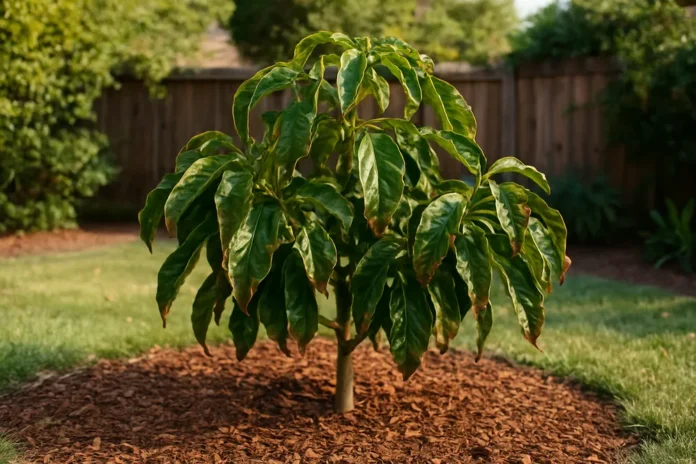
Avocado tree leaves usually curl because the tree is stressed by watering problems, heat, dry air, salt buildup, pests, or root trouble. Curling is the tree's way of reducing moisture loss or reacting to damaged roots and foliage.
Curled leaves on an avocado tree can be unsettling, especially when the rest of the tree looked fine just a week or two earlier. In my experience, avocado leaf curl is usually a stress signal rather than a disease by itself. The leaves are telling you something about water, heat, roots, or pests before the problem becomes more obvious elsewhere.
The tricky part is that several issues can make avocado tree leaves curl in similar ways. Some leaves roll inward to conserve moisture, some cup downward when roots stay too wet, and some twist because insects are feeding on tender growth. Once you match the curling pattern with the tree's growing conditions, the cause is often much easier to narrow down.
What Leaf Curling Looks Like on Avocado Trees
Leaf curl is not always dramatic at first. On avocado trees, you may see leaf edges rolling under, leaves folding slightly along the center vein, tips hooking downward, or brand-new leaves looking puckered and distorted. Sometimes only the youngest growth is affected. In other cases, older leaves curl first and may later turn brown at the edges.
It helps to notice whether the leaves are also dry, crispy, yellowing, spotted, sticky, or limp. Curling paired with brown margins often points toward drought stress or salt injury. Curling with limp, soft leaves can suggest root trouble from soggy soil. Distorted new growth with little insects or shiny residue often points to sap-sucking pests.
- Leaves curling upward or inward during hot, dry weather often signal moisture stress.
- Leaves drooping and curling downward in wet soil can point to overwatering or poor drainage.
- Young leaves that are twisted, puckered, or misshapen are more often linked to pests feeding on fresh growth.
- Curled leaves with brown edges or tip burn commonly show salt buildup or inconsistent watering.
When I diagnose avocado stress, I compare both new growth and older leaves before I do anything else. If the newest leaves look distorted but older foliage is mostly normal, I start by suspecting pests. If older leaves are curling and burning at the margins, I look much harder at water and salts.
Watering Problems Are the Most Common Cause
Underwatering and Drought Stress
Avocados have shallow, sensitive roots, so they react quickly when the soil dries too far. During hot spells, leaves often curl inward or downward to reduce water loss. You may also notice leaf edges becoming dry, tan, or brittle, especially on container trees or newly planted trees that have not established a broad root system yet.
A thirsty avocado usually has dry soil several inches down, and the tree may look dull rather than lush. Leaves can hang a bit lower than normal before they crisp. If drought stress continues, the tree may shed some leaves to protect itself.
Overwatering and Poor Drainage
Too much water can curl avocado leaves too, which is why this symptom confuses so many gardeners. When roots sit in soggy soil, they cannot get enough oxygen. The foliage may curl, droop, or look weak even though the soil is wet. This often happens in heavy clay, in low spots, or in pots without excellent drainage.
Overwatered avocado trees may also develop yellowing leaves, leaf drop, or slow growth. If the soil smells sour, stays wet for days, or feels muddy below the surface, poor drainage is a strong possibility. Avocados really dislike wet feet, and root stress can show up surprisingly fast.
- Underwatered trees often have dry soil, curled leaves, and crisp brown tips or edges.
- Overwatered trees often have wet soil, limp curled leaves, yellowing, and stalled growth.
- Container avocados swing between too dry and too wet more easily than in-ground trees.
- Recently planted trees need consistent moisture, but they should never sit in saturated soil.
If watering is the likely issue, resist the urge to make huge swings. I get the best results by correcting moisture gradually and then judging success by how the next flush of leaves looks, not by whether damaged leaves flatten back out.
Heat, Sun, Wind, and Dry Air Can Make Leaves Curl
Avocado trees prefer warm conditions, but intense afternoon sun, hot wind, and very low humidity can still push them into stress. In many parts of the U.S., a stretch of high heat causes leaves to curl as a protective response. The tree is trying to reduce surface exposure and conserve moisture.
This is especially common on young trees, patio trees in black nursery pots, and trees that were recently moved from shade to full sun. Leaves may curl and look slightly scorched on the exposed side of the canopy. In dry inland climates, wind can be just as damaging as direct heat because it strips moisture from leaves quickly.
Signs Heat Stress Is the Main Driver
- Curling is worst after very hot afternoons and may ease somewhat overnight.
- Leaf edges may look dry or singed, especially on the sunniest side of the tree.
- The soil dries rapidly, particularly in containers or raised planting areas.
- Newly planted trees and trees with thin canopies are affected first.
When weather is the cause, the tree often stabilizes once temperatures moderate and moisture becomes more even. Some damaged leaves will remain curled or scorched, but healthy new growth should come in normally if the tree's roots stay in good shape.
Salt Buildup and Fertilizer Burn Are Frequent Hidden Causes
Avocado trees are more sensitive to salts than many other fruit trees. If irrigation water is mineral-heavy, fertilizer is applied too aggressively, or salts accumulate in a potting mix, leaves can curl and develop tip burn. This problem often sneaks up slowly and looks a lot like drought stress.
The classic clue is browning that starts at the tips or margins of older leaves, followed by curling and a dry, papery feel. You may be watering regularly, but the roots still struggle because excess salts interfere with normal water uptake. In containers, salt buildup is especially common because the minerals have nowhere to go unless water drains deeply through the pot.
When to Suspect Salts or Fertilizer Injury
- Leaf tips and edges brown first, then curl.
- You fertilized recently or more heavily than usual.
- A white crust appears on the soil surface or around the pot rim.
- The tree is watered often but still acts stressed.
- Tap water in your area is hard or high in dissolved minerals.
If this is the issue, the solution is usually less about adding something and more about reducing what has built up. Backing off fertilizer, flushing container soil with plain water when drainage is good, and avoiding repeated light watering all help prevent the problem from getting worse.
Pests Can Curl Tender Avocado Leaves
Several small pests feed on avocado foliage, especially tender new leaves, and their feeding can cause curling or distortion. Thrips, mites, aphids, and sometimes whiteflies are the usual suspects. These pests pierce plant tissue and suck out fluids, which can leave leaves twisted, cupped, puckered, or curled around the damaged area.
Pest-related curling often shows up most clearly on fresh growth because those leaves are softer and easier to damage. You might also notice stippling, bronzing, sticky honeydew, black sooty mold, or fine webbing depending on the insect involved. The tree may otherwise be watered correctly, which helps separate pest injury from root stress.
Common Pests Linked to Curled Leaves
- Aphids can cluster on new shoots and make young leaves curl or pucker.
- Spider mites often cause fine stippling, bronzing, and curling in hot, dry conditions.
- Thrips can scar and distort tender leaves as they expand.
- Whiteflies may cause leaf stress and sticky residue when populations build up.
Pest pressure is often worse on stressed trees, so it is common to see two issues at once. A tree weakened by heat or inconsistent watering is more likely to struggle when insects move in. That is why treating the pest alone does not always solve the overall problem.
I try not to spray anything until I have actually checked the undersides of leaves and the newest tips with a close look. Avocados can hold onto damaged foliage for a while, and I have seen gardeners mistake old heat stress for an active insect problem simply because the leaves stayed curled.
Root Problems and Disease Can Also Be Involved
Although leaf curl is more often tied to care and environment, serious root stress can also trigger it. Avocado roots are vulnerable to rot when soil stays wet or drainage is poor. Root rot reduces the tree's ability to absorb water and nutrients, so the leaves may curl even when the soil is moist.
Phytophthora root rot is one of the most concerning issues for avocado trees. It tends to show up where soil is compacted, irrigation is excessive, or planting sites stay damp. The canopy may thin, leaves may wilt or curl, and growth slows noticeably. Over time, leaves can yellow, brown, and drop.
Clues That Root Trouble May Be Deeper than Simple Overwatering
- Soil drains poorly and remains wet long after watering.
- The tree keeps declining even after you reduce irrigation.
- Leaf drop, yellowing, and dieback accompany the curling.
- The trunk base stays too damp or mulch is piled against it.
- The tree was planted too deeply or in heavy clay.
If root disease has begun, recovery depends heavily on improving drainage and reducing additional stress. Severely affected trees can be difficult to save, especially if the root zone has remained saturated for a long time. Early correction gives the best chance of seeing healthy new flushes.
How to Narrow Down the Real Cause and Help the Tree Recover
Because avocado leaf curl has several look-alike causes, the best approach is to match the symptom with the tree's conditions instead of guessing from the leaf shape alone. Start with the simplest questions: Is the soil staying too dry or too wet? Did the weather turn hot and windy? Was fertilizer recently applied? Are the youngest leaves distorted or sticky? Those clues usually point you in the right direction.
A Practical Troubleshooting Checklist
- Feel the soil below the surface, not just the top inch. Avocado roots need even moisture, not repeated extremes.
- Look at where the curling appears first. Older leaves often reflect water or salt stress, while new growth more often shows pest injury.
- Check the weather from the past week. Heat spikes and wind commonly trigger temporary curling.
- Inspect leaf undersides and shoot tips for aphids, mites, thrips, webbing, or sticky residue.
- Think back to recent fertilizer use, especially in containers or with synthetic feeds.
- Assess drainage around the root zone. Standing water, compacted clay, and buried root flares all raise concern.
What Usually Helps
- Water deeply but only when the root zone begins to dry appropriately for the season and site.
- Improve drainage if soil stays wet, and avoid letting pots sit in saucers of water.
- Mulch the soil surface lightly to buffer temperature and moisture, but keep mulch away from the trunk.
- Reduce or pause fertilizer if tip burn and salt buildup are likely.
- Rinse or treat pests only when you have confirmed they are present.
- Protect young trees from intense afternoon sun and drying wind during extreme weather.
Do not expect curled leaves to look perfect again. Once avocado leaves are physically distorted, scorched, or salt-burned, they often stay that way until they eventually drop. The real sign of improvement is healthy new growth that emerges flat, green, and undamaged.
When Curled Avocado Leaves Are a Minor Issue and when They Are Serious
A little curling during a heat wave or after a brief dry spell is usually not a crisis, especially if the tree perks up once conditions improve. Many avocado trees recover well from short-term weather stress. If the canopy is still green, the branches are flexible, and new buds are forming, the tree often has plenty of life left in it.
The problem becomes more serious when curling is widespread and accompanied by yellowing, heavy leaf drop, blackened roots, dieback, or consistently wet soil. Those signs suggest the issue has moved beyond normal environmental stress. Large in-ground trees may hide root problems until the canopy begins thinning, so persistent decline should not be ignored.
- Usually minor: temporary curling in heat, slight edge roll, otherwise healthy color, and normal new growth.
- More concerning: curling with yellowing, wilt, dieback, soft roots, or a sour, waterlogged root zone.
- Urgent: rapid canopy decline, severe leaf drop, trunk stress, or a tree that keeps worsening despite corrected watering.
FAQ
Can Avocado Leaves Uncurl After the Problem Is Fixed?
Sometimes mild curling improves, but many damaged leaves stay curled or marked. The better sign is that new leaves come in healthy once the tree is no longer stressed.
Do Indoor Avocado Trees Get Curled Leaves for the Same Reasons?
Yes, but indoor trees are especially prone to dry air, inconsistent watering, and spider mites. Containers also make overwatering and salt buildup more common.
Should I Remove Curled Avocado Leaves?
Only remove leaves that are mostly dead, badly damaged, or diseased. Slightly curled leaves can still photosynthesize and help the tree recover.
Can Too Much Fertilizer Cause Avocado Leaves to Curl?
Yes. Excess fertilizer can burn roots and create salt buildup, which often shows up as curled leaves with brown tips or margins.
Why Are Only the New Avocado Leaves Curling?
When only new growth is curling, pests such as aphids, thrips, or mites are more likely than deep root stress. Tender leaves show feeding damage faster than mature leaves.
Is Leaf Curl on Avocado Trees Caused by a Virus?
For home gardeners, viruses are not the usual reason avocado leaves curl. Water stress, heat, salts, pests, and root problems are far more common causes.
Still trying to pinpoint what is stressing your avocado tree? Read our avocado tree care and treatment guides to choose the right watering routine, soil setup, and pest control products before the damage spreads.
