

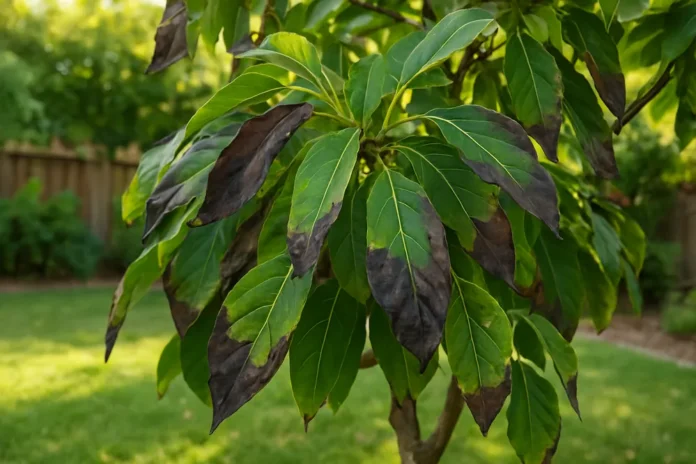
Avocado tree leaves usually turn black because of cold injury, leaf burn from salts or drought stress, overwatering, or disease. The exact cause depends on whether the blackening starts at the tips, edges, spots, or entire leaves.
Seeing avocado tree leaves turning black can be alarming, especially when a healthy-looking tree seems to decline fast. In my experience, black leaves on avocado are often a stress signal rather than an instant death sentence. The key is noticing where the blackening starts, how quickly it spreads, and what has changed in the tree's environment.
Avocados are a little particular. They dislike hard freezes, soggy roots, salty soil, hot reflected heat, and sudden swings in care. A black leaf tip means something different from black patches in the middle of the leaf, and that difference matters when you are deciding whether to water less, flush the soil, prune, or leave the tree alone for a bit.
The good news is that you can usually narrow this down by reading the symptom pattern. Once you match the blackening to the most likely cause, the right fix becomes much clearer.
What the Blackening Pattern Is Telling You
Before treating anything, look closely at black avocado leaves and ask a few simple questions. Is the damage mostly on the tips and margins? Did it appear after a cold night? Are the leaves dry and crispy, or soft and limp? Is the newest growth affected first, or the oldest leaves? These clues often tell you more than a fertilizer bottle ever will.
- Black or dark brown tips and edges usually suggest salt buildup, drought stress, or inconsistent watering.
- Whole leaves turning dark after a cold snap often point to frost or freeze damage.
- Black spots or blotches can suggest fungal or bacterial leaf disease, especially in humid conditions.
- Leaves that blacken and drop while the soil stays wet can signal root stress from overwatering or poor drainage.
- Scorched patches on sun-exposed leaves may be sunburn, especially after pruning or sudden heat.
When I diagnose avocado leaf damage, I look at several leaves from different parts of the canopy instead of one dramatic leaf near the outside. If the outer, upper leaves are worst, I think weather or sun. If the lower canopy and the whole tree look stressed, I start thinking roots.
Cold and Frost Damage
Cold injury is one of the most common reasons avocado leaves suddenly turn black. Avocado trees are not truly cold-hardy, and even a brief dip below their comfort zone can damage leaf tissue. Often the leaves first look water-soaked or limp, then they dry into blackened or dark brown patches over the next few days.
This kind of damage is especially common on young trees, tender new growth, and trees planted in exposed spots where cold air settles. A wall, patio, or slope can create a warmer pocket, while low areas in the yard can turn into frost traps.
Signs It Is Cold Damage
- Blackening appears soon after a frost or unusually cold night.
- New leaves and soft stem tips are hit hardest.
- Damage is often widespread on the exposed side of the tree.
- Leaves may hang limp before turning dry and dark.
If frost is the cause, do not rush to prune right away. Damaged leaves look ugly, but they can still shade and protect inner wood while the tree recovers. Wait until warmer weather and clear new growth show you what is truly dead. Then remove only the parts that stay dry, brittle, and lifeless.
Salt Burn and Fertilizer Burn
Avocados are very sensitive to salts. That includes salts from overfertilizing, poor-quality irrigation water, and natural buildup in the soil. When too much salt accumulates around the roots, the tree struggles to take up water properly. The result is often blackened or dark brown leaf tips and edges, sometimes with a crisp texture.
This is especially common in containers, in arid climates where water evaporates quickly, and in landscapes watered lightly and often instead of deeply. If you fertilized recently and the blackening started soon after, fertilizer burn moves high on the suspect list.
How Salt Damage Usually Looks
- Tips turn brown, then darken toward black.
- Leaf edges dry out before the center of the leaf does.
- Older leaves often show symptoms first.
- The tree may keep producing new leaves, but they start showing the same burned edges over time.
If this sounds familiar, flush the soil deeply so excess salts move below the root zone, provided the soil drains well. Stop fertilizing for a while, and avoid quick-release products that can hit avocado roots too hard. If you grow in a pot, occasional thorough watering until excess runs out the drainage holes helps prevent salts from concentrating.
I would much rather underfeed an avocado than overfeed it. They respond better to gentle, steady nutrition than a heavy dose meant to force fast growth.
Watering Problems and Root Stress
Both too little water and too much water can lead to blackening leaves on avocado, but the texture and whole-tree behavior are different. Drought stress usually causes leaves to dry from the tips and edges inward. Overwatering tends to create a more general decline, with limp foliage, yellowing, leaf drop, and roots that cannot breathe.
Avocado roots need moisture, but they also need air. Heavy clay, a low planting spot, or frequent shallow watering can keep the root zone too wet for too long. Once the roots are stressed, leaves may darken, wilt, and eventually fall.
Clues That Point to Underwatering
- Leaf tips and edges become dry, crisp, and dark.
- The soil pulls away from the sides of the pot or feels dry several inches down.
- Leaves may curl inward during hot afternoons.
- Fruit may drop early if stress is severe.
Clues That Point to Overwatering
- Leaves darken but may feel limp before they dry.
- Yellowing often appears along with blackening.
- The soil stays wet for days after watering.
- Growth slows, and leaves drop without crisping first.
The best watering pattern for avocado is usually deep and infrequent rather than frequent and shallow. Let the upper layer of soil begin to dry before watering again, but do not let the whole root zone turn bone dry. Container trees need more frequent checks than in-ground trees because potting mix dries faster and salts build up faster.
Root Rot and Poor Drainage
If your avocado tree has blackening leaves plus steady decline, root rot is a serious possibility. Avocados are famously vulnerable to root problems in poorly drained soil. The most common issue is Phytophthora root rot, which thrives in wet conditions and gradually weakens the tree's ability to absorb water and nutrients.
What makes root rot confusing is that the leaves can look drought-stressed even though the soil is wet. The roots are damaged, so the canopy acts thirsty because it cannot take up water properly.
Warning Signs of Root Rot
- Persistent wilting despite moist soil.
- Leaf blackening combined with yellowing and drop.
- Little or weak new growth.
- A sour smell or chronically soggy soil around the root zone.
- Decline that worsens after rainy periods or frequent irrigation.
The main response is improving drainage and reducing water stress, not simply adding more fertilizer. Avoid piling mulch against the trunk, and never let the root zone stay swampy. In severe cases, especially with mature trees, local extension guidance or arborist help can be worthwhile because root diseases are hard to reverse once advanced.
One of the easiest mistakes with avocado is treating a root problem like a feeding problem. If a stressed tree looks pale and weak, people often fertilize, but that can worsen root burn when the real issue is suffocation below the soil line.
Sunburn and Heat Stress
Although avocados like warm weather, their leaves can still burn in intense sun, especially during heat waves or after sudden exposure. Blackened patches may start as tan, bronze, or brown scorch marks on the most exposed leaves, then darken with time. Young trees and recently pruned trees are especially vulnerable because their canopy is thinner.
Heat reflected from walls, pavement, gravel, or stucco can make leaf burn much worse. I see this often when an avocado is planted in a beautiful but harsh patio corner that bakes all afternoon.
When Heat Is Likely the Problem
- Damage is worst on the sunny side of the tree.
- Leaves show irregular scorched patches rather than tip burn alone.
- Symptoms appear after extreme heat or intense afternoon sun.
- The tree was recently moved, planted, or heavily pruned.
For heat stress, keep moisture consistent, protect young trees during severe hot spells, and avoid unnecessary pruning that exposes tender leaves and branches. A healthy canopy is part of the tree's own sun protection system.
Leaf Spot and Other Diseases
Not all blackening on avocado leaves comes from weather or watering. Fungal and bacterial diseases can create dark spots, blotches, or lesions that spread across the leaf surface. These are more likely when the canopy stays damp, air circulation is poor, or overhead irrigation keeps splashing foliage.
Leaf spot symptoms usually look different from uniform edge burn. Instead of a dry margin, you often see distinct dark lesions, sometimes with a yellow halo, sometimes merging into larger dead areas. Severely infected leaves may drop early.
Signs Disease May Be Involved
- Spots appear scattered across the leaf rather than only at tips.
- Leaves have dark lesions with defined borders.
- Humidity or frequent rain preceded the problem.
- The canopy is dense and stays wet for long periods.
Remove badly affected fallen leaves, avoid wetting the foliage when you water, and improve airflow if the tree is crowded. If spotting is spreading aggressively or affecting fruit as well as leaves, a local diagnosis helps because treatment depends on the specific disease and your region.
Container Avocados Have a Few Extra Risks
Potted avocado trees often develop black leaves for reasons that overlap with in-ground trees, but the trouble happens faster. Containers dry out quickly, roots heat up faster, and fertilizer salts accumulate more easily. At the same time, a pot without excellent drainage can stay too wet around the roots.
If your avocado is in a container, pay close attention to the potting mix, drainage holes, and watering rhythm. A tree in a decorative pot without enough drainage can go downhill even when the top inch looks normal.
- Use a fast-draining potting mix rather than heavy garden soil.
- Make sure the pot drains freely after every watering.
- Flush the pot occasionally to reduce salt buildup.
- Protect the container from severe cold and intense reflected heat.
- Repot if roots are circling tightly and water runs straight through without soaking in.
What to Do Right Now
If you are standing in front of a blackening avocado and want a calm plan, start by matching the symptom pattern to the likely cause. Then make one or two meaningful corrections instead of changing everything at once.
- Think back over the last two weeks for frost, heat, fertilizing, or watering changes.
- Check whether the leaf damage is on tips, edges, spots, or whole leaves.
- Feel the soil several inches deep to judge moisture, not just the surface.
- Pause fertilizer if the tree is stressed or if salt burn is possible.
- Water deeply only if the root zone is actually drying out and drains well.
- Wait before pruning unless you see clearly dead, brittle wood or obvious disease cleanup needs.
Most damaged leaves will not turn green again, so judge recovery by new growth, not by the old leaves. Once the cause is corrected, healthy new leaves are the best sign that your tree is on the mend.
Change one variable at a time whenever possible. If you flush the soil, reduce watering, and fertilize all in the same week, it becomes much harder to tell what actually helped or hurt.
When Black Leaves Are an Emergency and when They Are Not
A few blackened leaves after a cold night or dry spell usually are not an emergency. Avocados often recover if the roots are healthy and the growing points are still alive. On the other hand, rapid leaf drop, blackening across most of the canopy, trunk damage after a freeze, or constant wet soil call for quicker action.
- Less urgent: a few burned tips, scattered damaged leaves, minor sun scorch, or light frost damage limited to outer leaves.
- More urgent: blackening with wilt in wet soil, major branch dieback, trunk splitting after freeze, or disease symptoms spreading fast through the canopy.
If the tree is mature and valuable, do not hesitate to get local expert help for root rot, freeze injury, or diseases that may affect fruit production. Avocados can decline slowly for months, so earlier diagnosis can save a lot of time.
FAQ
Will Black Avocado Leaves Turn Green Again?
No. Damaged leaf tissue does not recover its green color. Look for healthy new growth as the real sign that the tree is improving.
Should I Cut Off Black Leaves From My Avocado Tree?
Usually only if the leaves are fully dead, dry, or diseased enough to justify cleanup. After cold damage, it is often better to wait before pruning because damaged foliage can still protect inner wood.
Can Overwatering Make Avocado Leaves Turn Black?
Yes. Overwatering can stress or rot the roots, which leads to darkening leaves, yellowing, wilt, and leaf drop. This is especially common in heavy soil or poorly draining containers.
Why Are Only the Tips of My Avocado Leaves Turning Black?
Black tips usually suggest salt buildup, fertilizer burn, drought stress, or inconsistent watering. Tip burn is less often caused by disease than scattered spots across the leaf.
Do Avocado Trees Get Black Leaves After Frost?
Yes. Frost-damaged leaves often darken within days of a cold event. New growth and exposed outer leaves are usually affected first.
Can Tap Water Cause Black Leaf Edges on Avocado?
In some areas, yes. Hard or salty irrigation water can contribute to mineral buildup in the soil, which may show up as burned, darkened tips and edges over time.
Is Black Spotting on Avocado Leaves Always a Disease?
No. Some blackening comes from cold, sunburn, or salt stress. Disease is more likely when you see distinct spots or lesions rather than uniform burn along the edges.
Need the right fix fast? Read our guide to avocado tree care problems and our recommended fertilizers, mulches, and drainage solutions so you can help your tree recover with confidence.
