

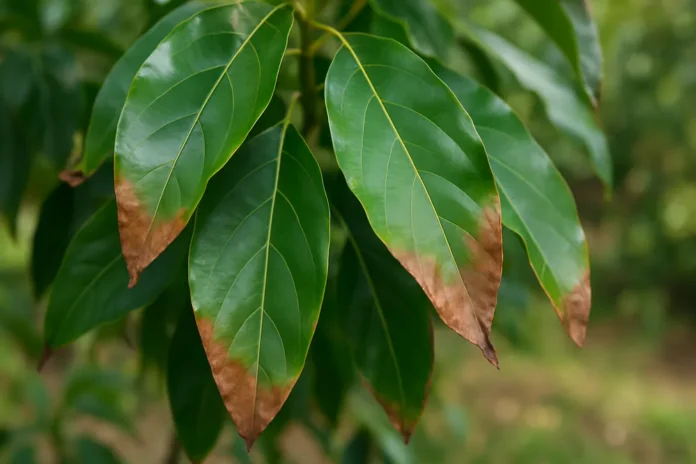
Avocado tree leaf tips usually turn brown because the tree is under stress from inconsistent watering, salt buildup, dry air, root problems, or weather extremes. In many cases, the brown tips are the plant's way of showing moisture imbalance rather than a serious disease.
When an avocado starts getting brown leaf tips, I usually treat it as an early stress signal instead of a reason to panic. Avocados are a little fussy about moisture, salts, and roots, so tip burn often shows up before the rest of the tree looks obviously unhealthy.
The tricky part is that several different problems can cause nearly the same symptom. A tree that is too dry, too wet, sitting in salty soil, or exposed to hot wind can all develop similar browning at the leaf edges and tips. That is why it helps to look at the whole pattern, not just one damaged leaf.
If your avocado tree still has decent green color and active growth, there is a good chance you can correct the issue. The key is figuring out whether the browning is coming from watering habits, soil conditions, roots, fertilizer, or weather before you start changing everything at once.
What Brown Tips Usually Mean on Avocado Leaves
Brown tips form when the farthest part of the leaf can no longer stay hydrated or healthy. Because the tip is the end of the water pathway, it is often the first place to dry out, burn from salts, or collapse under root stress. On avocados, that makes leaf tip browning one of the most common visible symptoms.
Sometimes the damage stays limited to a crisp brown point. In other cases, the brown area spreads down the margins, and the leaf may curl, yellow, or drop. Old damage will not turn green again, so your goal is to stop the problem from progressing and judge recovery by the condition of new leaves.
- Brown tip only, with otherwise green leaves often points to mild water stress or salt buildup.
- Brown tips plus yellowing can suggest root stress, nutrient imbalance, or poor drainage.
- Brown tips after heat, wind, or a cold snap often indicate environmental injury.
- Brown tips on many leaves at once usually mean the issue affects the whole root zone rather than one isolated branch.
When I diagnose avocado leaf burn, I pay more attention to which leaves are affected first than to the exact shade of brown. If older outer leaves are crisping while fresh new growth still looks decent, I usually suspect a root-zone or moisture problem before I blame pests or disease.
Inconsistent Watering Is the Most Common Cause
Avocados like evenly moist soil, but they do not like extremes. If the root ball dries out too much between waterings, leaf tips can desiccate and turn brown. If the soil stays soggy, roots lose oxygen and stop moving water properly, which can produce very similar browning.
When Underwatering Is the Issue
A too-dry avocado often shows crisp, papery browning on the tips and edges first. Leaves may curl slightly, feel dry, and sometimes drop after a hot spell. The soil may pull away from the sides of a pot, or water may run through very quickly without soaking in.
When Overwatering Is the Issue
Overwatered avocados can also develop brown tips, but the leaves often look softer at first and may yellow before they crisp. Growth slows, the soil stays wet for too long, and the tree may look dull or droopy even though the pot or planting area is moist. Prolonged sogginess leads to weak roots, and weak roots cannot support healthy leaves.
- Underwatering signs: dry soil, leaf curl, crisp texture, fast drainage, wilt during heat.
- Overwatering signs: wet soil for days, yellowing, soft limp leaves, slow growth, sour-smelling potting mix.
- Both problems can lead to brown tips because both reduce steady water movement to the leaves.
I would rather water an avocado deeply and less often than give it frequent light sips. Shallow watering encourages a stressed root zone and often makes tip burn worse, especially in containers.
Salt Buildup and Fertilizer Burn Are Very Common in Avocados
Avocados are especially sensitive to salts. Those salts can come from synthetic fertilizer, manure-heavy amendments, softened household water, or even naturally mineral-rich irrigation water. When salts accumulate in the soil, they interfere with the roots' ability to take up water, and the leaf tips often burn first.
This kind of damage usually shows as dry brown tips and margins while much of the leaf remains green. If you recently fertilized, especially in warm weather or with a strong product, fertilizer burn climbs higher on the suspect list. Container-grown avocados are particularly prone to this because salts have nowhere to go unless the soil is flushed thoroughly.
Clues That Point to Excess Salts
- White crust on the soil surface or around the pot rim
- Brown tips appearing after a feeding
- A tree that gets regular tap water but no occasional deep flushing
- Good green color overall, but repeated tip burn on older leaves
- A potted avocado that has been in the same mix for a long time
If your tree is in the ground, poor-quality irrigation water can slowly create the same problem. In dry regions, this is one of the most common reasons avocados develop ongoing edge burn even when watering seems otherwise reasonable.
Poor Drainage and Root Problems Can Show Up as Brown Tips
Healthy avocado roots need air as much as they need moisture. Heavy clay, compacted soil, a pot without adequate drainage, or a container that is too large for the root ball can keep the root zone wet too long. Once roots begin to decline, the leaves lose their steady water supply and the tips often brown.
If root problems continue, you may also notice yellowing leaves, reduced vigor, leaf drop, or blackened mushy roots in containers. Avocados are vulnerable to root rot, especially when cool wet soil lingers for long stretches. A tree in trouble below the soil line often looks like it needs more water above the soil line, which leads many gardeners to overcorrect in the wrong direction.
Situations That Increase Root Stress
- Planting too deeply
- Mulch piled against the trunk
- Dense soil that stays muddy after rain
- Decorative pots trapping water around a nursery pot
- Cold-season watering schedules that stay heavy after temperatures drop
A stressed avocado from root issues often gives mixed signals. I have seen trees with wet soil and crispy tips at the same time, and that combination usually tells me the roots cannot function well enough to supply the canopy, not that the tree simply needs more water.
Dry Air, Heat, Wind, and Cold Can All Scorch Leaf Tips
Environmental stress is another major cause of brown tips, especially for young trees and potted avocados. Hot afternoon sun, reflected heat from walls or pavement, drying wind, and very low humidity can push more moisture out of the leaves than the roots can replace. The result is scorched tips and edges.
Cold damage can look similar. After a chilly night or sudden temperature swing, the tender ends of leaves may turn brown or blacken slightly. Indoor avocados placed near heating vents, fireplaces, or drafty windows can also develop persistent tip burn from dry moving air.
Weather Patterns That Commonly Trigger Browning
- Heat waves after a cool period
- Strong drying wind, especially with full sun
- Very low indoor humidity in winter
- Cold snaps that damage tender foliage
- Sudden moves from shade to direct sun
This kind of damage often appears quickly after the weather event. If the timing of the browning clearly matches a blast of heat or cold, environmental scorch becomes much more likely than a nutrient issue.
Nutrient Issues Can Contribute, but They Are Not Always the Main Culprit
Home gardeners often jump straight to deficiency, but brown tips on avocados are more often tied to moisture or salts than to a simple lack of fertilizer. That said, nutrient imbalances can weaken leaves and make tip burn more noticeable.
Potassium deficiency, for example, can sometimes cause browning at the margins of older leaves. Low magnesium or general nutrient stress can also lead to poor leaf quality. But if you add more fertilizer without confirming the cause, you can easily worsen the problem by increasing salt levels around the roots.
How Nutrient-related Browning Tends to Look
- Damage appears along margins as well as tips
- Symptoms may follow a pattern on older or newer leaves
- Leaf color may look pale, blotchy, or uneven along with browning
- Growth can be weak even when watering seems stable
If you suspect nutrition, a soil test or a fertilizer review is more useful than guessing. Avocados do best with measured feeding, not frequent heavy applications.
Pests and Disease Are Possible, but Less Likely than Cultural Stress
Brown tips alone usually do not point first to insects or leaf disease. However, mites, root rot organisms, and other stress-related problems can contribute. Spider mites may cause stippling, dusty-looking leaves, and eventual browning, especially in hot dry conditions. Root diseases can mimic watering problems because they damage the plant's ability to absorb moisture.
Look for clues beyond the tips. Speckling, webbing, unusual spots, black lesions, or a sudden overall collapse suggest you should widen the diagnosis. If the browning is clean, dry, and concentrated at the tips and edges, cultural conditions are still the most probable starting point.
How to Tell Which Cause Is Most Likely
The fastest way to sort this out is to match the symptom pattern with recent care and weather. One leaf by itself is not enough evidence. Check several leaves, the soil condition, watering frequency, fertilizer history, and any recent changes in temperature or location.
- Feel the soil several inches down, not just the surface.
- Think back over the last two to four weeks for missed waterings, heavy rain, or a feeding.
- Check whether the damage is mostly on older leaves, new leaves, or leaves on the sunniest side.
- Look for yellowing, curling, softening, speckling, or leaf drop that might narrow the cause.
- Consider whether the tree is in a pot, in clay soil, near heat-reflecting surfaces, or watered with high-mineral water.
Patterns matter. Brown tips after fertilizer suggest salts. Brown tips after a heat wave suggest scorch. Brown tips with constantly wet soil suggest roots. Brown tips that improve when watering becomes more consistent often point to simple moisture stress.
What to Do to Help Your Avocado Recover
Once you have a likely cause, focus on stabilizing the tree rather than trying every remedy at once. Avocados respond best when the root zone becomes consistently favorable again. Existing brown tissue will stay brown, so watch new growth for proof that your correction is working.
If Watering Is the Problem
- Water deeply enough to moisten the full root zone.
- Let the soil approach lightly moist rather than soggy before watering again.
- Adjust for season, temperature, wind, and pot size instead of using a rigid calendar.
- Use mulch over the root area, but keep it away from the trunk.
If Salts or Fertilizer Burn Are the Problem
- Pause fertilizing until the tree resumes steady healthy growth.
- Flush container soil thoroughly so excess salts drain out.
- Switch to a gentler feeding schedule rather than strong frequent doses.
- Avoid softened water if possible because it can add problematic sodium.
If Drainage or Roots Are the Problem
- Make sure excess water can drain freely from containers.
- Do not leave pots sitting in standing water.
- Repot only if the mix is compacted or roots are clearly unhealthy.
- In the ground, improve drainage around future plantings rather than burying the trunk deeper or piling soil around it.
If Weather Stress Is the Problem
- Protect young trees from intense afternoon sun and drying wind.
- Move indoor pots away from vents, heaters, and cold drafts.
- Acclimate trees gradually when moving them outdoors or into brighter light.
- Provide extra attention during heat waves, but do not keep the soil waterlogged.
Change one variable at a time whenever you can. If you increase watering, flush salts, repot, and fertilize all in the same week, it becomes almost impossible to tell what actually helped or hurt the tree.
Should You Trim Off Brown Avocado Leaf Tips
You can trim off badly browned portions for appearance, but it is not necessary for plant health. If you do prune the damaged part of a leaf, follow the natural leaf shape and leave a small margin of brown rather than cutting into healthy green tissue. Cutting into live tissue can create a fresh wound that dries out again.
I usually leave mildly damaged leaves in place unless they are mostly dead. They still photosynthesize, and they can help the tree while it is recovering. Removing too many leaves from a stressed avocado can slow that recovery.
When Brown Tips Are a Sign of a More Serious Problem
Brown tips are often manageable, but they deserve closer attention if the tree is declining fast. Widespread yellowing, blackened stems, severe leaf drop, a sour soil smell, trunk damage, or no new growth for an extended period can mean the issue goes beyond minor stress.
- Seek deeper diagnosis if the tree keeps worsening despite corrected watering.
- Be more concerned if the trunk base stays wet or shows rot.
- Investigate root health if the potting mix smells foul or roots appear black and mushy.
- Act quickly if new leaves also emerge deformed, scorched, or immediately brown.
The earlier you correct the root-zone problem, the better the odds of saving the tree. Avocados can recover well from moderate leaf damage, but they struggle when root decline is advanced.
FAQ
Will Brown Avocado Leaf Tips Turn Green Again?
No. Damaged leaf tissue does not heal back to green. Judge recovery by whether new leaves emerge healthy and whether existing leaves stop developing additional browning.
How Often Should I Water an Avocado Tree with Brown Tips?
There is no single schedule that fits every tree. Watering depends on temperature, pot size, soil type, wind, and season. Aim for deep watering followed by enough drying that the soil is moist, not constantly wet or bone dry.
Can Tap Water Cause Brown Tips on Avocado Leaves?
Yes. In some areas, mineral-rich tap water can contribute to salt buildup over time, especially in containers. Softened water can be even more problematic because of sodium.
Is Epsom Salt Good for Avocado Leaf Tip Burn?
Usually not as a first response. Brown tips are often caused by watering problems or excess salts, and adding Epsom salt can complicate the issue unless a magnesium deficiency has actually been identified.
Should I Fertilize My Avocado Tree if the Leaf Tips Are Brown?
Not automatically. If salt buildup or fertilizer burn is part of the problem, more fertilizer can make it worse. It is better to confirm that the tree truly needs feeding before applying anything.
Why Are Only the Older Avocado Leaves Getting Brown Tips?
Older leaves often show stress first because the tree may sacrifice them to protect newer growth. This pattern is common with salt buildup, inconsistent watering, and general root-zone stress.
Can Low Humidity Cause Brown Tips on an Indoor Avocado Tree?
Yes. Dry indoor air, especially near heaters or vents, can cause avocado leaf tips to dry and brown. Indoor trees often need steadier moisture and protection from hot moving air.
Need the right fix fast? Read our avocado tree care and troubleshooting guides to choose the best soil, fertilizer, mulch, and watering setup before tip burn spreads.
