

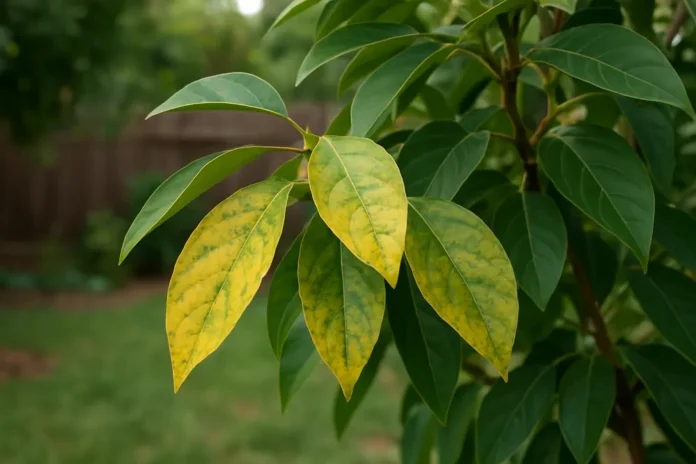
Avocado tree leaves usually turn yellow because of overwatering, poor drainage, nutrient deficiency, root stress, or temperature shock. Sometimes the yellowing is also part of normal leaf aging, especially on older inner leaves.
Seeing avocado tree leaves turning yellow can be unsettling, especially if the tree looked healthy just a week or two earlier. In my experience, yellowing is one of the most common avocado complaints, but it is also one of the easiest symptoms to misread because several very different problems can cause the same basic color change.
The good news is that avocado leaves usually give extra clues beyond just yellow color. Where the yellowing starts, whether the leaves feel limp or crisp, how fast it spreads, and what the soil feels like can tell you a lot. Sometimes the cause is as simple as soggy roots after heavy watering. Other times it is a nutrient issue, salt buildup, cold stress, or just older leaves cycling out naturally.
If you look at the whole tree instead of one leaf, you can usually narrow it down quickly. Yellow avocado leaves are a symptom, not a diagnosis, so the key is matching the pattern to the most likely cause.
What Normal Yellowing Looks Like on an Avocado Tree
Not every yellow leaf means your avocado tree is in trouble. Avocados regularly shed older leaves, especially the ones deeper inside the canopy or lower on the tree. Those older leaves often fade from green to pale yellow before dropping, while the newer outer growth stays healthy and green.
Normal aging usually happens gradually and only affects a limited number of leaves at a time. The tree otherwise looks vigorous, with no sudden wilt, dieback, or widespread discoloration. If the yellowing is mostly on older foliage and the new growth looks good, I usually consider that routine leaf turnover rather than a crisis.
- A few older inner leaves turn yellow and fall
- New leaves remain green and firm
- The tree is still pushing fresh growth
- Yellowing is slow rather than sudden
Overwatering and Poor Drainage Are the Most Common Causes
If I had to pick the most common reason avocado leaves turn yellow, it would be excess moisture around the roots. Avocado trees need consistent water, but they do not tolerate waterlogged soil well. Their roots need oxygen, and when the soil stays saturated, the roots struggle to function. That often shows up first as yellow leaves, drooping foliage, and slow growth.
This is especially common in heavy clay soil, containers without excellent drainage, or planting sites where water collects after rain. A tree can look thirsty above ground while actually being too wet below ground. Gardeners sometimes respond by watering even more, which makes the problem worse.
- Leaves yellow across large parts of the canopy
- Foliage may droop but the soil feels wet
- New growth is weak or sparse
- Leaves may eventually develop brown tips or edges
- The ground stays damp for days after watering
When I suspect overwatering, I do not judge by the surface alone. I push a trowel or soil probe several inches down near the root zone, because avocado soil can look dry on top and still be soggy underneath.
The fix is not simply to water less on a random schedule. It is to let the root zone breathe and then water deeply only when the soil has started to dry. For in-ground trees, improving drainage may matter more than changing frequency. For potted trees, repotting into a faster-draining mix may be the real solution.
Underwatering Can Also Cause Yellow Leaves
Avocados can also yellow when they are not getting enough water, particularly during hot weather, windy spells, or periods of active growth. Drought stress often causes leaves to look pale or yellowish before they dry at the edges. The tree may drop leaves to reduce water demand.
Unlike overwatering, underwatering usually comes with dry, dusty soil and leaves that feel thin or brittle rather than soft. If the tree is in a container, the root ball can dry out much faster than people expect, especially in full sun.
- Yellowing starts during hot or windy weather
- Leaf edges may brown and crisp
- Soil pulls away from the sides of the pot or feels dry well below the surface
- Leaves may curl, fold, or drop
- New growth stalls
A deeply but infrequently watered avocado usually performs better than one that gets light daily sprinkles. The goal is to wet the root zone thoroughly and then allow some drying before the next watering. Shallow watering encourages shallow roots, which makes the tree more vulnerable in heat.
Nutrient Deficiencies Often Show Up in the Leaf Pattern
When watering seems reasonable, the next thing I look at is the yellowing pattern itself. Nutrient deficiencies do not always color the whole leaf evenly. Sometimes the veins stay greener while the tissue between them turns yellow, or the newest leaves are affected differently from the oldest ones.
Nitrogen Deficiency
Nitrogen deficiency usually causes a more general pale green to yellow look, often starting on older leaves first because the plant moves nitrogen to new growth. The whole tree may look washed out rather than vividly yellow in patches. Growth can become slow and sparse.
Iron Deficiency
Iron deficiency often shows up on younger leaves first. The leaf tissue turns yellow while the veins remain greener, creating a clear contrast. This is common when soil pH is too high, because iron may be present in the soil but unavailable to the roots.
Magnesium Deficiency
Magnesium problems often affect older leaves and can create yellowing between veins while some green remains near the center or along the main veins. It may show up more strongly in container trees or trees under prolonged nutrient stress.
- Older leaves yellow first often suggests mobile nutrients like nitrogen or magnesium
- Newer leaves yellow first often points toward iron or other immobile nutrient issues
- Green veins with yellow tissue between them strongly suggest chlorosis rather than simple watering stress
- Weak growth alongside yellowing increases the odds of a feeding issue
I try not to throw multiple fertilizers at an avocado all at once. If the tree is stressed, too many corrections at the same time can muddy the diagnosis and sometimes burn already struggling roots.
Use a fertilizer formulated for fruit trees or avocados, and pay attention to micronutrients if your soil is alkaline. A soil test or at least a pH check is extremely helpful here, because some yellowing that looks like deficiency is really a nutrient availability problem caused by the soil itself.
Salt Buildup and Fertilizer Burn Can Mimic Deficiency
One of the trickier avocado problems is salt stress. Avocados are fairly sensitive to salts from fertilizer, hard irrigation water, or repeated feeding in containers. Salt buildup can interfere with root function and produce yellowing, browning, and leaf drop that people sometimes mistake for hunger.
In potted avocados, fertilizer salts can accumulate quickly if water only moistens the top layer and never flushes through the pot. In landscapes, reclaimed water or naturally salty water can gradually cause root stress and leaf scorch.
- Leaf tips and edges brown after yellowing begins
- The problem appears after heavy or repeated fertilizing
- A white crust may develop on the soil or container rim
- Growth slows even though the tree is being fed regularly
If this seems likely, stop fertilizing for a while and flush the soil with plain water if drainage is good. In containers, a thorough leaching can help remove excess salts. Going forward, lighter and less frequent feeding is usually better than strong doses.
Root Damage and Root Rot Can Turn Leaves Yellow Fast
When yellowing spreads quickly and the tree starts looking weak overall, root problems move high on the suspect list. Avocados are vulnerable to root rot, especially in poorly drained soil. Damaged roots cannot take up water or nutrients properly, so the canopy begins to decline even if you are watering.
Root rot often starts underground long before the symptoms above ground become obvious. By the time leaves are yellowing heavily, dropping, and failing to recover after watering, the roots may already be badly compromised.
- Yellowing and wilt happen together
- The tree does not perk up after proper watering
- Leaves may drop prematurely
- Growth dies back at branch tips
- Soil stays wet and may smell sour or stagnant
If an avocado looks thirsty every day no matter what, I start thinking less about the watering can and more about the roots. A tree with damaged roots often behaves like a dry tree because it has lost the ability to move water upward.
There is no quick cosmetic fix for root rot. The best chance of recovery is improving drainage, reducing excess moisture, and protecting the remaining healthy roots from further stress. In severe cases, recovery can be slow or unlikely.
Cold, Heat, and Weather Swings Can Trigger Yellowing
Avocado trees respond strongly to weather extremes. Cold snaps, dry winds, sudden heat, and intense reflected sun can all stress the leaves. Sometimes a tree that was green and stable suddenly develops pale or yellow patches after a rough weather event.
Cold stress is especially common in young avocado trees. Chilled leaves may first look dull or yellowish, then develop browning or drop off later. Heat stress can bleach leaves, especially if the root system is already under strain. Wind adds another layer by increasing moisture loss.
- Yellowing appears after a frost, cold night, or heat wave
- Outer or exposed leaves show more damage than shaded inner leaves
- Leaf edges may scorch after hot dry wind
- Young trees are affected more severely than established ones
Weather damage usually improves when conditions stabilize and new growth emerges. The key is not to overreact with heavy fertilizer or extra water immediately after the event. A stressed avocado often needs steadier conditions more than aggressive treatment.
Pests and Disease Can Contribute to Chlorosis
Although watering and nutrition are more common causes, pests and disease can also make avocado leaves turn yellow. Mites, scale, and other sap-feeding insects weaken leaves and interfere with photosynthesis. A light infestation may cause stippling, pale mottling, or gradual yellowing before you notice the pests themselves.
Disease pressure can also stress the tree enough to trigger yellowing, particularly when the roots or vascular system are involved. However, leaf yellowing from disease alone is usually not perfectly uniform. You often see spotting, deformation, webbing, sticky residue, or branch decline alongside the color change.
- Check leaf undersides for mites, scale, or fine webbing
- Look for sticky honeydew or black sooty mold
- Notice whether yellowing is patchy rather than even
- Inspect branches for dieback or cankers
If pests are present, treatment depends on the specific culprit. A strong spray of water, horticultural oil, or insecticidal soap may help for some common pests, but timing matters and stressed trees should be treated carefully in hot weather.
How to Tell Which Cause Is Most Likely
The fastest way to diagnose yellow avocado leaves is to combine three clues: soil moisture, which leaves are affected first, and whether the yellowing is even or patterned. That usually gets you close enough to choose the right next move.
- Feel the soil several inches deep, not just the surface.
- Note whether older leaves, newer leaves, or the whole canopy is yellowing.
- Look for green veins, brown edges, drooping, or crispness.
- Think about recent changes like rain, fertilizer, heat, cold, repotting, or missed watering.
Wet soil plus drooping yellow leaves usually points toward overwatering or root trouble. Dry soil plus curling or crispy yellow leaves leans toward underwatering. Yellow new leaves with green veins suggests iron chlorosis. Widespread pale foliage often hints at nitrogen shortage or root stress.
What to Do to Help the Tree Recover
Once you identify the likely cause, focus on steady correction rather than rapid intervention. Avocados respond better to consistent care than to dramatic swings. Most yellow leaves will not turn green again, so judge success by the condition of new growth.
- Adjust watering based on actual soil moisture, not the calendar alone
- Improve drainage if the soil stays wet too long
- Use a balanced fruit-tree fertilizer only when the tree is actively growing and not severely stressed
- Check soil pH if chlorosis keeps returning
- Flush excess salts from containers when needed
- Protect young trees from frost, extreme heat, and drying wind
- Monitor for pests before the canopy weakens further
If your avocado is in a pot, container conditions can magnify every problem faster than in-ground planting. That means root crowding, poor drainage, salt buildup, and inconsistent moisture all become more likely. Sometimes simply upgrading the potting mix and drainage makes a dramatic difference.
If the tree is planted in the ground and continues declining despite better watering, consider drainage issues below the surface. A healthy avocado root zone should never sit in standing water for long. In stubborn cases, a soil test and closer inspection of the planting site often reveal what routine watering changes do not.
FAQ
Will Yellow Avocado Leaves Turn Green Again?
Usually no. Once an avocado leaf has turned noticeably yellow, it often stays that way or eventually drops. Look for healthy new growth as the real sign that your fix is working.
Should I Remove Yellow Leaves From My Avocado Tree?
If the leaves are mostly yellow and clearly declining, you can remove them, but there is no need to strip the tree aggressively. I usually leave lightly yellowed leaves in place until the tree naturally sheds them unless they are diseased or badly damaged.
How Often Should I Water an Avocado Tree with Yellow Leaves?
There is no single schedule that fits every tree. Water based on soil moisture, weather, and drainage, because both overwatering and underwatering can cause yellow leaves.
Why Are Only the New Avocado Leaves Turning Yellow?
Yellow new leaves often suggest iron deficiency or another micronutrient problem, especially in high-pH soil. It can also happen when stressed roots are unable to take up nutrients efficiently.
Can Too Much Fertilizer Make Avocado Leaves Yellow?
Yes. Excess fertilizer can create salt buildup and root stress, which may lead to yellowing, brown tips, and leaf drop. This is especially common in containers.
Do Avocado Trees Lose Older Leaves Naturally?
Yes. Avocados regularly shed older interior leaves, and those leaves may turn yellow first. If the rest of the tree looks healthy, that kind of leaf drop is usually normal.
Is Yellowing After a Cold Night Permanent?
Sometimes the affected leaves will not recover, but the tree can still bounce back if the wood and roots remain healthy. Wait for warmer conditions and watch for strong new growth before deciding how much damage was done.
Need the right fix fast? Read our avocado tree care and treatment guides to choose the best fertilizer, watering setup, and recovery products before yellowing spreads.
