

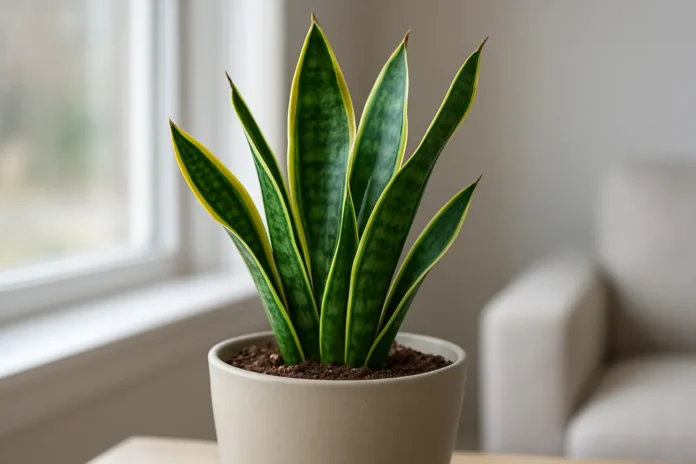
Snake plant leaves usually develop yellow edges from watering stress, root damage, excess fertilizer salts, too much harsh sun, or cold exposure. The yellow margin is the plant's way of showing tissue stress rather than healthy growth.
If your snake plant leaves have yellow edges, the plant is telling you something is off, but it is not always a crisis. In my experience, this symptom most often comes from watering problems, root stress, or a mismatch between light and temperature rather than a rare pest or disease issue.
Snake plants are forgiving, which is why yellow margins can sneak up on people. A plant may look mostly upright and firm while the leaf edges slowly fade from deep green to yellow. The good news is that snake plant yellow edges are usually fixable once you match the pattern on the leaf to the cause behind it.
What Yellow Edges Usually Mean on a Snake Plant
Yellow edges are a stress symptom. They tell you the outer tissue of the leaf is being damaged or is no longer supported well by the roots and internal moisture balance. Unlike a plant that turns fully yellow from age, a snake plant with yellow margins often has a specific environmental trigger.
The pattern matters. If the yellowing starts at the very edge and moves inward, I usually suspect watering imbalance, mineral buildup, harsh sun, or cold injury. If the whole leaf softens, wrinkles, or starts collapsing from the base, root rot moves higher on the suspect list. If the edges are yellow but dry and papery, sun or salt stress becomes more likely than soggy roots.
- Yellow edge with soft soil and droopy growth often points to overwatering or root damage.
- Yellow edge with shriveled, curling leaves often points to underwatering or roots that cannot take up moisture.
- Yellow edge on the window-facing side can suggest sun scorch.
- Yellow edge after a cold draft or winter move often indicates temperature stress.
- Yellow edge with a crust on the soil or pot rim often suggests fertilizer or tap-water salt buildup.
When I diagnose snake plants, I compare newer leaves with the oldest outer leaves first. If the newest growth stays clean while old leaves show yellow edging, the plant is often recovering from a past stress. If fresh growth also develops yellow margins, the problem is still active.
Overwatering Is the Most Common Cause
Snake plants store water in their leaves and rhizomes, so they do not like staying wet for long. When the soil remains damp, roots lose access to oxygen and begin to weaken. Once that happens, the leaves cannot move water and nutrients normally, and yellow edges may appear before dramatic rot symptoms show up.
This is especially common when a snake plant is in a decorative cachepot, a low-light corner, or a dense potting mix that dries slowly. People often water on a schedule that works in summer but becomes too frequent in winter. Even if the top inch feels dry, the lower half of the pot may still be wet enough to stress the roots.
Signs the Yellow Edges Come From Too Much Water
- Leaf edges yellowing while the leaf feels softer than normal
- Mushy spots near the base of the leaf
- A pot that stays heavy for many days after watering
- Soil with a sour or swampy smell
- Little to no new growth during the warm season
- Blackened, mushy, or sparse roots when you inspect the root ball
If overwatering is the cause, the fix is not just watering less often. You also need to make sure the plant has a pot with drainage and a fast-draining mix. If roots are already damaged, simply letting the pot dry may not be enough because those roots can no longer absorb water effectively.
Underwatering and Root Dryness Can Also Yellow the Margins
Although overwatering gets most of the attention, underwatering can create yellow edges too. A snake plant that stays dry for too long starts pulling moisture from leaf tissue. The edges and tips often show the strain first because they are the farthest point from the root system.
This tends to happen in very warm rooms, near heat vents, in terra cotta pots that dry quickly, or when a rootbound plant sheds water straight down the sides of the pot without fully soaking the root ball. In that case, you may think you watered well, but the roots barely got any moisture.
Clues That the Plant Is Too Dry
- Leaf edges yellowing along with brown, crispy tips
- Leaves that look thinner, wrinkled, or slightly folded inward
- Very dry soil pulling away from the inside of the pot
- A pot that feels unusually light
- Water running through immediately without soaking the mix
If a snake plant has gone bone dry and the potting mix has turned hydrophobic, I like to water in stages. A light first pass, a short wait, and then a deeper soak works better than dumping in one heavy watering that races out the drain hole.
A dehydrated plant can perk up, but damaged yellow tissue usually stays yellow. Judge recovery by whether new leaves emerge clean and whether existing leaves stop worsening.
Root Problems and Poor Potting Mix Can Mimic Watering Mistakes
Sometimes the watering habit is not terrible, but the roots are still struggling because of the soil or container. Snake plants do best in a coarse, airy mix that drains quickly and dries at a moderate pace. A heavy peat-based potting soil that stays compacted can keep roots wet in one season and hard as a brick in the next.
A pot that is too large can also create trouble. Extra soil holds extra moisture around roots that are not yet filling the container. On the other hand, a plant that is severely rootbound may dry out too fast and struggle to take up water evenly, which can also show up as yellow margins.
When to Inspect the Roots
- The plant keeps yellowing no matter how carefully you water
- The potting mix stays wet longer than expected
- The plant dries out almost immediately after watering
- The base of the leaves feels unstable or loose
- You have not repotted in several years and the mix looks compacted
Healthy snake plant roots are usually firm and pale orange, cream, or white depending on age. Rotten roots feel mushy and dark. Severely dry, dead roots can look brittle, shriveled, or hollow. If you find either extreme, the plant needs fresh mix and a reset, not just a tweak to the watering calendar.
Too Much Direct Sun Can Scorch the Leaf Edges
Snake plants tolerate bright light, but sudden exposure to strong direct sun can damage leaf tissue. This is especially true if the plant was grown in lower light and then moved to a south- or west-facing window without an adjustment period. The leaf edges and exposed faces can fade, yellow, or even turn tan and dry.
Sun stress usually looks different from root problems. The damage often appears on the side facing the glass, and the soil may not be unusually wet or dry. In some cases the yellowing is paired with bleached patches or crisp streaks rather than an evenly soft decline.
Signs the Yellowing Is Light Related
- Damage appears mostly on the window-facing side
- Yellowing started soon after moving the plant to a brighter spot
- Edges feel dry or papery rather than soft
- There are pale, bleached, or scorched patches in addition to yellow margins
A snake plant can handle some direct morning sun, but harsh afternoon sun through hot glass is more likely to scorch it. Filtered bright light is usually the safer sweet spot indoors.
Cold Drafts and Temperature Swings Can Trigger Yellow Edges
Snake plants are tougher than many houseplants, but they still dislike cold stress. If leaves sit near a drafty window, uninsulated door, garage, or blasting air conditioner, the tissue along the edges can yellow or become water-soaked. Chilling injury can show up days after the exposure, which is why people sometimes miss the connection.
This problem is common in winter when the pot touches a cold windowsill or when a plant is left in a car during a move. Repeated temperature swings can be just as stressful as one obvious cold event.
- Yellowing appeared after a cold night or recent move
- Leaves feel slightly translucent or water-soaked at first
- Damage is worse on the side closest to the draft
- The plant sits near a vent, exterior door, or unheated window
Cold damage can look deceptively similar to overwatering because both can make leaf tissue soften. If the soil seems reasonable but the plant lives near a draft, I do not rule out temperature stress just because the leaves are not crispy.
Fertilizer Salts and Hard Water Buildup Are Easy to Overlook
Snake plants do not need heavy feeding. When fertilizer is applied too often, too strongly, or during low-light months, salts can build up in the potting mix. Those salts interfere with water uptake and can burn the margins of the leaves, creating yellow edges that later turn brown.
Hard tap water can add to the problem over time. If you notice a white crust on the soil surface, around the drain holes, or on the rim of the pot, mineral accumulation may be contributing to the stress.
Salt Buildup Is More Likely When
- You fertilize monthly or more often year-round
- You use full-strength liquid fertilizer every time you water
- The plant has been in the same soil for a long time
- A white or yellowish crust forms on the potting mix or container
- Leaf margins yellow while the roots otherwise seem intact
This cause is often fixable with a good flush using plain water, followed by lighter feeding habits and, if needed, repotting into fresh mix. For most indoor snake plants, a diluted fertilizer during active growth is plenty.
Pests and Disease Are Less Common but Still Possible
Snake plants are not especially pest-prone, but they can occasionally get spider mites, mealybugs, or thrips. These pests feed on plant tissue and may leave yellow stippling, pale margins, distorted growth, or a generally washed-out look. Pest damage is usually more irregular than a clean watering issue.
Fungal or bacterial disease is less likely unless the plant has been staying wet, injured, or grown in poor air circulation. Disease often causes spots, mushy lesions, or spreading patches rather than a simple even edge of yellow.
What to Look For
- Fine webbing or dusty-looking leaf surfaces from spider mites
- Cottony clusters around the base or leaf crevices from mealybugs
- Silvery scarring or distorted new growth from thrips
- Wet-looking spots, foul smell, or rapidly spreading rot from disease
If the yellow edging comes with visible insects or patchy feeding damage, isolate the plant and treat the pest problem. But if the leaves simply have clean yellow margins, watering and environmental stress are still more likely than pests.
How to Fix Yellow Edges on a Snake Plant
The best fix depends on the cause, but the overall goal is simple: restore healthy roots and steady growing conditions. Snake plants recover slowly, so expect improvement to show in stable existing leaves and cleaner new growth rather than a fast cosmetic rebound.
A Practical Recovery Plan
- Check the soil moisture deeper in the pot instead of judging by the dry top layer alone.
- Make sure the plant is in a pot with drainage and empty any standing water from saucers or outer pots.
- If the mix is dense, sour-smelling, or badly compacted, repot into a fast-draining cactus or succulent mix amended with extra perlite or pumice.
- Trim away completely mushy or dead roots before repotting.
- Move the plant to bright, indirect light if it has been scorched or sits in dim conditions that keep the mix wet too long.
- Keep it away from cold windows, vents, and temperature swings.
- Pause fertilizer until you see signs of active growth again.
- If salt buildup is visible, flush the pot thoroughly or repot with fresh mix.
Do not expect yellow edges to turn green again. Damaged margins are permanent. What you want to see is that the yellowing stops spreading and that new leaves emerge firm, evenly colored, and upright.
I try not to change five variables at once. If the plant does not need emergency root work, I correct the biggest issue first and watch the newest growth. That tells me far more than obsessing over old damaged edges.
Can You Cut Off the Yellow Parts
You can trim badly discolored or crispy edges for appearance, but do it carefully. Follow the natural shape of the leaf and use clean scissors. Avoid cutting deep into healthy green tissue because each cut creates a new wound and can leave a brown scar line.
If a whole leaf is severely damaged, soft at the base, or collapsing, remove that leaf at the soil line with a clean tool. If the damage is minor and the leaf is still firm, I usually leave it alone. The plant can still photosynthesize with a partly yellowed leaf.
How to Prevent Yellow Edges From Coming Back
Prevention is mostly about consistency. Snake plants stay attractive when their roots cycle between a thorough watering and a genuine dry-down, without long periods of soggy soil or extreme dehydration.
- Water only when the mix is mostly dry, and less often in winter.
- Use a fast-draining succulent-style mix and a pot with drainage holes.
- Place the plant in bright, indirect light or gentle morning sun instead of harsh afternoon exposure.
- Protect it from cold drafts and sudden temperature drops.
- Fertilize lightly during active growth and skip frequent feeding in darker months.
- Flush the soil occasionally if you use hard water or fertilize regularly.
- Repot when the mix has broken down or the plant becomes severely rootbound.
Once you learn your plant's rhythm, yellow edges usually stop being a recurring problem. Most snake plants want less fuss than people think, but they do want the basics done consistently.
FAQ
Will Yellow Edges on a Snake Plant Turn Green Again?
No. Once the leaf tissue has yellowed, it usually does not regain its original green color. Focus on stopping the spread and encouraging healthy new growth.
Should I Remove Yellow-edged Snake Plant Leaves?
Only if the leaf is badly damaged, mushy, or unattractive enough that you want to prune it. A firm leaf with minor yellow margins can still help the plant.
How Often Should I Water a Snake Plant with Yellow Edges?
There is no safe fixed schedule. Water when the potting mix is mostly dry, then water thoroughly and let it dry again. Frequency changes with light, temperature, pot size, and season.
Can Too Much Fertilizer Cause Yellow Edges on Snake Plants?
Yes. Excess fertilizer salts can burn the leaf margins and interfere with water uptake, which often shows up as yellowing that later browns at the edges.
Do Yellow Edges Mean My Snake Plant Has Root Rot?
Not always. Root rot is one possible cause, especially if the soil stays wet and the leaves soften, but yellow edges can also come from dryness, sun scorch, cold, or salt buildup.
Is Tap Water Causing the Yellow Edges on My Snake Plant?
It can contribute, especially if your water is very hard and leaves mineral crust on the soil or pot. Hard water alone is not always the only cause, but it can add stress over time.
Can Low Light Cause Yellow Edges on a Snake Plant?
Low light is usually an indirect cause. It slows drying and growth, which makes overwatering and root stress more likely. The yellow edges often come from those secondary problems.
Still not sure whether your snake plant needs less water, a new potting mix, or pest treatment? Read our snake plant care and troubleshooting guides to choose the right fix before the damage spreads.
