

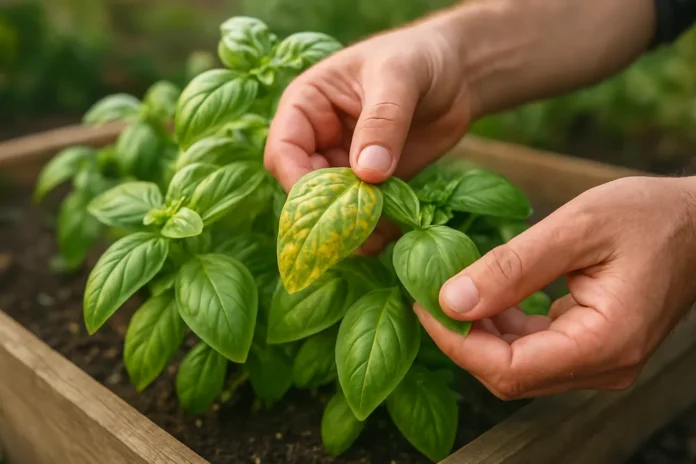
Yellow spots on basil leaves are most often caused by downy mildew, bacterial leaf spot, pest feeding, or stress from uneven watering and cool, damp conditions. Basil can also spot yellow when leaves are damaged by sun, nutrient imbalance, or environmental shock.
When I see basil leaves with yellow spots, I do not assume it is just hunger or a watering mistake. Basil is fast-growing and tender, so it shows stress quickly, and those pale or yellow marks can come from disease, insects, weather swings, or root trouble.
The good news is that the pattern of the spots usually tells a story. Some yellow spots stay small and dry, some spread between the veins, and some show up with fuzzy growth underneath the leaf. Once you match the symptom pattern to the likely cause, it gets much easier to decide whether your basil yellow spots problem is fixable, manageable, or a sign it is time to remove a plant before the issue spreads.
Below, I will walk through the most common causes, how to tell them apart, and what I would do in a home garden or on a patio container.
What Yellow Spotting Usually Means on Basil
Yellow spotting is a symptom, not a diagnosis. Basil leaves can yellow in distinct patches because the leaf tissue is being damaged in one area while the rest of the leaf still functions normally. That damage may come from a pathogen inside the leaf, sap-sucking pests feeding from the surface, or stress at the roots that reduces water and nutrient flow.
The biggest clue is where and how the spots appear. If they look angular and are limited by leaf veins, I start thinking about downy mildew. If they are tiny, scattered, and paired with stippling or fine webbing, pests move higher on my list. If lower leaves yellow more evenly and the plant looks pale overall, nutrition or root stress is more likely than a leaf disease.
When I diagnose basil, I always compare several leaves from different levels of the plant. A true disease usually creates a repeating pattern, while watering stress and minor sun damage often look random from leaf to leaf.
Downy Mildew Is One of the Most Common Causes
If your basil develops yellow areas that seem to spread between the veins, downy mildew is one of the first possibilities to consider. This disease is especially common in warm weather with humid nights, crowded plants, and leaves that stay wet for long periods. Sweet basil is particularly susceptible.
How the Spots Look
Early on, the upper leaf surface may show pale yellow blotches or angular spots. They often look a little like a nutrient issue at first. As the disease progresses, the yellow areas darken, leaves curl or wilt, and the plant loses vigor.
What to Check Underneath the Leaf
Flip the leaf over, especially in the morning when humidity is high. Downy mildew often produces a gray, brown, or purplish fuzzy growth on the underside. That fuzzy coating is one of the strongest clues that you are dealing with disease rather than a simple feeding issue.
- Spots are often angular rather than perfectly round
- Yellowing follows the spaces between leaf veins
- Undersides may show fuzzy gray or purple growth
- Plants worsen quickly in humid, still air
Once downy mildew is established, badly infected basil rarely returns to full health. You can slow spread by removing affected leaves, improving airflow, watering the soil rather than the foliage, and reducing crowding. In severe cases, the best home-garden move is often to pull and discard the plant so neighboring basil is not exposed.
Bacterial Leaf Spot Can Create Small Yellow Halos
Bacterial leaf spot is another common reason basil leaves develop yellow spotting. This problem often starts as dark, water-soaked specks that later gain a yellow halo. It spreads easily in splashing water, on tools, and by handling wet plants.
What It Looks Like
The spots tend to be smaller and more distinct than the blotchy yellowing caused by downy mildew. You may see brown or black centers with yellow tissue around them. In bad cases, the spots merge and the leaves become ragged or papery.
Conditions That Favor It
- Frequent overhead watering
- Rainy periods with warm temperatures
- Crowded basil plants with poor airflow
- Handling or harvesting while leaves are wet
There is no simple cure for bacterial spotting on a heavily affected basil plant. Remove the worst leaves, avoid wetting the foliage, sanitize snips, and give plants more space. If spotting keeps spreading fast, start fresh with clean seed or healthy transplants and change your watering habits.
Pests Can Cause Speckled Yellow Damage
Tiny sap-feeding insects and mites often leave basil with fine yellow dots or flecks. This kind of damage is usually called stippling. Instead of larger blotches, the leaves look peppered with many pale spots where feeding pierced the tissue.
Spider Mites
Spider mites are especially common in hot, dry conditions, including basil grown in containers near sunny walls or patios. They are tiny and easy to miss, but their feeding creates many light yellow specks. Fine webbing between leaves or stems is a strong giveaway.
Thrips and Leafhoppers
Thrips scrape leaf surfaces and leave silvery or yellow flecking, sometimes with slight distortion. Leafhoppers can produce pale stipples and may make leaves look washed out. With either pest, damage often appears first on tender new growth.
- Look for very fine speckling rather than broad patches
- Check leaf undersides for moving dots or slender insects
- Tap a leaf over white paper to spot hidden pests
- Watch for webbing, distorted tips, or silvery scarring
If I suspect pests on basil, I avoid reaching for strong sprays first because you are growing an edible herb with soft foliage. A firm water rinse, better spacing, and repeated inspection often solve light infestations before harsher treatment is needed.
For home gardeners, the safest early response is usually washing plants with water, removing heavily damaged leaves, and repeating inspections every few days. Insecticidal soap can help with some pests, but use it carefully on basil and always follow the label for edible plants.
Watering, Roots, and Nutrient Stress Can Also Show Up as Spots
Not every yellow spot is a disease. Basil reacts quickly to inconsistent moisture, soggy roots, compacted soil, and nutrient imbalance. In these cases, the leaf symptoms are often less crisp and less patterned than they are with disease.
Overwatering and Root Stress
When basil roots sit in wet soil, they struggle to take up oxygen and nutrients. Leaves may develop pale blotches, general yellowing, or a tired, limp look even when the soil is wet. Container basil is especially prone to this if the pot drains poorly or a saucer stays full.
Underwatering and Sudden Drying
Dry stress usually causes drooping first, but repeated cycles of bone-dry soil followed by heavy watering can lead to yellow patches or scorched-looking spots. The edges may crisp, especially during hot weather.
Nutrient Imbalance
A mild nutrient shortage usually makes basil look pale overall, but deficiencies can sometimes create mottling or irregular yellowing. Nitrogen deficiency affects older leaves first and causes a more even yellowing than distinct spots. Magnesium or micronutrient issues can cause interveinal yellowing, where veins stay greener than the tissue between them.
- Wet, heavy soil points toward root stress
- Very dry soil and crispy edges suggest drought stress
- Uniform paling on older leaves often indicates low nitrogen
- Yellowing between veins may hint at nutrient imbalance
If the pattern does not clearly match disease or pests, root-zone stress is worth taking seriously. Basil grows best in evenly moist, well-drained soil with steady fertility rather than feast-or-famine conditions.
Sunscald, Cold Shock, and Weather Swings Can Mark Basil Leaves
Basil loves warmth, but it still gets damaged by abrupt environmental changes. A plant moved from shade to hot direct sun can develop pale yellow or bleached patches. Cold nights, chilly rain, or sudden wind exposure can also leave leaves marked and blotchy.
Sunscald
Sunscald often shows up on the most exposed leaves. The spots may look washed out at first, then turn tan or papery. Unlike a spreading disease, sunscald usually affects the side of the plant that took the strongest light hit.
Cold Injury
Basil dislikes temperatures much below 50 degrees Fahrenheit. Cool nights can cause pale spotting, darkened patches, drooping, and slowed growth. Cold-stressed basil is also more vulnerable to disease afterward, which can make diagnosis tricky.
I see a lot of basil damage after gardeners set plants outside too fast in spring. If the marking is mostly on exposed outer leaves and newer sheltered growth looks better, weather shock is often more likely than infection.
How to Tell the Common Causes Apart
The fastest way to narrow the problem is to look at the shape, location, and progression of the yellow spots. Basil rarely hides the pattern for long.
- Angular yellow patches with fuzzy growth underneath usually point to downy mildew
- Small dark spots with yellow halos often suggest bacterial leaf spot
- Fine yellow stippling with webbing or tiny insects usually means pest feeding
- Random pale blotches on sun-exposed leaves can be sunscald
- General yellowing, limp growth, and soggy soil often indicate root stress
- Interveinal yellowing without major spotting may be a nutrient issue
If symptoms appear overnight across many leaves after humid weather, I think disease first. If they creep in on a few leaves and get worse during dry heat, pests or watering stress become more likely. This is why the recent weather and your care routine matter almost as much as the leaf itself.
What to Do Right Now for Spotted Basil Leaves
Once you notice yellow spots, the main goal is to stop further damage and protect healthy growth. Basil is fast enough that if you correct the problem early, clean new leaves can replace older damaged ones.
- Remove the worst affected leaves, especially if they show fuzzy growth, rot, or heavy spotting.
- Water at the soil line instead of wetting the leaves.
- Increase airflow by spacing plants and thinning crowded stems.
- Check leaf undersides for pests, webbing, or fungal growth.
- Let containers drain fully and never leave roots standing in water.
- Avoid overfertilizing, which can stress tender basil and encourage weak growth.
- If one plant is badly diseased, isolate or discard it to protect the rest.
Do not expect damaged leaves to turn green again. Judge success by the condition of new growth over the next week or two. If new leaves are emerging clean, your correction is working.
Change one major variable at a time when the cause is unclear. If you alter watering, fertilizer, sun exposure, and sprays all at once, you lose the chance to learn what actually helped and you can stress basil even more.
Can You Still Eat Basil with Yellow Spots?
That depends on the cause and severity. Basil with minor cosmetic sun damage or slight stress spotting may still be usable if the leaves are otherwise fresh and healthy. I avoid using leaves that are slimy, heavily diseased, moldy underneath, or badly infested with pests.
If downy mildew or bacterial spotting is advanced, the leaves often lose quality even if they are not dangerous in the way a toxic plant would be. The flavor drops, texture suffers, and the foliage spoils quickly. For kitchen use, pick only clean, healthy leaves from unaffected growth and wash them well.
How to Prevent Yellow Spots on Future Basil Plants
Prevention matters more with basil than heroic rescue efforts. Because it grows fast, a clean start and steady conditions usually outperform trying to revive a plant that is already deeply compromised.
- Plant basil where it gets sun but also good airflow
- Water the soil, not the leaves
- Use containers and beds with reliable drainage
- Avoid crowding plants too closely together
- Harvest regularly to keep growth open and fresh
- Do not handle or prune plants when foliage is wet
- Rotate planting spots if disease has been a recurring issue
- Choose healthy starts and avoid bringing home already spotted plants
In my own garden, the biggest difference comes from spacing and morning watering. Basil that dries quickly after sunrise is much less likely to run into the mildew and bacterial problems that cause so much yellow spotting.
FAQ
Why Do Basil Leaves Have Yellow Spots but Still Look Mostly Green?
That usually means the problem is localized rather than a whole-plant deficiency. Early downy mildew, bacterial spotting, pest stippling, and mild sunscald often damage part of the leaf while the rest remains green.
Can Overwatering Cause Yellow Spots on Basil Leaves?
Yes. Overwatering can stress the roots and lead to pale blotches, general yellowing, and limp foliage. Wet roots also make basil more vulnerable to leaf diseases that create yellow spotting.
What Does Downy Mildew on Basil Look Like?
It often starts as yellow angular patches on the upper leaf surface. The underside may develop gray, brown, or purplish fuzzy growth, especially in humid conditions.
Do Spider Mites Make Basil Leaves Spot Yellow?
Yes. Spider mites commonly cause very fine yellow stippling across the leaves, and you may also see delicate webbing when the infestation grows.
Will Yellow-spotted Basil Leaves Turn Green Again?
No, damaged leaf tissue usually does not recover its normal color. The goal is to stop the cause so new leaves grow in healthy and clean.
Should I Remove Basil Leaves with Yellow Spots?
Remove leaves that are heavily spotted, diseased, or pest-damaged. Leaving a few mildly marked leaves is usually fine if the plant is otherwise healthy, but severe disease should be pruned out or the whole plant removed.
Can Too Much Sun Cause Yellow Spots on Basil?
Yes. Basil moved suddenly into intense direct sun can develop pale yellow or bleached patches, especially on exposed upper leaves. Those areas may later dry into tan, papery spots.
Need the right fix fast? Read our basil disease and pest treatment guides to choose the safest products, pruning steps, and prevention tools before the spots spread.
