

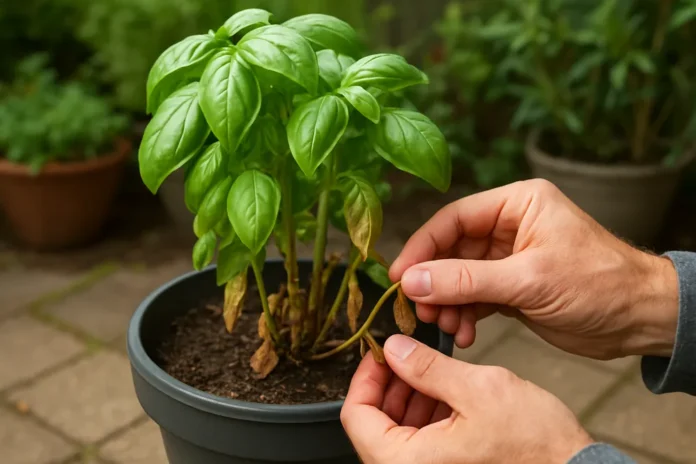
Basil stems often turn brown because older stems naturally become woody, especially on mature plants. Brown stems can also signal rot, cold damage, disease, or stress from watering problems.
If your basil stems turning brown has you worried, the first thing to know is that not all browning means the plant is in trouble. Basil can develop firmer, darker, more wood-like stems as it matures, especially if it has been growing for a while and you have harvested it regularly. In many cases, that kind of browning is completely normal.
The real question is whether the stem looks dry and sturdy or dark, soft, and unhealthy. When I check basil, I look at the whole plant pattern before I blame one cause. A tough lower stem on an otherwise vigorous plant is very different from a limp basil plant with blackened stems, yellow leaves, and soggy soil.
Once you know what kind of browning you are seeing, the fix gets much easier. Below, I will walk through the most common causes, how to tell them apart, and what to do to help your basil plant recover.
When Brown Basil Stems Are Normal
Basil is a soft-stemmed herb when it is young, but older plants often begin to toughen at the base. This is especially common on large, productive plants that have been growing for weeks or months. The lower stems may turn tan, light brown, or even medium brown while the upper growth stays green and tender.
This kind of browning is usually harmless if the stem feels firm, the leaves look healthy, and new growth is still coming in. The plant is simply maturing. Repeated pinching and harvesting can also encourage thicker stems, which may become more woody over time.
- The brown area is mostly near the bottom of the plant
- The stem feels dry, tough, and sturdy rather than mushy
- Leaves remain green and upright
- New shoots are still growing from the top or leaf nodes
- There is no foul smell or slimy tissue
When I see a basil stem that is brown only near the base but the tips are still lush and fragrant, I usually treat it as normal aging. Basil in trouble almost always gives you more clues than color alone.
Signs the Browning Points to a Problem
Trouble starts when the stem browning comes with wilting, yellowing, black spots, collapse, or a soft texture. Basil is sensitive to excess moisture, sudden cold, and several stem and root diseases. The color change matters, but the texture and the surrounding symptoms matter even more.
If the brown area is spreading quickly, moving upward, or appearing on young stems, take it seriously. Healthy woody growth develops gradually. Damage from rot, infection, or environmental stress usually appears faster and looks uneven or unhealthy.
- Soft, dark, water-soaked stems
- Brown or black lesions on stems
- Sudden wilting even when the soil is moist
- Leaves turning yellow, black, or dropping off
- A pinched-looking stem line near the soil surface
- Mold, fuzz, or a sour smell around the stem base
Overwatering and Stem Rot
One of the most common reasons basil stems turn brown is too much water. Basil likes evenly moist soil, but it does not like sitting in soggy conditions. When roots stay wet for too long, they cannot breathe properly, and fungi or bacteria can begin breaking down the stem and root tissue.
This type of browning often starts low on the plant, right where the stem meets the soil. Instead of looking woody and dry, the affected area looks dark, limp, or sunken. The plant may wilt even though the soil feels wet, which confuses a lot of gardeners into watering even more.
How Overwatering Browning Looks
- Stem base turns dark brown to black
- Tissue feels soft or mushy
- Leaves droop and may yellow at the same time
- Potting mix stays wet for long periods
- Roots may look brown instead of white
If your basil is in a pot without excellent drainage, or if it is planted in heavy soil that stays wet after rain, overwatering becomes even more likely. Indoor basil is especially prone to this because lower light slows water use.
If I suspect rot, I stop watering first and feel the stem right at soil level. A woody stem resists pressure. A rotting stem gives slightly, looks wet, or seems to narrow where the tissue is failing.
Underwatering, Heat Stress, and Sun Stress
Although rot gets a lot of attention, basil can also develop brown stems from stress on the dry side. Repeated wilting from underwatering, intense reflected heat, or scorching afternoon sun can harden and discolor stems over time. The plant may become stringy, less lush, and more prone to lower stem browning.
Dry stress usually shows up first in the leaves. They droop, curl, crisp at the edges, or lose their soft texture. Stems may then toughen or discolor as growth slows. This is more common in containers, raised beds, and spots near walls or patios that radiate extra heat.
- The soil becomes dry quickly and pulls from the pot edge
- Plants wilt during hot afternoons and recover only partly
- Leaf tips or edges turn brown and papery
- Stems look dry and hardened, not soft
- Growth becomes sparse and leggy
Basil likes warmth, but extreme conditions can still stress it. In very hot regions, morning sun with a little afternoon protection often gives better results than all-day blasting heat.
Cold Damage and Sudden Weather Swings
Basil is one of the first herbs to complain about cold. Even temperatures that are not technically freezing can damage the stems and leaves. If basil experiences chilly nights, cold drafts, or a sudden drop after being moved outdoors, stems may darken, brown, or blacken and then collapse.
Cold-damaged basil often looks water-soaked at first. Then the tissue turns brown or black and shrivels. This can happen to garden basil in spring or fall, and it is very common with grocery store basil placed near an air conditioner vent or a cold window.
- Damage appears suddenly after a cool night
- Leaves may blacken or become limp at the same time
- Young tender stems suffer first
- The plant may not recover if the whole stem base was chilled badly
Once basil gets chilled, damaged tissue does not turn green again. Your best move is to trim back dead growth and protect what is still alive from further cold exposure.
Fungal and Bacterial Diseases
Several diseases can cause brown basil stems, especially in humid weather or poorly ventilated spaces. Fusarium wilt, damping off in seedlings, bacterial stem issues, and general crown rot can all lead to discolored stems and plant decline.
Damping Off in Young Basil
Seedlings sometimes look fine one day and flop the next. The stem near the soil line becomes thin, brown, and weak. This is classic damping off, a disease problem favored by soggy soil, crowding, and stagnant air.
Fusarium and Vascular Problems
Older basil can suffer from diseases that move through the plant's internal tissue. Stems may show brown streaking, leaves may yellow unevenly, and the plant may wilt despite decent watering. These problems are harder to reverse and often require removing the plant.
Leaf Disease That Leads to Stem Stress
Downy mildew mainly affects basil leaves, but severe infection weakens the whole plant. Once the plant is struggling badly, stems may discolor as overall health declines. If stem browning appears alongside leaf spotting, fuzzy undersides, or rapid defoliation, disease should move higher on your suspect list.
- Brown or black streaks rather than uniform woody color
- Spreading lesions on stems
- Wilting that does not improve normally
- Crowded plants with poor airflow
- Problems during humid, wet weather
Disease-related browning usually looks irregular to me. Normal aging is neat and gradual. Infection tends to create blotches, streaks, collapse, or a fast downhill slide across several stems.
Pests and Physical Stem Damage
Basil is not the most pest-prone herb, but sap-sucking insects can weaken stems and leaves enough to cause discoloration. Aphids, whiteflies, spider mites, and thrips stress the plant by feeding on tender growth. Over time, stems may toughen, scar, or brown as the plant struggles.
Physical damage can also look like disease at first. Rough harvesting, wind whipping, pet damage, or stems bent too sharply can leave a brown scar. If the damage is isolated to one side or one branch, injury is more likely than a systemic problem.
- Sticky leaves or visible insects
- Fine webbing on undersides of leaves
- Silvery or speckled leaf damage
- One bent or kinked stem turning brown while the rest look fine
- Scabby, corky spots where the stem was bruised
Minor stem scarring will not usually kill the plant. If pests are involved, controlling them early gives basil a much better chance to regrow clean, healthy shoots.
How to Tell Woody Growth From Rot
This is the distinction that matters most for home gardeners. A basil stem that is brown because it is maturing is usually still doing its job. A basil stem that is brown from rot or severe disease is failing.
- Look at the location. Woody growth is usually lower on the plant. Rot often starts right at the soil line.
- Touch the stem. Woody growth feels firm and dry. Rot feels soft, wet, or hollow.
- Check the leaves. Healthy leaves with a brown lower stem often mean normal aging. Yellow, limp, or blackened leaves point to trouble.
- Smell the soil and stem base. Sour or musty smells suggest excess moisture and decay.
- Inspect new growth. If fresh green tips are still growing strongly, the brown base may be harmless.
When gardeners misread woody growth as a problem, they often overcorrect by watering more or fertilizing heavily. That can create a real problem where none existed before.
What to Do for Brown Basil Stems
The right fix depends on the cause, but a few steps help in most situations. Start by removing clearly dead, mushy, or blackened stems with clean scissors. Then correct the growing conditions instead of piling on multiple treatments at once.
If the Browning Is Normal Woody Growth
- Keep harvesting the tender tops regularly
- Do not overwater just because the lower stem changed color
- Consider starting a fresh basil plant if the old one is getting leggy
If the Problem Is Overwatering or Rot
- Let the top inch of soil dry slightly before watering again
- Move container basil into a pot with drainage if needed
- Trim away rotted stems and roots if the damage is limited
- Repot in fresh, airy mix if the soil is compacted or sour
If Heat or Drought Is the Issue
- Water deeply and evenly rather than in tiny daily splashes
- Mulch garden basil lightly to slow moisture loss
- Give container basil relief from intense late-day heat if needed
If Cold Caused the Damage
- Trim dead tissue once you can see what is truly gone
- Keep basil above chilly night temperatures
- Bring potted plants indoors before cool weather hits
If Disease Is Spreading
- Remove badly affected plants to protect nearby basil
- Increase airflow and avoid wetting foliage late in the day
- Do not compost severely diseased plants if you suspect a persistent pathogen
I try not to change water, fertilizer, sun exposure, and potting mix all in the same afternoon. Basil responds quickly, so changing one or two variables lets you tell what actually helped.
How to Prevent Basil Stems From Turning Brown Again
Prevention comes down to keeping basil growing steadily without long swings between wet and dry, hot and cold, crowded and stagnant. Healthy basil is fast-growing and forgiving, but it declines quickly when its basic needs are off.
- Plant basil in well-drained soil or a loose potting mix
- Use containers with drainage holes
- Water when the soil is lightly dry at the top, not on a rigid calendar
- Give basil plenty of sun, with some afternoon protection in extreme heat
- Space plants well for airflow
- Harvest regularly to keep plants bushy and productive
- Protect basil from cold nights and sudden temperature drops
- Start new plants during the season if older ones become woody and tired
One practical habit I recommend is checking the stem base every few days when weather is especially humid or rainy. Catching rot early is often the difference between saving the plant and losing it.
FAQ
Can I Still Eat Basil if the Stems Are Brown?
Yes, if the browning is just normal woody growth and the leaves are healthy. Do not use basil that is slimy, rotting, moldy, or badly diseased.
Why Are My Basil Stems Brown but the Leaves Still Look Healthy?
That usually points to natural aging and woody stem development, especially near the base of a mature plant. If the stem is firm and dry, it is often normal.
Should I Cut Off Brown Basil Stems?
Cut off stems that are mushy, blackened, collapsed, or clearly dead. If the stem is only woody at the bottom and the plant is still growing well, you do not need to remove it.
Why Did My Basil Stem Turn Brown at the Soil Line?
Browning right at the soil line often suggests excess moisture, rot, or damping off in young plants. This is more concerning than brown color higher up on a mature stem.
Can Basil Recover From Brown Stems?
It can recover if the cause is mild stress, minor rot caught early, or isolated damage. Recovery is less likely if the main stem base is badly rotted or the plant has a serious vascular disease.
Do Brown Basil Stems Mean I Am Overwatering?
Sometimes, but not always. Overwatering usually causes dark, soft, unhealthy-looking stems, while normal aging creates firm, dry, woody stems.
Why Are My Indoor Basil Stems Turning Brown?
Indoor basil often browns from low light, overwatering, poor airflow, or cold drafts near windows and vents. Container conditions indoors tend to stay wetter longer than gardeners expect.
Want healthier, fuller basil with fewer stem problems? Read our guide to the best basil fertilizers, potting mixes, and pruning tools so you can grow stronger plants all season.
