

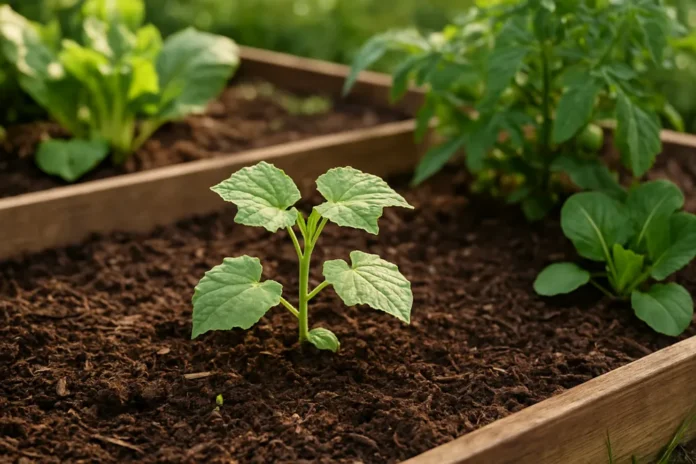
Cucumber plants usually stop growing because they are too cold, too wet, underfed, rootbound, or stressed by pests and poor soil conditions. Slow growth is most common when warmth, moisture, and nutrition are out of balance.
A cucumber plant that just sits there can be frustrating, especially when the leaves look alive but the vine never seems to take off. In my garden, cucumber plants not growing almost always trace back to a short list of stressors: cool weather, compacted soil, uneven watering, crowded roots, or not enough nutrition at the right time.
Cucumbers are fast growers when they are happy. They like warm soil, steady moisture, plenty of sun, and room for roots to spread. If one of those basics is off, the plant often responds by pausing growth instead of dying outright.
The good news is that stalled cucumbers are often recoverable. Once you match the symptom pattern to the cause, you can usually get the plant moving again and still end up with a productive patch of healthy cucumber vines.
What Normal Cucumber Growth Should Look Like
Before assuming something is wrong, it helps to know what healthy growth looks like. A cucumber seedling should steadily add new leaves, thicken its stem, and begin stretching into a vine once daytime warmth settles in. After transplanting, it may pause for a few days, but it should not stay the same size for more than a week or two in good weather.
Young plants usually focus on roots first, then top growth. That means a recently planted cucumber may look quiet above ground while it settles in. But if the leaves stay pale, the stem remains thin, or no new leaves appear, the plant is signaling stress rather than normal adjustment.
- New leaves appear regularly and are medium to deep green
- The stem thickens instead of staying threadlike
- Vines begin reaching or climbing once warmth increases
- Leaves stay firm during the day instead of wilting constantly
- Flowers begin forming after the plant has built enough leaf area
Cold Weather and Cool Soil Can Stop Cucumbers in Their Tracks
Cucumbers are warm-season plants, and they really mean it. If the air is mild but the soil is still cold, they often just sit there. Growth slows dramatically when nighttime temperatures dip below about 55°F, and plants can sulk for a long time after a cold snap even if they do not show obvious damage.
This is one of the most common reasons I see stunted cucumbers in spring. Gardeners plant on the first nice weekend, then the plants face chilly nights, cold rain, and sluggish soil biology. The plant survives, but it does not actively grow because the roots are not functioning well in cool ground.
- Leaves look dull or slightly bluish green
- New growth is tiny or absent
- Plants stay the same size after transplanting
- The soil feels cool a few inches down
- Growth improves only after a stretch of real heat
When I am diagnosing a slow cucumber, temperature is the first thing I rule out. A plant can look reasonably healthy and still be too chilled to grow, especially if the days are warm but the nights are not.
If cold is the issue, warmth is the fix. Black mulch, row covers, and patience help more than fertilizer in this situation. Feeding a chilled plant rarely speeds it up if the roots are still sitting in cold ground.
Poor Sunlight Limits Energy for New Growth
Cucumbers need full sun to grow well. If they get less than six to eight hours of direct light, they may stay small, stretch weakly, and produce fewer vines and flowers. Even partial shade from a fence, tree, or nearby tomatoes can slow them down more than many gardeners expect.
Low light usually causes gradual underperformance rather than sudden collapse. The plant may stay green but never become vigorous. In raised beds, I often see cucumbers overshadowed by taller crops on the south or west side, which quietly cuts their strongest afternoon light.
- Long, thin stems with wide spacing between leaves
- Smaller leaves than expected
- Slow vining despite warm weather
- Few flowers and weak overall growth
Watering Problems Can Stunt Growth From Both Sides
Overwatering and Soggy Roots
Cucumbers like consistent moisture, but they do not like waterlogged roots. Soil that stays saturated pushes out oxygen, and roots need oxygen to grow. In soggy ground, cucumber roots often slow down or begin to rot, leaving the plant unable to support fresh top growth.
Overwatered plants may look wilted even though the soil is wet. That confuses many gardeners into adding still more water. If the leaves droop, the stems seem soft, and the bed stays muddy or heavy, too much moisture is a likely culprit.
Underwatering and Drought Stress
On the other hand, dry spells can stall cucumbers just as quickly. When soil repeatedly dries out, the plant shifts into survival mode. It stops expanding leaves and vines because it cannot support that extra growth. Repeated cycles of drought and soaking are especially hard on cucumbers.
- Dry soil several inches down
- Wilting in the morning as well as afternoon
- Leaf edges crisping or curling
- Tiny new leaves that stop expanding
- Fruit, if present, becoming misshapen or bitter
I prefer to water cucumbers deeply and less often rather than giving them a light daily sprinkle. Deep watering encourages roots to move down into the soil, which makes the plant much more resilient when summer heat arrives.
Compacted Soil and Root Stress Keep Plants Small
Cucumber roots want loose, well-drained soil. In compacted clay, heavily trampled beds, or hard ground with little organic matter, roots simply cannot spread well. The result above ground is a plant that looks frozen in place.
Transplant stress can create the same effect. If roots were circling in a small pot, damaged during planting, or buried poorly, the plant may spend a long time recovering. Sometimes a cucumber that was started too early indoors becomes rootbound and never fully catches up after planting out.
- Water puddles on the surface before sinking in
- Soil feels dense, sticky, or bricklike when dry
- Plants remain small despite sun and warm weather
- Roots in containers form a tight spiral
- Transplants wilt easily after planting
If root stress is the problem, avoid digging close to the stem or trying to disturb the roots again. Focus on improving conditions around the plant with compost, mulch, and better watering habits so the root system can recover and expand.
Nutrient Imbalance Can Slow Vine and Leaf Production
Cucumbers are fairly hungry plants, but more fertilizer is not always better. Stunted growth can come from too little nutrition, especially nitrogen, or from an imbalance caused by overfeeding. A plant with poor soil fertility may stay pale and small. A plant hit with too much fertilizer can suffer root burn or produce odd, weak growth.
Nitrogen is the nutrient most tied to leafy growth, so a deficiency often shows up as slow vine development and pale older leaves. Phosphorus and potassium matter too, especially for roots and overall vigor, but in home gardens the real issue is often depleted soil that never got amended before planting.
- Pale green or yellowing older leaves may point to low nitrogen
- Purplish cast in cool soil can mimic phosphorus stress
- Brown leaf margins after feeding can suggest fertilizer burn
- Very fast dark leafy growth with few flowers can come from too much nitrogen later in the season
A balanced vegetable fertilizer or compost-rich soil usually works better than repeated random feedings. If you are unsure, light and steady is safer than strong and frequent.
Pests May Be Feeding on Roots, Stems, or Leaves
Stunted cucumber plants are sometimes being eaten, even if the damage is subtle. Cucumber beetles, aphids, spider mites, cutworms, and squash bugs can all weaken young plants. Root-feeding pests or stem damage are especially serious because the plant loses the ability to move water and nutrients efficiently.
Aphids often cluster on new growth and suck sap from tender stems and leaves. Cucumber beetles chew holes and can spread bacterial diseases. Spider mites are common in hot, dry weather and may cause a dusty, stippled look before the leaves begin to fade.
- Holes in leaves or chewed edges
- Sticky residue or ants on the plant
- Fine webbing under leaves
- Stem damage near the soil line
- Visible beetles, clusters of aphids, or eggs on leaf undersides
If a cucumber is not growing, I always inspect the undersides of leaves and the base of the stem before I blame fertilizer. Pest pressure often shows up as stalled growth a few days before the damage becomes obvious from a distance.
Disease Can Cause a Healthy-looking Plant to Stall
Diseases do not always start with dramatic spots or collapse. Early fungal, bacterial, or viral problems can first appear as reduced vigor. If the plant stops growing, looks off-color, wilts despite adequate moisture, or develops mottled leaves, disease moves higher on the suspect list.
Common cucumber problems include damping off in seedlings, bacterial wilt spread by cucumber beetles, powdery mildew later in the season, and mosaic viruses that distort or stunt leaves. Root rots are especially likely in poorly drained beds or after long wet periods.
- Wilting that does not improve after watering
- Mottled, twisted, or misshapen leaves
- Spots, fuzzy growth, or whitening on leaves
- Stems darkening at the base in seedlings
- Overall decline spreading plant to plant
When disease is involved, recovery depends on the problem. Some issues can be slowed by improving airflow and keeping foliage dry. Others, especially viral or severe wilt problems, may mean the plant will never become productive.
Crowding and Competition Can Quietly Reduce Growth
Cucumbers need space. If they are planted too closely together, or packed in with heavy feeders like tomatoes, squash, or corn, they compete for light, water, and nutrients. The result can be vines that stay short and never gain momentum.
Weeds can also steal moisture and nutrients from small cucumber plants. This matters most early on, when cucumbers are still building their root systems. A bed that looks only mildly weedy can still slow plant growth noticeably.
- Leaves from neighboring plants overlap the cucumber
- The soil dries quickly because many roots share the same space
- Vines stay thin and weak instead of branching out
- Weeds surround the base of the plant
Container Cucumbers Have a Few Extra Challenges
If your cucumber is growing in a pot, the container itself may be the problem. Cucumbers need more root room than many people expect. Small pots dry out too fast, heat up quickly, and run short on nutrients early. A cramped container often produces a plant that survives but never really grows.
Drainage also matters. A pot with poor drainage can create soggy roots, while a lightweight mix with too much peat may swing from soaking wet to bone dry in a day or two. Container plants need more frequent attention because the margin for error is smaller.
- Use a large container that can support a substantial root system
- Choose a loose potting mix rather than garden soil
- Water when needed, but do not let the pot stay saturated
- Feed regularly with a balanced fertilizer once active growth begins
- Provide a trellis so the vine can grow upward instead of tangling on itself
How to Figure Out the Real Cause in Your Garden
The fastest way to diagnose a stalled cucumber is to look at the whole pattern instead of one symptom. Ask when growth slowed, what the weather has been doing, how the soil feels, and whether the newest leaves look healthy. A plant that stopped after a cold week needs a different fix than one sitting in dense wet soil with pale leaves.
- Check recent temperatures, especially cool nights
- Feel the soil a few inches down for moisture and warmth
- Look for new leaves, not just the oldest leaves
- Inspect leaf undersides and stem bases for pests
- Notice whether the plant is crowded, shaded, or rootbound
- Review what fertilizer, if any, was recently applied
Try not to change five things at once. If you water differently, fertilize heavily, spray pests, and add amendments on the same day, you will not know what helped or what made things worse. A simple, targeted correction is usually the best approach.
How to Help a Cucumber Plant Start Growing Again
Once you know the likely cause, the next steps become fairly straightforward. Warm the soil if temperatures are lagging. Adjust watering so the root zone stays evenly moist but not waterlogged. Feed lightly if the plant is pale and undernourished. Remove weeds and reduce crowding if competition is strong.
Support recovery with consistent conditions rather than dramatic interventions. Cucumbers respond well when their environment becomes stable. They do not respond well to repeated stress followed by overcorrection.
- Mulch to hold moisture and moderate soil temperature
- Use row cover during cool spells if pollination is not yet needed
- Water deeply when the top layer begins to dry
- Side-dress with compost or a gentle balanced fertilizer if growth is pale and slow
- Trellis vines to improve light exposure and airflow
- Remove severely diseased plants if they are unlikely to recover
FAQ
Can a Cucumber Plant Recover After Transplant Shock?
Yes, many do recover if the weather is warm and the roots were not badly damaged. Give the plant steady moisture, protect it from cold nights, and avoid additional stress while it re-establishes.
Why Is My Cucumber Plant Green but Not Getting Bigger?
A green but stalled cucumber is often dealing with cool soil, limited root growth, too little sun, or crowding. The plant may be alive and photosynthesizing, but not comfortable enough to push new growth.
Should I Fertilize a Cucumber Plant That Is Not Growing?
Only if poor nutrition seems likely. If the soil is cold, soggy, or the plant is root stressed, fertilizer may not help and can sometimes make things worse.
How Long Should Cucumbers Take to Start Growing After Planting?
A healthy transplant usually resumes visible growth within several days to about two weeks, depending on weather. If it stays unchanged longer than that, check temperature, moisture, and root conditions.
Do Cucumbers Grow Slowly in Containers?
They can if the pot is too small, dries out too fast, or runs short on nutrients. In a large container with full sun, steady moisture, and regular feeding, container cucumbers can still grow well.
Can Too Much Water Stop Cucumber Growth?
Yes. Constantly wet soil deprives roots of oxygen and can lead to root rot, both of which slow or stop top growth.
Will Cucumbers Catch Up After a Cold Spring?
Often they will once temperatures warm consistently, especially if the plants were not badly damaged. Some early setbacks, though, can delay harvest and leave plants less vigorous all season.
Want faster vines and better harvests? Read our guide to the best cucumber fertilizers, trellis setups, and pest controls so you can fix stalled plants and keep them productive.
