

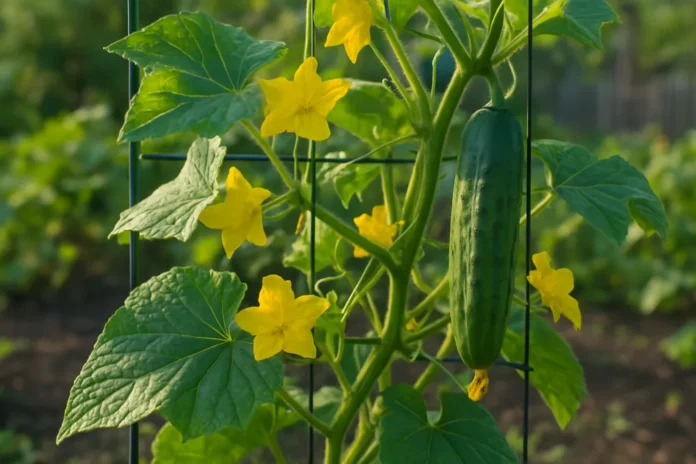
Cucumber plants usually fail to produce fruit because of poor pollination, too much heat, stressed growing conditions, or an imbalance between male and female flowers. Excess nitrogen, inconsistent watering, and low insect activity are especially common causes.
It is frustrating to see a healthy-looking cucumber vine climb, leaf out, and even bloom, only to end up with cucumber plants not producing fruit. In most home gardens, the problem is not that the plant is dying. It is that something in its growing conditions is interrupting flowering, pollination, or fruit set.
I have found that cucumbers often give warning signs before gardeners notice the missing fruit. You may see lots of blossoms that drop off, tiny cucumbers that shrivel, or vines that look lush and green but seem all leaves and no harvest. The good news is that this problem is usually fixable once you narrow down the cause.
The key is to look at the plant's stage, the weather, and how it has been fed and watered. A cucumber can be perfectly alive and still fail to make usable fruit if one or two basic needs are out of balance.
How Cucumber Plants Normally Set Fruit
Before troubleshooting, it helps to know how cucumbers fruit. Most cucumber plants produce separate male and female flowers. Male flowers usually appear first and grow on thin stems. Female flowers have a tiny swollen baby cucumber behind the bloom. Pollen has to move from the male flower to the female flower for fruit to develop.
If pollination does not happen, that tiny cucumber often turns yellow, stops growing, and drops off. This makes many gardeners think the plant has a disease, when the real issue is simply that the flower was never successfully pollinated.
- Male flowers: appear early, sit on slender stems, do not form fruit
- Female flowers: have a miniature cucumber at the base and can become fruit after pollination
- Parthenocarpic varieties: can set fruit without pollination, but only if you are actually growing that type
When I inspect a cucumber plant with no harvest, I look first for female flowers, not just flowers in general. A vine covered in male blooms can look productive from a distance, but it still cannot give you cucumbers yet.
Too Many Male Flowers Early in the Season
One of the most common reasons a cucumber plant is not producing fruit is simply timing. Many varieties naturally produce mostly male flowers first. Gardeners see blossom after blossom and expect fruit right away, but the plant is still in its early flowering phase.
As the plant matures, female flowers usually begin appearing in greater numbers. Warm, stable weather and steady growth encourage this shift. If your vine is still fairly young, the best answer may be patience rather than a major intervention.
- Young transplants often need more time before female flowers become common
- Cool nights can delay the switch from mostly male flowers to a better balance
- Bush and vining varieties may differ slightly in flowering pattern
Poor Pollination Is One of the Biggest Causes
If female flowers are present but tiny cucumbers are not growing, poor pollination is a leading suspect. Cucumbers rely heavily on bees and other pollinators unless you are growing a self-setting greenhouse type. Rainy weather, extreme heat, pesticide exposure, or a lack of pollinator-friendly flowers nearby can all reduce pollination.
Sometimes the plant will start tiny fruits, but they yellow and fall off after a few days. That is classic incomplete pollination. The flower received little or no viable pollen, so the plant aborts the fruit.
- Few bees visiting the garden
- Flowers opening during stretches of rain or high wind
- Plants grown under row covers too long after flowering starts
- Use of broad-spectrum insecticides during bloom
- Only a few female flowers open at a time and pollinators miss them
If pollinators are scarce, I sometimes hand-pollinate cucumbers in the morning with a small brush or by touching a male flower to the center of a female flower. It is a simple way to confirm whether pollination is the real bottleneck.
Heat Stress Can Stop Fruit Set
Cucumbers love warmth, but they do not love extreme heat. When daytime temperatures climb into the mid 90s or nights stay very warm, pollen quality can drop and female flowers may be less likely to set fruit. Plants under heat stress may also shed blossoms to conserve energy.
This is especially common in midsummer gardens where vines are exposed to reflected heat from fences, walls, black containers, or stone patios. The plant may still look vigorous because cucumber leaves can stay green even while fruiting slows.
- Temperatures above about 90 to 95 degrees F can interfere with fruit set
- Hot nights reduce recovery time and increase flower drop
- Dry, hot winds can stress blooms before pollination happens
Inconsistent Watering Leads to Blossom and Fruit Problems
Cucumber plants need consistent moisture to support flowering and fruit development. If the soil swings from bone dry to soaked, the plant often responds by dropping flowers or failing to size up young fruit. Even short dry spells can interrupt production during peak bloom.
This happens a lot in raised beds and containers, where the root zone dries faster than gardeners expect. On the other hand, constantly soggy soil can weaken roots and reduce the plant's ability to support fruit.
- Dry soil during flowering can cause blossoms to abort
- Overly wet soil can reduce root health and nutrient uptake
- Mulch helps moderate moisture swings and keeps roots cooler
- Deep watering is usually better than frequent shallow sprinkling
A cucumber plant can recover from a dry day faster than gardeners think, but the lost flowers often do not recover. When fruiting stalls, I pay close attention to what happened a few days earlier, not just how the plant looks today.
Too Much Nitrogen Can Produce Leaves Instead of Cucumbers
A lush cucumber vine is not always a productive cucumber vine. If you have given the plant a high-nitrogen fertilizer, rich lawn feed, or repeated doses of manure tea, it may put its energy into vigorous leaf and stem growth instead of flowers and fruit.
This is a classic issue in home gardens where cucumbers are planted near heavily fed tomatoes or where an all-purpose fertilizer is used too often. The plant looks dark green, fast growing, and healthy, but fruiting lags behind.
- Lots of vine growth with few female flowers
- Large, soft, dark green leaves
- Repeated feeding with products high in the first number of the N-P-K ratio
- Planting in very rich soil without balancing fertility
If this sounds familiar, stop pushing leafy growth. A fertilizer with a lower nitrogen level and more support for flowering and fruiting is usually a better fit once the plant is established.
Not Enough Sun Limits Flowering and Harvest
Cucumbers are heavy producers, and they need plenty of energy to make fruit. If the vines are growing in partial shade, behind taller crops, or in a spot with only a few hours of direct light, they may produce fewer female flowers and weaker fruit set.
Morning sun is especially valuable because it helps dry foliage and gets flowers active earlier in the day when pollinators are moving. In shaded gardens, vines may stretch, bloom lightly, and never really reach full production.
- Aim for at least 6 to 8 hours of direct sun
- Check whether tomatoes, corn, or fences are shading the cucumbers by midsummer
- Trellising can improve light exposure and make flowers easier for bees to find
Crowding and Plant Stress Can Reduce Fruiting
Overcrowded cucumber plants compete for light, water, and airflow. When vines are tangled tightly together or packed in with other vegetables, flowers can be hidden from pollinators and the plants can struggle to support fruit development.
Root stress also matters. Cucumbers dislike transplant shock, cold soil, sudden weather swings, and root disturbance. A plant that has been set back early may grow leaves for weeks before it settles down enough to fruit well.
- Space plants according to the variety rather than squeezing in extra seedlings
- Avoid cultivating deeply around the roots once plants are growing
- Use trellises to improve airflow, light, and pollinator access
- Keep weeds down so cucumbers are not competing for moisture
Variety Choice and Seed Type Matter More than Many Gardeners Expect
Some cucumber varieties are naturally earlier, heavier yielding, or better suited to hot weather than others. If you are growing a type that struggles in your region, fruit set can be disappointing even when care is decent. Gynoecious varieties, for example, produce a high proportion of female flowers and can be very productive, but some seed mixes include a pollinator variety for a reason.
Parthenocarpic cucumbers are another special case. These can set fruit without pollination and are excellent for greenhouses or low-pollinator areas. If you want dependable harvests in a screened structure or a patio setup, choosing the right variety can solve a problem before it starts.
Pests and Disease Can Interfere with Flowering and Fruit Set
A cucumber plant under attack often cuts back on fruit production. Cucumber beetles, aphids, spider mites, and squash bugs can all weaken the plant. Diseases such as powdery mildew, bacterial wilt, and downy mildew also reduce vigor and make it harder for the plant to carry fruit to maturity.
In these cases, the no-fruit problem is usually not the first symptom. You may also notice chewed leaves, sticky residue, mottling, wilting, or spotted foliage. If the plant is fighting for survival, flowering and fruiting usually slow down fast.
- Inspect leaf undersides for pests
- Watch for sudden wilting that does not improve after watering
- Remove badly diseased foliage when appropriate
- Avoid spraying pollinator-active flowers with insecticides
What to Do if Your Cucumber Plant Is Flowering but Not Fruiting
Once you know the likely causes, the fix is usually straightforward. Focus on reducing stress and improving pollination rather than making many changes at once. Cucumbers respond quickly when conditions improve, so new flowers often tell you whether your adjustments are working.
- Confirm whether female flowers are present and whether tiny fruits are forming and then dropping.
- Encourage pollinators with nearby blooming flowers and avoid insecticide use during bloom.
- Water deeply and consistently so the root zone stays evenly moist, not soggy or repeatedly dry.
- Stop high-nitrogen feeding if the plant is all leaves and switch to a more balanced fruiting fertilizer if needed.
- Use mulch to keep roots cooler and reduce moisture swings during hot weather.
- Improve light and airflow by guiding vines up a trellis or thinning nearby plants.
- Hand-pollinate a few flowers if poor pollination seems likely.
Judge success by new growth and new flowers, not by old blossoms that already failed. Once a flower drops or a tiny fruit yellows, that one is done. The goal is to improve the next round.
If several things might be wrong, I correct watering first and then watch the next week of blooms. Moisture stress is so common with cucumbers that it can mask other issues, and it is one of the fastest factors to improve.
When No Fruit Is Normal and when It Is a Real Problem
A cucumber plant with no fruit is normal if it is still young, newly transplanted, or only producing early male flowers. It becomes a real issue when the plant is mature, has plenty of blooms, and still is not setting or holding fruit after good weather and regular care.
If you have had several weeks of flowering with no harvest, especially in warm summer conditions, start looking closely at pollination, watering consistency, and fertilizer history. Those three account for a large share of home garden fruiting problems.
FAQ
Why Does My Cucumber Plant Have Flowers but No Cucumbers?
This usually means the plant has male flowers only, or female flowers are not being pollinated. It can also happen when heat, drought, or excess nitrogen interrupts fruit set.
How Can I Tell the Difference Between Male and Female Cucumber Flowers?
Male flowers sit on thin stems. Female flowers have a tiny baby cucumber directly behind the blossom.
Will Cucumbers Pollinate Themselves?
Most standard cucumber varieties still need pollen moved from male to female flowers, usually by bees. Some parthenocarpic varieties can set fruit without pollination.
Can Too Much Fertilizer Stop Cucumbers From Producing Fruit?
Yes. Too much nitrogen often causes vigorous leaf and vine growth at the expense of female flowers and fruit production.
Should I Hand-pollinate My Cucumber Flowers?
If pollinators are scarce or weather has been poor during bloom, hand-pollination can help. It is especially useful for confirming whether lack of pollination is the main problem.
Does Hot Weather Keep Cucumber Plants From Fruiting?
Yes, extreme heat can reduce pollen quality and cause flowers or tiny fruits to drop. Cucumbers like warm weather, but prolonged high heat can interfere with fruit set.
How Often Should I Water Cucumbers to Help Them Fruit?
Water often enough to keep the soil evenly moist but not soggy. The exact schedule depends on your soil, weather, and whether the plants are in the ground, raised beds, or containers.
Need a faster fix for stalled cucumber harvests? Read our guide to the best cucumber fertilizers, pollinator-friendly garden plants, and watering tools to get vines back into production.
