

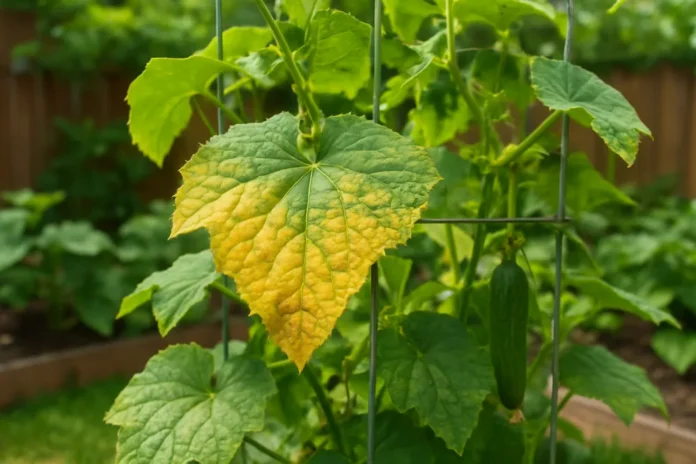
Cucumber leaves usually turn yellow because of watering stress, nutrient deficiencies, pest damage, disease, or simple leaf aging. The exact cause depends on which leaves yellow first and what other symptoms show up with it.
Few things are more frustrating than walking out to admire your cucumber patch and spotting cucumber leaves turning yellow instead of staying lush and green. Cucumbers grow fast, drink heavily, and respond quickly when something is off, so yellowing is often an early warning sign rather than the final stage of decline.
In my garden, I do not treat every yellow leaf the same. A single old leaf near the base is very different from a whole vine fading pale, and leaves with yellow spots tell a different story than leaves that yellow evenly between the veins. When you match the yellowing pattern to the plant's recent weather, watering, and growth stage, the cause usually becomes much clearer.
The good news is that many yellow-leaf problems are fixable if you catch them early. Below, I will walk through the most common reasons cucumber leaves lose color, how to tell them apart, and what to do so your plants can get back to producing crisp, healthy fruit.
What Yellowing Usually Means on Cucumber Plants
Yellow leaves on cucumbers are most often a sign that the plant is stressed or unable to move nutrients efficiently. That stress can come from too much water, too little water, poor fertility, compacted soil, root damage, pests feeding on the leaves, or diseases that interrupt normal growth. Sometimes the issue is mild and temporary. Other times it spreads fast and affects flowering and fruit set.
The first clue is where the yellowing starts. Older lower leaves usually yellow first when the plant is short on nitrogen or when those older leaves are simply being retired. Newer leaves that turn yellow can point to iron problems, severe root stress, or disease. If the leaf veins stay green while the tissue between them turns yellow, that suggests a nutrient issue. If the leaves look spotted, stippled, or patchy, pests or disease move higher on the suspect list.
When I diagnose cucumbers, I always compare at least three leaves from different parts of the plant before deciding anything. One damaged leaf can mislead you, but a repeated pattern across old leaves, new leaves, and nearby plants usually tells the real story.
Overwatering and Poor Drainage
Cucumbers need steady moisture, but they hate sitting in soggy soil. When roots stay too wet, they struggle to pull in oxygen, and the leaves often turn pale yellow as the plant begins to suffocate underground. Gardeners sometimes mistake this for drought and water even more, which deepens the problem.
Signs That Excess Water Is the Problem
- The soil stays wet for long stretches rather than drying slightly between waterings.
- Yellowing appears across much of the plant, not just one or two old leaves.
- Leaves may look limp or soft even though the ground is wet.
- Growth slows, flowers drop, or small fruits stall out.
- The planting area is heavy clay, a low spot, or a container without strong drainage.
If the soil is waterlogged, let the top inch or two dry before watering again. In beds, improve drainage with compost and avoid daily shallow watering. In containers, make sure extra water can escape freely. A deep soak once the soil begins to dry is better than frequent light watering that keeps the root zone constantly damp.
Underwatering and Heat Stress
Cucumbers are thirsty, fast-growing vines, and dry conditions show up quickly in the foliage. When the plant cannot take up enough water, leaves may wilt in the heat and then start yellowing, especially around the edges. Prolonged dryness also reduces nutrient uptake, so the plant can look both thirsty and deficient at the same time.
How Drought Stress Looks Different
- Leaves wilt during the day and do not fully recover by evening.
- Leaf edges may crisp, brown, or curl after yellowing begins.
- Soil feels dry several inches down.
- Fruit may become misshapen, bitter, or stop enlarging.
- The problem often worsens during hot, windy weather.
The fix is consistency. Cucumbers do best when the soil stays evenly moist, not bone dry one day and soaked the next. A layer of mulch helps a lot in summer because it cools the root zone and slows evaporation. I find that plants grown on trellises often need especially careful watering because the foliage is more exposed to wind and sun.
If your cucumbers keep swinging from wilted to overwatered, use your hand instead of the calendar. Water when the soil feels dry a couple of inches down, then soak deeply enough that the roots chase moisture lower into the bed.
Nitrogen Deficiency and Other Nutrient Problems
Cucumbers are fairly heavy feeders, especially once they start growing fast and setting fruit. If the soil is low in nutrients or if roots are stressed and cannot absorb what is present, leaves often lose their rich green color. Nitrogen deficiency is the most common culprit, but magnesium, potassium, and iron can also be involved.
Nitrogen Deficiency
Nitrogen helps support leafy growth, so a shortage usually shows up first on older leaves. They turn evenly pale green, then yellow, while newer leaves may stay greener for a while. Plants can look thin, slow, and less vigorous overall.
Magnesium or Potassium Issues
Magnesium deficiency often causes yellowing between leaf veins on older leaves, while the veins stay greener. Potassium problems may show up as yellowing along leaf edges that later become brown or scorched. These are more common in sandy soils, heavily watered beds, or gardens where plants have been producing hard for weeks.
Iron Deficiency
Iron problems usually affect newer leaves first. The young leaves turn yellow while veins remain green. This can happen when soil pH is too high or when roots are cold, wet, or otherwise stressed, even if iron is technically present in the soil.
- Feed with a balanced vegetable fertilizer if plants have not been fertilized recently.
- Side-dress with compost to improve gradual nutrient release and soil structure.
- Avoid overdoing high-nitrogen fertilizer once plants are flowering heavily, because that can push leaves at the expense of fruit.
- If chlorosis follows heavy rain or overwatering, correct the moisture issue first so roots can absorb nutrients again.
Pests That Cause Yellow Leaves
Several common cucumber pests damage leaf tissue directly or interfere with the plant's ability to stay vigorous. Insect feeding often creates a yellowed, speckled, or mottled appearance rather than a smooth, even fade.
Spider Mites
Spider mites are tiny and easy to miss, especially during hot, dry weather. They suck juices from leaves, leaving fine yellow stippling that can merge into bronzing or overall yellowing. Heavy infestations may produce fine webbing on the undersides of leaves.
Aphids
Aphids cluster on tender growth and leaf undersides, sucking sap and weakening the plant. Leaves may yellow, curl, or look distorted. They also leave sticky honeydew that can attract sooty mold.
Cucumber Beetles
Cucumber beetles chew leaves, flowers, and stems, but they are especially troublesome because they can spread bacterial wilt and other diseases. Feeding damage alone may not cause broad yellowing, but a stressed or infected plant can decline quickly after beetle activity.
- Check leaf undersides for insects, eggs, stippling, or webbing.
- Knock aphids off with a strong spray of water early in the infestation.
- Use insecticidal soap or neem only when needed and according to label directions.
- Keep weeds down, since they can shelter pests near cucumber vines.
- Encourage beneficial insects rather than reaching for broad-spectrum sprays first.
Diseases That Turn Cucumber Leaves Yellow
When yellowing comes with spots, wilting, collapse, or rapid spread from plant to plant, disease becomes more likely. Cucumbers are vulnerable to several fungal, bacterial, and viral problems, especially in warm weather with poor airflow or wet leaves.
Downy Mildew
Downy mildew often starts as angular yellow patches bounded by the leaf veins. The undersides of leaves may develop dark or purplish fuzzy growth in humid conditions. It spreads fast and can defoliate plants in a hurry.
Powdery Mildew
Powdery mildew is better known for its white coating, but infected leaves often yellow before they dry out. It tends to show up later in the season when foliage is dense and airflow is poor.
Bacterial Wilt
Bacterial wilt, often spread by cucumber beetles, usually causes sudden wilting more than classic yellowing at first. But as the plant fails, leaves can yellow and collapse quickly. One vine may suddenly look much worse than the rest.
Viral Diseases
Viruses such as cucumber mosaic virus can cause mottled yellow and green leaves, distortion, stunting, and poor fruit quality. Viral symptoms often look irregular and may not follow the neat patterns seen with simple nutrient problems.
For disease issues, remove badly affected leaves if that will improve airflow without stripping the plant bare. Water at the base rather than overhead, space plants properly, and sanitize tools if you have been cutting infected foliage. In severe cases, removing the whole plant is the best way to protect the rest of the patch.
A disease problem usually looks messy, not uniform. If the yellowing is patchy, spotted, or moving unpredictably across leaves and plants, I start thinking infection long before I assume the bed just needs fertilizer.
Natural Aging and Shading of Older Leaves
Not every yellow leaf signals trouble. As cucumber vines grow, the oldest leaves near the base naturally age, especially once the canopy gets dense and those leaves no longer receive much light. A few yellow lower leaves on an otherwise vigorous, fruiting plant are usually normal.
The key is scale. If only a handful of the oldest leaves are fading while the rest of the vine looks green and productive, do not panic. You can prune off fully yellow leaves if they are dry or touching damp soil, but there is no need to strip the plant aggressively.
Root Problems, Transplant Shock, and Soil Conditions
Anything that damages cucumber roots can lead to yellow leaves because the plant cannot move water and nutrients effectively. Newly transplanted cucumbers often sulk if their roots were disturbed, and they can yellow temporarily while reestablishing. Compacted soil, cold soil, nematodes, and root rot can create similar symptoms.
- Yellowing begins soon after transplanting.
- Plants stay small even with regular watering.
- Soil is hard, dense, or crusted over.
- Roots were broken or circling tightly in the pot at planting time.
- The bed stays cool and wet for long periods in spring.
Give transplants steady moisture, warm conditions, and time. Avoid cultivating deeply around cucumbers because their roots are easily damaged. In future seasons, add organic matter to improve drainage and reduce compaction, and wait until the soil is warm enough before planting heat-loving cucumbers outside.
How to Tell Which Cause You Are Dealing With
Because several problems can look similar at first glance, it helps to narrow them down with a quick symptom check. Look at the age of the affected leaves, the pattern of yellowing, the condition of the soil, and whether you see insects, spots, or mildew.
- If older leaves yellow evenly and growth is weak, think nitrogen deficiency or normal aging.
- If the whole plant looks pale and the soil is soggy, think overwatering or root stress.
- If leaves yellow at the edges and get crispy, think underwatering, heat stress, or potassium issues.
- If yellowing is speckled or stippled, inspect closely for mites or aphids.
- If leaves show angular patches, fuzzy growth, mottling, or rapid spread, suspect disease.
- If young leaves yellow first with green veins, consider iron chlorosis or damaged roots.
Try not to fix five things at once. If you add fertilizer, change watering, spray for pests, and prune heavily all on the same day, you will not know what actually helped and you may stress the plant further.
How to Get Cucumbers Green and Growing Again
Once you have a likely cause, focus on steady care rather than dramatic rescue measures. Cucumbers recover best when conditions become consistent. Healthy new growth is the real sign of improvement, not whether every old yellow leaf turns green again.
- Adjust watering so the soil stays evenly moist but never swampy.
- Mulch around plants to reduce moisture swings and soil splash.
- Feed lightly with a balanced fertilizer if nutrient deficiency seems likely.
- Remove only badly damaged or diseased leaves, not every yellowed leaf at once.
- Inspect leaves twice a week for mites, aphids, or beetles.
- Water at the base early in the day to reduce disease pressure.
- Improve airflow by spacing plants well and training vines upward when possible.
If the plant keeps declining despite corrected care, disease or root damage is often the hidden issue. In that case, protecting healthy nearby plants may matter more than trying to save one badly compromised vine.
How to Prevent Yellow Leaves Next Season
Prevention starts before planting. Cucumbers are less likely to yellow when they grow in loose, fertile soil with good drainage and consistent water. Most recurring problems trace back to stress, and stressed plants are always easier targets for pests and disease.
- Work compost into the bed before planting.
- Plant only after the soil has warmed in late spring.
- Use mulch to stabilize soil moisture and reduce splash-borne disease.
- Rotate cucumber-family crops so they do not grow in the same spot every year.
- Trellis or space plants for better airflow and easier inspection.
- Fertilize moderately rather than waiting until plants already look hungry.
- Check leaf undersides often so pests are caught before populations explode.
A little observation goes a long way with cucumbers. The plants grow so quickly that small problems can become big ones in less than a week, but that also means they often respond quickly once conditions improve.
FAQ
Should I Remove Yellow Cucumber Leaves?
Remove leaves that are fully yellow, badly diseased, or lying on wet soil. If only a few older lower leaves are yellowing naturally, you can leave them until they decline further so the plant is not stressed by extra pruning.
Can Yellow Cucumber Leaves Turn Green Again?
Mildly pale leaves may improve a bit if the cause is corrected early, but fully yellow leaves usually do not return to deep green. Watch for healthy new growth as the best sign that your fix is working.
Do Cucumbers Need a Lot of Fertilizer?
They need moderate, steady nutrition, especially once vines start growing fast and setting fruit. Too little fertility can cause yellowing, but too much fertilizer can also create lush leaves with fewer cucumbers.
Why Are Only the Bottom Leaves on My Cucumber Plant Turning Yellow?
Bottom leaves are usually the oldest, so they often yellow first from normal aging, shading, or nitrogen deficiency. If the rest of the plant looks vigorous, a few lower yellow leaves are not usually a major concern.
Can Too Much Sun Make Cucumber Leaves Turn Yellow?
Strong sun alone is not usually the problem, but intense heat combined with dry soil can stress plants enough to yellow leaves. Reflected heat, containers, and windy sites can make this worse.
What Does Overwatered Cucumber Yellowing Look Like?
Overwatered cucumbers often look generally pale or yellow while the soil stays wet. Leaves may droop even though the plant has plenty of moisture, and growth often slows because the roots are stressed.
How Often Should I Check Cucumber Plants for Pests and Disease?
At least twice a week in warm weather is a good habit, and daily checks help during humid or very hot stretches. Early detection makes yellow-leaf problems much easier to control.
Want healthier vines and bigger harvests? Read our guide to the best cucumber fertilizers and treatments so you can choose the right fix fast.
