

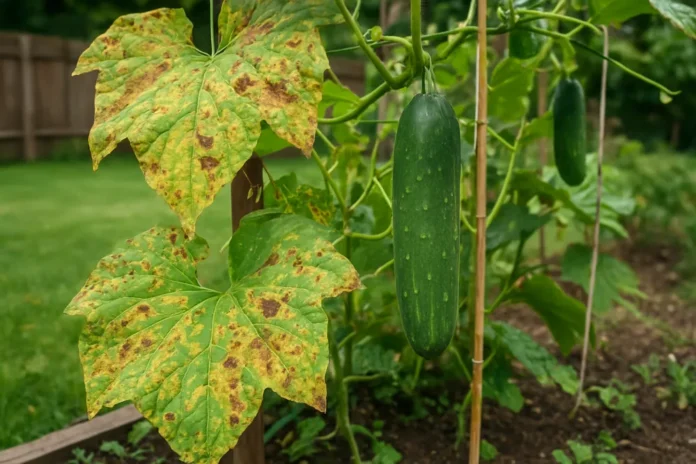
Cucumber leaves usually develop brown spots because of fungal or bacterial disease, pest feeding, watering stress, or leaf scorch. The most common causes are leaf spot diseases, downy mildew damage, and environmental stress that kills small patches of leaf tissue.
Seeing cucumber leaves with brown spots can be frustrating, especially when the plants looked healthy just a few days earlier. Cucumbers grow fast, which means problems can show up fast too. A few scattered spots may be minor stress, but a sudden spread across several leaves often signals disease or a care issue that needs attention.
When I diagnose cucumbers, I look less at the color alone and more at the pattern. Brown spots that start with yellow halos, angular patches trapped between veins, dry crispy edges, or tiny speckles after hot weather each point in a different direction. Once you know what kind of spotting you are looking at, it gets much easier to decide whether to prune, spray, adjust watering, or simply monitor new growth.
The good news is that brown spotting does not always mean the plant is done for. Cucumbers can keep producing well if you catch the cause early, remove badly damaged foliage, and improve growing conditions before the problem moves into the whole canopy.
What Brown Spots Usually Mean on Cucumber Leaves
Brown spots form when leaf tissue dies. That damage can come from infection, feeding injury, heat, chemical burn, or roots struggling to deliver moisture and nutrients evenly. The plant responds the same basic way in all of these cases: sections of the leaf lose function, fade from green to yellow or pale green, and finally turn tan, brown, or dark and brittle.
On cucumbers, the most common causes are fungal and bacterial leaf diseases, especially during warm, humid weather. But not every spot is contagious. If your weather has been erratic, watering has been uneven, or you recently sprayed something in bright sun, those clues matter just as much as the leaf color.
- Disease spots often spread from leaf to leaf and become more common after rain, overhead watering, or muggy nights.
- Environmental damage often shows up all at once after a heatwave, dry spell, wind event, or spray application.
- Pest damage usually comes with stippling, holes, webbing, chewing, or insects on the undersides of leaves.
- Nutrient or root issues tend to cause broader yellowing or edge scorch, not neat isolated spots at first.
When I am unsure, I compare older leaves with the newest ones. If the worst spotting is low on the plant and creeps upward, I suspect a disease splashing from the soil. If tender top growth is hit hardest right after weather stress or spraying, I start with scorch or chemical injury.
Leaf Diseases That Commonly Cause Brown Spotting
Angular Leaf Spot
Angular leaf spot is a bacterial disease that causes water-soaked lesions limited by the leaf veins, so the spots often look blocky or angular instead of round. As they age, the damaged areas turn tan to brown and may dry out and tear away. In humid weather, you may notice the leaves looking ragged as the dead tissue drops out.
This problem spreads quickly when leaves stay wet for long periods. Rain splash, overhead irrigation, and handling wet plants all help move bacteria around. If several leaves have sharply defined brown patches and the issue seems to worsen after storms, angular leaf spot is high on the list.
Alternaria and Other Fungal Leaf Spots
Fungal leaf spot diseases can produce small brown lesions that enlarge over time. Some become circular with faint rings, while others stay irregular. Yellow halos around the spots are common, especially in the early stage. Leaves with many lesions may curl, yellow, and collapse sooner than healthy foliage.
Warm temperatures, crowded vines, and poor airflow make these diseases more aggressive. Mulch helps by reducing soil splash, and trellising helps leaves dry faster. Once fungal spotting gets established, removing the worst leaves and improving airflow can slow the spread.
Anthracnose
Anthracnose can create irregular brown areas on leaves, often starting as yellowish or water-soaked spots. It may also affect stems and fruit, which is a useful clue. In wet weather, lesions expand faster, and badly affected leaves can look scorched or blighted.
Downy Mildew Damage
Downy mildew often begins as pale green or yellow angular patches on the upper leaf surface, usually boxed in by veins. As the tissue dies, those areas turn brown. On the undersides of leaves, especially in humid mornings, you may see dark gray to purplish growth. It can strip a cucumber patch quickly once conditions favor it.
- Angular or vein-limited spots suggest angular leaf spot or downy mildew.
- Rounder spots with halos or faint target-like rings lean more toward fungal leaf spot diseases.
- Spots plus fruit or stem lesions raise concern for anthracnose.
Pests and Feeding Damage That Can Turn Spots Brown
Some pest problems begin as tiny pale specks, not obvious brown spots. As feeding continues, those injured cells dry out and merge into larger brown patches. On cucumbers, spider mites, cucumber beetles, thrips, and sometimes aphids can all contribute to leaf spotting or bronzing.
Spider Mites
Spider mites are especially common during hot, dry weather. Their feeding creates fine stippling, giving leaves a dusty or faded look at first. Later, the stippled areas turn bronze or brown, and leaves may crisp up. Fine webbing on the undersides is a strong clue when the infestation is advanced.
Cucumber Beetles and Chewing Insects
Cucumber beetles usually create holes rather than true spots, but their feeding can leave torn edges and damaged tissue that dries brown. They are also important because they can spread bacterial diseases, so chewing damage plus wilting or spotting deserves a closer look.
Thrips and Sap-feeding Insects
Thrips scrape leaf surfaces and leave silvery or bronzed areas that later turn brown. The pattern is usually more streaked or flecked than round. Aphids are less likely to cause distinct brown spots on their own, but heavy feeding can weaken leaves and encourage secondary issues.
Flip over several damaged leaves before treating anything. I often find mites or thrips hiding on the undersides while the top of the leaf just looks like a vague brown spot problem.
Watering, Heat, and Chemical Damage That Mimic Disease
Not all brown spotting is infectious. Cucumbers are heavy drinkers with shallow roots, and they react quickly to swings between soggy and dry soil. If roots cannot keep up, leaf tissue at the edges or in exposed patches may dry and turn brown.
Drought Stress and Uneven Watering
Dry soil, intense sun, and hot wind can produce scorched spots or crisp margins, especially on older leaves. Plants in containers and raised beds are especially vulnerable because the soil dries faster. Sometimes the pattern looks random because one vine root zone dried harder than another.
Overwatering and Poor Drainage
Too much water can also lead to spotting, though indirectly. Saturated soil limits oxygen around the roots, which weakens the plant and makes leaves yellow and patchy before dead brown tissue develops. Constantly wet foliage also invites disease, so overwatering can cause both stress damage and infection at the same time.
Sunscald and Heat Scorch
During extreme heat, leaves can develop bleached or tan areas that quickly become brown and papery. This is more likely after pruning exposes previously shaded leaves or after transplant stress. The damage usually appears on the most exposed surfaces, not evenly through the canopy.
Fertilizer and Spray Burn
Foliar fertilizers, insecticidal soaps, neem, and even homemade sprays can burn cucumber leaves if applied too strongly or during hot, bright conditions. Herbicide drift can also create brown flecks, twisted growth, or blotchy tissue death. If the spots appeared a day or two after spraying, think about application timing and concentration before assuming disease.
- Scorch often affects the most exposed leaves first.
- Spray injury often appears soon after treatment and may be fairly uniform where the spray landed.
- Root-related stress usually comes with wilting, slowed growth, or broad yellowing in addition to brown areas.
How to Tell Which Cause Is Most Likely
You do not need a lab test to narrow this down in a home garden. Start with a few simple observations: where the spots began, what the weather has been like, whether the spots are round or angular, and whether the undersides of leaves show insects, webbing, or fungal growth.
- Check whether the oldest lower leaves are worst. If yes, soil-splashed disease is more likely.
- Look at the shape of the lesions. Angular spots bounded by veins suggest bacterial disease or downy mildew.
- Inspect undersides early in the morning for grayish growth, webbing, or tiny moving pests.
- Think back over the last week. Rain, overhead watering, a heat spike, or a recent spray can explain a lot.
- Notice whether new leaves are staying healthy. If fresh growth looks good, the plant may be recovering from a temporary stress rather than a spreading infection.
Pattern matters more than any single damaged leaf. One ugly leaf after a hot afternoon is very different from many leaves developing new spots every day. If spotting is expanding across the plant despite stable weather, disease becomes much more likely.
I try not to diagnose from the worst leaf on the plant because the oldest damage is often the messiest and least informative. The newest spots tell the real story. They still show the original color, shape, and spread pattern before everything dries brown.
What to Do Right Now to Stop the Problem From Getting Worse
Once cucumber leaves have turned brown, that tissue will not recover. The goal is to protect healthy leaves, reduce stress, and slow further spread. Start with sanitation and growing conditions before reaching for any treatment.
- Remove badly spotted leaves, especially those touching the soil or blocking airflow. Do not strip the plant bare.
- Water at the base of the plant rather than overhead so the foliage stays as dry as possible.
- Mulch the soil to reduce splash from irrigation and rain.
- Space or trellis vines so air moves through the canopy and leaves dry faster after dew or storms.
- Avoid handling vines when they are wet because that can spread bacterial and fungal problems.
- Hold off on extra fertilizer unless you know the plant is deficient. Overfeeding softens growth and can worsen stress.
If disease seems likely and the problem is actively spreading, a labeled copper or fungicide product for cucurbits may help protect healthy foliage, depending on the disease involved. These products generally work better as protectants than cures, so early use matters. Always follow the label and avoid spraying during high heat.
If pests are the cause, wash off light infestations with a strong stream of water or use an appropriate insecticidal soap or horticultural product labeled for cucumbers. For spider mites, improving humidity around the plants and repeated thorough coverage on leaf undersides matters more than a single quick spray.
When Brown Spots Mean the Plant May Not Be Worth Saving
A cucumber plant can tolerate some leaf loss, but there is a point where recovery becomes unlikely. If most leaves are heavily spotted, the canopy is collapsing, fruit is also developing lesions, or new growth is quickly becoming infected, the plant may no longer be productive enough to justify treatment.
In that case, removing the plant can protect nearby cucumbers and other cucurbits. Dispose of diseased material rather than composting it if you are dealing with a serious leaf disease. Clean up fallen leaves too, since many pathogens persist in garden debris.
How to Prevent Brown Spots on Future Cucumber Crops
Prevention is much easier than trying to fix a dense cucumber patch once disease takes hold. A few habits make a big difference from the start of the season.
- Choose disease-resistant cucumber varieties when possible.
- Rotate cucumbers and other cucurbits to a different part of the garden each year.
- Use mulch to reduce soil splash onto lower leaves.
- Trellis plants to improve airflow and keep foliage off the ground.
- Water deeply and consistently at soil level rather than giving frequent shallow sprinkles.
- Thin crowded growth so leaves dry quickly after dew and rain.
- Scout weekly for early spots and underside pests before the problem spreads.
- Remove plant debris at the end of the season to reduce carryover disease.
I have found that the biggest difference usually comes from combining three simple practices: watering at the base, keeping vines off the soil, and not letting old infected leaves linger. Those steps do not eliminate every problem, but they dramatically reduce how quickly brown spotting takes over.
FAQ
Can Cucumber Leaves with Brown Spots Turn Green Again?
No. Brown tissue is dead and will not recover. Focus on protecting healthy leaves and watching whether new growth stays clean.
Should I Remove Spotted Cucumber Leaves?
Yes, if the leaves are badly affected, touching the soil, or crowding the plant. Remove them carefully, but leave enough healthy foliage for the plant to keep growing and shading fruit.
Are Brown Spots on Cucumber Leaves Always a Disease?
No. They can also come from spider mites, drought stress, sunscald, fertilizer burn, or spray injury. The shape, location, and spread pattern help separate these causes.
Is It Safe to Eat Cucumbers From a Plant with Spotted Leaves?
Usually yes, if the fruit itself is healthy and not rotting or badly damaged. Wash the cucumbers well and discard fruit with soft spots, sunken lesions, or obvious decay.
Does Overhead Watering Cause Brown Spots on Cucumbers?
It can. Wet leaves do not automatically create spots, but frequent overhead watering encourages bacterial and fungal diseases and increases splash from contaminated soil.
What Does Downy Mildew Look Like on Cucumber Leaves?
It often starts as angular yellow or pale patches between the veins on the upper leaf surface. Those areas later turn brown, and the undersides may show dark gray or purplish growth in humid conditions.
Can Too Much Fertilizer Cause Brown Spots on Cucumber Leaves?
Yes. Excess fertilizer can burn roots or leaves and lead to crispy brown edges or blotches. Foliar sprays that are too strong or applied in hot sun can also scorch leaves.
How Fast Can Cucumber Leaf Spot Spread?
In warm, humid weather it can spread very quickly, sometimes within days. Crowded plants, wet foliage, and frequent rain make the problem move faster.
Need a treatment that actually matches the problem? See our guide to the best fungicides, insecticidal sprays, and cucumber care products so you can protect new growth and keep your harvest on track.
