

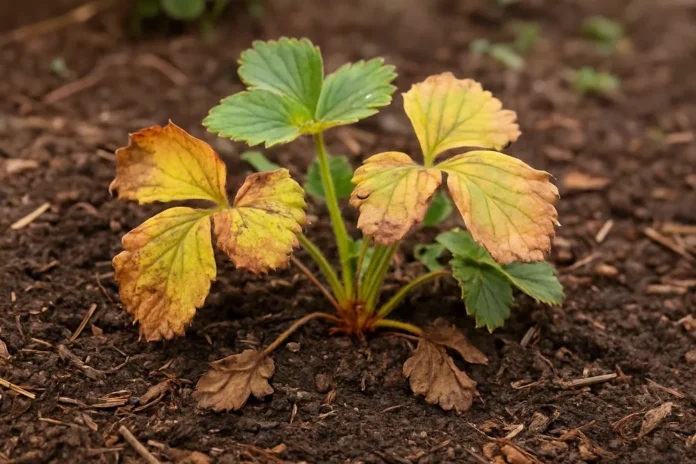
A strawberry plant usually starts dying because its roots, crown, or leaves are under stress from too much water, too little water, disease, pests, or extreme heat. In many cases, the real problem begins below the soil line before the top growth collapses.
It is frustrating to watch a healthy strawberry plant suddenly slump, yellow, dry out, or collapse just when you expect flowers and fruit. In my experience, strawberry plant decline often looks dramatic above ground, but the real cause usually starts with roots, the crown, or a steady buildup of stress the plant can no longer handle.
Strawberries are productive but not especially forgiving. They like consistent moisture, good airflow, rich but well-drained soil, and a planting depth that keeps the crown in exactly the right spot. When one of those basics slips, you may see wilting, browning leaves, weak growth, mushy crowns, small fruit, or a plant that seems to die almost overnight.
The good news is that a dying plant usually leaves clues. The pattern of yellowing, the condition of the crown, the feel of the soil, and whether the damage is spreading from leaf edges, roots, or the center of the plant can help you narrow down what is really happening.
What a Dying Strawberry Plant Usually Looks Like
Before jumping to a fix, it helps to define the symptom. Strawberry plants do not all die the same way. Some wilt even though the soil is wet. Others slowly yellow and shrink. Some develop scorched leaf edges in hot weather, while others suddenly collapse from crown rot or root disease.
- Leaves turning yellow, then brown
- Outer leaves drying up while the center stays weak or stunted
- Whole plant wilting during the day and not recovering by evening
- Black, mushy, or foul-smelling roots
- A soft or brown crown at the center of the plant
- Fruit that stays small, rots, or never develops well
- Chewed leaves, missing stems, or visible insects
Once you know whether the problem is mostly in the leaves, crown, roots, or fruit, the likely causes become much easier to sort out.
Watering Problems Are One of the Most Common Causes
Too Much Water and Soggy Soil
Overwatering is one of the fastest ways to weaken strawberries. These plants like even moisture, but they do not want to sit in waterlogged soil. When soil stays saturated, roots cannot access oxygen well, and rot-causing pathogens get an easy opening. The plant may wilt even though the soil feels wet, which often confuses gardeners into watering more.
- Leaves look limp but not crisp
- Yellowing spreads through the plant
- Growth slows or stalls
- Roots appear brown, soft, or sparse instead of pale and firm
- The crown may feel soft at the base
Too Little Water and Drought Stress
Underwatering can also make strawberries look like they are dying, especially in containers, raised beds, and hot spells. Because strawberry roots are relatively shallow, they dry out faster than deeper-rooted crops. Dry stress often shows up as leaf edge browning, drooping in midday heat, poor flowering, and fruit that stays undersized.
When I am not sure whether a strawberry is too wet or too dry, I look at the texture of the wilt. Dry plants usually feel papery or crisp at the edges. Overwatered plants tend to look heavy, limp, and yellowish, with no real bounce even when temperatures cool down.
The fix depends on consistency more than volume. Strawberries do best when the soil stays lightly moist, never bone dry and never swampy.
Poor Drainage and Root Rot Can Kill Plants Quickly
If your strawberry plant seems to decline rapidly, especially after rainy weather or frequent irrigation, poor drainage may be the main issue. Heavy clay soil, compacted ground, and containers without good drainage holes all raise the risk of root rot.
Root rot often begins out of sight. By the time the leaves collapse, the roots may already be too damaged to support the plant. Common signs include blackened roots, a sour smell in the potting mix, yellow lower leaves, and a crown that starts turning brown from the bottom up.
- Garden beds that puddle after rain
- Pots with saucers left full of water
- Dense soil with little organic matter
- Planting in low spots where water collects
- Mulch piled too tightly around the crown in wet weather
A plant with advanced root rot is hard to save. If the crown is mushy and most roots are gone, replacement is often more realistic than recovery. The long-term solution is improving drainage before replanting.
Planting Depth Matters More than Many Gardeners Expect
Strawberries are fussy about planting depth. The crown, which is the short central stem where leaves and roots meet, should sit right at soil level. If it is buried too deeply, it may rot. If it sits too high, roots can dry out and the plant may struggle to establish.
I see this a lot with newly planted bare-root strawberries and nursery starts. A plant may look fine for a week or two, then begin to wilt, yellow, or stop growing because the crown is stressed.
- Buried crown: soft center, yellowing leaves, slow collapse
- Crown too high: exposed roots, frequent wilting, poor vigor
- Mulch covering the crown: trapped moisture and rot risk
If a newly planted strawberry is failing, I gently brush soil back from the crown before I assume disease. Correcting the depth early can make a bigger difference than fertilizer or extra water.
Diseases That Commonly Make Strawberry Plants Collapse
Crown Rot and Root Diseases
Crown rot, red stele, and other root-related diseases are serious problems in damp conditions. These diseases often cause wilting, stunting, and eventual plant death even when watering seems reasonable. Cutting into the crown may reveal brown internal tissue instead of healthy pale tissue.
Leaf Spot and Leaf Scorch
Leaf diseases usually do not kill a mature strawberry plant overnight, but they can weaken it over time. You may see purple spots, tan centers, burned-looking patches, or leaves that dry up early. If enough foliage is damaged, the plant loses energy and fruit production drops.
Botrytis and Fruit Rot
Gray mold and fruit rots are most obvious on berries, but they also point to a larger moisture and airflow problem. If plants are crowded, watered overhead late in the day, or mulched poorly, disease pressure rises fast.
- Remove badly infected leaves and fruit
- Avoid wetting foliage when possible
- Space plants for good airflow
- Replace heavily diseased plants rather than composting them nearby
- Rotate planting areas if disease has been severe
If several plants decline in the same area at once, disease or drainage is more likely than a one-off watering mistake.
Heat, Sun, and Weather Stress Can Mimic Disease
Strawberries enjoy sun, but intense heat can still push them into decline, especially in containers or during their first season. Leaves may wilt during the hottest part of the day, develop dry margins, or bleach slightly. Fruit can sunscald, and blossoms may drop during prolonged high temperatures.
Late frosts can also injure plants, blacken blossoms, and stall growth. Wind adds another layer of stress by drying the soil and foliage faster than expected. A plant dealing with heat or frost stress may look diseased even when no pathogen is involved.
- Container plants dry out much faster than in-ground plants
- Dark pots heat roots quickly in full afternoon sun
- Fresh transplants scorch more easily than established plants
- Reflected heat from walls, patios, or stone beds can intensify stress
Nutrient Imbalances and Poor Soil Fertility Weaken Strawberries
A strawberry plant that is pale, weak, and unproductive may be struggling with low fertility or an imbalanced feeding routine. Nitrogen deficiency often causes general yellowing and reduced growth, while too much fertilizer can burn roots, encourage weak leafy growth, or reduce fruiting.
Strawberries prefer fertile, well-drained soil with organic matter mixed in. In containers, exhausted potting mix can become a problem surprisingly fast. If the plant has been in the same pot or bed for a long time without replenishment, nutrients may be part of the issue.
- Pale green or yellow older leaves can point to low nitrogen
- Scorched leaf edges after feeding may suggest fertilizer burn
- Lots of leaves with little flowering can happen with excess nitrogen
- Poor soil pH can limit nutrient uptake even when nutrients are present
Feeding helps only if roots are healthy enough to take nutrients up. When a plant is already rotting or badly water-stressed, fertilizer usually makes matters worse instead of better.
Pests May Be Draining or Damaging the Plant
Insects and other pests do not always kill strawberry plants outright, but heavy infestations can tip a stressed plant over the edge. Spider mites, aphids, slugs, root weevils, and sap-feeding pests all reduce plant vigor in different ways.
Above-ground Pests
Aphids cluster on tender growth and can distort leaves. Spider mites are tiny but destructive in hot, dry weather, often causing stippled or bronzed foliage. Slugs chew holes in leaves and damage ripening fruit, especially where mulch stays damp.
Below-ground Pests
Root-feeding pests are easy to miss because the top growth just looks weak, wilted, or stunted. If watering seems correct but the plant still declines, inspect roots and the crown area carefully.
When damage looks random from plant to plant, I start thinking about pests. When several neighboring plants fail in the same pattern, I lean more toward drainage, disease, or a site problem.
Container Strawberries Have a Few Extra Risks
Strawberries in pots can thrive, but they are less buffered against mistakes. Soil dries faster, heats faster, and loses nutrients faster. Small containers also limit root space, which means even a healthy plant can start declining if it becomes crowded or rootbound.
- Tiny pots that dry out within a day
- Poor drainage or compacted potting mix
- Salt buildup from frequent fertilizer use
- Winter root damage in cold climates
- Old potting mix that no longer absorbs water evenly
If a container strawberry keeps struggling, the issue is often not one dramatic disease but repeated cycles of drying out, overheating, and weak root growth.
How to Narrow Down the Real Cause
A quick inspection usually tells you more than guessing from leaf color alone. Start with the crown and soil, then move outward. Check whether the soil is dry, evenly moist, or waterlogged. Look for exposed roots, buried crowns, spots on leaves, pest damage, and any mushiness near the base.
- Feel the soil a couple of inches down, not just on the surface.
- Inspect the crown where leaves emerge for browning or softness.
- Slide a container plant out carefully to check root color and smell.
- Look under leaves for mites, aphids, or stippling.
- Notice whether only one plant is affected or many plants are declining together.
- Think back to recent weather, heavy rain, heat waves, transplanting, or fertilizer use.
That pattern-based approach is what usually separates root rot from simple thirst, or pest damage from a sitewide drainage problem.
Can a Dying Strawberry Plant Be Saved?
Sometimes yes, especially if the crown is still firm and there are healthy white or tan roots left. A plant that is only mildly stressed by watering mistakes, heat, or shallow planting can often rebound. New leaves from the center are a good sign.
A plant is much less likely to recover if the crown is mushy, the roots are black and rotted, or disease has spread through several plants in the bed. In that case, saving the location for future strawberries is often more important than trying to rescue one plant past the point of return.
- More salvageable: wilt from temporary dryness, shallow planting, mild heat stress, early nutrient issues
- Less salvageable: crown rot, severe root rot, extensive pest damage below ground, repeated collapse after watering
How to Prevent the Problem Next Time
Healthy strawberry plants depend on steady conditions more than heroic interventions. Prevention is usually simpler than treatment, especially with diseases that attack the crown and roots.
- Plant in well-drained soil or raised beds
- Set crowns exactly at soil level
- Water consistently without keeping the bed soggy
- Use mulch to keep fruit clean but keep the crown uncovered
- Give plants enough spacing for airflow
- Replace weak or diseased plants promptly
- Refresh container mix and pot size when plants outgrow their space
- Avoid overcrowding with too many runners in a small area
If you grow strawberries year after year, pay attention to the spots where plants repeatedly fail. That kind of repeat problem usually points to drainage, disease carryover, or soil conditions rather than bad luck.
FAQ
Why Is My Strawberry Plant Wilting Even Though the Soil Is Wet?
This often points to overwatering, root rot, or poor drainage. When roots are damaged, the plant cannot move water properly, so it wilts even in soggy soil.
Should I Cut Off Dead Leaves From a Struggling Strawberry Plant?
Yes, remove leaves that are fully brown, mushy, or clearly diseased. Leave any healthy green growth in place so the plant can keep producing energy.
Can Overwatering Kill Strawberry Plants?
Yes. Constantly wet soil can suffocate roots and encourage crown and root rot, which can kill the plant quickly.
How Do I Know if My Strawberry Plant Has Root Rot?
Check the roots and crown. Rotted roots are usually dark, soft, and sparse, and the crown may be brown or mushy instead of firm and pale inside.
Why Are My Strawberry Leaves Turning Brown and Crispy?
Brown, crispy leaves are often linked to underwatering, heat stress, fertilizer burn, or sun scorch. If the tissue is soft instead of crisp, disease or overwatering is more likely.
Can a Strawberry Plant Come Back After Looking Dead?
It can if the crown is still firm and the roots are not badly damaged. If the center is mushy or rotted, recovery is much less likely.
Do Strawberry Plants Die After Fruiting?
No, most garden strawberries are perennial for a few years, though individual plants decline with age. A plant that dies right after fruiting is usually dealing with stress, disease, or poor conditions rather than a normal life cycle.
Need help choosing the right fix fast? Read our strawberry care and treatment guides to compare watering tools, fungicides, mulches, and pest controls that actually help stressed plants recover.
