

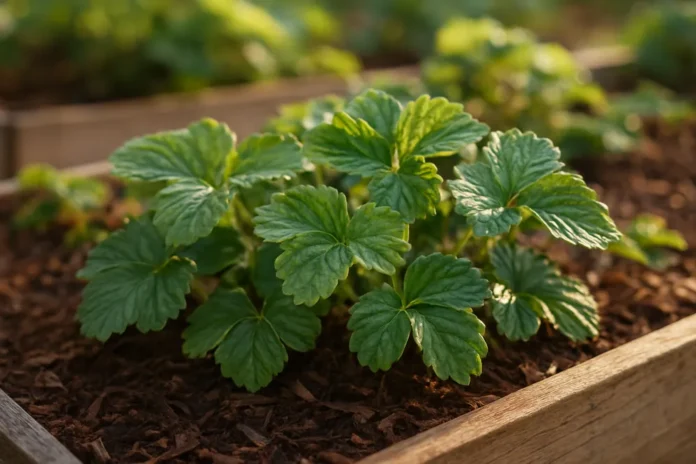
Strawberry leaves usually curl because the plants are stressed by heat, uneven watering, pests, disease, or chemical injury. Sometimes older leaves also curl as they age and naturally decline.
Curled leaves on strawberry plants can be unsettling, especially when the plants looked fine just a few days earlier. In my experience, strawberry leaves curling is usually a stress signal rather than a single clear-cut problem. The challenge is figuring out whether that stress is coming from weather, roots, insects, disease, or something sprayed nearby.
The good news is that strawberries often give extra clues if you slow down and look closely. Leaves that cup upward in hot afternoons tell a different story than leaves that twist, pucker, or stay tightly curled all day. If you compare new growth to older leaves, check the undersides, and notice whether the whole plant or just a few leaves are affected, you can usually narrow the cause down pretty quickly.
Below, I will walk through the most common reasons strawberry leaves curl, what each one tends to look like, and which problems are most likely to affect home garden patches, raised beds, containers, and hanging baskets.
What Curling Leaves Are Trying to Tell You
Leaf curling is not a disease by itself. It is a symptom. Strawberries curl their leaves when normal water movement, growth, or tissue development gets disrupted. That disruption may be mild and temporary, or it may point to a larger issue that needs attention.
- If leaves curl mostly during hot sun and relax later, heat or water stress is likely.
- If young leaves are distorted, puckered, or twisted, think pests, virus, or chemical exposure.
- If older leaves curl and also yellow or crisp at the edges, root stress or nutrient imbalance may be involved.
- If only one plant is affected while nearby plants look normal, focus on that plant's roots, crown, or local pest pressure.
- If many plants change at once, weather, irrigation, herbicide drift, or a spreading disease become more likely.
When I diagnose strawberries, I look at the newest leaves first. Damage on fresh growth usually points to mites, aphids, virus, or chemical injury, while older leaves are more often reacting to watering problems, heat, or normal wear.
Heat Stress and Low Humidity
One of the most common causes of curling is simple environmental stress. On hot, bright, windy days, strawberry leaves may cup upward or fold slightly to reduce moisture loss. This is especially common in containers, raised beds, black plastic mulch, and south-facing spots where roots heat up quickly.
Heat-related curling often appears without spots, holes, or major discoloration at first. The leaves may look otherwise healthy, just smaller, tighter, or slightly leathery. If the stress continues, leaf edges can dry out, berries may stay small, and flowers may abort.
- Curling is worse in midafternoon than in the morning
- Soil dries quickly between waterings
- Container plants are affected more than in-ground plants
- Leaves may also look dull, limp, or slightly scorched at the margins
Watering Problems and Root Stress
Underwatering
Strawberries have fairly shallow roots, so they respond quickly when soil dries out. If plants are not getting enough moisture, leaves may curl inward, wilt, or feel papery. Fruit production often drops fast because the plant is protecting itself rather than pushing new growth.
Overwatering and Poor Drainage
Too much water can cause curling too. Waterlogged roots cannot take up oxygen well, and stressed roots struggle to support healthy top growth. In this case, the leaves may curl while also looking pale, soft, or slightly yellow. The plant may seem droopy even though the soil is wet.
Heavy clay soil, pots without enough drainage, or beds set in low spots can all lead to root stress. If roots stay soggy long enough, crown rot and root rot can follow, which makes the leaf symptoms worse.
I would rather water strawberries deeply and consistently than give them frequent shallow sips. Shallow watering encourages weak surface roots that make curling worse during the next hot spell.
Sap-sucking Pests That Distort Leaves
Aphids
Aphids feed by piercing plant tissue and sucking sap, which can make leaves curl, pucker, or twist. They often gather on tender new growth and on the undersides of leaves. You may also notice sticky honeydew, ants moving around the plants, or a shiny residue on nearby foliage.
Cyclamen Mites and Broad Mites
Mites are a major culprit when young strawberry leaves stay small, crinkled, and deformed. Cyclamen mites are extremely tiny and hard to see without magnification, but the damage can be dramatic. New leaves may look tightly bunched, puckered, or bronzed, and the plant can become stunted.
Thrips
Thrips can distort tender leaves and flowers, especially in dry weather. Their feeding may leave a silvery cast, streaking, or roughened tissue along with curling.
- Check the undersides of curled leaves with a hand lens
- Look for sticky residue, stippling, bronzing, or tiny moving insects
- Pay close attention to the center of the plant where fresh leaves emerge
- Isolated damage on the newest growth often points to pest feeding
Disease Issues That Can Cause Leaf Curl
Powdery Mildew
Powdery mildew is one of the classic disease causes of strawberry leaf curling. Infected leaves often curl upward along the edges, exposing more of the lower surface. You may also see a whitish powdery coating, purplish blotching, or a reddish cast on the leaf margins. This disease tends to show up when air circulation is poor and humidity stays high around the foliage.
Leaf Spot and Leaf Scorch
These diseases do not always cause curling first, but as spots expand and tissue is damaged, leaves may cup, dry, or twist. If your curled leaves also have purple, brown, tan, or scorched-looking lesions, fungal leaf diseases should be on your list.
Viral Problems
Several strawberry viruses can lead to curling, crinkling, yellowing, or overall weak growth. Viral symptoms are often uneven and persistent. Leaves may look small, misshapen, or mottled, and the plant may fail to recover even when watering and feeding are corrected. Aphids can spread some viruses, which is another reason to take sap-sucking insects seriously.
Powdery mildew has a very particular look on strawberries. When I see leaf edges rolling upward with a faint purplish tinge, I think mildew before I think drought, especially if mornings have been humid and the bed is crowded.
Nutrient Imbalance and Fertilizer Issues
Strawberries do not need heavy feeding, and too much fertilizer can stress them as much as too little. Excess salts from synthetic fertilizers can burn roots, causing curling, browning, and a general stalled look. This is especially common in pots where nutrients concentrate quickly.
On the other hand, poor fertility can weaken growth enough that leaves emerge small or somewhat misshapen. A true nutrient deficiency is less likely to cause sudden dramatic curling by itself, but low potassium, magnesium issues, or overall depleted soil can add to the problem.
- Recent feeding followed by worse symptoms suggests fertilizer burn
- White crust on the soil surface in containers points to salt buildup
- Pale plants with weak growth may need balanced nutrition, but feeding should be moderate
- Fresh manure or overapplied high-nitrogen products can push soft growth that invites pests and disease
Herbicide Drift and Chemical Injury
If leaves suddenly twist, cup, narrow, or look oddly strap-like, think about chemical exposure. Strawberries are sensitive plants, and even a small amount of herbicide drift from lawn weed killers, brush control products, or nearby spraying can distort new growth. Insecticidal soaps and horticultural oils can also cause temporary leaf stress if used during heat or at too-strong rates.
Chemical injury often shows up fast and may affect the side of the patch closest to the spray source. New leaves may be much more deformed than older ones. Recovery depends on how severe the exposure was.
When Curling Is Mild or Mostly Harmless
Not every curled strawberry leaf means the plant is in serious trouble. Older leaves naturally wear out, especially after heavy fruiting, heat, or transplanting. A few tired outer leaves may curl, yellow, or dry as the plant shifts energy to fresh crowns and runners.
Transplant shock can also cause temporary curling. Newly planted strawberries often spend a week or two adjusting while roots establish. As long as new growth starts looking normal and the crown stays firm, the plant usually settles in.
How to Figure Out the Real Cause in Your Patch
A quick visual check can save you from treating the wrong problem. Start with the pattern rather than the symptom alone. Curling means one thing in a hot dry container and something very different in a cool crowded bed with powdery residue.
- Check whether the newest leaves or the oldest leaves are curling most.
- Look at the underside of several leaves for aphids, mites, webbing, or stippling.
- Feel the soil two to three inches down to see whether it is dry, evenly moist, or soggy.
- Inspect for powdery coating, purple blotches, brown spots, or scorched edges.
- Think back to recent weather, fertilizing, spraying, or transplanting.
- Compare affected plants with healthy ones nearby to spot what is different.
If you still cannot tell, avoid making several big changes at once. A sudden fertilizer application, fungicide, insecticide, and watering overhaul all together can make diagnosis harder and sometimes stress the plants even more.
What to Do to Help Curled Strawberry Leaves Recover
Stabilize Moisture
Keep the soil consistently moist but not soggy. Strawberries like even moisture, especially during flowering and fruiting. Mulch with clean straw or another light organic mulch to reduce temperature swings and slow evaporation.
Improve Airflow
Thin overcrowded runners, remove badly damaged old leaves, and avoid overhead watering late in the day. Better air movement helps with both heat buildup and fungal pressure.
Treat Pests Only when You Confirm Them
A strong spray of water may knock back aphids. In more persistent cases, insecticidal soap can help, but apply it carefully and according to label directions. Mite problems are trickier and may require targeted products or removing the worst plants if the infestation is severe.
Address Disease Conditions
Remove heavily infected leaves, clean up debris, and avoid wetting foliage if powdery mildew or leaf disease is present. Resistant varieties, wider spacing, and better airflow prevent repeat issues better than relying on sprays alone.
Go Easy on Fertilizer
If overfeeding may be part of the problem, stop fertilizing for now and flush container soil with plain water if salt buildup is likely. When you resume feeding, use a balanced product at a modest rate.
How to Prevent Future Curling Problems
Healthy, steady-growing strawberries are much less likely to develop serious curling. Most prevention comes down to keeping stress low and catching problems early.
- Plant in full sun with good airflow, but protect container plants from extreme reflected heat
- Use well-drained soil rich in organic matter
- Water deeply enough to moisten the root zone, then water again before the soil turns bone dry
- Mulch to keep roots cooler and moisture more even
- Inspect new growth weekly for aphids, mites, and mildew
- Avoid herbicide use anywhere near edible beds when drift is possible
- Replace old, declining plants as needed since disease and mite pressure often build with age
FAQ
Can Strawberry Leaves Uncurl Once the Problem Is Fixed?
Sometimes. Mildly stressed leaves may relax and look better, especially after heat or watering issues improve. Severely distorted or diseased leaves usually stay damaged, so judge recovery by the look of new growth.
Should I Cut Off Curled Strawberry Leaves?
Only remove leaves that are badly damaged, clearly diseased, or mostly dead. If the leaves are still green and working, the plant can still use them while it recovers.
Do Curled Leaves Always Mean My Strawberries Are Dying?
No. Curling is often an early stress response, and many plants bounce back once moisture, temperature, or pest issues are corrected. It becomes more serious when plants are also stunted, spotted, yellowing, or collapsing.
Why Are Only the New Strawberry Leaves Curling?
When the youngest leaves are most affected, mites, aphids, viral problems, or herbicide drift are higher on the list. New tissue shows distortion faster because it is still developing.
Can Too Much Sun Make Strawberry Leaves Curl?
Yes, especially during intense summer heat or in containers that dry out fast. The leaves may cup or fold to reduce water loss, even if the plant is otherwise healthy.
Is Epsom Salt a Good Fix for Curled Strawberry Leaves?
Usually not as a first response. Leaf curling has many causes, and adding magnesium without evidence of a deficiency can waste time or create imbalance. It is better to identify the likely stress before adding supplements.
Can Powdery Mildew Make Strawberry Leaves Curl Without a Heavy White Coating?
Yes. Early infections may show upward curling, a purplish cast, or slight distortion before the powdery growth becomes obvious, especially on the undersides of leaves.
Need the right fix for stressed berry plants? Read our guide to the best strawberry fertilizers, fungicides, and pest controls so you can choose a treatment that actually matches the problem.
