

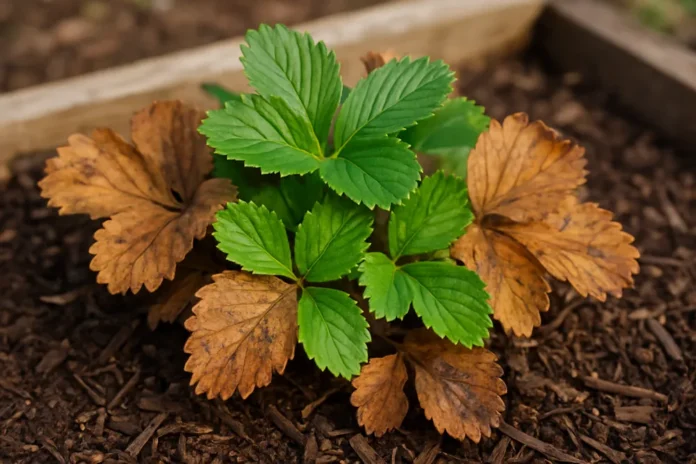
A strawberry plant usually turns brown because of water stress, fungal disease, root damage, sun scorch, or cold injury. Sometimes only older leaves are aging naturally while the rest of the plant stays healthy.
When a strawberry plant turning brown shows up in the garden, the cause is not always the same from one bed to the next. I have seen browning start at the leaf edges after a hot dry spell, show up as spots after wet weather, and spread from the crown when roots stayed soggy too long. The pattern matters as much as the color.
Strawberries are productive little plants, but they can be surprisingly quick to react when something is off. Brown leaves, stems, flowers, or fruit can come from stress, disease, poor drainage, fertilizer issues, or seasonal dieback. The good news is that strawberries usually give several clues at once, and once you match those clues to the right problem, the fix becomes much clearer.
In most cases, I start by looking at where the browning begins. Is it only on old outer leaves, on leaf tips, around spots, on the crown, or on the berries themselves? That first observation usually narrows the list fast.
What Brown Strawberry Leaves and Stems Usually Mean
Brown tissue on strawberry plants is a symptom, not a single diagnosis. The most common reasons are inconsistent watering, roots sitting in soggy soil, fungal leaf diseases, intense sun or heat, cold injury, fertilizer burn, and natural aging of older leaves. Sometimes more than one issue is happening at once, especially in crowded beds with poor airflow.
Before assuming disease, look at the whole plant. If only the oldest outer leaves are browning while the center is pushing fresh green growth, that may be routine aging. If the entire plant looks limp, crisp, or collapsed, the problem is usually environmental, such as watering or root stress. If you see distinct spots, fuzzy growth, or browning that spreads after rainy weather, disease moves higher on the list.
- Brown, dry leaf edges often suggest underwatering, salt buildup, or fertilizer burn.
- Soft brown crowns or blackened roots usually point to rot from overly wet soil.
- Small purple or reddish spots that turn tan or brown often suggest fungal leaf spot issues.
- Brown patches on berries, flowers, or stems after humid weather can signal gray mold or blossom blight.
- Brown outer leaves late in the season may be normal plant turnover.
When I diagnose strawberries, I do not judge the plant by its worst leaf. I compare the oldest leaves, the newest leaves, the crown, and the soil moisture together. That usually tells me whether I am looking at stress, disease, or simple aging.
Watering Problems Are One of the Most Common Causes
Underwatering and Drought Stress
Strawberries have relatively shallow roots, so they feel dry conditions quickly. When the soil dries too much, leaves may wilt first, then turn brown at the edges or between the veins. In containers, this can happen very fast during warm weather, especially if the pot is small or exposed to afternoon sun.
Drought stress usually creates tissue that feels crisp or papery rather than soft. Flowers may dry up, small fruit may stall, and the plant can look generally tired by the end of the day. If the soil pulls away from the sides of a pot or feels dry several inches down in the bed, lack of water is a likely factor.
Overwatering and Poor Drainage
Too much water causes a different kind of browning. Roots need oxygen, and saturated soil cuts that off. When roots stay wet too long, plants may first yellow, then develop brown leaves that look weak and limp rather than dry. The crown can soften, and the whole plant may decline even though the soil appears moist.
In heavy clay, low spots, and pots without good drainage, overwatering is especially common. If the plant never seems to perk up despite frequent watering, check the roots and crown. Brown mushy roots are very different from healthy pale roots, and they are a strong sign of root damage or rot.
If you are unsure whether the plant is too dry or too wet, water less by the calendar and more by the soil. I like to check moisture a couple of inches down near the root zone, because the surface can mislead you in both directions.
Leaf Diseases Often Cause Brown Spotting and Blotches
Strawberries are prone to several fungal leaf problems, especially when nights are cool, humidity is high, and leaves stay wet for long periods. These diseases often begin as small spots rather than broad browning across the whole leaf. Over time, those spots expand, merge, and leave leaves looking scorched or tattered.
Leaf Spot and Leaf Scorch
Common leaf spot may start as small purple to reddish spots that develop lighter centers. Leaf scorch tends to create many small dark purple spots that can blend together until the leaf looks brown or burned. Both are more likely in crowded plantings where leaves dry slowly after rain or overhead watering.
- Spots have defined edges rather than random browning.
- Older leaves are often affected first.
- Problems spread faster in wet weather.
- Crowded beds and poor airflow make symptoms worse.
Blights and Secondary Infections
Once a strawberry plant is stressed, secondary fungal issues can move in. Damaged leaves may develop irregular brown patches that do not match a perfect spotting pattern. Stems can also discolor if infection takes hold after mechanical damage, hail, heavy splashing, or insect feeding.
If disease is limited to a few leaves, quick cleanup can help slow it down. Remove badly affected leaves, thin runners if the bed is packed, and avoid wetting the foliage late in the day. Sanitation matters more than many gardeners realize with strawberries.
Root and Crown Problems Can Turn the Whole Plant Brown
When the center crown of the plant begins failing, browning can spread quickly. Crown rot and root rot are serious because the crown is the plant's core growing point. A strawberry may look thirsty, but the real issue is that damaged roots can no longer move water upward.
Crown and root problems are more likely in waterlogged soil, beds with poor drainage, or containers where excess water collects. Plants may stay stunted, produce weak new growth, or collapse suddenly in warm weather. Sometimes the crown looks brown inside if you cut it open, instead of firm and pale.
- Leaves wilt even when soil is wet.
- Browning appears across much of the plant, not just at the edges.
- Roots are brown, sparse, or mushy instead of pale and fibrous.
- The crown feels soft or shows internal browning.
If root or crown rot is advanced, severely affected plants often do not recover well. In that case, replacing the plant and correcting the drainage issue is usually better than trying to nurse it along while nearby plants remain at risk.
Sun Scorch, Heat Stress, and Wind Burn Can Brown Foliage Fast
Strawberries like plenty of sun, but even sun-loving plants can scorch under sudden intense exposure, reflected heat, or hot drying winds. This is especially common after transplanting, when roots are not yet well established, or when plants moved from greenhouse conditions go straight into strong outdoor sun.
Heat or wind damage usually shows up on exposed leaf surfaces and edges. Tissue looks dry and crisp, and the damage may be worst on one side of the plant. Black plastic mulch, stone edging, and walls that reflect heat can intensify the problem around the root zone and foliage.
This kind of browning often stops once conditions moderate and the plant is kept evenly moist. The damaged leaves do not turn green again, but healthy new growth should emerge normally if the crown and roots remain sound.
Cold Injury and Seasonal Dieback Can Look Worse than They Are
A late frost can blacken blossoms, brown tender leaves, and leave gardeners convinced the whole planting is lost. Strawberry flowers are especially vulnerable. If the center of the blossom turns black or brown after a cold snap, that flower may not set fruit even if the leaves survive.
Older leaves also naturally brown as plants cycle through growth, especially after harvest or during seasonal transitions. In many beds, the outer foliage gets ragged while the crown continues producing new leaves. That is very different from a plant whose center is declining.
I worry much more about browning in the crown and newest leaves than I do about a ring of tired outer leaves. With strawberries, the center tells you the future of the plant.
- Frost damage often appears suddenly after one cold night.
- Blackened flower centers usually mean that bloom was injured.
- Older leaves browning from the outside in can be normal aging.
- Healthy new central growth usually means the plant is still viable.
Fertilizer Burn and Salt Buildup Can Mimic Drought Stress
Too much fertilizer, especially synthetic products applied heavily or too often, can damage strawberry roots and create brown leaf edges and tips. This often looks similar to dry stress because the plant struggles to take up water properly when salts build up around the roots.
Container strawberries are particularly vulnerable because excess salts have less soil volume to disperse into. Brown margins appearing soon after feeding, white crust on the soil surface, or a sudden decline after using a strong liquid fertilizer all point toward overfeeding.
Strawberries generally prefer moderate feeding, not aggressive fertilization. Once they are stressed, pushing more fertilizer rarely helps. It often makes browning worse.
Brown Flowers and Fruit Point to a Different Set of Issues
If the leaves look mostly fine but flowers or berries are turning brown, focus on weather, disease, and pollination conditions rather than leaf nutrition. Brown flowers after a cold night often mean frost damage. Brown soft fruit in humid weather often suggests gray mold, especially if fuzzy growth develops.
Fruit touching wet soil or sitting in dense foliage is more likely to rot. Overripe berries can also brown quickly in hot weather, but diseased fruit usually softens unevenly and may show mold. Good airflow and keeping berries off wet ground make a big difference.
- Brown flower centers after frost usually mean lost fruit from that bloom.
- Soft brown berries with fuzzy growth often indicate gray mold.
- Fruit resting on wet mulch or soil rots faster.
- Dense foliage traps moisture and encourages fruit disease.
How to Tell Which Cause Is Most Likely in Your Garden
A quick visual check can narrow the problem down. Start with the soil, then the pattern on the leaves, then the crown and roots if needed. You are trying to answer three simple questions: is the tissue dry or soft, is the damage uniform or spotty, and is the newest growth healthy or failing?
- Feel the soil near the roots. Bone dry suggests drought stress, while soggy soil suggests drainage trouble.
- Check whether browning starts at the tips and edges or in distinct spots. Spots often suggest disease.
- Inspect the center crown. Firm pale tissue is reassuring, while brown soft tissue points to rot.
- Look at weather patterns from the last week. Heat waves, heavy rain, and frost often explain sudden changes.
- Think about recent fertilizer use, especially in containers or newly planted strawberries.
This approach keeps you from treating the wrong issue. For example, a wilting plant in wet soil does not need more water, and a plant with fungal spotting does not need extra fertilizer.
What to Do to Help a Brown Strawberry Plant Recover
Recovery depends on the cause, but a few basic steps help in many situations. Remove dead or heavily diseased leaves, improve airflow, and keep watering consistent instead of swinging between dry and drenched. If the plant is in a container, make sure water drains freely and the potting mix is not compacted.
- Water deeply enough to moisten the root zone, then let the top layer begin to dry before watering again.
- Avoid overhead watering when possible, especially late in the day.
- Trim away badly spotted or dead foliage and discard it.
- Mulch to reduce soil splash and conserve even moisture.
- Move container plants out of extreme reflected heat if leaf scorch is likely.
- Stop heavy fertilizing until the plant resumes healthy growth.
If root rot or crown rot is severe, remove the affected plant rather than allowing it to linger. Replant only after improving drainage or switching to a fresh potting mix. Healthy strawberries can rebound from leaf damage, but they struggle to recover from a failing crown.
How to Prevent Future Browning in Strawberry Beds and Containers
Prevention is mostly about consistency. Strawberries perform best in well-drained soil, full sun with reasonable moisture, and enough spacing for leaves to dry after rain. Many browning problems start when plants are overcrowded, watered from above too often, or grown in soil that stays wet too long.
I have had the healthiest plants in raised beds with organic mulch, steady moisture, and routine cleanup of old foliage. Container strawberries also do well when the pot is large enough, drainage holes are clear, and fertilizer is applied lightly instead of all at once.
- Plant in well-drained soil or raised beds.
- Space plants so air can move between them.
- Use mulch to reduce splash and keep berries cleaner.
- Water at the base rather than over the leaves.
- Protect blooms from late frost when cold nights are forecast.
- Remove old diseased foliage and rotting fruit promptly.
- Feed moderately and avoid salt buildup in containers.
FAQ
Should I Cut Off Brown Leaves on My Strawberry Plant?
Yes, if the leaves are fully brown, badly spotted, or clearly dead. Removing them improves airflow and reduces disease pressure. Leave partly green leaves alone if the plant still needs them for energy.
Can a Strawberry Plant Recover After Turning Brown?
Often yes, if the crown and roots are still healthy. Plants recover best from temporary drought, heat stress, or minor leaf damage. Recovery is less likely when the crown is rotting or the roots are badly damaged.
Why Are Only the Edges of My Strawberry Leaves Turning Brown?
Brown leaf edges commonly point to dry soil, inconsistent watering, fertilizer burn, or salt buildup. Hot wind and intense sun can also crisp the margins, especially in containers.
Why Is My Strawberry Plant Brown After Heavy Rain?
Heavy rain can lead to root stress, crown rot, and fungal leaf disease. If the soil stays saturated or foliage remains wet for long periods, browning often follows.
Are Brown Outer Leaves Normal on Strawberry Plants?
Sometimes they are. Older outer leaves naturally age and decline, especially after fruiting or during seasonal change. It is less concerning when the center of the plant is still pushing healthy green growth.
Why Are My Strawberry Flowers Turning Brown?
Brown flowers are often caused by frost injury or blossom disease. If the center of the bloom turns dark after a cold night, that flower may not develop into fruit.
Can Too Much Fertilizer Make Strawberry Plants Turn Brown?
Yes. Excess fertilizer can burn roots and cause brown tips or leaf margins. This is especially common in pots, where salts build up faster.
Want the right fix faster? Check our strawberry care guides and recommended fungicides, fertilizers, and watering tools to get struggling plants back on track.
