

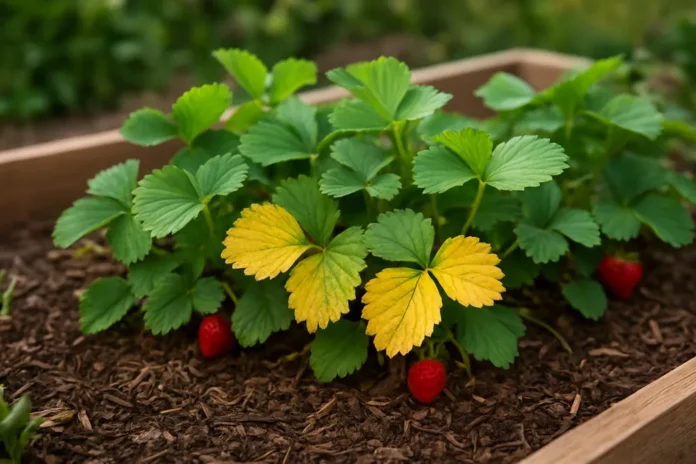
Strawberry leaves usually turn yellow because the plants are stressed by too much water, too little nutrition, poor drainage, pests, disease, or normal aging. The exact cause often shows up in the yellowing pattern, whether it starts on old leaves, new leaves, or the whole plant.
When I see strawberry leaves turning yellow, I do not assume it is one single problem. Strawberries are quick to show stress, and yellow foliage can mean anything from soggy roots to a missing nutrient to a disease starting to move through the patch.
The good news is that yellow leaves usually give you clues if you slow down and look closely. Where the yellowing starts, whether the veins stay green, how wet the soil feels, and whether the crown still looks healthy all help narrow it down. In many home gardens, the cause is fixable before yield drops too far.
If your strawberry plants still have firm crowns and some healthy green growth, there is a strong chance they can recover. The key is matching the symptom pattern to the real issue instead of throwing fertilizer, water, and sprays at them all at once.
What Yellow Strawberry Leaves Are Trying to Tell You
Yellowing leaves are a stress signal, not a diagnosis by themselves. Strawberries are shallow rooted, so they react quickly when moisture swings too far in either direction. They also feed heavily during active growth and fruiting, which means nutrient shortages can show up fast in poor soil or containers.
Before you decide on a fix, look at the pattern. Older outer leaves turning pale first often suggests nitrogen shortage or normal aging. New inner leaves turning yellow can point more toward iron deficiency or root trouble. If the entire plant looks washed out and stalled, I start thinking about drainage, compacted soil, root disease, or a serious feeding problem.
- Yellowing on older leaves first often points to nitrogen deficiency or natural leaf aging.
- Yellowing on new leaves first can suggest iron deficiency, high soil pH, or root stress.
- Yellow leaves with brown edges or crisping often go with drought stress, salt buildup, or fertilizer burn.
- Yellow leaves with spots, blotches, or collapse raise concern for fungal or bacterial disease.
- Yellowing plus wilting in wet soil often means roots are struggling from rot or poor drainage.
When I diagnose strawberries, I always compare old leaves, new leaves, and the crown before I do anything else. If the crown is firm and the newest growth is still decent, I usually focus on fixing the root zone first instead of cutting off every yellow leaf in a panic.
Overwatering and Poor Drainage Are Common Causes
One of the most common reasons strawberry leaves turn yellow is that the roots are staying too wet. Strawberries like even moisture, but they do not like waterlogged soil. When the root zone stays saturated, roots cannot take up oxygen properly, and the leaves often fade from healthy green to dull yellow.
This problem is especially common in heavy clay soil, raised beds that settled and compacted, containers without enough drainage holes, or spots watered on a rigid schedule even after rain. Wet soil also sets the stage for root and crown rot, which can take a mild yellowing issue and turn it into a major plant loss.
Signs the Soil Is Staying Too Wet
- Leaves look pale yellow and slightly limp even though the soil is damp.
- Plants wilt during the day but the bed feels wet below the surface.
- Growth is slow, weak, or stunted.
- Older leaves may yellow first, then whole plants begin to decline.
- You notice a sour smell, algae, or constantly soggy mulch around the crowns.
If you suspect excess water, cut back irrigation and let the top inch of soil dry slightly before watering again. Improve drainage with organic matter if the bed is dense, and make sure crowns are not buried below the soil line. In containers, dump any standing water from saucers and confirm that water drains freely after each watering.
Underwatering Can Also Make Leaves Yellow
Dry soil can cause yellowing too, especially when strawberries are flowering or setting fruit. Because their roots stay near the surface, they run short on moisture faster than many other garden plants. A plant that repeatedly dries out may start with dull, faded leaves and move toward yellowing, browning edges, and smaller berries.
This is common in containers, hanging baskets, sandy soil, and beds mulched too lightly in hot weather. Water stress is not always dramatic wilting. Sometimes the plants simply lose color and vigor first.
Clues That Strawberries Are Too Dry
- The top few inches of soil are dry and dusty.
- Leaf edges look crisp or scorched along with yellowing.
- Plants recover temporarily after watering, then fade again quickly.
- Fruit stays small or becomes misshapen.
- Container plants feel very light when lifted.
I prefer deep, thorough watering over frequent light sprinkles. Light watering keeps only the surface damp, and that often encourages shallow roots to suffer even faster during the next hot afternoon.
Aim for evenly moist soil, not alternating drought and flood. Mulch with clean straw or pine needles to reduce evaporation and keep berries clean at the same time. Drip irrigation or a soaker hose usually works better than overhead watering because it keeps moisture steadier around the roots.
Nitrogen Deficiency and Other Nutrient Shortages
If your strawberry leaves are turning yellow gradually and the plants look generally weak, a nutrient deficiency may be involved. Nitrogen is the most common culprit because strawberries use it to build leafy growth. When nitrogen runs low, older leaves often turn pale green and then yellow first while new leaves stay somewhat greener for a while.
Other nutrient issues can look a little different. Iron deficiency often shows up on newer leaves, with yellow tissue between greener veins. Magnesium deficiency can create interveinal yellowing on older leaves. Potassium shortage may bring yellowing or browning around leaf edges.
How Nutrient Problems Usually Appear
- Nitrogen deficiency: older leaves yellow first and growth slows.
- Iron deficiency: young leaves yellow while veins stay greener.
- Magnesium deficiency: older leaves show yellowing between veins.
- Potassium deficiency: leaf margins yellow or scorch, especially during fruiting.
- General underfeeding: plants stay small, pale, and less productive.
Strawberries do best in fertile, well-drained soil with regular but moderate feeding. Too much fertilizer is not better, especially high-nitrogen products applied heavily in warm weather, because they can stress roots or promote soft growth at the expense of fruit. A soil test is the cleanest way to know what is missing, particularly if you have repeated yellowing each year.
If you have not fed the bed in a long time, use a balanced fertilizer appropriate for berries and follow the label closely. Compost can help improve long-term soil fertility, but if a deficiency is already visible, compost alone may work too slowly to correct it during the current season.
High Soil pH Can Lock Up Iron and Other Nutrients
Sometimes the soil contains nutrients, but the plants still cannot use them well. Strawberries prefer slightly acidic soil, generally around pH 5.5 to 6.5. If the pH drifts too high, iron and other micronutrients become less available, and leaves may yellow even when you have been fertilizing.
This issue often appears as yellowing on the newest leaves with green veins still visible. Gardeners sometimes mistake this for a simple fertilizer shortage and keep adding more feed, which does not solve the underlying lockout.
When pH Is Worth Checking
- New leaves are yellow but veins remain greener.
- You have fertilized, yet plants still look chlorotic.
- The bed has a history of lime applications.
- Your native soil is naturally alkaline.
- Container mix has broken down or been reused for multiple seasons.
A basic soil test can reveal whether pH is the hidden cause. If the reading is too high, the fix is usually to adjust the soil over time rather than trying random foliar sprays. In containers, refreshing the potting mix is often the simplest route.
Root and Crown Diseases Can Start with Yellow Leaves
Some of the most serious reasons for yellow strawberry leaves begin below the soil line. Root rot, crown rot, and red stele can interfere with water and nutrient movement long before the plant fully collapses. Early on, leaves may just look pale, weak, or yellowed. Later, plants wilt, stunt, and die back.
These diseases are more likely in poorly drained beds, cool wet conditions, crowded plantings, and soil where strawberries have been grown repeatedly without rotation. If the crown becomes brown inside or the roots look dark and reduced instead of light and fibrous, disease moves higher on the suspect list.
Symptoms That Suggest Disease Instead of Simple Stress
- Yellowing continues even after watering is corrected.
- Plants wilt in wet soil rather than dry soil.
- Crowns feel soft or look brown inside when cut open.
- Roots are black, sparse, or decayed.
- Single plants or patches collapse while nearby plants remain healthier.
When strawberries yellow unevenly across a bed, I pay attention to the pattern on the ground. Scattered weak plants can be a nutrition issue, but a soggy low spot or a spreading patch usually makes me think root disease or drainage trouble before anything else.
Unfortunately, diseased plants often do not bounce back fully. Remove badly affected plants, improve drainage, avoid replanting strawberries in the same infected spot right away, and start future beds with healthy certified plants. Good spacing and careful irrigation go a long way in prevention.
Leaf Diseases Can Cause Yellowing with Spots or Blotches
Not all yellow leaves come from the roots. Strawberry foliage can also yellow from leaf spot, leaf scorch, leaf blight, and other foliar diseases. These usually do not create a plain, even yellowing. Instead, you tend to see spots, purple margins, tan centers, irregular blotches, or scorched patches that eventually lead to yellow surrounding tissue.
Overhead watering, crowded beds, old infected leaves, and humid conditions all make these diseases worse. They are especially common when plants have a lot of dense top growth and poor air movement.
What to Look for on the Leaves
- Small spots that expand and develop pale or tan centers.
- Reddish, brown, or purple-edged lesions.
- Yellow halos around damaged areas.
- Leaf tissue that dries out in blotches instead of fading evenly.
- Older, lower leaves affected first where moisture lingers longest.
Remove badly infected leaves, thin crowded plants if needed, and water at the base instead of from overhead. Clean up fallen debris at the end of the season so spores have fewer places to persist. If disease pressure is severe and recurring, resistant varieties and better spacing usually help more than repeated reactive treatments.
Pests Can Weaken Leaves and Wash Out Their Color
Sap-sucking pests such as spider mites, aphids, and leafhoppers can make strawberry foliage look yellow, stippled, or generally unhealthy. These insects feed on plant juices, and heavy infestations reduce the leaf's ability to stay green and productive.
Spider mites are especially easy to miss at first because they are tiny and often stay on the undersides of leaves. In hot, dry weather they can turn a healthy planting into a dusty-looking, pale patch surprisingly fast.
Signs Pests May Be Involved
- Fine stippling or speckling instead of smooth, even yellowing.
- Tiny insects or mites on leaf undersides.
- Fine webbing in severe spider mite infestations.
- Curled or distorted new growth along with yellowing.
- Sticky residue or sooty mold from aphid feeding.
Inspect both sides of several leaves, not just the top of the plant. A strong spray of water can reduce light aphid populations, while better plant spacing and less drought stress help discourage mites. If you use a control product, make sure strawberries are listed on the label and avoid spraying during peak pollinator activity.
Cold, Transplant Shock, and Seasonal Aging Are Sometimes Normal
Not every yellow leaf means trouble. Strawberries often shed older leaves as weather shifts, especially after winter, after fruiting, or after transplanting. A few outer leaves turning yellow while the center stays healthy can be part of the plant's normal cycle.
Cold snaps can temporarily bleach or yellow foliage, and newly planted strawberries may pause before they settle in. In these cases, the yellowing usually stays limited and is followed by fresh green growth once conditions improve.
Situations Where Yellowing May Be Temporary
- A few older leaves yellow after harvest.
- Transplants lose some outer foliage while establishing.
- Cold weather causes brief discoloration but crowns stay firm.
- Plants send up healthy new leaves despite a little leaf loss.
- Only the oldest leaves near the base are fading.
If the newest growth remains green and vigorous, I usually consider mild yellowing on older leaves a maintenance issue rather than a crisis. Trim away dead foliage, keep watering steady, and focus on supporting fresh growth.
How to Narrow Down the Cause Step by Step
If several possible causes seem to fit, work through the basics in order. This prevents wasted effort and avoids stacking multiple changes that make the real cause harder to identify.
- Check soil moisture a few inches down, not just at the surface.
- Inspect whether yellowing starts on older leaves, newer leaves, or the whole plant.
- Look at roots and crowns on one struggling plant if disease is suspected.
- Examine leaf undersides for mites, aphids, or stippling.
- Review recent fertilizer use and whether the bed may be underfed or overfed.
- Consider whether weather, transplanting, or post-harvest aging explains minor yellowing.
- Use a soil test if yellowing is widespread or keeps returning.
The most effective fix depends on the first true cause, not the last symptom you noticed. Yellowing from root rot will not improve with extra fertilizer, and yellowing from nitrogen shortage will not improve just by watering more carefully.
How to Help Strawberry Plants Recover
Once you identify the likely cause, recovery usually depends on stabilizing the plant's environment. Strawberries recover best when moisture is even, crowns are kept above soggy soil, airflow is decent, and feeding is moderate rather than heavy-handed.
- Correct watering so soil stays consistently moist but never saturated.
- Mulch to reduce moisture swings and keep fruit off bare soil.
- Feed only if deficiency or low fertility is likely, and avoid overdoing nitrogen.
- Remove badly diseased or dead leaves to reduce stress and improve airflow.
- Replace plants that have advanced crown or root rot.
- Refresh exhausted container mix and confirm drainage is strong.
- Plan crop rotation and resistant varieties if disease has been recurring.
Do not expect yellow leaves to turn fully green again. Judge improvement by the quality of new growth. If new leaves emerge healthy and the plant regains vigor, you are moving in the right direction even if the oldest damaged leaves never recover.
FAQ
Should I Cut Off Yellow Strawberry Leaves?
Yes, if the leaves are mostly yellow, spotted, or dead, you can trim them off with clean scissors. Leave any partly green leaves that are still helping the plant unless disease is clearly present.
Can Too Much Fertilizer Make Strawberry Leaves Turn Yellow?
Yes. Excess fertilizer can burn roots, create salt stress, and interfere with normal nutrient uptake. That can lead to yellowing, browning edges, and weak growth.
Why Are Only the Older Strawberry Leaves Turning Yellow?
Older leaves usually yellow first from nitrogen deficiency, normal aging, or general plant stress. If the center of the plant is still producing healthy green growth, the problem is often less serious than yellowing on new leaves.
Why Are My Strawberry Leaves Yellow but the Veins Are Still Green?
That pattern often points to chlorosis, commonly from iron deficiency or high soil pH that blocks iron uptake. It is especially telling when the newest leaves are affected first.
Can Yellow Strawberry Leaves Recover and Turn Green Again?
Usually no. Damaged yellow leaves often stay yellow or decline further. The better sign of recovery is fresh new growth that comes in healthy and green.
Do Strawberry Leaves Turn Yellow After Fruiting?
They can. Older leaves often fade after heavy fruit production, especially if plants are stressed by heat, low nutrients, or inconsistent watering.
Is Yellowing More Common in Potted Strawberries?
Yes. Container strawberries dry out faster, run out of nutrients sooner, and suffer more quickly from poor drainage or exhausted potting mix, so yellowing shows up sooner than it often does in the ground.
Need the right fix fast? Read our guide to the best fertilizers, fungicides, and pest treatments for strawberries so you can choose a product that matches the exact problem.
