

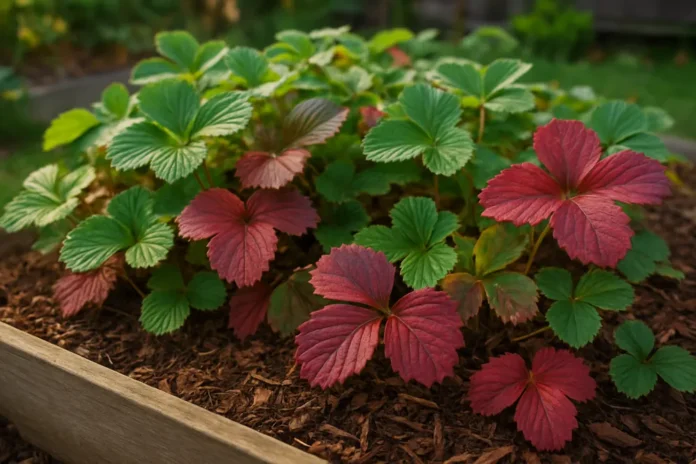
Strawberry leaves often turn red because of cold weather, phosphorus stress, aging foliage, or disease. Sometimes it is a normal seasonal color change, but widespread reddening during active growth usually signals stress.
Seeing strawberry leaves turning red can be unsettling, especially when you were expecting fresh green growth and a heavy berry crop. The good news is that red leaves do not always mean your plants are in serious trouble. In many gardens, strawberries redden for simple reasons like cool nights, older leaves aging out, or temporary nutrient stress.
What matters most is the pattern. If only older outer leaves are changing color in fall, I usually do not worry much. If young leaves are reddening in spring, the plants are stalling, or you also see spots, wilting, or poor fruiting, then I start looking closer at roots, soil fertility, and possible disease.
In my experience, strawberries are good at showing stress early. Once you know how to read the leaf color, where it appears, and what time of year it happens, it becomes much easier to decide whether this is normal or something worth fixing.
When Red Strawberry Leaves Are Normal
Not every red leaf is a problem. Strawberry plants can naturally develop reddish, bronze, or purplish tones when temperatures cool down, especially in fall or during sharp spring cold snaps. This happens because pigments called anthocyanins build up in the foliage, and some varieties show this color more strongly than others.
Older leaves also tend to redden before they die back. If the center of the plant still looks healthy, new growth is green, and the plant is otherwise growing well, a few red outer leaves are often just part of the plant's normal cycle.
- Red color appears mostly on older outer leaves
- New leaves in the crown remain green and vigorous
- Color change happens in fall, winter, or after chilly nights
- Plants are still flowering or fruiting normally
- There are no obvious leaf spots, collapse, or crown rot symptoms
When I am deciding whether red leaves are harmless, I look at the newest growth first. If the center of the plant is clean and green, I usually suspect weather or aging leaves before I assume a serious nutrient or disease problem.
Cold Stress and Weather Swings
Cold stress is one of the most common causes of red strawberry leaves. Cool nights can slow root activity, which means the plant takes up water and nutrients less efficiently even if the soil contains what it needs. As a result, leaves may flush red or purple, especially along the edges or across the whole blade.
This kind of reddening often shows up in early spring after warm days are followed by cold nights. It can also happen in late fall as plants prepare for dormancy. In raised beds and containers, the effect is sometimes stronger because roots are exposed to greater temperature swings.
- Leaves turn reddish after a cold spell
- Plants may look slightly stalled but not diseased
- Discoloration affects several plants at the same time
- Younger growth may stay smaller until weather warms
- Container and exposed bed plants are often hit first
If cold is the main cause, plants often recover on their own once temperatures stabilize. Remove only leaves that are clearly dead. Avoid feeding heavily during a cold snap, since the roots may not be able to use that fertilizer efficiently.
Phosphorus Deficiency and Poor Nutrient Uptake
A classic reason for red or purplish strawberry leaves is phosphorus stress. Gardeners often assume that means the soil has no phosphorus, but that is not always true. Sometimes the nutrient is present and the plant simply cannot access it because the soil is too cold, too wet, too compacted, or the pH is off.
Phosphorus helps with root development, flowering, and energy transfer in the plant. When strawberries struggle to get enough, older leaves may take on a dull red, purple, or bronzed cast. Growth can become slower, and berry production may drop.
Signs That Point Toward Phosphorus Stress
- Reddish or purplish color on older leaves first
- Plants remain small or slow to grow
- Flowering and fruit set are weaker than expected
- Soil has stayed cold or soggy for long periods
- Beds have not been amended in a long time
Before you add fertilizer, it is smart to think about the growing conditions. In many home gardens, what looks like a fertilizer shortage is really a root-zone problem. If soil is waterlogged or roots are chilled, feeding more may not help much until the stress is corrected.
I try not to chase leaf color with repeated fertilizer applications. With strawberries, I get better results by improving drainage, moderating moisture, and then feeding lightly once the plants are actively growing again.
Low Nitrogen and General Nutrient Imbalance
Although yellowing is the more familiar sign of nitrogen deficiency, strawberries with low overall fertility can also develop reddish tones, especially when nitrogen shortage combines with cool weather or weak roots. Plants may look thin, pale, and slow, with older leaves fading to a red-brown color before dying back.
This is more common in containers, long-used raised beds, and patches that have been producing for several seasons without fresh compost or balanced fertilizer. Excessive feeding can also create imbalance, especially if one nutrient is pushed far above the others.
- Older leaves discolor first
- Plants look generally weak rather than sharply diseased
- Leaf size is smaller than normal
- Runner production and berry size may decline
- Growth is sparse across the whole planting
A soil test is the fastest way to know whether fertility is truly the issue. If you garden without testing, use a gentle, balanced approach rather than dumping on high doses of fertilizer. Strawberries respond better to steady care than to sudden corrections.
Water Stress and Root Problems
Strawberries can show red leaves when their roots are under stress. Both overly wet and overly dry conditions interfere with nutrient uptake and overall plant function. In saturated soil, roots lose oxygen and begin to decline. In very dry soil, the plant cannot move enough water and nutrients through the foliage.
Root stress often causes a more general look of decline than simple cold weather does. You may notice limp leaves, reduced new growth, smaller berries, or plants that seem to sit still for weeks. Containers dry out quickly, while heavy clay beds may stay wet too long after rain.
Clues That Roots Are the Real Problem
- Leaf color change is paired with wilting or stunting
- Soil is consistently soggy or bone dry
- Plants in low spots look worse than others
- Container plants are rootbound or drying out daily
- Crowns or roots look dark, mushy, or weak when inspected
Improving drainage, watering more evenly, and mulching to buffer moisture swings can make a big difference. If roots are rotting, though, badly affected plants may not recover well.
Leaf Spot and Other Diseases That Can Make Leaves Look Red
Some diseases can make strawberry leaves appear red, especially when spotting or blighting spreads across the foliage. Common culprits include leaf spot, leaf scorch, and leaf blight. These problems are more likely when plants are crowded, overhead watered, or staying damp for long stretches.
Disease-related redness usually does not look like a smooth, even flush of color. Instead, you see distinct lesions, irregular blotches, burned margins, or spots that merge together. In humid weather, this can move quickly through a dense patch.
How Disease Symptoms Usually Differ From Weather Stress
- Redness appears as spots, patches, or lesions rather than an even tint
- Leaf edges may look scorched or crisp
- Affected leaves can curl, dry out, or collapse
- The problem spreads plant to plant in wet conditions
- Old infected leaves linger under the canopy and reinfect new growth
Start by removing the worst infected leaves and cleaning up debris around the plants. Improve air circulation, water at the base instead of overhead, and avoid splashing soil onto foliage. If disease pressure is severe every year, renovating the bed or replanting in a new location may be the better long-term fix.
When leaf disease is involved, the shape of the discoloration tells the story. A uniform red wash usually pushes me toward cold or nutrient stress, but sharp-edged spots and blotches make me think disease almost immediately.
Soil pH, Compaction, and Site Issues
Sometimes red leaves are a symptom of the site rather than a specific deficiency. Strawberries prefer slightly acidic, well-drained soil. If pH is too high or too low, nutrients become harder for roots to absorb even when they are present in the ground. Compacted soil causes a similar effect by limiting root growth and oxygen.
This often shows up in older beds where the soil has settled, organic matter has broken down, and foot traffic has pressed the planting tight. Plants may survive, but they never seem lush, and leaf color issues keep returning.
- Plants perform poorly year after year in the same spot
- Water puddles or runs off instead of soaking in evenly
- Roots stay shallow and weak
- Fertilizer does not seem to improve growth much
- A soil test shows pH outside the ideal range
If you suspect a site problem, a soil test is worth it. It gives you pH and nutrient information at the same time, which helps you avoid guessing. In many cases, adding compost and refreshing the bed solves more than one problem at once.
How to Tell Which Cause Is Most Likely
The quickest way to narrow this down is to look at timing, leaf age, and the overall condition of the plant. Red leaves in late fall are very different from red leaves during spring fruit set. Likewise, a plant with clean red older leaves is different from one with spots, mushy crowns, or stalled new growth.
Ask These Questions While You Inspect the Patch
- Is the red color mostly on old leaves or new leaves?
- Did the change happen after cold weather or heavy rain?
- Is the red color even across the leaf, or does it appear in spots and lesions?
- Are the plants still growing, flowering, and setting fruit normally?
- Does the soil stay too wet, too dry, or tightly compacted?
- Have the plants been fertilized or tested recently?
If the answer points toward seasonal stress, you may only need patience and cleaner growing conditions. If the plants are weak, production is dropping, or symptoms are spreading, take action sooner. Strawberries tend to decline gradually, then all at once.
What to Do to Fix Red Strawberry Leaves
The right fix depends on the cause, but most strawberry patches improve when you support healthy roots and steady growth. Start with the basics before reaching for products. Good drainage, even moisture, decent spacing, and moderate fertility solve a surprising number of red-leaf complaints.
Practical Steps That Help Most Plantings
- Remove dead or heavily diseased leaves to improve airflow
- Water deeply but do not keep the soil constantly soggy
- Mulch to reduce moisture swings and soil splash
- Feed lightly with a balanced fertilizer if plants are undernourished
- Top-dress with compost to improve soil structure
- Avoid crowding by thinning runners or renovating old beds
- Protect plants from extreme cold with mulch or row cover when needed
- Test soil pH and nutrients if the problem keeps returning
If a bed has repeated disease problems, poor drainage, and weak production year after year, replacement may be more effective than trying to revive every plant. Fresh stock in a better site often outperforms a struggling old patch.
I judge recovery by the new leaves, not the old red ones. Once a strawberry leaf has discolored, it may never turn green again, so the real sign of success is healthy fresh growth coming from the crown.
How to Prevent Strawberry Leaves From Turning Red Again
Prevention comes down to keeping strawberries out of stress. Healthy plants can handle brief cold spells and small nutrient fluctuations without dramatic leaf color changes. Weak plants show every bump in the road.
- Plant strawberries in well-drained soil with plenty of organic matter
- Keep soil evenly moist, especially during flowering and fruiting
- Use mulch to protect shallow roots and moderate temperature swings
- Do not let beds become overcrowded and matted
- Refresh older beds with compost and timely feeding
- Water early in the day and keep foliage as dry as possible
- Rotate or replant if disease becomes chronic
- Check soil every few years instead of guessing at fertilizer needs
A tidy strawberry bed is usually a healthier strawberry bed. When I stay ahead of watering, thinning, and cleanup, I see far fewer mystery color changes in the leaves.
FAQ
Will Red Strawberry Leaves Turn Green Again?
Sometimes mildly stressed leaves improve, but many red leaves stay discolored until they age out. The best sign of recovery is healthy green new growth from the center of the plant.
Are Red Strawberry Leaves a Sign of Too Much Fertilizer?
Usually red leaves point more toward stress, poor nutrient uptake, or deficiency than overfeeding. However, excessive fertilizer can damage roots or create imbalance, which may lead to odd coloration.
Should I Cut Off All the Red Leaves?
Do not remove every red leaf automatically. Trim leaves that are dead, badly spotted, or clearly diseased, but keep mildly discolored leaves if they are still helping the plant photosynthesize.
Can Cold Weather Alone Make Strawberry Leaves Red?
Yes. Cool nights and sudden temperature swings commonly cause red or purplish foliage, especially on older leaves and in containers or raised beds.
Do Red Leaves Mean My Strawberries Need Phosphorus?
Possibly, but not always. Phosphorus stress can cause red leaves, yet the real issue may be cold soil, wet roots, poor pH, or compaction preventing the plant from taking up nutrients.
Why Are Only the Older Strawberry Leaves Turning Red?
That pattern often suggests normal aging, cold stress, or a mobile nutrient issue such as phosphorus shortage. If the newest growth stays green and vigorous, the problem is usually less serious.
Can Strawberry Leaf Diseases Make Leaves Look Red?
Yes. Leaf spot, scorch, and blight can create red, purple, or brownish lesions that may spread across the foliage, especially in wet and crowded conditions.
Want healthier plants and better berries this season? Read our guide to the best strawberry fertilizers and mulches so you can fix stress fast and keep your patch productive.
