

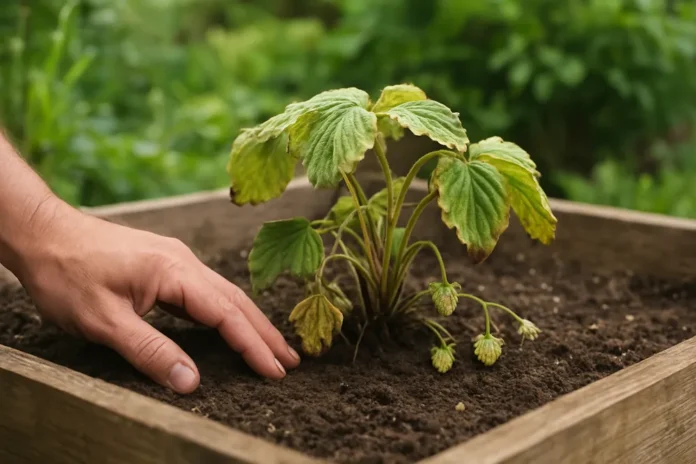
A strawberry plant usually wilts because its roots are not supplying enough water to the leaves, either from drought, overwatering, heat stress, root damage, or disease. Wilting can also happen when crowns or roots are attacked by rot, borers, or other pests.
When a strawberry plant wilting in the garden catches your eye, it can look urgent fast. One day the leaves seem fine, and the next the whole plant is drooping in the sun or collapsing at the crown. Strawberries are productive plants, but they are not especially forgiving when roots, crowns, or moisture levels get out of balance.
I have found that wilting in strawberries is one of those symptoms that can mean several very different problems. Sometimes it is as simple as a thirsty plant in hot weather. Other times the soil is actually too wet, the roots are failing, or a crown disease is cutting off water flow. The key is to look at which parts of the plant are wilting, how quickly it happened, and what the soil feels like around the roots.
The good news is that strawberry wilting often gives clues before the plant is completely lost. If you read the pattern carefully, you can usually tell whether you are dealing with heat stress, watering mistakes, disease pressure, or pest damage.
What Wilting Usually Means in Strawberry Plants
Wilting means the leaves and stems are losing firmness because the plant is not moving enough water upward to support normal growth. In strawberries, that breakdown can happen for two main reasons. The plant either cannot access enough moisture, or the tissues that move water have been damaged.
That is why both dry soil and soggy soil can lead to the same symptom. In dry ground, the plant simply runs short of water. In waterlogged ground, roots can suffocate and rot, which also stops water uptake. Diseases in the crown or vascular tissue can create a similar effect, as can root-feeding pests.
- Leaves droop mostly in afternoon heat but recover by evening: often heat stress or temporary moisture stress
- Plant stays wilted morning and evening: often root damage, crown rot, or severe drought
- Only one side or one plant in a patch wilts: often localized root injury, pest damage, or disease
- Wilting with yellowing, mushy crown tissue, or black roots: often overwatering or rot problems
- Wilting with dry, crispy leaf edges: often drought, hot wind, or shallow roots overheating
When I diagnose wilted strawberries, I look at them early in the morning before the heat builds. If a plant is still limp at sunrise, I stop blaming the afternoon sun and start checking roots, crowns, and soil moisture much more seriously.
Underwatering and Dry Soil
The most straightforward cause of wilting is that the soil has dried out too much. Strawberry plants have relatively shallow root systems, so they react quickly to missed watering, sudden heat, or drying winds. Plants in containers and raised beds are especially prone to this because their soil loses moisture faster than in-ground beds.
Dry-soil wilting usually starts with limp leaves during the hottest part of the day. If the stress continues, older leaves may scorch at the edges, flowers can abort, and developing berries may stay small or become seedy and uneven. In severe cases, the whole crown weakens and the plant stops pushing fresh growth.
Signs That Dryness Is the Likely Cause
- Soil feels dry several inches down, not just on the surface
- Plants perk up after a deep watering
- Beds with black fabric, fast-draining soil, or full reflected heat dry especially fast
- Container strawberries wilt sooner than plants in the ground
- Leaf edges may look crisp rather than soft or mushy
If this sounds like your situation, the fix is consistency rather than occasional flooding. Water deeply enough to moisten the root zone, then water again before the soil becomes bone dry. A light mulch of clean straw or pine needles helps keep the soil cooler and reduces sharp moisture swings.
Overwatering and Root Suffocation
Many gardeners are surprised to learn that overwatering can make strawberry plants wilt just as badly as drought. When soil stays saturated, air is pushed out of the root zone. Roots need oxygen to function, and without it they begin to weaken, die back, and lose the ability to supply water to the leaves.
This kind of wilt often looks confusing because the soil is wet, but the plant still droops as if it were thirsty. Leaves may turn dull green or yellow, growth slows, and the plant may never fully recover between waterings. If root rot has started, fine feeder roots may be brown instead of white and firm.
Common Situations That Lead to Overwatering
- Heavy clay soil that drains slowly after rain
- Beds planted too low where water collects
- Containers without enough drainage holes
- Frequent shallow watering that keeps the top layer constantly wet
- Automatic irrigation running on a schedule that ignores weather
If you are unsure whether wilt is from too little or too much water, dig a small test hole beside the plant instead of guessing from the surface. I trust what the root zone feels like several inches down far more than how the top half-inch looks.
To correct this, let the soil begin drying to a healthy moisture level before watering again. Improve drainage where possible, reduce irrigation frequency, and avoid keeping mulch packed tightly against the crown.
Heat Stress and Transplant Shock
Strawberries can wilt even when moisture is reasonably adequate if temperatures spike, especially after planting. Newly set transplants often have limited roots compared with the amount of leaf surface they are trying to support. A hot afternoon, dry wind, or sudden jump in sun exposure can overwhelm them.
Heat-related wilting often appears worst in late afternoon and may improve overnight. The crown usually stays firm, and the plant may look mostly normal in the morning. This pattern is especially common in spring plantings that were moved from greenhouse conditions into full sun without much hardening off.
When Heat Is the Main Trigger
- Wilting is strongest on hot, bright, windy days
- Recently planted strawberries are affected more than established plants
- Dark containers or black plastic make root zones hotter
- Plants recover noticeably after sunset or on cooler days
Temporary shade during extreme heat, steady moisture, and a layer of mulch usually help. With transplants, it also helps to remove some blossoms early so the plant puts energy into root establishment instead of trying to produce fruit immediately.
Crown Rot and Root Rot Diseases
If a strawberry plant stays wilted no matter what the weather is doing, and the soil is not simply dry, disease becomes more likely. Several fungal and water mold diseases can attack strawberry crowns and roots, especially in cool, wet, poorly drained conditions. Once the crown tissue starts failing, the leaves collapse because water movement is interrupted.
Plants with crown or root rot may show weak growth, smaller leaves, yellowing, reddening, or sudden collapse. If you cut into the crown lengthwise, healthy tissue should look pale and solid. Diseased crowns often show brown, reddish, or dark streaked tissue inside. Roots may be blackened, sparse, or mushy.
Clues That Point to Rot Rather than Simple Watering Stress
- The plant remains wilted even when soil moisture seems appropriate
- The crown feels soft, discolored, or shrunken
- Roots lack fresh white feeder growth
- Wilting spreads in low spots or after extended rainy weather
- Plants decline fast after a period of sitting in wet soil
Unfortunately, badly rotted plants usually do not bounce back. Remove affected plants, improve drainage, and avoid replanting strawberries into the same disease-prone spot right away. Starting with clean plants and well-drained beds is one of the best long-term protections.
Verticillium Wilt and Other Systemic Diseases
Some strawberry wilting comes from systemic diseases that live in the soil and block the plant's internal water-conducting tissue. Verticillium wilt is a classic example. It may start with outer leaves looking dull, scorched, or flattened against the ground, followed by overall decline as temperatures warm.
This kind of wilt can be tricky because it does not always create obvious mushiness like crown rot. Instead, the plant may just never look vigorous, then starts collapsing during stress. Older leaves often show symptoms first, and affected plants may stay stunted compared with healthy neighbors.
Conditions That Raise the Risk
- Planting strawberries in soil that recently grew tomatoes, peppers, potatoes, eggplant, or other susceptible crops
- Reusing the same strawberry bed for too many years
- Poor rotation and persistent soilborne disease pressure
- Cool to moderate weather followed by plant stress
A single wilted plant can be a watering miss. A repeating pattern in the same section of bed often makes me think about soil history. If tomatoes or potatoes grew there recently, I take that clue seriously with strawberries.
There is no simple rescue once systemic wilt diseases are established. The practical response is removal of sick plants, crop rotation, and starting over in cleaner ground with resistant or certified disease-free stock when possible.
Pests That Can Make Strawberries Wilt
Wilt is not always about water or disease. Pests can damage roots, bore into crowns, or weaken stems enough that the top growth cannot stay hydrated. The exact pest varies by region, but root-feeding grubs, vine weevils, crown borers, and sap-sucking insects can all contribute.
With pest-related wilting, you may notice a plant that looks out of proportion to the rest of the bed. One strawberry may suddenly collapse while nearby plants remain fine. Tug gently on the crown and inspect the base. If the plant lifts too easily, shows chewing, hollowing, or missing roots, insects may be involved.
Pest Clues to Watch For
- Plants wilt despite decent soil moisture
- Crowns show tunnels, chewing, or hollow sections
- Roots are missing or pruned back
- Wilting is isolated to a few plants rather than the whole bed
- You find grubs, larvae, or weevils in the root zone
Treatment depends on the pest, but sanitation matters in every case. Remove badly infested plants, clean out plant debris, and inspect the bed closely before replanting. Healthy, unstressed strawberries are also less likely to be overwhelmed by minor feeding damage.
Planting Depth and Crown Problems
Strawberries are fussy about planting depth, and getting it wrong can lead to wilting. If the crown is buried too deeply, it can stay damp and rot. If it is planted too high, roots may dry out quickly and fail to anchor the plant well enough to keep up with water demand.
A correctly planted strawberry has the roots spread downward and the crown sitting right at soil level. Leaves should emerge above the surface, while the root system is fully covered. Crowns packed under heavy mulch or wet compost can also develop problems similar to planting too deep.
How Planting Depth Affects Wilting
- Buried crowns are more likely to rot and collapse
- Exposed roots dry out quickly in warm weather
- Loose planting allows root movement and poor establishment
- Mulch piled against the crown traps excess moisture
If you catch this issue early, you may be able to reset the plant at the proper depth. Do it during cooler weather if possible, water it in well, and keep the crown clear.
How to Tell Which Cause Is Most Likely
Because strawberry wilting has several lookalike causes, a quick routine helps narrow things down. Start with the simplest observations first, then move toward more invasive checks like examining roots or cutting into the crown.
- Check the time of day. Afternoon-only drooping often points to heat or temporary water stress.
- Feel the soil several inches deep beside the plant. Dry, evenly moist, or saturated soil gives your first big clue.
- Compare affected plants to healthy ones nearby. A single wilted plant suggests a local problem more than a bed-wide irrigation issue.
- Look at leaf texture and color. Crispy edges suggest drought or heat, while yellow soft growth suggests excess moisture or root trouble.
- Inspect the crown at soil level. Soft, dark, or sunken tissue raises concern for rot.
- Lift one struggling plant if needed. Healthy roots should be firm and light colored, not black, mushy, or mostly gone.
Try not to make several big changes at once. If you flood a dry-looking plant, fertilize it, spray it, and move it all in the same day, you make diagnosis harder and may add more stress.
What to Do Right Now for a Wilted Strawberry Plant
Your immediate response should match the likely cause, but a few steps are broadly helpful and low risk. Move carefully, because a weakened strawberry can decline quickly if the crown or roots are disturbed too much.
- Water deeply only if the root zone is actually dry
- Pause watering if the soil is saturated and improve drainage if possible
- Provide temporary afternoon shade during extreme heat
- Keep mulch around the plant but not pressed against the crown
- Remove dead leaves and rotting fruit that hold moisture and disease
- Pull and discard plants with obvious crown rot or severe root failure
- Avoid fertilizing a badly wilted plant until the cause is clearer
If the plant perks up within a day after correcting dry soil or heat stress, you are probably on the right track. If it remains limp, inspect for crown or root problems sooner rather than later.
How to Prevent Strawberry Wilt in the Future
Prevention comes down to keeping the root zone stable and reducing disease pressure. Strawberries perform best when moisture is even, drainage is good, and crowns stay healthy. In my own beds, most wilting problems become rare once site preparation is right.
- Plant in full sun with well-drained soil
- Set crowns at the proper soil level, not buried and not exposed
- Use mulch to moderate soil temperature and moisture swings
- Water deeply and consistently rather than lightly every day
- Do not let irrigation continue automatically after rainy periods
- Rotate beds and avoid planting after tomatoes, potatoes, peppers, or eggplant
- Start with clean, disease-free plants from a reliable source
- Replace old, declining beds instead of forcing weak plants to keep going year after year
If you grow strawberries in containers, prevention also means choosing a pot large enough to buffer moisture changes and making sure drainage stays open all season. Container plants dry out fast, but they can also stay waterlogged if saucers remain full.
FAQ
Can a Strawberry Plant Recover After Wilting?
Yes, if the cause is temporary drought, heat stress, or mild transplant shock, the plant can recover once conditions improve. Recovery is less likely if the crown is rotting, roots are badly damaged, or a systemic disease is involved.
Why Does My Strawberry Plant Wilt During the Day but Look Better at Night?
That pattern usually points to heat stress or the plant losing water faster than the roots can replace it during hot afternoons. It can happen even when the plant is not severely dry, especially in containers or newly planted beds.
Should I Water a Wilted Strawberry Plant Right Away?
Only if the soil is actually dry in the root zone. If the soil is already wet, more water can worsen root problems and make the wilting worse.
How Do I Know if Strawberry Roots Are Rotting?
Healthy strawberry roots are firm and light colored, often white to tan. Rotten roots are usually dark, soft, sparse, or mushy, and the crown may also look brown or feel soft.
Can Too Much Sun Make Strawberry Plants Wilt?
Strong sun by itself usually is not the whole problem, but intense heat and reflected light can push a marginally dry or newly transplanted strawberry into wilt. Plants in black pots, raised beds, and windy spots are especially vulnerable.
Why Is Only One Strawberry Plant Wilting and Not the Others?
A single wilted plant often suggests a local issue such as root damage, crown rot, poor planting depth, or pest activity. Bed-wide problems like irrigation errors usually affect more than one plant unless water coverage is uneven.
Does Fertilizer Help a Wilted Strawberry Plant?
Not usually at first. If the plant is wilted from root stress, rot, or improper watering, fertilizer can add more strain instead of solving the problem.
Want the best fix for weak, drooping berry plants? Read our guide to the best strawberry fertilizers, mulches, and disease-control options so you can revive plants faster and protect the next harvest.
