

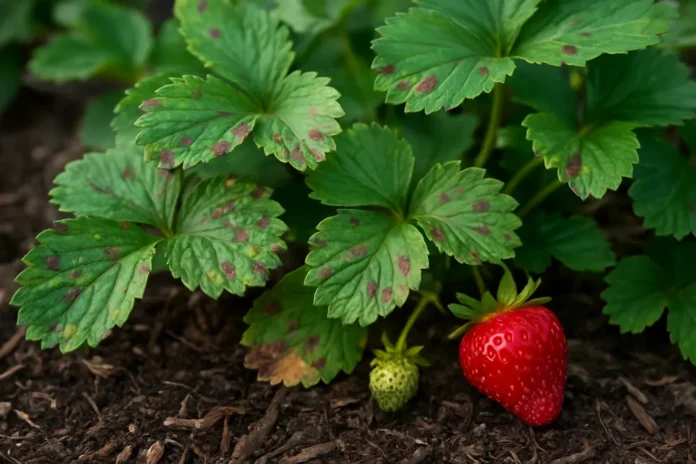
Strawberry leaves usually get brown spots from fungal leaf diseases such as leaf spot or leaf scorch. Water stress, fertilizer burn, chemical injury, and environmental stress can also mark leaves with brown patches.
Seeing strawberry leaves with brown spots can be frustrating, especially when the plants looked healthy just a few days earlier. In my garden, this symptom most often traces back to leaf disease, but not every brown mark means your plants are in serious trouble.
The key is to look at the size, color, and pattern of the spots, along with recent weather and how the bed is being watered. Some spots stay cosmetic and mainly affect older leaves, while others spread fast enough to weaken plants, reduce fruit quality, and carry over into the next flush of growth.
If you can tell the difference between disease spotting, environmental stress, and simple leaf aging, it gets much easier to make the right fix. Below, I will walk through the most common causes of brown spots on strawberry leaves, what each one looks like, and what to do next.
What Brown Spots Usually Mean on Strawberry Leaves
Brown spotting on strawberry leaves usually falls into four buckets: fungal disease, watering stress, nutrient or salt injury, and physical damage from sun, chemicals, or weather. The most common issue for home gardeners is a fungal leaf disease, especially during warm, humid stretches or when plants stay wet overnight.
Strawberries are low-growing plants, so their leaves are constantly exposed to splash-up from soil and mulch. That makes them easy targets for disease spores. Once you add crowded growth, overhead watering, and poor airflow, those small spots can multiply quickly.
- If spots are small, round, and repeated across many leaves, think disease first.
- If edges are browning or crisping rather than forming clear spots, think water stress, salt burn, or scorch.
- If only a few leaves are affected after a spray, heat wave, or fertilizer application, think injury rather than infection.
- If the oldest leaves are declining while newer leaves look clean, normal aging may be part of the picture.
When I diagnose strawberries, I do not start with the ugliest leaf. I compare an older spotted leaf, a newer leaf, and one from the center of the plant. That quick side-by-side usually tells me whether I am looking at a spreading problem or isolated damage.
Fungal Leaf Diseases Are the Most Common Cause
Strawberry Leaf Spot
Leaf spot is one of the classic reasons strawberry foliage develops brown marks. It often starts as small purplish or reddish spots that later develop tan, gray, or nearly white centers with darker borders. On some varieties, the spots stay small and neat. On others, they merge and give the leaf a rough, tired appearance.
This disease thrives when leaves stay damp for long periods. Rainy spells, overhead sprinklers, dense plantings, and old infected leaves all help it spread. Severe infections can reduce the plant's energy and leave fruit more exposed to sun because the canopy thins out.
Leaf Scorch
Leaf scorch creates many tiny dark purple or brown specks that may enlarge into blotches. Unlike classic leaf spot, the centers do not always turn pale. Badly affected leaves can look scorched, dry, or rusty, especially around the margins, and the leaf may curl upward.
This disease often shows up during humid conditions when planting beds are overcrowded or weedy. It can weaken plants over time, especially if you allow infected foliage to remain in the bed and keep splashing water onto the leaves.
Leaf Blight
Leaf blight tends to produce larger V-shaped or irregular brown lesions, usually starting from the leaf edge and moving inward. The tissue may look dry and papery. In a wet season, this can spread faster than gardeners expect and make whole leaflets collapse.
- Remove badly infected leaves and old plant debris from around the crown.
- Water at the soil line instead of wetting the foliage.
- Thin runners and crowded growth to improve airflow.
- Refresh mulch so rain does not keep splashing soil onto the leaves.
- If disease pressure is heavy each year, consider a labeled fungicide for strawberries and follow the label exactly.
If you decide to treat with a fungicide, start early while the spotting is still limited. Fungicides protect cleaner growth better than they repair leaves that are already covered in lesions.
Watering Problems Can Mimic Disease
Strawberries like consistently moist, well-drained soil. When they swing between too dry and too wet, the leaves often respond with browning, especially on the edges or in scattered patches. This can look like disease at first glance, but the pattern is usually less tidy than fungal spotting.
Underwatering
Dry soil stress often causes leaf edges to turn brown and crisp, starting on older leaves. During hot weather, the plants may wilt in the afternoon and recover by evening. If drought stress keeps repeating, small brown dead areas can develop within the leaf tissue.
Overwatering and Poor Drainage
Soggy soil reduces oxygen around the roots and weakens the plant. When roots are stressed, leaves may develop irregular brown patches, yellowing, or a generally dull look before collapse. Wet beds also create the perfect setup for fungal diseases, so watering problems and disease often overlap.
- Water deeply but only when the top inch of soil starts to dry.
- Use drip irrigation or a watering wand at the base of the plant.
- Avoid frequent shallow watering that keeps the surface wet all the time.
- Improve drainage with raised beds or looser soil if water lingers after rain.
- Mulch around plants to even out moisture and reduce splash-up.
If your plants are in containers, check drainage holes and potting mix first. Strawberries in pots can swing from bone dry to waterlogged much faster than plants in the ground.
Nutrient Issues, Salts, and Fertilizer Burn
Not every brown spot comes from a pathogen. Strawberries can also show brown lesions, leaf edge burn, or patchy discoloration when nutrients are out of balance or when fertilizer salts build up near the roots. This is especially common in containers, hanging baskets, and beds that get repeated quick-feed applications.
Excess Fertilizer
Too much fertilizer, especially high-nitrogen synthetic feed, can burn roots and show up as browning on leaf margins or scattered necrotic spots. You may also notice unusually lush soft growth right before the damage appears. In severe cases, the whole plant looks scorched.
Potassium or General Nutrient Stress
Nutrient shortages tend to show broader discoloration patterns than true leaf spot disease. Potassium stress, for example, can lead to edge browning and poor overall vigor. Magnesium or nitrogen problems are more likely to yellow leaves first, but older stressed leaves may later develop brown dead tissue.
- Stop fertilizing for a bit if damage appeared right after feeding.
- Flush container soil with plain water to reduce built-up salts.
- Use a balanced fertilizer labeled for berries or fruiting plants.
- Avoid piling granular fertilizer against the crown.
- Get a soil test if the same bed repeatedly shows weak growth and leaf discoloration.
I get suspicious of fertilizer burn when the spotting shows up suddenly and fairly evenly across several plants right after feeding. Disease usually spreads more irregularly, while salt injury often hits multiple plants in the same pattern.
Sun Scorch, Spray Damage, and Weather Injury
Strawberry leaves can develop brown or tan patches from direct environmental injury too. If plants were recently transplanted, exposed to intense sun after a cloudy stretch, or sprayed during hot weather, the spots may be damage rather than disease.
Sun Scorch
Sun scorch usually creates pale tan or brown patches on the most exposed leaves. The tissue may look bleached at first, then dry and papery. This is more common on plants that were moved from protected conditions into full sun without much transition.
Chemical Injury
Foliar fertilizers, insecticidal soaps, neem products, herbicide drift, and even some homemade sprays can leave brown speckling or blotches. If the pattern appears soon after a spray and mostly affects exposed upper surfaces, chemical injury becomes much more likely.
Cold, Wind, or Hail Damage
Late frosts, drying wind, and physical weather damage can bruise leaves and leave brown spots or torn areas that later turn necrotic. Those leaves will not turn green again, but healthy new growth usually comes in fine once conditions stabilize.
- Spray any product early or late in the day, not during heat.
- Always test foliar sprays on a small area first.
- Protect blooms and tender foliage when frost threatens.
- Harden off new transplants before moving them into full sun.
How to Tell Which Cause You Are Dealing With
You do not need a lab diagnosis to make a smart first call. A close look at the spots and the recent conditions around the plants will usually narrow it down enough to act. I focus on pattern before anything else.
- Round spots with purple or dark borders and pale centers usually suggest leaf spot disease.
- Tiny dark specks that merge and make leaves look scorched point more toward leaf scorch.
- Large irregular dead patches from the edge inward can fit leaf blight, drought stress, or weather injury.
- Crispy edges across many leaves often suggest inconsistent watering or fertilizer salts.
- Damage mostly on top, outer, or newly exposed leaves often points to sun or spray injury.
- Only old leaves affected while fresh growth looks healthy may mean aging leaves plus mild stress rather than a severe outbreak.
Also check whether the plants are fruiting well. If spots are present but new leaves are coming in clean and the crowns look healthy, the problem may be manageable with sanitation and watering changes. If new leaves keep emerging spotted or distorted, the stress is ongoing.
What to Do Right Now to Stop the Problem From Getting Worse
The best next step is to reduce stress while removing the conditions that favor spread. Brown tissue will not heal, so judge progress by the quality of new leaves over the next week or two.
- Trim off the worst damaged or heavily spotted leaves, especially ones lying on wet mulch or soil.
- Clear away fallen leaves and plant debris around the crowns.
- Switch to watering at the base if you have been wetting the foliage.
- Thin overcrowded runners and weeds so leaves dry faster after rain.
- Pause fertilizer if you recently fed and suspect burn.
- Monitor new growth rather than obsessing over old damaged leaves.
- Use a labeled fungicide only if disease is clearly spreading and cultural fixes are not enough.
Do not remove every imperfect leaf at once. Strawberries still need enough foliage to feed the plant and ripen fruit. I usually remove the worst leaves first, then reassess after several days.
How to Prevent Brown Spots on Future Strawberry Growth
Prevention matters a lot with strawberries because leaf diseases often cycle through splash, damp foliage, and old debris. A few simple habits make a noticeable difference from one season to the next.
- Plant strawberries with enough spacing for airflow.
- Use straw or another clean mulch to separate leaves and fruit from bare soil.
- Water early in the day and direct it at the root zone.
- Remove old diseased foliage after harvest if your growing system allows it.
- Keep weeds down so the bed dries more quickly.
- Avoid overfeeding, especially with fast-release nitrogen.
- Rotate planting areas when possible instead of keeping strawberries in the same tired, disease-prone bed for years.
If you garden in a humid area, resistant varieties and raised beds can make a surprisingly big difference. In my experience, gardeners often blame fertilizer first, but long leaf wetness is usually the bigger driver behind recurring spot problems.
FAQ
Should I Cut Off Strawberry Leaves with Brown Spots?
Yes, remove the worst affected leaves if they are heavily spotted, collapsing, or lying against wet mulch. Leave enough healthy foliage for the plant to keep growing and feeding fruit.
Can Strawberry Plants Recover From Brown Spotted Leaves?
Yes, the plant can recover if the crown and new growth remain healthy. Damaged leaves will not turn green again, so look for clean new leaves as the real sign of improvement.
Are Brown Spots on Strawberry Leaves Always a Fungus?
No. Fungal disease is common, but brown spotting can also come from drought, overwatering, fertilizer burn, spray injury, sun scorch, or weather damage.
Is It Safe to Eat Strawberries From Plants with Leaf Spots?
Usually yes, if the fruit itself is healthy and free from rot or mold. Wash harvested berries well and discard any fruit that is soft, spotted, or moldy.
Why Do Only the Older Strawberry Leaves Have Brown Spots?
Older leaves naturally take the first hit from stress, age, and disease exposure. If new leaves look healthy, the issue may be mild or already improving.
Will Baking Soda Fix Brown Spots on Strawberry Leaves?
Baking soda is not a reliable cure for established strawberry leaf diseases and can sometimes stress foliage if mixed poorly. Good sanitation, dry leaves, airflow, and labeled products are more dependable.
How Often Should I Water Strawberries to Avoid Brown Leaf Problems?
Water whenever the top inch of soil begins to dry, aiming for even moisture rather than a strict calendar. Hot weather, containers, and sandy soil all increase watering needs.
Need the right fix fast? Read our guide to the best fungicides, mulches, and watering tools for strawberries so you can stop leaf spot problems before they cut into your harvest.
