

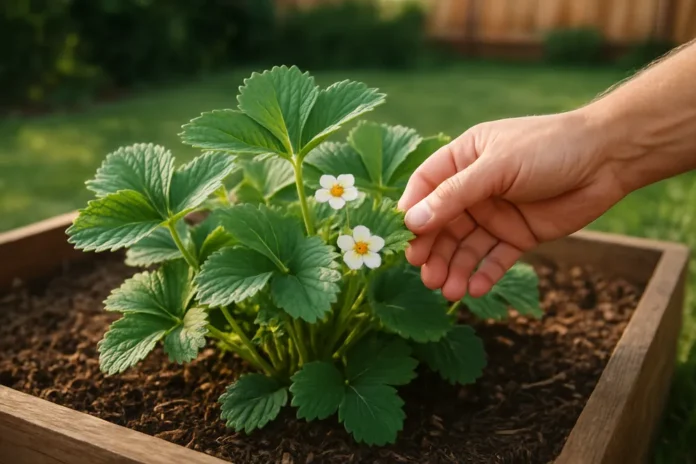
A strawberry plant usually stops short of fruiting because it is too young, not getting enough sun, growing too many leaves from excess nitrogen, or blooming under poor pollination or weather stress. Some varieties also produce on a schedule, so the plant may be healthy but not in its fruiting window.
It is frustrating to grow a lush, healthy-looking strawberry plant and still end up with no berries. In my experience, this usually means the plant is putting its energy into leaves and runners, or something interrupted flowering and pollination before fruit could form.
The good news is that a strawberry plant not producing fruit is often fixable once you narrow down the cause. Strawberries are pretty clear in the way they respond to light, feeding, temperature, and age, so a few clues can usually tell you what is going wrong.
If your plant has plenty of leaves but very few flowers, or flowers that never become berries, start with the basics: variety, sun, fertilizer, pollination, and plant age. Those five factors solve most cases I see in home gardens.
Start With The Plant Type And Fruiting Schedule
Not all strawberry plants fruit the same way. June-bearing strawberries make one main crop, usually in late spring or early summer. Everbearing and day-neutral strawberries can produce over a longer season, often in waves. If you are waiting for berries outside that natural window, the plant may not actually be failing.
Newly planted strawberries also need time to settle in. Many gardeners pinch the first flowers on young plants to help them build roots and crowns, especially with spring plantings. That can delay fruit, but it often improves future harvests.
- June-bearing plants usually produce one heavy crop each year.
- Everbearing plants tend to fruit in smaller flushes across the season.
- Day-neutral plants can keep producing when temperatures stay in a workable range.
- First-year plants may fruit lightly, especially if planted late or stressed after transplanting.
When I troubleshoot strawberries, I always ask what type they are before assuming something is wrong. I have seen plenty of perfectly healthy June-bearing plants called unproductive simply because the gardener expected berries all summer.
Too Little Sun Is A Common Reason For Lots Of Leaves And No Berries
Strawberries need strong light to flower well and ripen fruit. A plant in bright shade may survive and even look decent, but it often will not produce much. For reliable fruiting, aim for at least 6 to 8 hours of direct sun a day, with more being better in most U.S. climates.
Low light leads to smaller crowns, fewer flower buds, and slower growth overall. It can be especially sneaky in garden beds that were sunny in spring but became shaded later by trees, fences, or nearby vegetables.
- Plants bloom poorly in less than 6 hours of direct sun.
- Partial shade often causes thin flowering and weak berry set.
- Container strawberries may need to be moved as the season changes.
- Crowded beds can self-shade and reduce fruit production.
Too Much Nitrogen Pushes Leaves Instead Of Fruit
A strawberry plant that looks big, dark green, and lush but refuses to fruit often has too much nitrogen. Nitrogen is useful for leafy growth, but when it is overdone, the plant keeps investing in foliage and runners instead of flowers and berries.
This happens a lot when strawberries are planted near lawns, fed with high-nitrogen vegetable fertilizer, or grown in compost-rich soil that keeps releasing nutrients. If leaves are huge and healthy-looking but flowers are scarce, fertility is one of the first things to review.
- Avoid feeding with lawn fertilizer or general high-nitrogen products.
- Use a balanced or berry-focused fertilizer if your soil actually needs feeding.
- Do not keep fertilizing just because the plant is green and growing.
- Excess nitrogen can also make plants softer and more disease-prone.
If I suspect overfeeding, I stop adding fertilizer and watch the next round of growth rather than trying to correct everything at once. With strawberries, new growth and new bloom tell you more than the old leaves ever will.
Poor Pollination Can Leave Flowers But No Fruit
If your strawberries bloom but the flowers dry up, misshape, or never turn into berries, pollination may be the problem. Each flower needs good pollen transfer to develop a full berry. When pollination is weak, fruit set can be poor or the berries that do form may be small and uneven.
Bees and other pollinators usually handle strawberries outdoors, but cool, rainy, windy weather during bloom can interfere. Plants grown in covered patios, greenhouses, or sheltered balconies may also receive less insect activity than expected.
- Rain can keep pollinators away during the main bloom period.
- Windy weather can reduce bee activity and damage delicate blossoms.
- Covered growing areas may need more open access for pollinators.
- Misshapen berries often point to incomplete pollination.
Temperature Stress Can Interrupt Flowering And Fruit Set
Strawberries are sensitive to temperature swings, especially when they are budding and blooming. Late spring frosts can kill flower buds or blacken the centers of open blossoms, which means no fruit from those flowers. On the other end, prolonged heat can reduce flowering and make plants pause production.
This is especially common with day-neutral and everbearing types in hot summers. The plant may look alive and leafy but wait for cooler weather before producing again. In many areas, strawberries fruit best in the mild windows of spring and early fall.
- Frost-damaged strawberry blossoms often have black or dark brown centers.
- Hot weather above the plant's comfort range can reduce bloom and berry set.
- Sudden cold snaps after buds form may wipe out an early crop.
- Container plants are more exposed to fast temperature swings than in-ground beds.
Plant Age, Crowding, And Too Many Runners Reduce Production
Strawberry plants are not at their most productive forever. After a few seasons, many beds become crowded with older plants and daughter plants connected by runners. At that point, the patch may have plenty of greenery but less fruit because the crowns compete for light, water, and nutrients.
Runners are useful if you want to expand the patch, but they cost the mother plant energy. If your goal is fruit, it usually helps to remove extra runners and keep the bed from turning into a tangled mat.
- Older, exhausted crowns often produce fewer flowers.
- Crowded plants dry slowly and compete harder for resources.
- Too many runners shift energy away from fruit production.
- Renovating or replanting every few years can restore yield.
A strawberry patch can look wonderfully full and still be underperforming. When I see a dense carpet of leaves with tiny crowns packed shoulder to shoulder, I usually expect low berry production until the bed is thinned or renewed.
Water Problems Can Cause Blossoms To Drop Or Fruit To Stall
Strawberries need even moisture, especially during bloom and fruit formation. Drought stress can cause flowers to abort, while inconsistent watering can lead to weak fruit set and poor berry size. Waterlogged soil causes a different problem by reducing root health and oxygen in the root zone.
In containers, this issue shows up fast because potting mix dries out much more quickly than garden soil. In heavy clay beds, the opposite can happen, where roots stay too wet and plants lose vigor before they can support fruit.
- Keep soil consistently moist but not soggy.
- Mulch helps prevent moisture swings around shallow roots.
- Containers may need watering more often in warm weather.
- Poor drainage can suppress flowering just as much as drought can.
Pests And Diseases Can Damage Buds, Flowers, And Plant Energy
Sometimes the issue is not a cultural problem at all. Insects that feed on buds and blooms can stop fruit before it starts. Diseases that weaken foliage, crowns, or roots can also reduce the plant's ability to flower and carry berries to maturity.
Common trouble signs include spotted or collapsing leaves, mushy crowns, wilt despite moist soil, buds that fail to open, and flowers that look damaged before fruit begins to swell. Slugs, sap-feeding insects, fungal leaf diseases, and root or crown rots can all contribute to low production.
- Check flower buds for chewing or distortion.
- Look for spotted, scorched, or collapsing leaves.
- Inspect crowns for softness, dark rot, or a foul smell.
- Keep fruiting beds clean and avoid overhead watering when possible.
How To Tell Which Problem You Actually Have
The pattern matters more than the symptom alone. A plant with no flowers at all points you toward light, nutrition, age, or variety timing. A plant with flowers that never become berries points more toward pollination, frost, moisture stress, or bloom damage.
Look at the whole plant and the timing. Did it bloom during a cold snap? Is it making runners everywhere? Are the leaves oversized and deep green from too much feeding? Is the bed packed tight after several years? Those clues usually narrow the answer quickly.
- Check whether the plant has formed flower buds at all.
- Notice whether blossoms look normal, damaged, or blackened in the center.
- Review how much direct sun the plant gets each day.
- Think back to recent fertilizer use, especially high-nitrogen products.
- Look for runner overload, crowding, and plant age.
- Consider the weather during bloom, including frost, rain, and heat.
What Usually Helps Strawberries Start Fruiting Again
Once you know the likely cause, the fix is usually straightforward. Move containers into fuller sun, cut back on nitrogen-heavy feeding, thin crowded patches, remove extra runners, and protect blooms from cold snaps when possible. If pollination is weak, encouraging more insect activity around bloom time can make a noticeable difference.
If your bed is old and tired, replacing it with fresh plants may be the smartest move. Strawberries are productive but not permanent, and sometimes a clean restart gives better results than trying to rescue a patch that has declined for years.
- Give plants full sun whenever possible.
- Feed lightly and avoid excess nitrogen.
- Water consistently and improve drainage if soil stays wet.
- Thin or renew crowded beds every few years.
- Trim runners when fruit production matters more than expansion.
- Protect blossoms during late frosts with row cover or other light protection.
FAQ
Can a Strawberry Plant Have Flowers but Still Not Make Berries?
Yes. That usually points to poor pollination, frost damage, heat stress, or moisture problems during bloom. Damaged flowers cannot develop into full fruit even if the plant otherwise looks healthy.
Why Does My Strawberry Plant Have Lots of Leaves and No Fruit?
The most common reasons are too little sun and too much nitrogen. Both conditions encourage leafy growth while reducing flower production.
Do Strawberry Plants Produce Fruit in Their First Year?
They can, but first-year harvests are often lighter. Some young plants need time to establish, and gardeners sometimes remove early flowers to build stronger plants.
Should I Cut Runners Off if I Want More Strawberries?
Usually yes. Runners take energy away from fruit production, so removing extras often helps the plant focus on flowers and berries instead of spreading.
How Much Sun Do Strawberries Need to Fruit Well?
Most strawberry plants need at least 6 to 8 hours of direct sun a day for good flowering and fruiting. More sun usually means better berry production, as long as watering is consistent.
Can Hot Weather Stop Strawberries From Producing?
Yes. Prolonged heat can reduce flowering and cause some varieties to pause fruiting. Many plants resume better production when temperatures cool down.
When Should I Replace an Old Strawberry Bed?
If the patch has become crowded, yields have dropped for a couple of seasons, or crowns look weak and small, it is often time to renovate or replant. Many home gardeners refresh beds every few years.
Want better harvests from every berry plant in your yard? Read our guide to the best strawberry fertilizers, mulch options, and raised bed setups to boost flowering and fruit production fast.
