

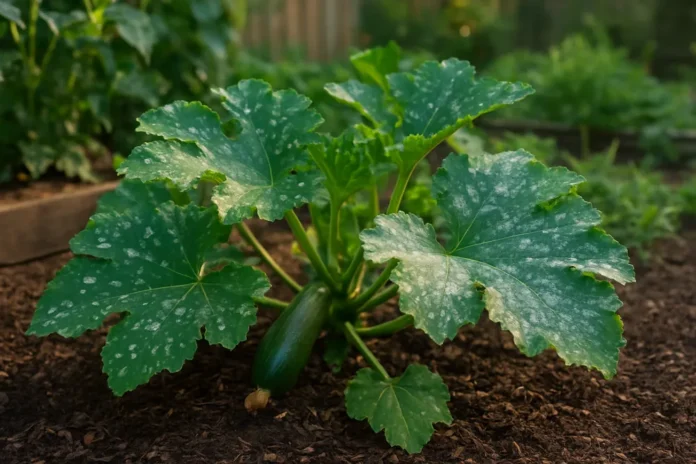
White spots on zucchini are often either natural leaf variegation or powdery mildew. They can also come from pest feeding, residue, or stress that makes the foliage more vulnerable.
Seeing pale or white spotting on zucchini leaves can be confusing because not every white mark means your plant is in trouble. Some zucchini varieties naturally develop silvery mottling along the leaf veins, while others get white patches from fungal disease, pest damage, or residue left behind after watering or spraying.
When I look at a zucchini plant with this symptom, I start with the shape of the spots. Flat, symmetrical markings built into the leaf are very different from a dusty coating, tiny speckles, or blotches that spread fast in humid weather. Once you know which pattern you are dealing with, the fix becomes much more straightforward.
The good news is that most causes of white spots on zucchini are manageable at home. A careful look at the leaves, stems, and recent weather usually tells you whether you can leave the plant alone or need to step in quickly.
Natural Variegation Is Often Mistaken for a Problem
Many zucchini varieties naturally have white, silver, or pale green markings on their leaves. These spots are part of the leaf tissue itself, not something sitting on top of the surface. They often appear in consistent patterns near the veins or in repeated shapes across several leaves.
If the leaf looks firm, healthy, and deep green between the pale areas, natural variegation is the most likely explanation. The plant will keep growing normally, flowers will open as expected, and the spots will not turn fuzzy or spread in a random way from one day to the next.
- The white areas look smooth and flat, not powdery
- The pattern is similar on multiple leaves
- New growth appears healthy and vigorous
- There is no yellow halo, browning, or leaf collapse around the spots
- The marks seem built into the leaf rather than sitting on top of it
I have seen plenty of gardeners treat healthy zucchini for disease when the plant was simply variegated. If the leaf pattern looks almost decorative and repeats from leaf to leaf, I usually hold off on any treatment and watch the new growth first.
Powdery Mildew Is the Most Common Harmful Cause
If the white spots look like someone dusted the leaves with flour, powdery mildew is the top suspect. This fungal disease is extremely common on zucchini, especially in warm weather with high humidity, poor airflow, crowded planting, or older leaves that stay damp for long periods.
Powdery mildew usually starts as small, round white patches on the upper leaf surface. Over time, those patches expand, merge together, and can cover large parts of the leaf. Infected leaves may yellow, dry out, or become brittle, which reduces the plant's ability to support fruit production.
Signs That Point to Powdery Mildew
- White or grayish powder on the top of leaves
- Spots that enlarge and spread over several days
- Older outer leaves affected before the newest center growth
- Leaves gradually yellowing or browning after the white coating appears
- Problems worsening during humid spells or late in the season
Mild cases are manageable. Remove the worst affected leaves if the plant is still full and vigorous, but avoid stripping too much foliage at once. Improve spacing, water at the soil line instead of overhead, and keep weeds down so air can move through the bed. If the infection is spreading fast, a home gardener can use labeled treatments such as potassium bicarbonate, sulfur, neem-based products, or other fungicides approved for edible crops. Always follow the product label and spray in the cooler part of the day.
With zucchini, I judge mildew treatment by the condition of new leaves, not by whether old infected leaves turn green again. Damaged leaves rarely recover, so the goal is to protect fresh growth and keep the plant productive.
Pest Feeding Can Leave Pale Stippling or Scarring
Some insects do not make large white patches, but they do cause many tiny pale dots that can blend together and look whitish from a distance. Spider mites, thrips, and leafhoppers are common examples. These pests feed by piercing leaf tissue and sucking out cell contents, leaving stippled or silvery areas behind.
This kind of spotting usually looks different from powdery mildew. Instead of a fuzzy coating, the leaf surface shows pinprick discoloration, fine scarring, or a dull silvery cast. You may also notice leaf curling, bronzing, fine webbing from spider mites, or tiny moving insects on the undersides of leaves.
Clues That Pests Are Involved
- Very small white or pale speckles rather than broad patches
- Damage concentrated on leaf undersides or edges
- Fine webbing, black specks, or visible insects
- Leaves looking dull, dry, or lightly sandblasted
- Hot, dry weather making the problem worse
Check the undersides of several leaves with good light. A strong spray of water can knock down light infestations of mites and aphids. In heavier cases, insecticidal soap or horticultural oil labeled for vegetables can help, but coverage matters because these pests hide underneath foliage. Avoid spraying in intense midday heat to reduce leaf burn.
Residue From Hard Water, Sprays, or Dust Can Mimic Disease
Not every white mark comes from the plant itself. Hard water can leave mineral deposits, especially if you water overhead and the droplets dry on the leaf surface. Foliar sprays, some fertilizers, and even road or construction dust can also leave pale spotting or a chalky film.
Residue tends to sit on top of the leaf rather than changing the tissue underneath. It may appear after a recent spray or after repeated overhead irrigation. Often the pattern follows drip marks, splashes, or a general coating on exposed leaves rather than round fungal patches.
- The white material wipes off with a finger or damp cloth
- Only the most exposed leaves are affected
- The spots appeared soon after spraying or watering
- The leaf tissue still looks healthy once the residue is removed
- There is no steady spreading from leaf to leaf
If you suspect residue, gently wipe one spot with a damp paper towel. If it comes off cleanly and the leaf looks normal beneath it, you are likely dealing with a surface deposit rather than disease. Switching to soil-level watering and mixing sprays carefully according to label directions usually prevents the issue from returning.
Sun Stress, Transplant Shock, and Minor Physical Damage Can Bleach Tissue
Zucchini leaves can also develop pale or whitish areas after environmental stress. A plant that was recently transplanted into strong sun may show bleached patches, especially if it was not hardened off gradually. Wind abrasion, hail, rubbing against supports, or sudden heat can damage leaf tissue and leave scuffed or lightened spots.
This damage usually stays limited to the leaves that were exposed during the stressful event. It does not act like powdery mildew and generally does not keep spreading in circular patches. New growth often comes in normally once the plant settles and conditions improve.
When Stress Damage Is More Likely
- The spotting appeared after transplanting or a heat wave
- Only a few leaves are affected
- Leaf surfaces look bleached or papery, not dusty
- Damage lines up with wind exposure or physical rubbing
- Fresh growth from the center looks healthy
Support the plant with steady watering, mulch to moderate soil moisture, and avoid additional stress such as aggressive pruning or heavy fertilizing. In most cases, the plant grows past this kind of cosmetic injury.
How to Tell Which Cause You Are Dealing With
A simple close inspection can save you from treating the wrong problem. The main question is whether the white area is part of the leaf, sitting on the surface, or caused by actual tissue damage. Pattern matters as much as color.
- Look at several leaves, not just one. Compare older outer leaves with newer center leaves.
- Rub a white area gently with your finger. If it smears or wipes away, think mildew or residue.
- Turn the leaf over and inspect the underside for insects, webbing, eggs, or scarring.
- Check whether the pattern is symmetrical along the veins. That often points to natural variegation.
- Notice whether the problem is spreading daily. Fast expansion usually means disease rather than harmless leaf markings.
My quickest test is to compare the oldest leaf, the newest leaf, and one in the middle. If only the older leaves have dusty patches, mildew jumps to the top of my list. If all ages show the same built-in silver pattern, I treat it as normal genetics.
What to Do Right Now for a Zucchini with White Spots
Once you have a likely diagnosis, your next steps should be targeted. Zucchini grows fast, so the best response is usually simple and timely rather than dramatic.
If the Spots Are Natural Variegation
Do nothing beyond normal care. Keep the plant watered evenly, feed it as needed, and monitor new growth. No treatment is necessary.
If the Spots Are Powdery Mildew
Remove heavily coated leaves if the plant has enough healthy foliage left. Water at the base, thin surrounding plants if airflow is poor, and consider a labeled fungicide if new leaves keep getting infected.
If Pests Are Causing the Spotting
Rinse the undersides of leaves with water and recheck after a day or two. If insects remain active, use insecticidal soap or horticultural oil according to the label, making sure you reach the undersides.
If Residue Is the Issue
Switch to soil-level watering, avoid unnecessary foliar sprays, and gently rinse or wipe leaves if needed. The plant should be fine.
If Stress or Weather Damage Is the Cause
Focus on steady care. Keep soil consistently moist, mulch around the base, and protect young plants from sudden exposure when possible.
How to Prevent White Spotting Problems in the Future
You cannot prevent natural variegation, but you can lower the odds of mildew, pest flare-ups, and stress spotting. Zucchini responds well to a few basic cultural habits.
- Space plants generously so air can move around the leaves
- Water early in the day at the soil line instead of overhead
- Mulch to reduce soil splash and even out moisture
- Inspect leaf undersides weekly for early pest activity
- Remove badly diseased foliage promptly and discard it
- Avoid overfertilizing with nitrogen, which can create lush, vulnerable growth
- Rotate squash-family crops when possible to reduce recurring disease pressure
I also like to harvest zucchini regularly and keep the plant open enough that I can see what is happening in the center. Overgrown plants hide problems until they are much harder to manage. Catching mildew or mites early makes a huge difference.
When White Spots Mean the Plant May Not Be Worth Saving
Sometimes a zucchini plant is so far gone that treatment is more effort than value, especially late in the season. If most of the leaves are heavily coated with mildew, the plant is collapsing, and fruit production has nearly stopped, replacement may be the better use of your garden space.
The same goes for severe pest infestations that have already bronzed or crippled the canopy. In a small home garden, removing one badly affected plant can protect healthier neighbors and save you time. Just be sure to dispose of diseased material rather than composting it if you suspect active fungal infection.
FAQ
Are White Spots on Zucchini Leaves Always Powdery Mildew?
No. Many zucchini varieties have natural silver or white variegation on the leaves, and white spotting can also come from pests, residue, or sun stress. Powdery mildew usually looks dusty and spreads over time.
How Can I Tell Natural Variegation From Powdery Mildew on Zucchini?
Natural variegation is smooth, flat, and often follows a repeated pattern along the veins. Powdery mildew looks like a powdery coating on the surface and tends to expand into larger patches.
Can I Eat Zucchini From a Plant with White Spots on the Leaves?
Usually yes, as long as the fruit itself is healthy and you have followed any pre-harvest instructions for treatments you applied. Leaf problems like variegation or mild powdery mildew do not automatically make the fruit unsafe.
Should I Cut Off Leaves with White Spots?
Only if the leaves are heavily diseased or badly damaged. Removing a few infected leaves can help with airflow and disease management, but taking too many at once can weaken the plant.
Does Overhead Watering Cause White Spots on Zucchini?
It can contribute. Overhead watering may leave mineral residue on leaves and can create conditions that favor powdery mildew, especially when airflow is poor.
What Spray Works Best for Powdery Mildew on Zucchini?
Products labeled for edible crops such as potassium bicarbonate, sulfur, neem-based products, or other approved fungicides can help. The best choice depends on the label, your weather, and how far the disease has spread.
Will White Spots Go Away on Their Own?
Natural variegation will remain because it is part of the leaf. Residue may wash off, and stress damage may stop spreading, but powdery mildew and pest damage usually need some intervention to prevent further decline.
Need a treatment that actually works? Read our guide to the best fungicides and pest controls for squash so you can protect your zucchini before leaf damage cuts into your harvest.
