

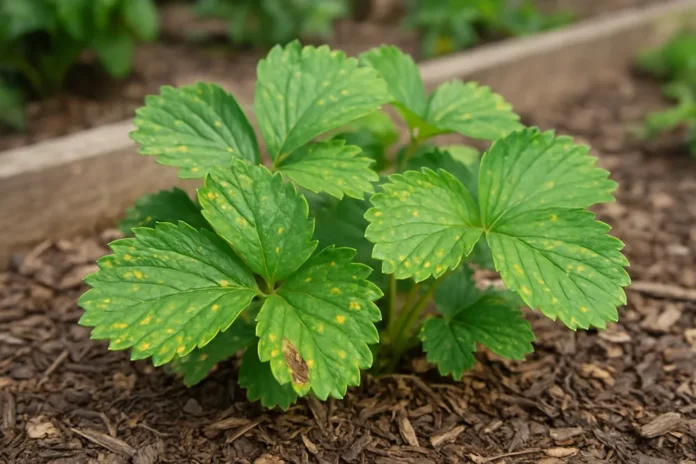
Strawberry leaves usually develop yellow spots because of fungal leaf diseases, sap-sucking pests, nutrient problems, or watering stress. The exact cause depends on whether the spots stay small, turn brown, spread fast, or come with curling, chewing, or overall yellowing.
Seeing strawberry leaves with yellow spots can be unsettling, especially when the plants were looking healthy a week earlier. In my garden, this symptom most often shows up during humid weather, after overhead watering, or when plants have become crowded enough that leaves stay damp too long.
The tricky part is that yellow spotting is not one single problem. It can come from common fungal diseases, tiny pests feeding on the undersides of leaves, nutrient shortages, or root stress caused by wet soil. A few close observations usually tell the story, and the pattern matters more than the color alone.
If your strawberry plants still look vigorous, this issue is often manageable. The key is separating harmless older-leaf blemishes from a problem that is actively spreading through the patch.
What Yellow Spots Usually Mean on Strawberry Leaves
Yellow spots on strawberry leaves are a symptom, not a diagnosis. Sometimes they begin as tiny pale flecks and later develop dark centers. Other times the whole leaf looks mottled or stippled, with many fine yellow dots that never become classic round lesions. The difference matters because fungal diseases tend to make more defined spots, while mite or leafhopper feeding often creates a speckled or washed-out look.
Start by looking at three things: where the spots appear, what shape they have, and how fast they are spreading. Spots mostly on older lower leaves often suggest disease splashing up from the soil or age-related stress. Spots on many leaves at once, especially with fine stippling, can point to pests. Uniform yellowing between veins is more likely tied to nutrition than infection.
- Small round spots with tan, purple, red, or brown centers often indicate leaf spot or leaf scorch diseases.
- Tiny yellow speckles over the whole leaf surface often suggest spider mites or leafhoppers.
- Yellowing that follows veins or affects the whole leaf more evenly is more often linked to nutrient imbalance or root stress.
- Spots that show up after hot, bright weather can sometimes be worsened by sun stress on already weakened plants.
When I diagnose strawberries, I look at the newest healthy leaves first. If the new growth is clean and the spotting is mostly on older leaves, the problem is often earlier stress or a disease that can be contained. If every layer of the plant is showing fresh spots, I assume the issue is still active.
Fungal Leaf Diseases Are the Most Common Cause
Leaf Spot
Common leaf spot on strawberries often starts as small purplish or reddish spots that later develop lighter centers. As the center tissue fades, the surrounding area can look yellowish, especially from a distance. Heavily affected leaves may look peppered with little circular marks.
Leaf Scorch
Leaf scorch usually begins with many tiny dark purple spots. These may merge into larger blotches, and the leaf can take on a scorched appearance with yellowing around damaged tissue. This disease is common in warm, humid plantings where air movement is poor.
Powdery Mildew and Other Fungal Stress
Powdery mildew is better known for its whitish coating, but early stress from it can make leaves curl and develop patchy chlorosis, which reads as yellow spots or pale blotches. Other fungal problems may also create irregular yellow areas before more obvious signs appear.
Fungal issues are especially likely if you have had rain, overhead irrigation, crowded plants, heavy mulch holding moisture against lower leaves, or old infected foliage left in the bed from the previous season. The spores spread easily by splashing water and lingering moisture.
- Spots are usually more distinct than nutrient yellowing.
- Lower and older leaves are often hit first.
- Humid weather and wet foliage make symptoms worse.
- The issue often spreads plant to plant instead of staying isolated.
Pests That Cause Yellow Speckling and Mottling
Spider Mites
Spider mites are one of the easiest yellow-spot culprits to miss because the damage starts so small. Their feeding creates a fine stippled pattern, as if the leaf has been dusted with pale yellow pinpricks. In hot, dry weather, the damage can spread quickly and leaves may bronze, dry, or curl. Turn over the leaves and you may find tiny moving dots or delicate webbing.
Leafhoppers
Leafhoppers suck sap and leave behind pale stippling or patchy yellowing. Damage often looks cleaner and more evenly scattered than fungal spots. If disturbed, the insects jump or fly quickly, so they are easiest to notice in the morning when plants are still cool.
Aphids and Other Sap Feeders
Aphids usually cause curling and general weakening more than classic yellow spots, but on stressed strawberries they can contribute to blotchy yellowing. Their honeydew can also encourage sooty mold, which adds another layer of leaf trouble.
If the spotting looks dusty or evenly stippled, I always inspect the undersides with a phone flashlight before treating for disease. It is easy to waste time spraying fungicide when mites are the real reason the leaves look speckled.
Nutrient Deficiencies and Soil Issues That Mimic Spotting
Not every yellow mark is a disease lesion. Strawberries can show patchy chlorosis when nutrients are out of balance, especially in containers, raised beds with repeated watering, or soils with a pH that limits nutrient uptake. In these cases, the yellowing may look like spots at first but usually lacks the neat circular borders seen with many leaf diseases.
Nitrogen Shortage
Low nitrogen usually causes older leaves to turn pale overall rather than producing isolated yellow dots. Growth may be slow, and the plant can look thin or undersized.
Iron or Manganese Problems
Micronutrient deficiencies often show as yellowing between veins, especially on newer leaves. This is more common when soil pH is too high. Hard water, excessive lime, or poorly balanced container mixes can make the problem worse.
Salt Buildup or Fertilizer Burn
Too much fertilizer can damage roots and cause patchy yellowing that resembles spotting from a distance. Leaf edges may brown, and the plant may wilt even when the soil is moist. This happens most often in pots, grow bags, and small raised beds where salts accumulate faster.
- Deficiency yellowing is usually more diffuse than fungal lesions.
- Several plants may show the same pattern at the same time.
- New growth quality often gives the best clue.
- Container strawberries are more prone to quick nutrient swings than in-ground beds.
Watering Stress, Root Trouble, and Environmental Causes
Strawberries like even moisture, but they do not like sitting in soggy soil. When roots stay too wet, oxygen drops, uptake slows, and leaves can develop yellow blotches, weak growth, and eventually browning. Dry spells can also trigger yellowed patches, especially when the plant cycles between drought and overwatering.
Compacted soil, poor drainage, and overcrowded containers all increase the odds of root stress. In some cases the yellow spotting is really a surface expression of trouble below ground. Plants may also show drooping, poor fruit set, or leaves that feel limp rather than crisp.
Environmental stress can intensify existing problems too. A plant with mild leaf spot or a small mite population often looks much worse after a heat wave, transplant shock, or irregular watering. That is why symptoms sometimes seem to appear overnight when the issue has actually been building for days.
How to Tell Which Cause You Are Dealing With
A quick inspection routine can save a lot of guesswork. Look at both sides of several leaves, not just the worst one. Check whether the affected leaves are old or new, whether the spots are round or speckled, and whether the crown and roots still look healthy.
- Examine the spot shape. Round, bordered lesions usually lean fungal. Fine stippling usually leans pest-related.
- Check the leaf undersides. Look for mites, insects, webbing, eggs, or sticky residue.
- Notice where the problem started. Lower inner leaves often point to moisture-related disease. Outer exposed leaves can show more mite damage.
- Review recent weather and watering. Several rainy days or frequent overhead irrigation strongly support a disease diagnosis.
- Compare new growth to old growth. Clean new leaves often mean the plant can recover once the current stress is corrected.
I try not to diagnose from one damaged leaf. Strawberries often hang onto old blemished foliage long after conditions improve, so the plant can look sick even when the new growth is telling you the problem has already slowed down.
What to Do to Help Affected Strawberry Plants Recover
Remove the Worst Damaged Leaves
Clip off heavily spotted, dead, or collapsing leaves and throw them away rather than composting them if disease is suspected. This reduces spore load and improves airflow. Do not strip the plant bare, though. It still needs enough healthy foliage to keep growing.
Water at the Soil Level
Switch from overhead watering to drip irrigation, a watering wand directed at the base, or careful hand watering. Keeping leaves dry is one of the simplest ways to slow many fungal leaf problems.
Thin and Clean the Patch
If plants are packed tightly, thin runners and remove old debris around the crowns. Better airflow helps leaves dry faster and also makes pest inspections easier.
Treat Pests Only when You Confirm Them
For mites or other soft-bodied pests, a strong water spray on leaf undersides, insecticidal soap, or horticultural oil can help when used correctly. Follow label directions, avoid spraying in peak heat, and cover the undersides well.
Correct Soil and Feeding Problems Gently
If the plants seem pale overall, use a light balanced fertilizer suited to strawberries rather than a heavy feeding. For possible micronutrient issues, improving soil pH and root health is usually more effective than repeatedly adding random supplements.
Use Fungicides Only when the Pattern Fits
If you clearly have a spreading fungal leaf disease, labeled garden fungicides can help protect new growth. They do not erase existing spots, so success is measured by cleaner leaves that emerge afterward.
Change one thing at a time when possible. If you prune, fertilize, spray, and change watering all in the same afternoon, it becomes much harder to tell what actually solved the problem or what stressed the plant further.
How to Prevent Yellow Spotting From Coming Back
Prevention is easier than cleanup with strawberries because many leaf issues spread quickly in dense plantings. The best long-term strategy is to grow plants in a way that keeps foliage dry, roots steady, and old infected debris from building up.
- Space plants well enough for airflow and resist letting runner growth become a solid mat.
- Water early in the day and direct water to the soil instead of the leaves.
- Mulch to reduce soil splash, but keep heavy wet mulch from smothering the crowns.
- Remove old diseased leaves after harvest or during cleanup so spores do not overwinter nearby.
- Rotate strawberry beds when practical instead of planting new strawberries in the same stressed spot year after year.
- Check leaf undersides regularly during hot dry spells when mite populations can surge.
- Keep fertility moderate. Lush overly soft growth is often more disease-prone than balanced growth.
If you grow strawberries in containers, prevention also means refreshing potting mix on schedule, making sure drainage holes stay open, and watching fertilizer strength carefully. Container plants can swing from too wet to too dry much faster than bed-grown plants.
When Yellow Spots Are Serious Enough to Worry About
A few marked leaves are usually not an emergency. I worry more when the spotting is expanding rapidly across the planting, new leaves are emerging already damaged, or the plants are losing vigor fast. That suggests the underlying cause is still active and strong enough to reduce harvest.
- Most leaves are now affected, not just a few older ones.
- Spots are merging into large dead areas.
- Leaves are curling, bronzing, or dropping quickly.
- Plants are wilting despite reasonable moisture.
- Fruit production has slowed sharply and new growth looks weak.
In those cases, it is worth acting promptly and taking a closer look at roots, pests, recent weather patterns, and your watering method. Strawberries can rebound well, but they do better when the cause is caught before the crowns are weakened.
FAQ
Can Strawberry Plants Recover From Yellow Spotted Leaves?
Yes, they often can. Existing spots usually stay visible, but if you fix the cause, the new leaves should emerge healthier and the plant can keep producing.
Should I Cut Off Leaves with Yellow Spots?
Remove the worst affected leaves if they are heavily diseased, collapsing, or crowding the plant. Leave enough healthy foliage for the plant to keep feeding itself.
Are Yellow Spots on Strawberry Leaves Always a Fungus?
No. Fungal disease is common, but mites, leafhoppers, nutrient imbalance, fertilizer stress, and wet roots can all produce yellow spotting or mottling.
Will Yellow Spotted Leaves Affect the Fruit?
Mild spotting may not matter much, but severe or spreading damage can reduce plant energy, lower fruit size, and weaken overall production.
Is It Safe to Eat Strawberries From Plants with Spotted Leaves?
Usually yes, if the fruit itself is healthy and no product labels say otherwise after treatment. Do not eat fruit that is rotting, moldy, or damaged.
Why Do Only the Older Strawberry Leaves Have Yellow Spots?
Older leaves are often the first to show fungal spotting, past stress, or natural decline. If the center of the plant is pushing clean new growth, the problem may be limited or already improving.
Can Overwatering Cause Yellow Spots on Strawberry Leaves?
Yes. Overwatering and poor drainage can stress roots, limit nutrient uptake, and make leaves develop yellow blotches while also encouraging fungal disease.
Do I Need Fungicide for Yellow Spots on Strawberry Leaves?
Only if the symptoms clearly fit a fungal disease and the problem is actively spreading. Fungicides protect cleaner new growth, but they will not make existing spots disappear.
Need the right fix fast? Read our guide to the best fungicides, miticides, and strawberry-safe treatments so you can choose a product that matches the exact cause.
