

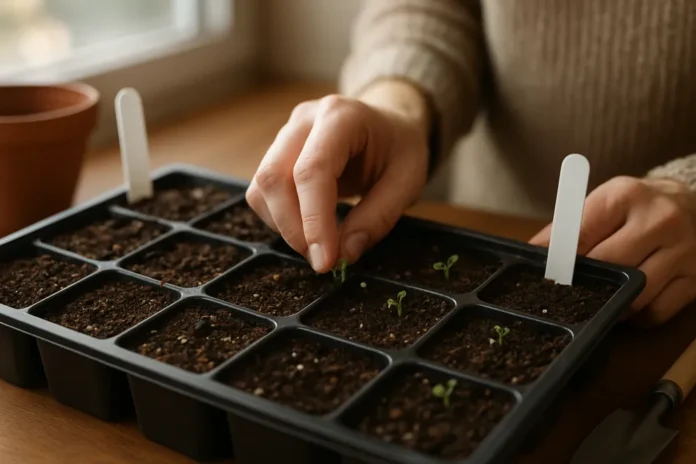
Lavender seeds usually fail to germinate because they are too old, too wet, too warm, buried too deeply, or were not given the cold conditions many varieties prefer. Slow and uneven sprouting is also normal with lavender, so seeds may still be viable even when nothing appears at first.
Lavender can test a gardener's patience from the very beginning. If you have trays of lavender seeds sitting there with no green in sight, the problem is often not one dramatic failure but a small mismatch in temperature, moisture, light, or timing.
I have found that lavender is one of those plants that makes you garden more carefully. It does not usually behave like basil, zinnias, or marigolds that pop up quickly with basic warmth and moisture. Lavender germination is often slow, uneven, and fussy, especially when seed packets are old or when conditions stay too damp.
The good news is that poor sprouting usually has a fixable cause. Once you know what lavender seeds need and what commonly stalls them, you can improve the next sowing and often rescue your current setup too.
Why Lavender Seeds Are Slow in the First Place
Lavender seeds are naturally slower than many common garden flowers and herbs. Depending on the variety, fresh seed, and conditions, they may take anywhere from two to six weeks to sprout, and sometimes longer. That delay leads many gardeners to assume the seeds are dead when they are really just moving at lavender speed.
Another challenge is that germination is often uneven. A few seeds may emerge early while the rest sit still for another week or two. This is normal enough that I rarely judge a tray too soon unless the mix has clearly stayed soggy, dried out completely, or developed algae and mold.
When I sow lavender, I expect patchy timing rather than a neat carpet of seedlings. If one or two seeds sprout and the rest do not, I do not assume the whole batch failed. I assume the conditions are close and I keep them steady a little longer.
The Most Common Reasons Lavender Seeds Do Not Germinate
Old or Low-quality Seed
Lavender seed does not keep forever, and germination rates drop as seed ages. A packet that has been stored in a hot garage, humid shed, or sunny windowsill may look fine but perform poorly. Even with good storage, older seed tends to sprout more slowly and less evenly than fresh seed.
If your packet is more than a couple of years old, weak germination is a real possibility. Specialty lavender varieties can also vary in vigor, so the issue may be genetic as much as environmental.
Skipped Cold Stratification
Many lavender types germinate better after a period of cold, moist stratification. This mimics winter conditions and helps break natural dormancy. English lavender and related types often benefit the most, though instructions vary by supplier and species.
If your seed packet recommended chilling and you skipped it, that alone can reduce sprouting or stretch the timeline dramatically. Seeds may still germinate, but often more slowly and less reliably.
Planting Too Deeply
Lavender seeds are small and should not be buried deeply. They need close contact with the seed-starting mix, but they also respond well to light or very shallow coverage. If they are planted under a thick layer of mix, they may struggle to break dormancy or exhaust themselves before reaching the surface.
A light press into the surface or a dusting of vermiculite is usually enough. Deep burial is one of the easiest mistakes to make because the seeds look tiny and easy to lose.
Too Much Water
Overwatering is a frequent lavender problem from day one. Seeds need consistent moisture, but they do not want a heavy, saturated mix with poor air flow. In soggy trays, seeds can rot before they sprout, and the surface often develops algae, fungus, or a stale smell.
Lavender comes from dry, lean environments, and while seeds still need moisture, they do better in a light mix that is damp rather than wet. A tray that glistens constantly or feels muddy is usually too wet.
Too Little Water
Dryness can be just as damaging. Small seeds close to the surface dry out quickly, especially under grow lights, heating mats, or in low indoor humidity. If the seed coat dries repeatedly after the sowing mix was first moistened, germination can stall.
This is one reason lavender can be tricky. It dislikes staying soaked, but the surface cannot be allowed to crust over and dry hard either.
Temperatures That Are Too High or Too Low
Lavender usually germinates best in moderate temperatures, often around 65 to 75 degrees Fahrenheit. If the tray sits in a chilly basement, germination slows. If it sits on a hot mat or in a sun-baked window where the mix overheats, seeds can also fail.
Many gardeners assume all seeds like strong bottom heat, but lavender is not always happier that way. Mild warmth is better than intense heat.
Insufficient Light
Some lavender seed germinates better with light exposure or only a very thin covering. A dark location or thick blanket of mix can reduce success. Even after sprouting, weak light quickly produces spindly seedlings, which makes a germination problem look worse than it is.
Heavy or Contaminated Seed-starting Mix
Dense potting soil holds too much water and limits oxygen around the seed. Reused mix can also carry fungus, insect eggs, or salts that reduce success. Lavender seed does best in a fresh, fine-textured seed-starting blend that drains well and stays evenly moist.
How to Tell Which Problem You Are Dealing With
The tray itself usually gives clues. Instead of guessing, look at the surface, smell the mix, and think about how the setup has behaved over the last two weeks.
- If the mix is green, slimy, or smells sour, excess moisture is a likely cause.
- If the surface is pale, hard, and shrinking from the edges of the cell, the seed likely dried out.
- If you used garden soil or dense potting mix, poor air flow around the seed may be slowing germination.
- If the tray sits above 80 degrees Fahrenheit for much of the day, heat stress may be the problem.
- If the seeds were covered with more than a thin layer of mix, they may be planted too deeply.
- If nothing has happened after several weeks and all conditions seem reasonable, old seed or missing stratification moves higher on the list.
I like to sacrifice one cell and gently scrape the surface to inspect a few seeds. If they are swollen and pale, they were at least taking up moisture. If they are mushy, they likely rotted. If they still look dry and unchanged, I usually suspect moisture swings or old seed.
What Lavender Seeds Need for Better Germination
A reliable lavender setup is simple, but each part matters. Use fresh seed, a sterile seed-starting mix, and shallow sowing. Keep the medium evenly damp, not soaked, and hold temperatures in a moderate range with bright light nearby.
- Use fresh seed from a reputable source whenever possible.
- Cold stratify seeds for two to four weeks if the variety benefits from it or packet directions recommend it.
- Moisten the seed-starting mix before sowing so the seeds are not blasted around by heavy watering later.
- Press seeds onto the surface and cover only very lightly, or not at all if the packet calls for light germination.
- Use a humidity dome only until the surface is staying evenly moist, then vent it to reduce fungal problems.
- Keep the tray around 65 to 75 degrees Fahrenheit.
- Provide bright light right away so any seedlings that emerge stay compact and healthy.
Lavender responds better to consistency than to intensity. Strong heat, heavy watering, and rich soil do not speed it up. They usually make things worse.
Should You Start Over or Wait Longer?
That depends on how long the seeds have been sown and how stable the conditions have been. If it has only been two or three weeks, I would usually wait, especially if the mix still looks healthy and the seed packet was fresh. Lavender often rewards patience.
If it has been four to six weeks with no movement, and you know the tray has been too wet, too hot, or was seeded deeply, I would lean toward starting over with corrected conditions. If the seed itself is old, restarting with a fresh packet gives you a much better chance.
A half-and-half approach can work well too. Keep the current tray another week or two while you sow a second tray using better technique. That way you do not lose time, and sometimes the first tray surprises you.
If I am torn between waiting and restarting, I ask myself whether the original setup was merely imperfect or clearly flawed. Lavender can forgive slow timing. It rarely forgives stale seed in soggy soil.
How to Improve Your Next Sowing Step by Step
For the next round, set yourself up for a steadier germination window rather than trying to force fast results. Start with clean trays and a fine seed-starting mix. Pre-moisten it so it feels like a wrung-out sponge, then fill the cells loosely and level the surface.
If your lavender variety benefits from cold treatment, place the sown tray or the seeds in moist medium in the refrigerator for a few weeks before moving them into warmth and light. Once ready, sow the seeds shallowly and mist gently so they settle into contact with the mix.
Cover the tray with a dome only long enough to prevent surface drying. Vent it daily, and remove it if condensation builds heavily. Keep temperatures moderate and light bright. Water from below when possible, then let excess water drain away fully.
- Use fresh seed and read the variety-specific instructions on the packet.
- Prepare a light, sterile mix and moisten it before sowing.
- Cold stratify when recommended.
- Sow on the surface or barely cover the seed.
- Keep conditions evenly moist and moderately warm.
- Give the tray bright light and good air flow.
- Wait long enough for uneven germination before discarding the tray.
Common Mistakes That Look Harmless but Hurt Germination
A few small habits cause a lot of lavender frustration. One is watering with a strong stream from above, which buries or dislodges tiny seeds. Another is using leftover potting soil that is too chunky and moisture-retentive for fine seeds.
Growers also get into trouble by placing trays on aggressive heat mats without checking actual soil temperature. Windowsills can create similar problems by overheating during the day and chilling sharply at night. Either swing can slow or stop germination.
Finally, avoid fertilizing before seedlings emerge. Seeds contain what they need to sprout. Extra fertilizer salts in the medium can stress young roots and encourage algae or fungal issues before the plant even starts.
When the Issue May Be the Variety Itself
Not all lavender behaves exactly the same from seed. English lavender is generally the most common from seed, but hybrids and specialty cultivars may show lower or less uniform germination. Some types are more often propagated from cuttings because seed-grown plants vary or sprout poorly.
If you are growing a named cultivar, read the packet carefully. It may note slower germination, lower expected rates, or the need for cold treatment. Sometimes the best answer is not that you failed, but that the plant itself is less cooperative from seed than its label implied.
Signs Your Lavender Seeds Are Finally on the Right Track
Once conditions improve, you may still not see instant sprouts, but the tray will usually look healthier. The surface stays evenly damp without slime, there is less condensation, and any emerging seedlings stand upright rather than collapsing.
Healthy lavender seedlings are small at first, with compact growth and a gray-green cast as true leaves develop. They should not be stretched, toppled, or soft at the base. After germination, let the top of the mix dry slightly between waterings to reduce damping-off and encourage stronger roots.
FAQ
How Long Do Lavender Seeds Usually Take to Germinate?
Lavender seeds commonly take 14 to 30 days, but some batches need longer. Uneven sprouting is normal, so a tray may continue germinating for several weeks.
Do Lavender Seeds Need Light to Germinate?
Many lavender seeds do best when sown on the surface or only lightly covered, which suggests light can help. Follow the packet directions for your variety, but avoid burying them deeply.
Do I Need to Cold Stratify Lavender Seeds?
Often yes, or at least it improves results for many types. A cold, moist period of two to four weeks can help break dormancy and produce more even germination.
Can I Germinate Lavender Seeds on a Heat Mat?
Yes, but only if the medium stays in a moderate range. If the mat pushes the soil too warm, lavender seeds may stall or rot instead of sprouting.
Why Did My Lavender Seeds Mold Instead of Sprout?
Mold usually points to excess moisture, low air circulation, or contaminated starting mix. Seeds sitting in soggy conditions often decay before they have a chance to germinate.
Should I Soak Lavender Seeds Before Planting?
Soaking is not usually necessary. Cold stratification and proper surface sowing are generally more helpful than a pre-planting soak.
Can Old Lavender Seeds Still Germinate?
They can, but the rate is often much lower and the timing slower. If the packet is old or was stored poorly, fresh seed is a safer bet.
Is It Easier to Grow Lavender From Cuttings than From Seed?
In many cases, yes. Cuttings are often faster, more reliable, and truer to the parent plant, especially for named cultivars and hybrids.
Want better results next time? Read our seed-starting guide and compare the best trays, grow lights, and propagation tools for stronger lavender seedlings.
