

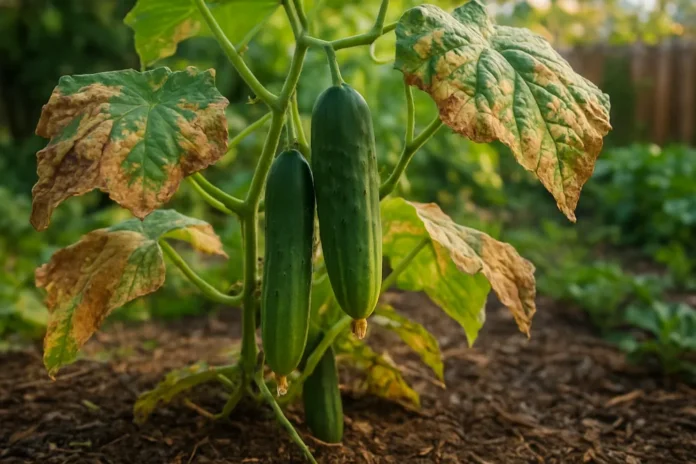
Cucumber leaves usually turn brown because of inconsistent watering, fungal or bacterial disease, pest damage, heat stress, or nutrient imbalance. The exact cause depends on whether the browning starts at edges, spots, tips, or whole leaves.
When cucumber leaves turning brown show up in the garden, it can feel like the plant is suddenly failing overnight. In reality, cucumbers usually give clues before they crash. The shape of the brown areas, where they start, and how fast they spread all help narrow down the cause.
I treat browning on cucumbers as a symptom, not a diagnosis. Sometimes it is as simple as a watering swing during hot weather. Other times it is early blight-like fungal pressure, bacterial problems, spider mites, or plain old leaf scorch on a plant that got stressed. The good news is that cucumbers grow fast, so if you catch the issue early, they often recover well enough to keep producing.
What Brown Cucumber Leaves Are Trying to Tell You
Brown leaves are not one single problem. On cucumbers, I usually see a few common patterns: crispy brown edges, small brown spots with yellow halos, papery tan patches between veins, leaf tips that dry out first, or whole older leaves collapsing and turning brown. Each pattern points toward a different group of causes.
- Brown edges and crispy margins often suggest water stress, heat, fertilizer burn, or salt buildup.
- Round or angular brown spots can point to fungal or bacterial leaf diseases.
- Fine stippling followed by bronzing or browning often suggests spider mites.
- Bleached or tan patches on the sunniest side can be sun scorch or heat injury.
- Older leaves yellowing first, then browning, can indicate nutrient deficiency, root stress, or normal aging made worse by stress.
When I diagnose cucumbers, I always compare new growth to old growth. If the newest leaves still look healthy, the plant often has a manageable stress problem. If fresh growth is already spotting or burning, I start thinking disease, root trouble, or a more active pest issue.
Water Stress Is One of the Most Common Causes
Underwatering and Uneven Moisture
Cucumbers are thirsty plants with big leaves that lose water quickly in warm weather. If the soil swings from bone dry to soaked, leaves may wilt during the day, then develop brown edges or dry patches. Fruits may also become misshapen or bitter. This is especially common in containers, raised beds, and sandy soil.
Underwatering usually causes the oldest, largest leaves to show stress first. The browning tends to look dry and crisp rather than spotted or greasy. In hot spells, a plant can look fine for weeks and then suddenly show damage after just a day or two of missed watering.
Overwatering and Root Stress
Too much water can cause browning too. When roots stay soggy, they cannot pull in oxygen well, and the plant starts acting like it is drought-stressed even in wet soil. Leaves may first yellow, droop, or look dull green, then develop brown areas as roots weaken. If the soil smells sour or stays muddy for days, overwatering or poor drainage is a strong possibility.
- Water deeply and consistently instead of giving light daily sprinkles.
- Aim to keep soil evenly moist, not soggy or dusty dry.
- Mulch around plants to slow evaporation and moderate soil temperature.
- Use containers with strong drainage if growing cucumbers in pots.
Leaf Diseases Can Turn Spots Brown Fast
Angular Leaf Spot and Bacterial Issues
Bacterial diseases often create water-soaked lesions that later dry into brown, torn-looking patches. On cucumbers, angular leaf spot is a well-known example. The spots are limited by leaf veins, so they can look boxy or angular rather than perfectly round. In humid weather, they spread quickly and make leaves look ragged.
Alternaria and Other Fungal Leaf Spots
Fungal diseases can also start as small yellow or tan spots that enlarge and turn brown. Depending on the disease, the spots may have faint rings, yellow halos, or a dry papery center. Once several spots merge, whole sections of the leaf die back. Lower leaves often show symptoms first because they stay damp longer and get less airflow.
Downy Mildew Progression
Downy mildew does not always begin brown, but it often ends that way. It commonly starts as yellow patches between veins on the upper leaf surface. Those patches later brown and crisp up as tissue dies. In humid conditions, the undersides of leaves may show dark, fuzzy growth. This disease can move through cucumber plantings quickly, especially late in the season.
- Remove badly infected leaves if the plant still has plenty of healthy foliage.
- Avoid overhead watering late in the day.
- Space plants well and prune lightly if vines are packed too tightly.
- Do not compost severely diseased foliage unless your compost gets truly hot.
- Rotate cucurbits to a different area next season if disease has been persistent.
If you suspect disease, avoid handling wet plants. I have seen gardeners spread problems from one cucumber hill to the next just by brushing through damp vines during morning harvest.
Pests Can Cause Bronzing, Browning, and Scorched-looking Leaves
Spider Mites
Spider mites are tiny, but the damage becomes obvious once populations build. Leaves first develop fine pale speckling, then a bronzed look, then dry brown sections. Hot, dusty, dry conditions make them worse. If you tap a leaf over white paper, you may see tiny moving dots. Fine webbing is a later clue.
Cucumber Beetles and Sap-feeding Insects
Cucumber beetles chew holes, but their bigger problem is disease spread. Their feeding wounds make leaves look ragged, and they can help bacterial problems move through the patch. Aphids and whiteflies are less likely to create direct brown patches at first, but heavy feeding weakens plants and can lead to curling, yellowing, and later browning.
- Check leaf undersides where pests often hide.
- Rinse minor mite or aphid populations off with a firm spray of water.
- Encourage beneficial insects by avoiding broad, repeated insecticide use.
- Use insecticidal soap or horticultural oil only according to label directions and not during peak heat.
Heat, Sun, and Fertilizer Can Burn Cucumber Leaves
Sun Scorch and Heat Stress
Even sun-loving cucumbers can scorch when roots are stressed and temperatures spike. Browning from heat often appears on the most exposed leaves, especially after transplant shock, a missed watering, or a sudden jump in temperature. The tissue may look bleached first, then turn tan or brown and papery.
Fertilizer Burn and Salt Buildup
Too much fertilizer can pull moisture out of leaf tissue and burn roots. This often shows up as browned tips and edges, especially shortly after feeding. Water-soluble fertilizers mixed too strong, fresh manure, or repeated feedings in containers can all trigger this. Salt buildup is more common in pots, where minerals collect if the soil is not flushed occasionally.
If the damage appeared soon after fertilizing and the pattern is mostly tip or edge burn rather than random spots, fertilizer is a likely culprit. Plants may stall, droop, or wilt because damaged roots cannot function properly.
Nutrient Problems and Root Issues Can Also Show Up as Browning
Cucumbers need steady nutrition, but true deficiencies are not always the first reason for brown leaves. More often, roots are too cold, too wet, too dry, or damaged, so the plant cannot take up nutrients well. That said, potassium deficiency can contribute to leaf edge scorch on older leaves, and magnesium problems can lead to yellowing between veins before browning sets in.
Compacted soil, root rot, transplant damage, and root-knot nematodes can all create a stressed root system that leads to browning above ground. If the plant has weak growth, droops despite decent moisture, and never seems to perk up, it is worth thinking below the soil line.
- Older leaves with scorched edges may suggest potassium shortage or uptake problems.
- Yellowing between veins before browning can point to magnesium stress.
- General yellowing followed by browning may come from nitrogen shortage, but also from soggy roots.
- A plant that keeps declining despite watering may have a root or vascular problem rather than a simple leaf issue.
I am cautious about blaming nutrients too quickly. In many home gardens, the real problem is not that the soil lacks fertilizer, but that stressed roots cannot use what is already there.
How to Tell Which Cause Is Most Likely
Start with the pattern, not the product shelf. Browning that begins on lower leaves after humid weather leans toward disease. Browning that follows a heat wave or skipped watering often points to moisture stress. Fine stippling before bronzing suggests mites. Browning after feeding suggests fertilizer burn.
- Look at where the damage started: lower leaves, top leaves, edges, tips, or random spots.
- Notice how it looks: crispy, papery, water-soaked, speckled, or haloed.
- Think about timing: recent rain, overhead watering, fertilizing, transplanting, or extreme heat.
- Check the undersides of leaves for pests, fuzz, webbing, or sticky residue.
- Inspect the soil moisture a few inches down instead of judging by the surface alone.
If only a few older leaves are affected and new growth looks good, the issue is often manageable. If many leaves are rapidly spotting, collapsing, or infecting new growth, disease pressure is probably rising and the plant may decline quickly without intervention.
What to Do Right Now to Help Your Cucumber Plant
The best response depends on the cause, but a few actions help in most cases. First, remove leaves that are fully brown and no longer useful. They will not turn green again, and they can harbor pests or disease. Do not strip the plant bare, though, because cucumbers still need enough leaf area to produce fruit.
- Stabilize watering so the soil stays evenly moist.
- Mulch to keep roots cooler and reduce moisture swings.
- Improve airflow around vines by guiding growth onto a trellis or thinning crowded areas.
- Water at the base of the plant instead of wetting foliage.
- Pause fertilizer if you recently fed heavily and suspect burn.
- Remove and dispose of badly diseased leaves away from the garden.
If the plant still has healthy new growth and active flowering, it may continue producing well even after losing some damaged leaves. If the entire vine is heavily infected, wilted, or collapsing from the base upward, replacement is sometimes more practical than trying to rescue it late in the season.
Make one major change at a time if you can. When gardeners increase water, add fertilizer, spray for pests, and prune heavily all at once, it becomes much harder to tell what actually helped or made the stress worse.
How to Prevent Brown Leaves on Future Cucumber Crops
Prevention matters more with cucumbers than perfection. These plants grow fast and respond quickly to stress, so a few smart habits make a big difference. I get the cleanest foliage when I start with good spacing, steady moisture, mulch, and enough support to keep leaves off the ground.
- Plant cucumbers in full sun with rich, well-drained soil.
- Space plants to promote airflow and reduce long periods of leaf wetness.
- Use drip irrigation or water early in the day at soil level.
- Mulch once the soil has warmed to keep moisture more consistent.
- Trellis vining varieties when possible to reduce disease spread.
- Rotate cucumbers and related crops to reduce disease carryover.
- Watch for mites and beetles early before damage builds.
- Feed moderately rather than overcorrecting with heavy fertilizer doses.
It also helps to choose disease-resistant cucumber varieties if leaf problems have been frequent in your garden. Resistance will not make plants invincible, but it can buy you time and keep production going longer during tough weather.
FAQ
Should I Cut Off Brown Cucumber Leaves?
Yes, if the leaves are mostly brown, dead, or heavily diseased. Remove them with clean pruners, but leave enough healthy foliage for the plant to keep growing and shading fruit.
Can Brown Cucumber Leaves Turn Green Again?
No. Brown tissue is dead and will not recover. Focus on whether new growth stays healthy after you correct the underlying problem.
Do Cucumbers Get Brown Leaves From Too Much Sun?
Yes, especially during extreme heat or when the plant is already stressed by dry soil, transplant shock, or weak roots. Sun scorch usually looks bleached or papery before it turns brown.
What Does Overwatered Cucumber Damage Look Like?
Overwatered cucumbers often look droopy even though the soil is wet. Leaves may yellow first, then develop brown patches as roots struggle from lack of oxygen or rot.
Why Are Only the Bottom Cucumber Leaves Turning Brown?
Lower leaves are often the first to brown from age, splash-up disease, poor airflow, and prolonged dampness. If the damage is moving upward with spots or halos, disease is more likely than simple aging.
Can Powdery Mildew Make Cucumber Leaves Brown?
Yes. Powdery mildew usually starts as white coating on leaves, but badly affected foliage can yellow, dry out, and turn brown as the leaf tissue dies.
Is Epsom Salt a Fix for Brown Cucumber Leaves?
Not usually. Epsom salt only helps when magnesium deficiency is truly the issue, and many brown leaf problems on cucumbers come from watering, disease, pests, or root stress instead.
Need the right fix fast? Read our guide to the best cucumber disease treatments and garden-safe sprays so you can protect healthy vines before the damage spreads.
