

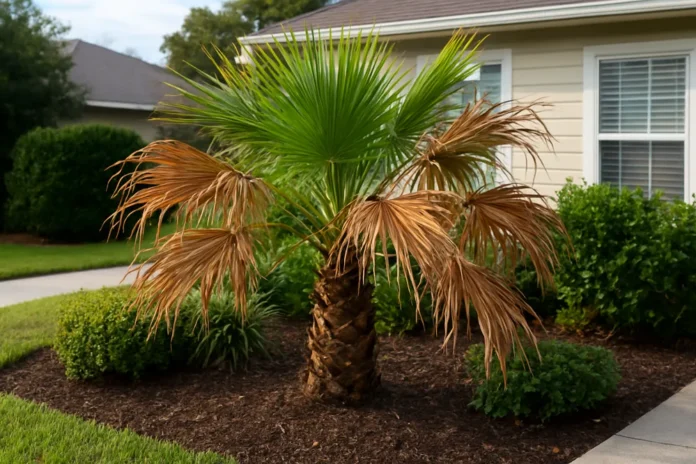
Palm trees usually turn brown because of watering stress, cold injury, salt or fertilizer buildup, nutrient deficiencies, pests, or simple aging of older fronds. In many cases, the browning pattern tells you whether the problem is normal or a sign of stress.
A palm tree turning brown can look alarming fast, especially when the plant is supposed to give your yard that lush, tropical feel. The good news is that brown fronds do not always mean the whole palm is dying. In many cases, the issue comes down to a few repeat offenders like inconsistent watering, weather stress, nutrient shortages, or a buildup of salts in the soil.
What matters most is where the browning starts and how it spreads. A few lower fronds slowly browning is often normal. Brown tips across many leaves, sudden crispy patches after a cold night, or a crown that looks weak are more serious clues. Once you match the pattern to the cause, the fix becomes much clearer.
I usually start by separating harmless old-frond dieback from active stress. That one habit saves a lot of unnecessary pruning and panic, because palms often show problems slowly and they do not recover the same way broadleaf shrubs do.
When Brown Fronds Are Normal
Palms naturally shed their oldest fronds as they grow. If the lowest, oldest leaves are yellowing first and then turning tan or brown while the center of the palm still looks healthy, that is usually part of the normal life cycle. A mature palm will not keep every frond forever.
Normal browning tends to happen gradually and only on older fronds near the bottom of the canopy. The newer fronds at the top should still emerge green and upright. If that is what you are seeing, you are likely looking at routine aging rather than a disease or care failure.
- Older fronds at the bottom brown first
- New growth in the center stays green
- The browning happens slowly, not overnight
- The trunk and crown still look firm and stable
I avoid removing a palm frond just because it has a little brown on it. If the frond is still partly green, it is still feeding the plant, and cutting too aggressively can stress the palm more than the original problem.
Watering Problems Are a Common Cause
Underwatering and Drought Stress
Palms can show drought stress with brown tips, dry edges, curled leaflets, and fronds that become crispy rather than limp. In hot, windy weather, container palms and newly planted palms dry out especially fast. Sandy soils also let water move through too quickly, which means a shallow splash often is not enough.
If the root zone stays too dry, the palm cannot move enough moisture to the fronds, and the oldest leaves usually show stress first. Over time, the browning can creep upward into more of the canopy.
Overwatering and Poor Drainage
Too much water can look surprisingly similar at first. Roots need oxygen as much as moisture, and a palm sitting in soggy soil may develop brown fronds because the roots are beginning to decline. You may also see yellowing before the fronds turn brown, a sour soil smell, or a general wilted look even though the ground feels wet.
Palms in heavy clay, low spots, or decorative pots without good drainage are especially prone to this problem. If the soil stays constantly saturated, root rot can follow.
- Underwatered palms often have dry, brittle fronds and dusty, fast-draining soil
- Overwatered palms may yellow first, then brown, while soil remains wet for days
- Newly planted palms need consistent deep watering, not frequent shallow sprinkling
- Container palms need more frequent checks than in-ground palms
When I am unsure whether a palm is too dry or too wet, I do not guess from the surface. I dig a few inches down near the root zone. The top inch can fool you, especially under mulch or after a light irrigation cycle.
Cold Damage and Weather Stress
Many palms sold in the U.S. can handle some cool weather, but not all palms tolerate freezes, cold wind, or sudden temperature swings equally well. A cold snap can leave fronds bronzed, water-soaked, spotted, or fully brown within days. Tender species may show damage first on exposed outer fronds, while the spear and center may remain alive if the freeze was brief.
Heat stress can also contribute to browning, especially when intense afternoon sun combines with dry soil and reflected heat from concrete or walls. In arid regions, low humidity and hot winds often crisp the tips and margins.
- Sudden browning after a cold night points to cold injury
- Fronds facing open wind or frost pockets are often worst first
- Brown, dry tips during heat waves often connect to moisture stress
- Container palms are more vulnerable because roots are less insulated
After cold damage, avoid rushing to prune every affected frond. Slightly damaged fronds can still help power recovery. Wait until all danger of frost has passed and you can tell what tissue is truly dead.
Nutrient Deficiencies Can Show Up as Browning
Palms are famous for showing nutrient problems in very specific ways. Potassium, magnesium, manganese, and sometimes iron deficiencies are common, especially in sandy soils, high-rainfall areas, or landscapes where palms are fed with the wrong fertilizer.
Potassium Deficiency
This is one of the most common palm nutrient issues. Older fronds may develop yellow-orange spotting, translucent flecks, and browning at the tips or margins. As it worsens, the fronds become frizzled and necrotic.
Magnesium Deficiency
Magnesium shortages often create broad yellow bands along the edges of older leaves while the center stays greener. It does not always start as brown, but stressed tissue can eventually turn tan and dry.
Manganese Deficiency
This tends to affect new growth more than old growth. Emerging fronds may look weak, withered, or frizzled, and severe cases can damage the growing point. Gardeners sometimes call this frizzle top.
If the newest fronds are abnormal, stunted, or browned while older ones looked decent before, think beyond watering and consider a feeding issue. Palms need palm-specific fertilizer formulas because general lawn fertilizers often push the wrong nutrient balance.
When a palm has brown tips on old fronds but the newest leaves still emerge strong, I start thinking potassium before I think disease. When the newest growth is distorted or weak, I pay much closer attention to manganese and the condition of the crown.
Salt Buildup, Fertilizer Burn, and Water Quality
Brown tips are often tied to excess salts in the soil. This can happen from overfertilizing, using fast-release fertilizers too heavily, watering with hard or salty water, or irrigating in coastal areas where salt exposure is common. Palms are not all equally salt-tolerant, and some show tip burn quickly.
Fertilizer burn usually appears as scorched leaf tips and edges, sometimes shortly after feeding. If a palm was recently fertilized and the browning seems to have accelerated, that timing matters. Container palms are especially vulnerable because salts concentrate in a smaller root zone.
- Brown tips on many fronds at once often suggest salt stress
- A white crust on pots or soil surface points to mineral buildup
- Fast-release fertilizer can burn roots more easily than slow-release palm blends
- Hard water can gradually contribute to leaf-tip browning indoors and outdoors
If water quality is poor, the damage may come on slowly and repeatedly, even when watering frequency seems right. The plant is getting moisture, but the root environment keeps becoming harsher.
Pests and Disease That Can Brown Palm Fronds
Pests do not cause every brown palm, but they should stay on your list if the color change is patchy, unusual, or paired with visible damage. Spider mites, scale insects, and mealybugs can weaken palms by feeding on plant sap. Heavy infestations may lead to stippling, yellowing, and gradual browning.
Fungal problems are more likely when the palm is stressed by poor drainage, overcrowding, or repeated overhead watering. Leaf spot diseases can create brown lesions with halos or irregular patches. More serious trunk or bud diseases can cause decline from the center outward, which is much more concerning than normal lower-frond browning.
Signs the Problem May Be Pests or Disease
- Sticky residue, tiny bumps, webbing, or cottony clusters on fronds
- Spots with distinct borders rather than plain tip burn
- The center spear loosening or pulling out easily
- One side of the palm collapsing or browning unevenly
- Dark, soft, or rotten tissue near the crown or trunk
If the spear leaf is affected, act quickly. Browning confined to old lower leaves is one thing. Browning that reaches the growing point can threaten the whole palm because many palms grow from a single central bud.
Transplant Shock, Root Stress, and Planting Issues
A recently planted palm may brown simply because it is trying to reestablish roots. Transplant shock often shows up as tip burn, drooping, slowed growth, or partial browning on several fronds. The palm is using stored energy while it tries to settle into a new site.
Planting depth matters too. A palm planted too deep can struggle in constantly wet conditions around the trunk flare and root initiation zone. Mechanical root damage from digging, trenching, or construction can also cause a delayed browning response.
If the palm was moved recently, had its root ball disturbed, or went into a very different light and moisture environment, some browning is not unusual. Recovery depends on stable care more than quick fixes.
How to Tell Which Brown Pattern You Have
The fastest way to diagnose a browning palm is to read the pattern instead of treating every brown leaf the same. Start with the age of the fronds, the location of the damage, and how quickly it appeared.
- If only the oldest bottom fronds are turning brown, suspect normal aging first.
- If tips and edges are browning across many fronds, consider watering inconsistency, salt buildup, or fertilizer burn.
- If damage appeared suddenly after a freeze or heat spike, weather stress is likely.
- If the newest fronds are weak, distorted, or browning, consider nutrient deficiency or crown trouble.
- If you see spots, pests, webbing, sticky residue, or soft tissue, investigate insects or disease.
- If the palm was planted recently, transplant shock and root disturbance move higher on the list.
Change one thing at a time when you correct a palm problem. If you adjust watering, fertilizer, pruning, and pest treatments all at once, it becomes much harder to tell what actually helped or whether the palm is still declining.
What to Do Next Without Making It Worse
The best response depends on the cause, but a few rules are almost always helpful. Water deeply but only as needed, improve drainage if the site stays soggy, and avoid heavy pruning. Remove fully dead fronds when they are completely brown, but leave any frond that still has meaningful green tissue.
If nutrient deficiency seems likely, use a slow-release fertilizer labeled for palms and follow the package carefully. If salt buildup is the issue in a container, flushing the soil with clean water may help reduce excess minerals over time. If pests are present, identify them before spraying, since not every insect product is effective on palm pests.
Most importantly, watch the new growth. Old fronds rarely turn green again. Success usually shows up when the palm starts producing healthier new leaves and the browning stops spreading.
FAQ
Should I Cut Off Brown Palm Leaves?
Only remove fronds that are fully brown or mostly dead. If a frond still has a good amount of green, leave it in place because it is still helping feed the palm.
Can a Brown Palm Tree Turn Green Again?
Brown tissue will not turn green again. What you are looking for is healthier new growth and a stop to further browning.
Why Are Only the Tips of My Palm Leaves Turning Brown?
Brown tips usually point to watering inconsistency, low humidity, salt buildup, hard water, or fertilizer burn. It is often a stress signal rather than a sign that the entire palm is failing.
How Can I Tell if My Palm Is Overwatered or Underwatered?
Dry, brittle fronds and fast-drying soil lean toward underwatering. Yellowing followed by browning in persistently wet soil suggests overwatering or poor drainage.
Will Fertilizer Fix a Brown Palm Tree?
Only if a nutrient deficiency is actually the cause. If the browning comes from overwatering, cold damage, or salt burn, adding more fertilizer can make the problem worse.
Is a Palm Tree Dead if the Fronds Are Brown?
Not necessarily. A palm can survive with several brown fronds if the crown and growing point are still alive and new leaves continue to emerge.
Why Is the Center of My Palm Turning Brown?
Browning in the center is more serious than browning on older lower fronds. It can point to cold damage, bud rot, severe nutrient issues, or crown injury and should be taken seriously.
Need the right fix for your palm fast? Check our palm care and treatment guides to compare fertilizers, pest controls, and watering tools that actually help stressed palms recover.
