

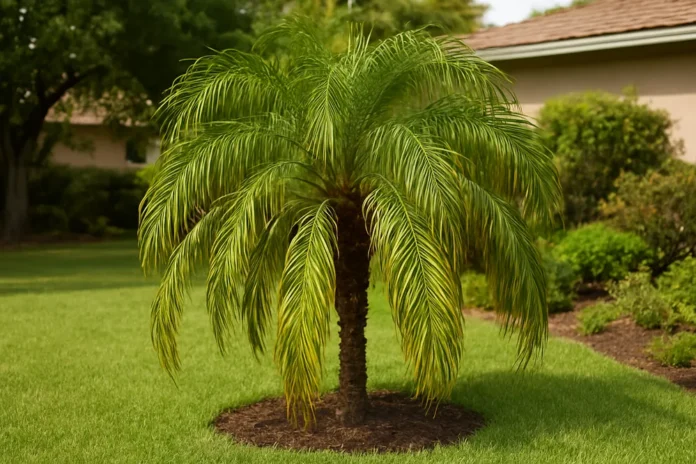
A palm tree usually droops because it is stressed by improper watering, root problems, cold damage, transplant shock, or nutrient deficiencies. In some cases, drooping fronds are also part of the normal aging process for older leaves.
A palm that suddenly looks limp can make even an experienced gardener uneasy. When I see a palm tree drooping, I do not assume it is dying, but I do treat it as a sign that something in its growing conditions has changed. Palms tend to show stress through their fronds long before the trunk tells the full story.
The tricky part is that drooping can mean several very different things. It may be as simple as dry soil during a hot stretch, or as serious as root rot, cold injury, or damage after planting. Some palms also hold older fronds at a lower angle naturally, so the key is to look at the whole plant, not just one leaf.
If your palm fronds are hanging, folding, or losing their normal structure, the pattern usually gives you clues. Where the drooping starts, how quickly it appeared, and whether the fronds are still green all help narrow down the cause.
What Drooping Really Means on a Palm
Drooping is a general stress symptom, not a diagnosis by itself. In palms, fronds can droop because they are losing internal moisture pressure, their roots are not functioning well, or the growing point has been damaged by weather or disease. Sometimes the fronds simply become heavy and arch more as they age, especially on mature specimens.
Start by asking whether the change is new or gradual. A palm that was upright last week and is now sagging points to a recent stress event. A palm with only the oldest lower fronds hanging while the center remains firm and green may just be following its normal growth cycle.
- Normal aging usually affects older, lower fronds first while new center growth still looks upright.
- Water stress often causes a softer, wilted look across multiple fronds at once.
- Root problems can make the whole canopy look tired, dull, and weak even when the soil feels moist.
- Cold damage may show up as droopiness followed by bronzing, browning, or collapsed leaf tissue.
When I evaluate a drooping palm, I look at the spear leaf in the center before anything else. If that newest growth is still firm and upright, the palm often has a recoverable stress issue rather than severe crown damage.
Underwatering and Heat Stress
One of the most common reasons palms droop is simple lack of water. In hot, windy weather, especially in sandy soils, moisture can disappear faster than many gardeners expect. Palms may respond by letting fronds hang lower, fold inward, or lose that full, lifted look.
Newly planted palms are especially vulnerable because their roots have not yet spread into surrounding soil. A palm that looked fine in the nursery can droop within days after planting if the root ball dries out. Container-grown palms can do the same outdoors when pots heat up and dry too quickly.
- Dry soil several inches down
- Fronds that look limp but not mushy
- Leaf tips turning brown and crisp
- Faster drooping during hot afternoons
- Improvement after deep watering
Heat stress can intensify the problem even when the palm technically gets water. If roots are confined, recently disturbed, or growing in poor soil, they may not keep up with demand during extreme temperatures. That is why drooping sometimes appears in summer even with a regular irrigation schedule.
Overwatering and Root Rot
Many people are surprised to learn that a palm can droop from too much water as well as too little. When soil stays waterlogged, roots cannot get enough oxygen. Over time they weaken, decay, and stop moving water to the fronds properly. The result can look a lot like drought at first glance.
This is especially common in heavy clay, low spots, or decorative beds where irrigation runs frequently. A palm planted too deeply can also stay wetter around the root flare, which raises the risk of root and trunk problems.
- Soil that stays soggy for days
- A sour or swampy smell near the root zone
- Yellowing along with drooping
- Blackened, soft, or decaying roots if exposed
- No improvement after additional watering
If drooping palms are in an automatically watered bed, I like to check soil moisture before assuming drought. Too many palms are watered more because they look wilted, when the real problem is that the roots are already suffocating.
Root rot can become serious quickly because palms depend on a healthy root system to support the entire crown. If the center growth begins to weaken, collapse, or pull out easily, the problem may have moved beyond simple overwatering into crown or bud damage.
Transplant Shock After Planting or Moving
A drooping palm shortly after planting is often dealing with transplant shock. Palms do not always re-establish instantly, and even a carefully handled specimen can sulk while roots adjust to new soil, temperature, and watering patterns. Some species resent disturbance more than others.
During this period, the roots may not take up water efficiently, which makes fronds sag or fold. If the palm was dug from the ground, transported in heat, planted at the wrong depth, or set in compacted soil, the stress can be more pronounced.
- Drooping that begins within days or weeks of planting
- Little or no new growth at first
- Some lower frond decline while the center remains alive
- A root ball that dries out faster than surrounding soil
- Stress that lasts longer in cool weather or poor soil
Transplant shock does not always mean the palm is failing. Many recover once they settle in, provided their moisture is steady and the planting site drains well. The main danger is turning a temporary problem into a bigger one by alternating between drought and overwatering.
Cold Damage and Sudden Weather Changes
Cold snaps are a major cause of drooping in palms, particularly in marginal climates or on species pushed beyond their comfort zone. A palm may look fine during the freeze itself, then collapse days later as damaged tissues break down. Fronds can droop, discolor, and develop water-soaked or burned areas.
Even hardy palms can droop after abrupt swings between warm and cold weather. Wind exposure makes this worse by drying the leaves while the roots are less active in cold soil. If the bud at the center was injured, recovery may be slow and uncertain.
- Drooping after a frost or freeze
- Bronze, tan, or gray-green fronds
- Soft or collapsed leaf tissue
- Damage concentrated on exposed sides of the palm
- Delayed symptoms appearing several days later
Cold injury on palms often looks worse a week later than it did the morning after the freeze. I try not to rush into heavy pruning because partly damaged fronds can still protect the crown while the plant reveals how much living tissue remains.
Nutrient Deficiencies That Weaken Fronds
Palms are notorious for showing nutrient deficiencies, and weak drooping fronds can be part of the picture. Potassium, magnesium, manganese, and nitrogen shortages all affect foliage quality, though they show up in slightly different ways. A nutrient-starved palm often looks tired before it looks dramatically discolored.
Potassium deficiency is one of the most common problems in landscape palms. Older fronds may develop yellowing, orange spotting, tip burn, and a hanging appearance. Magnesium deficiency can create broad yellow bands along older fronds, while manganese problems usually hit newer growth and can become severe.
- Older fronds yellowing and drooping together
- Burned or frizzled leaflet tips
- Weak new growth
- Poor color despite regular watering
- Long-term decline in sandy or nutrient-poor soil
Fertilizer issues are especially likely when palms have been fed with general lawn fertilizer instead of a palm-specific product. Standard high-nitrogen feeds can encourage growth without correcting the mineral balance palms need for sturdy fronds.
Pests, Disease, and Crown Problems
Although watering and weather account for most drooping complaints, pests and diseases should not be ignored. Scale insects, spider mites, palm aphids, and other sap-feeding pests can weaken fronds over time. Severe infestations rarely cause instant collapse, but they do add stress and can make fronds look dull, sticky, or distorted.
More serious are diseases that affect the bud, crown, trunk, or roots. Ganoderma butt rot, lethal bronzing, Fusarium wilt, and various bud rots can all lead to a drooping or collapsing canopy, depending on the palm species and stage of disease. In those cases, decline is often progressive rather than tied to one watering event.
- Sticky residue, visible insects, or black sooty mold
- One-sided decline or unusual frond distortion
- A spear leaf that pulls out easily
- Foul odor or rotting tissue in the crown
- Rapid canopy collapse without obvious drought stress
If the center spear is loose, rotten, or missing, the growing point may be compromised. Because palms grow from a single central bud, major crown damage is more serious than the loss of a few outer fronds.
How to Tell Normal Droop From a Real Problem
Not every downward frond means trouble. Many palms naturally arch as fronds mature, and some species always carry a softer, more fountain-like habit than others. The real warning signs are sudden change, loss of firmness, discoloration, or poor new growth.
Look at the distribution of symptoms. If only the oldest bottom fronds hang while fresh center leaves look healthy, that is often normal. If the entire crown looks deflated or the newest leaves are affected, the palm is more likely under active stress.
- Normal droop is gradual and mostly limited to older fronds.
- Problem droop appears quickly or spreads across the whole canopy.
- Normal droop keeps fronds structurally intact and reasonably green.
- Problem droop often comes with yellowing, browning, folding, or softness.
- Healthy palms continue producing strong new center growth.
What to Do to Help a Drooping Palm Recover
The best treatment depends on the cause, but the first goal is always to stabilize conditions. Palms respond better to steady care than dramatic swings. Sudden changes in watering, heavy pruning, and repeated fertilizer applications usually create more stress instead of less.
- Check soil moisture below the surface, not just on top. The root zone should be moist but not saturated.
- Adjust watering based on weather, soil type, and whether the palm is newly planted or established.
- Improve drainage if water stands around the palm after irrigation or rain.
- Delay pruning of partly green fronds unless they are fully dead or hazardous.
- Use a quality palm fertilizer if deficiency signs fit the pattern and the season is appropriate for feeding.
- Protect tender palms during future cold events with covers or other insulation suited to the plant size.
- Inspect the crown and spear leaf for rot, looseness, or pest buildup if decline continues.
I judge recovery on the next new frond, not on damaged ones already hanging there. Old fronds may never stand perfectly again, but healthy new growth tells you the palm is rebuilding from the center.
Be patient with recovery. Palms do not rebound overnight, and a stressed plant may need weeks or months to show clear improvement. If the crown is intact and the underlying issue is corrected, many palms can recover surprisingly well.
When the Palm Needs Professional Attention
Sometimes a drooping palm moves beyond routine home care. A certified arborist or palm specialist is worth calling if the spear leaf pulls out, the trunk is soft or rotting, the canopy collapses rapidly, or you suspect a serious disease. Large palms can also become dangerous if weakened fronds or the entire crown are unstable.
Professional help is also useful when irrigation, drainage, and species suitability are part of the problem. In my experience, palms often struggle for months because they were planted in the wrong spot for their cold tolerance, mature size, or soil drainage needs.
FAQ
Can a Drooping Palm Tree Recover?
Yes, many drooping palms recover if the crown is still alive and the stress is corrected. Recovery is most likely when the newest center growth remains firm and green.
Should I Cut Off Drooping Palm Fronds?
Only remove fronds that are fully dead, badly broken, or hazardous. Partly green fronds still help feed and protect the palm while it recovers.
How Often Should I Water a Drooping Palm?
There is no single schedule that fits every palm. Watering depends on species, soil, weather, and whether the palm is newly planted, but the root zone should stay evenly moist rather than bone dry or soggy.
Why Is My Newly Planted Palm Drooping?
Newly planted palms often droop from transplant shock, inconsistent moisture, heat, or planting depth problems. The roots need time to re-establish before the canopy looks normal again.
Can Cold Weather Make Palm Fronds Droop?
Yes, cold weather and frost commonly cause drooping, especially on tender species. Symptoms may not appear fully until several days after the cold event.
Does Overwatering Make Palm Trees Droop?
Yes, overwatering can cause drooping because waterlogged roots cannot function properly. The palm may look wilted even though the soil is wet.
What Does It Mean if the Center Spear Is Drooping Too?
A drooping or loose center spear is more serious than outer frond droop. It can point to crown damage, rot, or severe stress affecting the palm's growing point.
Need the right fix fast? Explore our palm care guides and palm fertilizer recommendations to choose the best treatment for drooping, yellowing, or stressed trees.
