

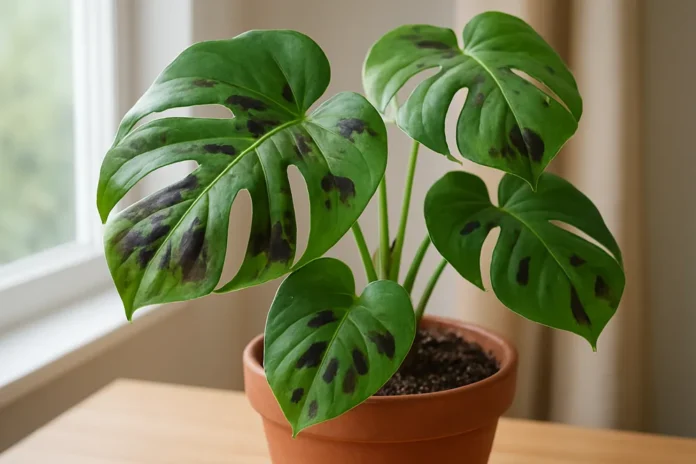
Black spots on a Monstera are usually caused by overwatering, fungal or bacterial leaf disease, cold damage, or physical injury to the leaves. In some cases, pests and salt buildup can also create dark, dead patches.
Monstera leaves can develop black spots for several different reasons, and the pattern of the damage usually gives you the biggest clue. A few isolated spots may come from bruising, sun scorch, or pest feeding, while larger dark patches often point to overwatering, root stress, or leaf disease.
In many homes, the most common cause is staying too wet for too long. Monsteras like evenly moist soil, but they do not like soggy roots. When roots struggle to get oxygen, the plant can start showing dark spotting, yellowing, soft stems, or blackened edges.
The good news is that black spots do not always mean your plant is doomed. If you catch the problem early and match the fix to the cause, many Monsteras recover well and can push out healthy new growth within the next growing season.
What Black Spots on Monstera Usually Mean
Black spots are areas of damaged leaf tissue. That damage can happen because the cells burst from cold, rot from excess moisture, dry out after scorch, or die after infection. The exact look matters. Round lesions with yellow halos often suggest disease, while irregular black patches can come from physical injury, wet roots, or sudden temperature stress.
- Small, dry black specks: often minor damage, pest feeding, or old stress
- Soft dark spots that spread: often linked to bacterial or fungal problems
- Black edges or tips: frequently related to watering stress, low humidity, or salt buildup
- Large black patches on exposed leaves: can happen after cold drafts or direct harsh sun
- Spots with yellowing around them: more suspicious for infection or root trouble
Overwatering and Root Stress
Why Wet Soil Causes Dark Spots
Overwatering is the most common reason a Monstera develops black spotting indoors. It is not just about how often you water. It is also about how long the potting mix stays wet. When roots sit in oxygen-poor soil, they weaken and begin to rot. Once the roots stop moving water and nutrients properly, leaves can develop blackened areas, yellow patches, drooping, and a general tired look.
Signs That Point to Overwatering
- Soil stays wet for many days after watering
- Lower leaves yellow before turning brown or black
- Dark spots appear along edges or in random patches
- Stems feel soft near the base
- The pot smells sour or musty
- Roots look brown, mushy, or stringy instead of firm and pale
How to Fix It
Let the top layer of soil dry before watering again. If the mix is dense or compacted, repot into a chunky aroid blend with ingredients like orchid bark, perlite, and quality potting mix. Always use a pot with drainage holes. If rot is advanced, trim mushy roots with clean scissors and repot into fresh mix. Remove badly damaged leaves only after the plant is stable, since the plant still uses any healthy green tissue that remains.
Fungal and Bacterial Leaf Spot Diseases
How Infections Show Up
Leaf spot diseases often start as small water-soaked marks or dark round lesions. Over time they can enlarge, merge together, and develop yellow halos. Bacterial leaf spot tends to look wet or greasy at first, while fungal spotting may appear more defined and dry as it ages. Both spread faster when leaves stay damp, airflow is poor, and the plant is crowded among other houseplants.
When Disease Is More Likely
- You mist heavily or frequently wet the leaves
- The plant sits in a humid corner with little airflow
- Spots started after bringing home a new plant
- You see multiple leaves affected, not just one damaged area
- Spots spread even when watering seems normal
What to Do
Isolate the Monstera from other plants if you suspect disease. Prune off badly infected leaves with sterilized shears and discard them in the trash, not the compost. Avoid overhead watering and stop misting for now. Improve air circulation around the plant. If the problem continues to spread, a houseplant-safe copper-based product or fungicide labeled for ornamental leaf spot may help, but sanitation and drier foliage are the most important steps.
Cold Damage and Temperature Shock
Monsteras are tropical plants and react badly to chilly air. A cold window in winter, an air-conditioning vent, or a drafty door can damage leaf cells quickly. This often creates dark brown to black patches that seem to appear suddenly. The affected areas may look water-soaked at first, then turn dry and papery.
- Damage appeared after a cold night or after transporting the plant
- Spots are mostly on leaves closest to a window or vent
- Newer exposed growth looks worse than protected inner leaves
- The pattern is patchy rather than neatly circular
Move the plant away from cold glass, exterior doors, and HVAC blasts. Monsteras do best when temperatures stay roughly between 65 and 85 degrees Fahrenheit. They can tolerate brief dips, but prolonged exposure to temperatures below about 55 degrees often leads to visible injury.
Sun Scorch and Heat Stress
Monsteras like bright indirect light, but direct afternoon sun can scorch the leaves, especially if the plant was not gradually acclimated. Scorched areas may start tan or bleached and later turn dark brown or black as the tissue dies. This is especially common on leaves pressed against hot glass or placed outdoors in strong summer sun.
How Scorch Differs From Disease
- Spots are usually on the side facing the light source
- The damaged area may look faded before turning dark
- The pattern is broad and irregular rather than dotted
- Only exposed leaves are affected
If you suspect light burn, shift your Monstera back a few feet from the window or use a sheer curtain to filter intense sun. Damaged leaf tissue will not turn green again, but new leaves should emerge normally once the light is corrected.
Pest Damage That Can Leave Dark Marks
Pests do not always create obvious black spots on their own, but feeding damage can leave tiny dead areas that darken with time. Thrips are one of the more common culprits on Monstera. They scrape leaf surfaces, causing silvery streaks, scarring, and small dark specks. Spider mites and scale can also stress leaves enough to produce patchy discoloration.
Clues That Pests Are Involved
- Fine stippling, scarring, or silvery patches on leaves
- Tiny moving insects on leaf undersides
- Black specks that look like tar or pepper, which can be insect waste
- Distorted new growth
- Sticky residue from scale or other sap-feeding pests
If you find pests, rinse the plant thoroughly and treat with insecticidal soap or neem-based products labeled for houseplants. Repeat applications are usually needed because one treatment rarely catches every life stage. Isolating the plant during treatment helps protect nearby houseplants.
Physical Damage and Bruising
Sometimes black spots are simply bruises. Monstera leaves are thick but still easy to crease, press, or tear during moving, staking, cleaning, or unfurling. Damaged tissue may look green at first, then turn brown or black over several days. If the spot stays limited and does not spread, mechanical damage is a likely explanation.
Bruising is especially common on leaves that rub against walls, furniture, or grow lights. New leaves can also get black marks if they are forced open before they naturally unfurl. The fix here is mostly prevention: handle the plant gently, give leaves room, and avoid touching tender new growth.
Humidity, Watering Inconsistency, and Salt Buildup
Monsteras are more forgiving than some tropical houseplants, but dry indoor air and erratic watering can still cause dark edges, black tips, or crispy spotting. In very dry homes, the leaf margins may lose moisture faster than the roots can replace it. Fertilizer salts and minerals from hard water can make that worse by damaging root function and burning the leaf tips.
Signs This Is the Issue
- Black or brown starts at the leaf tip or edge
- Damage appears on older leaves first
- A white crust forms on the soil surface or pot rim
- You fertilize often or use strong doses
- The plant alternates between bone dry and soaked
Water deeply, then allow the top inch or two of soil to dry before watering again. Flush the pot occasionally with plain water to wash out salt buildup. During active growth, feed lightly rather than heavily. If your tap water is very hard, filtered water can reduce mineral stress over time.
How to Tell Which Cause Is Most Likely
Because several issues can create dark spotting, it helps to compare the pattern on the leaves with the plant's recent conditions. Think about what changed in the past two to three weeks. Most houseplant problems leave a trail.
- If the soil has been staying wet and the plant looks droopy or yellow, root stress is the top suspect.
- If the spots are circular, spreading, or haloed in yellow, disease is more likely.
- If damage appeared right after a cold snap or draft, think temperature injury.
- If only the sun-facing leaves are affected, scorch is likely.
- If you see stippling, silvering, or insects, pests are probably involved.
- If the marks are isolated and stable after rough handling, bruising is the simplest explanation.
How to Treat a Monstera with Black Spots
Treatment works best when you address both the visible damage and the underlying cause. The black areas themselves usually do not heal, so the goal is to stop new spots from forming and encourage healthy new growth.
- Check the soil moisture and root condition first, especially if many leaves are affected.
- Move the plant into bright indirect light and keep it away from drafts, hot glass, and vents.
- Remove only severely damaged or clearly infected leaves with clean pruners.
- Adjust watering so the mix stays lightly moist but never swampy.
- Improve airflow and keep foliage dry if disease is suspected.
- Treat pests promptly if you find them on the leaves or stems.
- Pause heavy fertilizing until the plant is growing normally again.
Do not rush to cut every spotted leaf. If a leaf is still mostly green, it can still feed the plant. Prune for disease control, severe cosmetic damage, or leaves that are more dead than alive.
When to Repot and when to Leave It Alone
- Repot if roots are mushy, foul-smelling, circling tightly, or growing in stale dense mix.
- Wait if the plant recently moved, had minor bruising, or has a few old damaged leaves but otherwise healthy roots.
- Use a container only slightly larger than the current root ball to avoid extra wet soil.
How to Prevent Black Spots in the Future
Prevention mostly comes down to stable care. Monsteras do best when their environment is warm, bright, airy, and consistent. Sudden swings in moisture, light, or temperature are what usually lead to trouble.
- Water when the top inch or two of soil feels dry, not on a rigid calendar
- Use a chunky, well-draining potting mix
- Choose a pot with drainage holes
- Keep the plant in bright indirect light
- Protect it from cold drafts and intense direct afternoon sun
- Avoid leaving water on the leaves for long periods
- Inspect new plants for pests before placing them nearby
- Fertilize lightly during spring and summer instead of using heavy doses
When Black Spots Are a Serious Warning Sign
A few stable spots on an older leaf are usually not an emergency. Trouble becomes more serious when black areas are spreading quickly, stems are turning soft, roots smell rotten, or multiple new leaves are emerging damaged. Those signs suggest an active root or disease problem rather than cosmetic damage.
If the plant is declining fast, focus first on the basics: healthy roots, proper moisture, clean foliage, and a stable environment. A Monstera can replace old leaves, but it cannot recover well until the root system is functioning again.
FAQ
Should I Cut Off Monstera Leaves with Black Spots?
Only remove leaves that are badly damaged, actively infected, or mostly dead. If a leaf still has a lot of healthy green tissue, it can continue helping the plant.
Can Black Spots on Monstera Go Away?
No. Damaged leaf tissue does not turn green again. What you are looking for is no new spotting and healthy new growth.
Do Black Spots Always Mean Overwatering?
No. Overwatering is common, but black spots can also come from disease, cold damage, pests, sun scorch, bruising, and fertilizer or mineral stress.
Can I Save a Monstera with Root Rot and Black Spots?
Yes, if you catch it early. Trim away mushy roots, repot into fresh well-draining mix, and correct watering so the roots can recover.
Is Misting My Monstera Causing Black Spots?
It can contribute, especially if leaves stay wet and airflow is low. Damp foliage creates better conditions for bacterial and fungal leaf spot problems.
Why Does My Monstera Have Black Spots on New Leaves?
New leaves are more vulnerable to cold drafts, physical damage, low humidity during unfurling, and pest feeding. If the leaf emerged with damage and the spots are not spreading, environmental stress is often the cause.
Are Black Spots on Monstera Contagious to Other Plants?
If the cause is bacterial or fungal disease, it can spread under favorable conditions. Isolating the plant and keeping leaves dry helps reduce that risk.
How Long Does It Take a Monstera to Recover?
Visible recovery depends on the cause and the season. Existing spots stay, but a stabilized plant may start producing healthy growth again within a few weeks to a couple of months during active growth.
Need the right tools to rescue a struggling houseplant? See our guide to the best Monstera potting mixes, fungicides, and pest treatments so you can fix the problem faster.
