

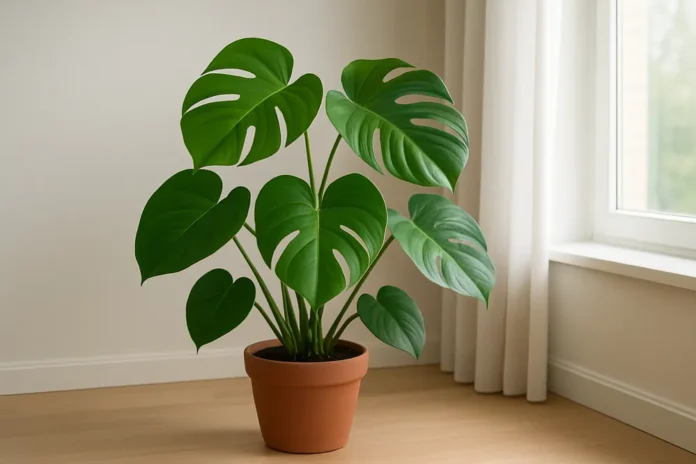
Monstera leaves usually lack holes because the plant is still juvenile or it is not getting enough light to mature properly. Stress from poor watering, weak growth, or missing support can also delay fenestrations.
If your monstera is putting out solid leaves with no fenestrations, the most common reason is simple: the plant is not mature enough yet. Young Monsteras often produce small, heart-shaped leaves with smooth edges, and the dramatic splits and holes develop later as the plant gains size, energy, and support.
That said, age is not the only factor. Light levels, watering habits, container size, nutrients, temperature, humidity, and whether the plant has something to climb can all influence whether new leaves develop holes. A healthy plant can still stay in its juvenile form for a long time if conditions are only mediocre.
The good news is that a hole-free Monstera is usually fixable with patience and a few changes. Once you understand what drives fenestration, you can create the conditions that encourage larger, more mature leaves over the next growing season.
What Fenestrations Mean On A Monstera
Fenestrations are the natural splits and holes that appear in mature Monstera leaves. On Monstera deliciosa, these openings are a sign that the plant has moved beyond its juvenile stage and has enough vigor to produce larger foliage.
In the wild, Monsteras climb trees and gradually reach brighter light. As they mature, their leaves get bigger and begin to split. Indoors, the same pattern usually happens more slowly, especially if the plant is growing in lower light or without vertical support.
- Small, whole leaves are normal on young plants
- Larger leaves usually appear before dramatic holes do
- Each new leaf reflects the conditions the plant experienced while that leaf was forming
- A plant can be healthy and still not fenestrate yet
The Most Common Reason Is Plant Age
The biggest reason a Monstera has no holes is that it is still juvenile. Many store-bought plants are propagated from young material and sold before they reach a mature stage. Even if the plant looks full and attractive, it may not be old or strong enough to produce fenestrated leaves.
Juvenile Monsteras typically make solid, smaller leaves. As the plant matures, newer leaves start to emerge bigger, thicker, and more deeply cut. This transition can take many months or even a couple of growing seasons indoors, especially if the plant is adjusting to a new home.
Signs Your Monstera Is Still Juvenile
- Leaves are relatively small compared with mature Monstera foliage
- The plant has short stems and little vertical growth
- New leaves look very similar in size to older ones
- There are no aerial roots or only tiny ones
- The plant has never had any split leaves, even under decent care
If age is the issue, the answer is usually patience combined with better growing conditions. You cannot force holes overnight, but you can help the plant mature faster.
Insufficient Light Delays Holes
After age, low light is the next most common cause. Monsteras are often described as low-light plants, but that label is misleading. They may survive in low light, yet they need bright indirect light to grow larger, stronger, and more mature leaves.
When light is too weak, the plant conserves energy. It may still produce leaves, but those leaves tend to be smaller and simpler. Fenestrations require extra energy because the plant is building bigger foliage with a more complex shape.
What Good Light Looks Like
- Bright indirect light near an east-facing window
- A few feet back from a south- or west-facing window with filtered sun
- Consistent light for most of the day, not just a dim corner
- Supplemental grow lights in darker homes or winter months
If your Monstera sits far from a window or in a room that stays dim most of the day, it may never build enough energy for fenestrated leaves. Moving it gradually to brighter conditions often makes a major difference in the next round of growth.
A Lack Of Climbing Support Can Keep Leaves Juvenile
Monsteras are climbing aroids, not naturally trailing houseplants. In nature, they grow upward along tree trunks. That vertical climb is part of what pushes them toward larger, more mature leaves.
When a Monstera sprawls across a shelf or hangs loosely from a pot, it often stays in a more juvenile pattern. Giving it a moss pole, plank, or sturdy stake can encourage stronger upward growth and bigger leaves over time.
Why Support Matters
- It mimics the plant's natural growth habit
- It helps stems and aerial roots anchor as they climb
- Climbing plants often produce larger internodes and leaves
- Mature growth is more likely when the plant grows vertically
Support alone will not create holes if light and care are poor, but it often helps a healthy Monstera move into a more mature form.
Watering Problems Slow Healthy Leaf Development
Inconsistent watering can also affect whether your Monstera develops holes. Underwatering, chronic overwatering, and root stress all reduce the plant's ability to produce large, vigorous leaves.
A plant that dries out too much between waterings may stall and make smaller leaves. A plant that stays too wet can develop stressed or damaged roots, which also leads to weak growth. In both cases, the result is often plain juvenile foliage rather than dramatic fenestration.
Better Watering Habits
- Water when the top inch or two of the potting mix feels dry
- Drench the soil thoroughly, then let excess water drain away
- Do not let the pot sit in standing water
- Avoid letting the root ball become bone dry for long periods
- Adjust watering frequency with season, light, and temperature
Monsteras prefer a consistent cycle of moisture and drying, not extremes. Steady growth supports better leaf size, and better leaf size is closely linked to fenestrations.
Pot Size, Root Health, And Soil Mix Matter Too
A Monstera with cramped roots or tired potting mix may continue surviving without really thriving. If the soil breaks down and holds too much water, roots lose oxygen. If the roots are badly pot-bound, the plant may struggle to support larger leaves.
At the same time, moving a small plant into a pot that is far too large can backfire. Extra soil stays wet longer, which increases the risk of overwatering. The goal is a pot that fits the root system with room for steady growth, plus a chunky, airy mix.
A Monstera-friendly Potting Mix Usually Includes
- Potting soil or coco coir for moisture retention
- Bark or orchid mix for airflow
- Perlite or pumice for drainage
- A container with drainage holes
Healthy roots are the foundation for mature leaves. If your Monstera has been in the same compacted mix for years, refreshing the soil may improve future growth.
Nutrients Help Build Bigger Leaves
Monsteras do not need heavy feeding, but they do need enough nutrients to support active growth. A nutrient-starved plant often produces slow, undersized leaves with little or no fenestration.
Nitrogen supports leafy growth, while phosphorus, potassium, and trace minerals help the plant stay vigorous overall. If your Monstera has been in the same soil a long time and has not been fertilized during the growing season, a lack of nutrition may be part of the problem.
Feeding Basics
- Use a balanced houseplant fertilizer during spring and summer
- Feed lightly rather than heavily if you are unsure
- Reduce or stop fertilizing in winter when growth slows
- Do not fertilize a severely stressed or root-damaged plant until it recovers
Fertilizer will not instantly create holes, but it can help the plant produce stronger new growth when light and watering are already in good shape.
Temperature And Humidity Influence Growth Speed
Monsteras grow best in warm, stable indoor conditions. Cool rooms, chilly drafts, or sudden temperature swings can slow growth enough to delay mature leaf development.
Humidity is less critical than many people think, but very dry air can still stress the plant, especially in winter near heating vents. High humidity will not magically create holes, yet comfortable tropical conditions support better overall growth.
- Aim for normal warm room temperatures
- Keep the plant away from cold windows in winter
- Avoid blast zones from heaters and air conditioners
- Moderate humidity is usually enough when other care is correct
What To Expect From New Leaves
One important thing to remember is that existing leaves will not develop holes later. If a leaf unfurls without fenestrations, that shape is set. The improvements you make now only affect leaves that are still developing inside the plant.
That is why growers often feel disappointed after moving a Monstera into brighter light and seeing no immediate change. The plant needs time to gather energy, adjust, and then produce a future leaf with a more mature form.
Good Signs That Fenestrations May Come Soon
- New leaves are larger than the previous ones
- Stem growth is stronger and more upright
- The plant is producing healthy aerial roots
- You begin seeing edge splits before full interior holes
- Successive leaves show gradual improvement rather than dramatic instant change
How To Encourage More Fenestrated Growth
If you want your Monstera to produce those iconic split leaves, focus on improving the conditions that matter most. The best results usually come from combining brighter light, steady watering, support for climbing, and enough space and nutrition for active growth.
- Move the plant to bright indirect light or add a grow light.
- Give it a moss pole, plank, or stake so it can climb upward.
- Water consistently and avoid both soggy and bone-dry soil.
- Refresh compacted soil or repot if the roots are crowded and the mix is exhausted.
- Feed lightly during the active growing season.
- Be patient and judge progress by the next few leaves, not the current ones.
This is usually a gradual process, not an overnight transformation. A Monstera that has lived in low light for months may need a full season of stronger growth before the leaf shape noticeably changes.
When No Holes Are Normal And When To Worry
In many cases, a Monstera with no holes is completely normal. If the plant is young, recently propagated, newly purchased, or recovering from a move, solid leaves are not a red flag.
You should look more closely if the lack of holes comes with other symptoms like yellowing, mushy stems, tiny deformed leaves, limp growth, black roots, or a sudden halt in development. Those signs suggest a broader care issue rather than simple immaturity.
- Normal: young plant, small but healthy green leaves, steady growth
- Concerning: stunted growth, repeated tiny leaves, yellowing, rot, pests, or severe drooping
- Normal: no holes on older leaves if the plant was previously juvenile
- Concerning: mature stems in poor light producing smaller and weaker leaves over time
FAQ
Will Existing Monstera Leaves Get Holes Later?
No. Once a leaf unfurls, its shape is fixed. Better care only affects future leaves.
How Long Does It Take for a Monstera to Get Fenestrations?
It depends on the plant's age and conditions. Some produce split leaves within a year indoors, while others take much longer if light or support is lacking.
Does Every Monstera Deliciosa Get Holes?
Given enough maturity and good growing conditions, most Monstera deliciosa plants will eventually develop fenestrations. Very young or stressed plants may stay solid-leaved for a long time.
Can Low Light Stop a Monstera From Fenestrating?
Yes. Low light is one of the biggest reasons Monsteras keep making plain leaves. The plant may survive, but it often will not have enough energy to produce larger split leaves.
Does a Moss Pole Really Help Monstera Leaves Get Bigger?
Often, yes. A moss pole or similar support encourages the plant to climb, which can lead to stronger growth and larger, more mature leaves over time.
Should I Cut Off Leaves That Do Not Have Holes?
Usually no. Solid leaves still help the plant photosynthesize and build energy. Remove them only if they are damaged, yellow, or diseased.
Can Fertilizer Make My Monstera Produce Holes Faster?
Fertilizer can support stronger growth, but it is not a shortcut by itself. Bright light, maturity, and healthy roots matter more.
Want bigger, healthier Monstera leaves faster? Read our guide to the best moss poles, grow lights, and Monstera fertilizers so you can choose the right setup for stronger fenestrated growth.
