

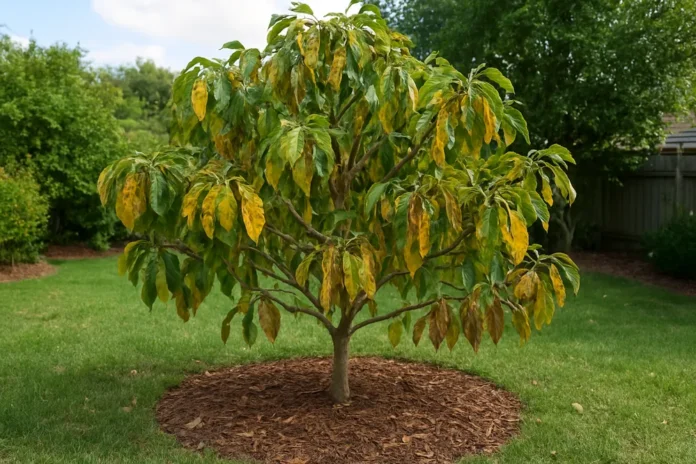
An avocado tree usually declines because of root stress, especially from overwatering, poor drainage, cold injury, pests, or disease. It can also struggle from drought, salt buildup, nutrient imbalance, or planting problems.
When an avocado tree starts dropping leaves, browning at the tips, or losing vigor, it can feel like it is dying overnight. In reality, avocado trees usually decline because something has been stressing them for a while, and the visible symptoms show up only after the roots, leaves, or trunk have already taken a hit.
I have found that avocados are less forgiving than many backyard fruit trees. They hate soggy roots, resent cold snaps, and respond badly to compacted soil or poor drainage. If your avocado tree is dying, the cause is often a combination of issues rather than one dramatic problem.
The good news is that a struggling tree can often recover if you catch the pattern early. The key is to match the symptoms you see, such as yellow leaves, blackened stems, leaf drop, trunk damage, or soft roots, with the most likely cause.
The Most Common Reasons Avocado Trees Decline
Most failing avocado trees fall into a few broad categories: water problems, temperature stress, root disease, pest pressure, nutrient imbalance, or planting stress. Avocados have shallow, sensitive roots that need oxygen as much as moisture. That is why they often struggle in heavy clay, low spots, or lawns that get frequent irrigation.
- Overwatering or poor drainage that leads to root suffocation
- Underwatering during hot, dry, or windy weather
- Root rot, especially in consistently wet soil
- Cold or frost damage to leaves, twigs, or the trunk
- Salt buildup from irrigation water or excess fertilizer
- Nutrient deficiencies, often showing up as pale or yellow foliage
- Planting too deep or mulch piled against the trunk
- Pests such as mites, borers, or scale
- Sunburn or heat stress, especially after pruning or sudden weather changes
When I troubleshoot an avocado, I look at the root zone before I focus on the leaves. Leaf symptoms can look similar across several problems, but wet, sour-smelling soil or a buried trunk usually points me toward the real issue much faster.
Watering Problems Are the Leading Cause
What Overwatering Looks Like
Overwatering does not always mean watering too often with a hose. It can also mean the soil stays wet too long because drainage is poor. Avocado roots need air spaces in the soil, and when those spaces stay full of water, roots begin to die back. Once the roots fail, the canopy starts thinning, leaves yellow, and branches may look limp even though the soil is damp.
- Leaves turning pale green or yellow
- Leaf drop without obvious drought stress
- Blackened or soft feeder roots
- Soil that remains wet several days after watering
- A general wilted appearance despite moist ground
What Underwatering Looks Like
Avocados also decline when they dry out too often, especially young trees. Drought stress usually shows up first as dry brown leaf tips and margins, curling leaves, and a sparse canopy. Fruit may drop early, and new growth can stall. During heat waves, a tree may look scorched in just a few days if the root zone is not being watered deeply enough.
The tricky part is that both overwatered and underwatered trees can wilt. The difference is in the soil and root condition. Wet, heavy soil suggests excess moisture. Bone-dry soil that pulls away from the root ball points to drought stress.
If you are correcting a watering issue, do not judge success by damaged old leaves. I watch for healthier new growth first, because burned or yellowed leaves often never return to normal.
Poor Drainage and Root Rot Can Kill a Tree Quickly
Root rot is one of the most serious avocado problems, and it commonly starts when soil stays wet for long periods. The disease attacks stressed roots first, then spreads until the tree cannot take up enough water or nutrients. Ironically, a tree with root rot may look thirsty because damaged roots cannot function properly.
You may notice yellowing leaves, tip burn, branch dieback, small leaves, and poor growth over time. In more advanced cases, the canopy thins badly, fruit drops, and the tree begins to collapse branch by branch. If you expose a few roots near the drip line, healthy roots should be light colored and firm. Diseased roots are dark, brittle, or mushy.
- Tree planted in clay or compacted soil
- Water standing after rain or irrigation
- Frequent shallow watering
- Mulch or soil piled against the trunk flare
- Lawn sprinklers wetting the root zone several times a week
A badly infected tree is hard to save, but an early case may improve if drainage is corrected and the soil is allowed to dry to a healthier cycle. Avocados do best when planted slightly high, with the crown above surrounding soil level and a broad mulched area that does not stay constantly soaked.
Cold Damage Often Shows Up After the Weather Improves
Avocado trees are sensitive to cold, especially young trees and tender new flushes. Frost damage may not be obvious the morning after a cold night. Instead, leaves can turn dull, limp, or water-soaked first, then brown or blacken over the next several days. Twigs may die back later, and bark on the trunk can crack or discolor.
If the cold was severe, the tree may drop a large number of leaves all at once. That can look dramatic, but leaf loss alone does not always mean the tree is dead. What matters more is whether the main wood and trunk remain alive. Scratch the bark lightly on a small twig. Green tissue underneath suggests living wood. Brown, dry tissue suggests dieback.
- Blackened young leaves and shoots
- Sudden leaf drop after a frost
- Split bark or sunken patches on the trunk
- Delayed bud break in spring
- Dead branch tips following a cold spell
I try not to rush into pruning right after frost. Branches that look awful can still protect lower wood from sunburn, and I usually wait until new growth shows me exactly where the living tissue stops.
Heat, Sunburn, and Wind Can Also Cause Severe Stress
Avocados like warmth, but extreme heat can still damage them, especially if the roots are dry or the canopy has been thinned by pruning, frost, or disease. Sunburn commonly affects exposed branches and the south or west side of the trunk. Bark may bleach, crack, or peel. Wind can worsen the damage by drying leaves faster than the roots can replace moisture.
Heat stress often causes leaf scorch along the edges and tips. In exposed sites, entire leaves may crisp and hang on the tree. Newly planted avocados are especially vulnerable because their roots have not spread far enough to buffer sudden swings in temperature and moisture.
- Bleached or cracked bark on exposed limbs
- Brown leaf edges during hot weather
- Wilting in the afternoon that improves by morning
- Heavy leaf drop after extreme wind or dry heat
- Damage that appears worse on one sunny side of the tree
Nutrient Problems and Salt Buildup Can Mimic Disease
Avocados can show nutrient stress as yellow leaves, weak growth, or poor fruiting, but not every pale leaf means the tree needs fertilizer. In many cases, the roots are too damaged or stressed to absorb nutrients properly. That means adding more fertilizer can actually make the situation worse, especially if salts accumulate in the soil.
Salt injury is common where irrigation water is mineral-heavy or when fertilizer is applied too heavily. The classic sign is brown leaf tip burn that gradually expands along the margins. Older leaves often show the damage first. A tree can also stall and shed leaves if salt levels become excessive around the roots.
Common Nutrient-related Symptoms
- Nitrogen deficiency can cause overall pale green leaves and reduced growth
- Iron deficiency often shows as yellow leaves with greener veins, especially on newer growth
- Zinc deficiency may cause smaller leaves and shortened internodes
- Salt buildup often causes brown tips and margins, starting on older foliage
If your tree has both yellow leaves and burned tips, think about root health and water quality before assuming it just needs feeding. Avocados respond best to light, steady fertility rather than heavy doses.
Pests and Diseases That Can Push a Tree Into Decline
A healthy avocado can tolerate minor pest activity, but a stressed tree is much more vulnerable. Mites, scale insects, and borers can all contribute to decline. Fungal issues can also move in after weather damage or chronic moisture problems.
Pests to Watch For
- Persea mites can cause stippling, browning, and leaf drop, often starting on the underside of leaves
- Scale insects can weaken the tree by feeding on sap and encouraging sooty mold
- Borers can attack stressed wood and create holes, frass, or sudden branch dieback
- Thrips may scar leaves or young fruit and add to overall stress
Disease Clues
Cankers, trunk lesions, gumming, and dieback can point to disease, especially if bark looks sunken or cracked in a localized area. Fungal leaf spots are usually less serious than root and trunk problems, but they can still signal that the tree is under strain.
If decline is rapid and you see holes in wood, fungal growth, or trunk damage, the tree may need closer diagnosis than a simple watering adjustment can provide.
Planting Mistakes Can Haunt an Avocado for Years
Many avocado problems begin the day the tree is planted. A tree set too deep, ringed by turf, or packed into a tight clay hole can struggle from the start. Because avocado roots are shallow and oxygen-hungry, even a small planting error can lead to chronic stress.
- Planting the root crown below grade
- Using a narrow planting hole in dense clay without improving drainage
- Keeping grass right up to the trunk, which increases water competition and sprinkler exposure
- Piling mulch against the trunk, which traps moisture around bark
- Leaving the tree root-bound without loosening circling roots at planting time
Young trees may survive for a year or two before the site problem catches up with them. If your avocado has never grown vigorously, the planting conditions deserve a hard look.
How to Read the Symptoms You Are Seeing
The pattern of damage often tells you more than one symptom by itself. Avocado leaves can yellow from overwatering, nutrient issues, or root disease. Brown tips can mean drought, salts, or root stress. That is why symptom combinations matter.
- Yellow leaves plus wet soil usually point toward overwatering or root trouble
- Brown tips plus white crust on soil can suggest salt buildup
- Blackened leaves after a cold night strongly suggest frost injury
- Sudden branch death on one side may indicate canker, borer activity, or sunburn damage
- Leaf scorch during heat with dry soil usually points toward underwatering
- A weak tree that never really took off often traces back to planting depth or poor drainage
It helps to compare old leaves, new leaves, branch tips, trunk bark, and the soil surface together. A single yellow leaf is not very meaningful. A whole canopy pattern is.
When an Avocado Tree Can Recover and when It May Not
An avocado tree can often recover from temporary drought, mild nutrient stress, or light frost if the trunk and main scaffold branches remain alive. Trees also rebound surprisingly well after losing leaves, as long as the root system is still healthy.
Recovery becomes less likely when root rot is advanced, the trunk is badly girdled or rotted, major limbs are sunburned and cankered, or the tree has lost most of its functional root mass. A tree that keeps declining despite improved care may be too compromised to regain strength.
- Good recovery signs include green tissue under bark, fresh buds, and healthy new shoots
- Poor signs include mushy roots, widespread trunk decay, no green tissue in twigs, and ongoing canopy collapse
- Young trees generally recover faster than old, heavily stressed trees
What Not to Do when Your Avocado Is Struggling
One of the easiest ways to finish off a stressed avocado is to throw too many fixes at it at once. Heavy fertilizer, daily watering, aggressive pruning, and random sprays can increase stress instead of relieving it.
- Do not fertilize heavily when roots are weak or soil is waterlogged
- Do not keep adding water to a wilted tree without checking whether the soil is already wet
- Do not prune hard right after frost or sunburn exposure
- Do not mound mulch or compost against the trunk
- Do not assume every yellow leaf means the tree is hungry
A calm diagnosis usually works better than a rescue spree. Avocados improve most when the underlying stress is removed and the tree is given stable conditions.
FAQ
Can an Avocado Tree Come Back After Losing All Its Leaves?
Yes, if the trunk and branches are still alive and the roots remain healthy. Leaf loss alone does not always mean the tree is dead, especially after frost or temporary drought.
How Do I Know if My Avocado Tree Has Root Rot?
Common signs include yellowing leaves, poor growth, wilted foliage despite wet soil, and dark or mushy feeder roots. Root rot is especially likely in heavy soil or areas that stay damp for long periods.
Why Are the Tips of My Avocado Leaves Turning Brown?
Brown tips are often caused by salt buildup, inconsistent watering, drought stress, or root problems. If the damage starts on older leaves and expands from the tips inward, salts are a common culprit.
Will Frost Kill an Avocado Tree?
A light frost may only damage leaves and young shoots, while a hard freeze can kill branches or even the trunk. Younger trees are much more vulnerable than established ones.
Should I Cut Off Dead Avocado Branches Right Away?
Not always. After cold damage, it is often better to wait until new growth appears so you can see which wood is truly dead and which parts are still alive.
Can Too Much Fertilizer Make an Avocado Tree Decline?
Yes. Excess fertilizer can burn roots, increase salt levels in the soil, and worsen leaf tip burn, especially when the tree is already stressed.
Why Is My Young Avocado Tree Dying Right After Planting?
Newly planted avocados often fail because they were planted too deep, watered too often, exposed to intense sun or wind, or placed in soil with poor drainage.
Need help choosing the right fix for a stressed avocado? Read our avocado tree care and treatment guides to compare the best soil amendments, fertilizers, mulches, and recovery products.
